
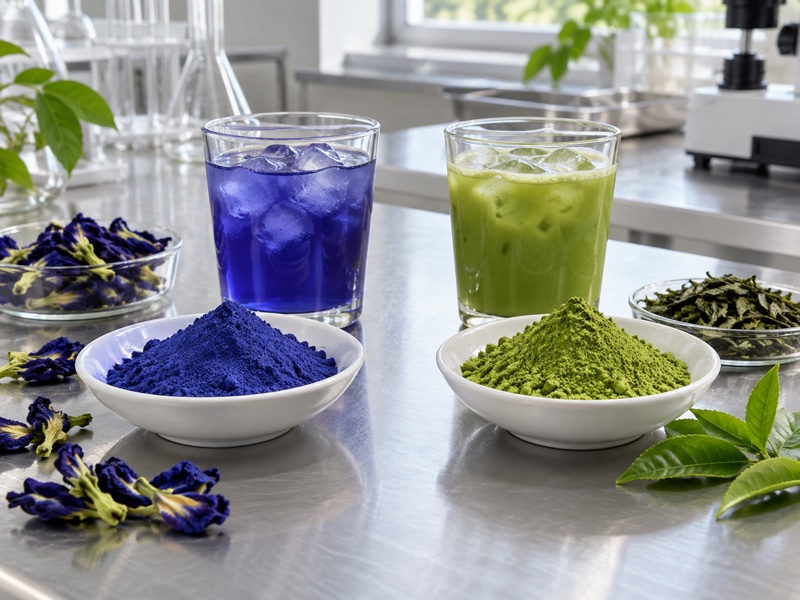
“Blue matcha” is an attractive search term and a confusing purchasing label. Most products sold under that name are made from butterfly pea flower, while green matcha is powdered tea from Camellia sinensis. The two ingredients behave differently in a cup and need different specifications. A buyer developing drinks or retail packs should begin with the botanical identity, ingredient declaration, and intended use rather than the color photograph. This guide explains the differences, the tests worth running, and the claims to check before a launch. A current top-ranking blue matcha article discusses the naming issue; for a commercial product, the supplier’s lot documents and the rules in the target market decide what may appear on a label.
1. What does “blue matcha” usually contain?
The name commonly points to a powder made from butterfly pea flower, Clitoria ternatea. Kew’s plant database lists that species in the legume family. Green matcha, by contrast, comes from tea leaves. Ask the supplier for the exact botanical name, plant part, processing method, and full ingredient list. A bag described only as “blue matcha” could contain flower powder, a concentrated extract, a blended drink mix, or other ingredients. Those are different materials with different dosages, labels, and costs.
The word matcha has cultural and ingredient expectations attached to it. If a product contains no tea, describe it plainly as butterfly pea flower powder or a butterfly pea drink, with “blue matcha” used only where local naming rules and clear consumer information allow. Do not rely on a marketplace title as an ingredient specification. A buyer can request a lot-linked sample and compare it with the accompanying documents. If the powder also contains sweetener, acidity regulator, or color, those should appear on the product file before anyone writes menu copy.
| Item | Green matcha | Product often called blue matcha |
|---|---|---|
| Botanical source | Tea plant | Butterfly pea flower, commonly |
| Main sensory role | Tea flavor and green color | Blue color and botanical note |
| Caffeine expectation | Tea naturally contains caffeine | Pure butterfly pea is not tea |
| Buyer check | Tea origin and grade fit | Identity and exact formulation |
2. Is blue matcha actually a type of tea?
Butterfly pea is not the tea plant. A drink made only from its flowers may be described casually as a herbal tea in some markets, but its botanical origin remains different from matcha. This distinction affects customer expectations. Someone ordering matcha may expect a tea flavor and caffeine; a butterfly pea drink may offer neither. If a café blends butterfly pea with real matcha, that is another formulation and should state both ingredients. An accurate menu line avoids making a blue flower drink sound like a blue variety of green tea.
Do not infer caffeine content from the color. Pure butterfly pea flower itself is not a tea leaf, but a commercial “blue matcha” blend could contain tea, coffee, or other caffeine sources. Read the full formulation and verify any precise caffeine claim against product-specific evidence. The same care applies to words such as “decaf,” “natural,” or “organic.” They refer to different facts and require different records. For a brand, accurate identity is a practical advantage: it helps service staff answer questions and prevents a product page from promising the wrong sensory experience.
3. Why is the powder blue, and why can lemon turn it purple?
Butterfly pea flowers contain blue pigments that can change appearance with the acidity of the drink. A clear blue beverage may shift toward purple when lemon or another acidic ingredient is added. That visual effect is useful for menu development, but it should be demonstrated with the exact powder, dose, water, and acid used in your recipe. Concentrates, whole-flower powders, and mixed products may not behave identically. The color shown in a supplier photograph is not a reliable promise for a milk drink or baked product.
Set up a small application matrix. Put the same powder dose into plain water, a sweetened base, an acidic base, and the milk or plant drink used by your operation. Photograph them immediately and after the planned holding time under neutral light. Record whether particles settle or a foam layer changes the color. If a brand wants a color-changing customer experience, test the sequence of addition and how long the effect remains visible. Avoid a menu claim that only works under a studio light with a different ingredient batch.
| Test cup | Why make it | What to record |
|---|---|---|
| Plain water | Baseline color | Hue and dispersion |
| Lemon base | Acid response | Color shift and flavor |
| Milk base | Café application | Cloudiness and stability |
| Intended package | Shelf or delivery use | Change during holding |
4. How does blue matcha taste next to green matcha?
Green matcha has a distinctive tea profile that may include grassy, savory, sweet, and bitter notes depending on the powder and preparation. Butterfly pea products are usually chosen more for color than for a comparable tea flavor. Taste each ingredient alone at the intended dose before hiding it in syrup. Then taste it in the final drink. A customer who asks for the deep taste of matcha should not be handed a mild blue flower beverage simply because both powders are sold under similar names.
If the product needs tea flavor and blue appearance, combining green matcha with blue powder may produce a dull or muddy color. Test before promising a turquoise cup. A separate layered presentation could preserve a more attractive visual, but it may still mix to a less appealing shade. Flavor pairings such as citrus, coconut, or light floral notes should be selected through a tasting panel. Keep sweetener levels consistent across tests so tasters are judging the botanical ingredients, not a sweeter version of one sample.
5. What should a buyer request from the supplier?
Start with a specification for the offered lot: botanical name, plant part, ingredient list, physical form, origin, processing description, packaging, storage, and relevant testing. Ask whether it is a whole-flower powder, an extract, or a prepared beverage blend. Those terms matter for label copy and formulation. Request a sample tied to the same specification you would buy in volume. A beautiful small sample is insufficient if the production lot has a different concentration or includes a carrier that was not declared during development.
Ask how color is measured or controlled between lots and what an acceptable range looks like in your application. Keep a retained sample and take standard-light photographs. For a retailer, check the exact label and artwork against the documents. A supplier should be able to answer what the blue component is without a long marketing story. If the answer changes across sales staff, pause the purchase until a technical representative supplies a clear written description. This protects the formulation team and the consumer.
| Supplier item | Buying purpose |
|---|---|
| Botanical identity | Correct ingredient declaration |
| Lot-linked sample | Application trial and comparison |
| Full composition | Allergen and claims review |
| Storage and pack details | Color and quality control |
6. Can a business use butterfly pea extract as a food color?
That depends on product form, food category, country, and the applicable conditions of use. In the United States, the FDA lists butterfly pea flower extract as a color additive under 21 CFR 73.69. That listing does not mean every blue powder or every proposed use is automatically permitted. A whole-flower ingredient and a regulated extract may have different legal treatment. The current rule, exact product, and intended food category should be reviewed by a qualified regulatory specialist before packaging is approved.
The same caution applies across export markets. A drink sold in one country can face different ingredient and labeling requirements in another. Ask the supplier for market-specific documents, then confirm them with your own compliance team. Do not copy a competitor’s “natural blue” claim without checking the product behind it. A B2B launch file should include the approved use, ingredient declaration, supplier documents, and the final label wording. The pretty color belongs at the end of that work, not the beginning.
7. Are health claims about blue matcha supported?
Avoid treating a pigment, a botanical tradition, or a small laboratory result as proof of a human health benefit. Butterfly pea contains compounds of research interest, but a finished drink’s effect depends on dose, preparation, and human evidence. A webpage may list benefits ranging from better skin to weight control; those statements require careful evidence and regulatory review before they appear in commercial copy. The safer and more honest product story is about what the customer can verify: color, flavor, ingredients, and preparation.
If marketing wants to make a nutrition or wellness claim, ask exactly what claim will be printed and what evidence supports the proposed serving. An ingredient study is not necessarily evidence for a diluted beverage. Also check whether the chosen product has added sugar. Calling a brightly colored sweet drink a “wellness” item can be misleading if the formulation tells another story. Keep the content useful: show a real ingredient list, a realistic image, and clear usage suggestions. Customers do not need medical promises to enjoy an unusual botanical color.
| Proposed wording | Evidence question |
|---|---|
| “Butterfly pea flower drink” | Does the formula match? |
| “Caffeine-free” | Are all ingredients verified? |
| “Organic” | Is certification valid for this lot and market? |
| Health benefit claim | Is suitable human and regulatory evidence available? |
8. How should blue matcha be tested in drinks and foods?
For a café drink, test color in the actual liquid, cup, and light. For ice cream or yogurt, observe how fat and opacity change the blue. For baked goods, heat and the batter’s acidity may shift the shade. Make small, controlled batches and record the powder dose by weight. The goal is a saleable product with consistent appearance and acceptable flavor, not merely a vivid sample in a laboratory beaker. Photograph the sample after the full expected service or storage interval.
Also examine dispersion. Some powders can leave visible specks or sediment, while extracts may behave differently. If a beverage is shaken before use, state that in the product instructions and confirm it works. For a packaged product, follow a real shelf-life plan that includes light exposure, container, temperature, and safety requirements. If a color-changing drink is served tableside, train staff to use the correct acid dose and explain the result. The effect should be a repeatable part of the experience rather than a lucky first trial.
9. How can a brand name the product without confusing buyers?
Lead with the true ingredient. A descriptive name such as “butterfly pea lemonade” tells a customer what produces the color. If “blue matcha” appears in a search-oriented headline, immediately explain that it is usually a nickname for butterfly pea flower powder and state whether the specific product contains tea. Keep the ingredient declaration and front-of-pack presentation consistent. A large “MATCHA” claim paired with no tea in the ingredient list may create a misleading impression even if a small subtitle mentions flowers.
Check product photos as carefully as words. A bright blue cup shown with a bamboo whisk and tea leaves may imply that the ingredient is conventional matcha. Show the real powder and finished recipe instead. Matcha Village’s pure matcha products are green tea powders; a blue botanical product should have a separate sourcing and label file. Accurate naming helps buyers avoid ordering the wrong material and helps consumers know whether to expect tea taste and caffeine.
10. What is a sensible launch checklist for blue matcha?
Confirm the product identity first. Then approve the target recipe, the acceptable color range, the full ingredient declaration, and the legal use in each sales market. Run a pilot with the actual pack or service cup and keep a retained sample. If you are launching a color-changing drink, test the color sequence during normal service with the same lemon, ice, and timing staff will use. Cost the drink from the finished portion, including any additional acid, sweetener, cup, and waste. A cheap powder can become costly if the dose required for a reliable color is high.
Make staff training plain: “This blue drink uses butterfly pea flower; it is separate from our green matcha tea.” That one sentence prevents many confused conversations. If the formulation contains both, say so. Build marketing copy from the approved technical sheet and have the compliance team review any claims. Blue matcha can be a useful search and menu idea, provided the product’s identity stays clear. The color should invite a customer in; the ingredient information should let them order with confidence.
| Launch gate | Evidence to keep |
|---|---|
| Identity | Botanical and composition specification |
| Application | Approved recipe and color photographs |
| Compliance | Market-specific review of use and claims |
| Repeat supply | Lot sample and acceptance range |
FAQs
Q1. Is blue matcha the same plant as green matcha? Usually no. Products called blue matcha commonly use butterfly pea flower, while green matcha comes from tea leaves.
Q2. Does blue matcha contain caffeine? Pure butterfly pea flower is not tea, but a commercial blend may include caffeine-bearing ingredients. Check its complete specification.
Q3. Why does lemon make the blue drink look purple? Butterfly pea pigments can change visible color with acidity. Test the actual recipe because product forms differ.
Q4. Can a bakery use it for blue cakes? Run a heat and batter trial, then confirm the exact ingredient’s permitted use and labeling in the sales market.
Q5. What document should a buyer request first? Ask for the lot-linked specification naming the botanical source, plant part, full composition, and intended food use.