
Matcha pancakes are often photographed as a tall green stack, but a breakfast customer notices the center first. It should be fully cooked and tender, with a tea flavor that survives the griddle and the syrup. The matcha pancakes recipe in search results is a useful household reference. A café has a different test: can staff pour consistent rounds, turn them at the right moment, and serve the last plate of the rush as well as the first? Start with the plain pancake, then add the toppings.
1. What makes a good matcha pancake?
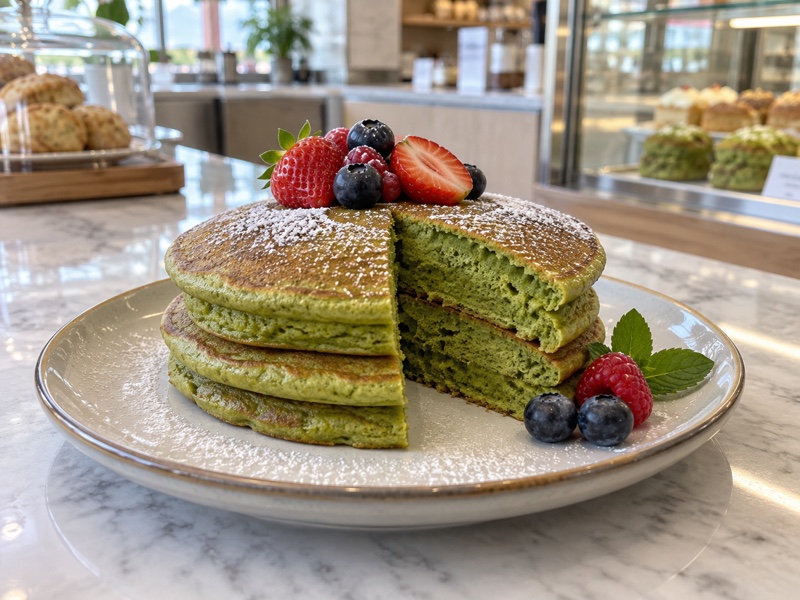
Set a clear target for size, thickness, color, and bite. A fluffy American-style pancake needs a different batter and griddle routine from a thin crêpe-like one. Specify the number of pancakes per plate and finished portion weight. The cut center should show a natural green tone without a wet batter line. A brown surface is part of griddle cooking; it need not be hidden with extra powder. Taste a plain bite while warm and another after the normal time it takes to reach a table.
Matcha should be identifiable through the base recipe’s vanilla, butter, and sugar. If the tea is only visible, reduce competing flavors before adding more powder. A product brief should include a practical service window: immediate dine-in, short takeaway, or delivery. Each has a different texture at the customer’s first bite. Photograph the real plated portion under normal café light, not a stack assembled solely for a campaign.
| Target | Check | Reject signal |
|---|---|---|
| Tender center | Cut thickest pancake | Wet line or dry crumb |
| Tea note | Plain and topped bite | Only sugar or vanilla |
| Portion | Count and finished weight | Uneven rounds |
| Service | Taste at handoff | Cold, soggy stack |
2. Which batter base should be tested?
Use a base the kitchen can make from weighed ingredients. Flour type, leavening, egg, milk, fat, and sugar all affect rise and tenderness. Matcha adds dry material and flavor; add it in controlled trials rather than sprinkling it into a finished batter. If the formula uses a plant milk, test the exact product because sweetness and thickness vary. A large vanilla dose can make the tea hard to taste even when the batter is green.
Sift matcha with dry ingredients if the approved lot is prone to clumping. Mix wet and dry to a defined endpoint. Overmixing a wheat batter can make pancakes tough; undermixing leaves flour pockets. Record the rest time and compare the first pancake with the last one made from a batch. Batter can thicken and leavening can change during a long shift. Staff should not thin it by eye with random splashes of milk. Set a measured adjustment or a maximum batch life.
3. How much powder is enough after cooking?
Make a three-dose trial with one base batter and the same griddle setting. Weigh the matcha and any flour adjustment. A home spoon measure is too imprecise for cost and repeatability. Taste fully cooked pancakes plain, then with the planned topping. The light dose may disappear under maple syrup, while the strong one may leave bitterness. Choose the dose that makes the complete plate taste of tea without asking customers to avoid the syrup.
The powder’s dry color is not a reliable finished-product score. Compare lot-linked samples on the same griddle and under the same light. Check whether the flavor changes after a short hold. Record grams per batter batch, saleable pancake yield, and cost per plate. If a new powder needs twice the dose to be noticed, its lower price per kilogram may not save money.
| Dose | Keep constant | Taste question |
|---|---|---|
| Light | Base, griddle, topping | Can guests name tea? |
| Medium | Same process | Is flavor balanced? |
| Strong | Same process | Is the finish bitter? |
4. Why does griddle heat matter so much?
Too much heat darkens the surface before the center cooks. Too little heat leaves a pale, dry pancake that spends too long on the plate. Test the griddle at its working load, not only when empty. Measure deposit weight and record the observed surface behavior: bubbles, setting edges, and the color at the first flip. Those cues can be more useful than a timer because griddle recovery changes when several orders arrive together.
Cut pancakes from the first, middle, and last round. If one side is uneven, check the surface temperature and how staff spread batter. If centers are wet, adjust deposit size or cooking time before changing matcha dose. Turn only when the pancake can support itself. A rushed flip can smear wet batter and give a patchy green surface. Train a second cook with the written method to see whether the cues are clear enough for service.
5. How should the team manage batter during a rush?
Decide whether batter is mixed to order, in small batches, or in a larger refrigerated prep. Each needs a different operational rule. A small batch may reduce waste but interrupt service. A large batch can drift in thickness as it sits. Follow the kitchen’s food-safety plan for egg and dairy ingredients, mixing time, cold hold, and discard. Do not use a home recipe’s storage note as a commercial standard.
Weigh a deposit from the beginning and end of the batch and compare spread on the griddle. If the batter thickens, record the change and test a measured correction. Check matcha settling as well; green specks at the bottom of a jug signal poor dispersion. Use a container that can be stirred safely and consistently. The product card should tell staff how many portions a batch makes and what to do when it reaches the approved hold limit.
| Service pattern | Benefit | Control needed |
|---|---|---|
| Small fresh batch | Limited hold drift | More prep cycles |
| Refrigerated batch | Faster line | Time, temperature, remix |
| Pre-cooked pancakes | Faster handoff | Reheat texture and safety |
6. Which toppings support the tea?
Maple syrup, berries, yogurt, whipped cream, and red bean each bring a different balance. Try the pancake without toppings first. Then add the proposed portion by weight. A large syrup pour can make every green pancake taste the same. Tart fruit may brighten a sweet batter; sweet cream may hide a subtle powder. Keep the first menu version focused. Extra toppings should earn their place in a blind tasting and in the cost calculation.
Wet toppings also change texture. A tall stack covered in sauce can turn soft before the guest reaches it. For takeaway, pack syrup separately and test the box. If a menu image shows berries or cream, staff should serve that portion consistently. Review allergens in the whole plate, including yogurt, nuts, wheat, egg, and possible cross-contact. A dairy-free milk in the batter does not make a plate dairy-free if the topping contains cream.
7. Can pancakes be held or reheated?
Test the customer experience at the end of the actual queue. A plain pancake may remain tender for a short rest on a rack, but a covered stack can collect steam and become damp. A warming cabinet can dry edges. Reheating can toughen the center and mute tea. Compare fresh, held, and reheated samples blind. If staff can easily identify the inferior sample, adjust the service process before declaring it acceptable.
For frozen or wholesale pancakes, a separate product trial is needed. Evaluate packing, storage, transport, and the final customer’s reheating appliance. Commercial shelf life and safety depend on the full process and cannot be inferred from a recipe blog. If the item is prepared for multiple sites, write a finished-product standard and test the worst likely time and temperature within the approved chain.
| Time point | Texture | Flavor and appearance |
|---|---|---|
| Fresh | Baseline tenderness | Tea, sweetness, green center |
| Normal queue | Steam and cooling | Does tea remain clear? |
| Reheated, if sold | Toughness or dryness | Color and aroma |
8. How should portion and margin be calculated?
Count saleable pancakes per weighed batch, not just batter deposits. Record batter left in the jug, rejects, topping use, packaging, and labor. A slightly smaller pancake can improve cooking consistency and portion control, but do not shrink the plate without checking value perception. Weigh the first, middle, and last completed plates. The difference between a two-pancake and three-pancake serving is larger than the matcha cost alone.
Compare the approved tea dose with powder cost per plate. If a supplier change is proposed, test it in the cooked pancake at the same dose. A lower powder price is a false economy if staff must add more or customers cannot taste the tea. Track the number of plates remade during a breakfast pilot. Griddle capacity and queue time may be the real constraint on the menu item, not ingredient cost.
9. What belongs on the recipe and ingredient card?
List ingredient weights, matcha lot or specification, dry blending method, mix endpoint, rest and hold, deposit weight, griddle setting, flip cue, finished weight, topping weights, and serving window. Add a photograph of the acceptable cut center and surface. The card should state an adjustment if batter thickens and a rejection rule for undercooked centers. It should work for a staff member who did not attend the development tasting.
Name the actual allergens and ingredients of the batter and toppings. If the menu offers an alternative milk, test it as a defined variant. A nutritional or caffeine number must be based on the finished serving with defensible ingredient information. Broad wellness claims should not follow from the presence of matcha. The menu description can simply tell customers what they will taste and what comes on the plate.
| Card item | Record | Why |
|---|---|---|
| Tea and batter | Lot, grams, mix | Repeatable flavor |
| Griddle | Heat, deposit, flip cue | Cooked center |
| Plate | Count and topping weights | Value and margin |
| Hold | Approved time and method | Customer texture |
10. When is the plate ready for the menu?
Run a trial during a realistic service period. Have another cook make several orders using the card. Cut samples from different points in the run and taste the plain pancake and full plate at the likely customer eating time. Record portion weights, griddle recovery, build time, and remakes. Test takeaway separately if offered. Approve the recipe only when the last plate still meets the same target as the first.
For powder sourcing, compare a lot-linked sample from Matcha Village’s wholesale range in the final batter. Use the same dose and process. Choose the powder that holds flavor after griddle cooking at a workable cost. The launch decision then rests on a repeatable breakfast plate, not on whether raw batter makes an attractive green swirl.
FAQs
Why do matcha pancakes brown on the outside? Griddle heat browns batter. Check the cooked center and flavor before trying to make the surface bright green.
Can pancake batter be prepared ahead? Yes only under a documented safe-holding and quality process. Test rise and texture at the end of that hold.
Can more powder fix weak tea flavor? Sometimes, but test sweetness, vanilla, toppings, and powder quality first. A higher dose may add bitterness.
Are matcha pancakes automatically dairy-free? No. Check every ingredient and topping, plus handling at the station.
Should syrup be included in the cost? Yes. Cost the portion customers actually receive, including syrup, fruit, packaging, and remakes.