
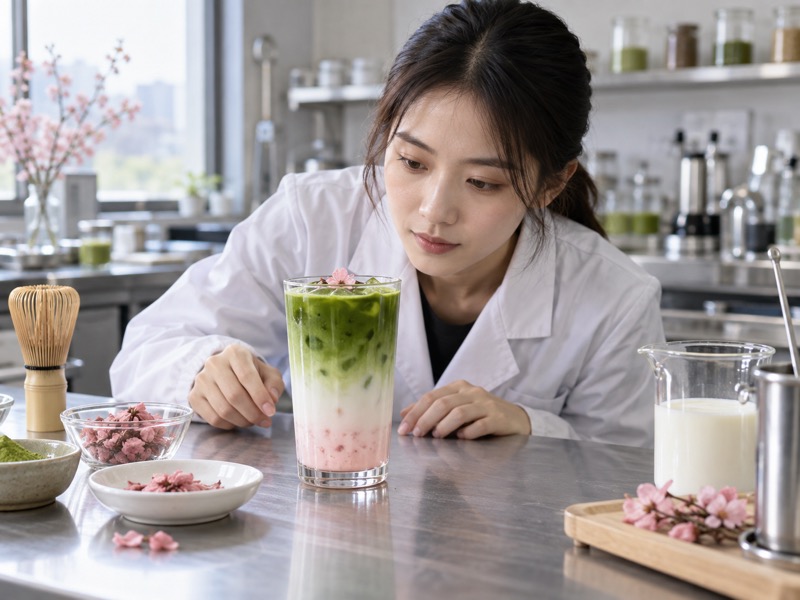
Sakura matcha pairs powdered green tea with a cherry-blossom theme or ingredient. It can be a distinctive seasonal drink, but “sakura” is not a single flavor formula. A syrup may taste floral and sweet; salted blossom can add a different note; a pink topping may contribute mostly color. If the menu does not say what the guest will actually taste, the drink can disappoint despite looking good. Rishi Tea’s iced sakura matcha latte provides one recipe example. A café or beverage brand should decide on the tea, floral ingredient and finished-cup experience before planning photography or a launch date.
For: café operators, beverage developers, seasonal-menu planners and ingredient buyers. Decision: whether the sakura note is clear, accurately described and practical to serve during a short selling window.
1. What should sakura contribute to the drink?
Define the flavor, not the color
Write a target such as “tea-led with a gentle floral finish” or “lightly sweet blossom-led latte with a clear tea base.” That makes evaluation possible. A pale pink foam over a green drink can signal spring, but it does not prove that the product tastes of cherry blossom. Have a small tasting panel describe coded samples without seeing the name. If they say only “vanilla” or “sweet milk,” the sakura cue may be too weak or the menu wording too strong.
Keep the experience coherent. Decide whether the drink should be refreshing, creamy or dessert-like. Choose cup size and serving temperature accordingly. A salty blossom garnish can be appealing in a sweet drink, but it can also surprise guests when the rest of the cup lacks that balance. Taste the first sip, midpoint and final portion. The drink should make sense after its visual layers are mixed, because most guests will not consume a layered latte without stirring.
| Concept | Expected note | Trial question |
|---|---|---|
| Tea-led | Matcha first, floral finish | Does tea remain clear? |
| Balanced | Tea and sakura together | Are both detectable? |
| Dessert-style | Sweet, creamy blossom | Is the finish cloying? |
2. Which sakura ingredient is being used?
Ask for the full specification
Cherry-blossom ingredients can arrive as syrup, dried or preserved blossoms, powder, flavoring or a prepared topping. They differ in salt, sugar, color, aroma and handling. Request the complete ingredient and allergen statements, usage guidance, pack size, shelf and storage details, and any origin or authenticity documents relevant to the claim. A generic “sakura” name is not enough for a label decision. If the product is only blossom-inspired rather than containing cherry blossom, the menu should say so plainly.
Trial the exact material. A substitute supplier’s syrup may be more vanilla-like or more floral. A preserved blossom may be salted enough to change the whole drink. Measure the ingredient by weight or volume and taste it in the complete recipe. Check whether it mixes evenly or leaves residue. Do not take a photograph of one ingredient and use it to imply that the final formula contains it if the commercial version does not.
3. Which matcha can hold its place?
Taste after floral addition
A delicate tea can disappear beneath a strongly flavored syrup. A very assertive tea can clash with a soft floral note. Compare identified matcha samples at equal dose in the same milk or water base, then add the chosen sakura ingredient. Judge color, bitterness, aroma and finish at the temperature served. A tea that looks vivid in powder form may not remain vivid under pink foam and white milk. The application trial decides more than a grade name.
Cost the accepted dose. Record tea grams per cup, lot code, pack size and the powder’s storage guidance. Keep a reference sample for a seasonal run; a new lot may require a retest even if the ingredient name is unchanged. Ask whether the supplier can cover the expected promotion volume and delivery schedule. A short season leaves little time to correct a shortage or a formula that changes mid-campaign.
| Tea test | What to observe | Why it matters |
|---|---|---|
| Plain base | Tea’s own profile | Set a baseline |
| With sakura | Flavor interaction | Avoid masking |
| After ice | Diluted final cup | Real guest taste |
4. How should sweetness and salt be balanced?
Measure both inputs
Sakura syrups may carry a substantial sweet load; preserved blossoms may carry salt. Milk or plant drinks can add their own sweetness. Start with the chosen tea dose and base, then build a measured ladder of sakura ingredient. Taste for a clear floral note without turning the drink into sugar with green color. If a salty garnish is used, taste it in the same way a guest will encounter it, including a sip that includes part of the garnish. A contrast can be pleasant; an isolated salty mouthful may not be.
Test reduced-sweet orders. If the syrup provides both flavor and sweetness, using less syrup can remove the sakura note. A café promising “less sweet” needs either a separate flavoring route or an honest limit on customization. Do not infer sugar content from taste alone; obtain the supplier’s nutrition or specification data. For packaged products, the final nutrition and ingredient declaration must be based on the commercial formula and market rules.
5. What should the drink look like at handoff?
Make a real service photo
Green and pink can look striking together, but color can shift under different light or after the layers mix. Photograph the approved recipe in the actual cup under normal café lighting. Check appearance immediately, after the expected pickup delay, and after a guest stirs it. A drink that photographs beautifully for thirty seconds but separates into an unattractive gray-green mix may need a different assembly or a different menu image.
Use garnish with purpose. Edible blossom pieces should be verified as food ingredients and used in an amount that makes sense. A large fragile flower can slow service or become awkward under a takeaway lid. If pink foam is used, test whether it holds and whether it changes the tea flavor. Do not rely on photo editing to create a brighter green or pink than the team can serve. Consistent presentation is a process outcome, not an image filter.
| Visual element | Main risk | Service check |
|---|---|---|
| Layered color | Unattractive mix | Stirred-cup photo |
| Pink foam | Collapse during wait | Timed hold |
| Blossom garnish | Lid or handling issue | Takeaway test |
6. How should the recipe work hot and iced?
Treat them as separate products
Hot milk releases aroma differently from a chilled drink. Ice changes concentration and can mute both matcha and the floral note. If both temperatures appear on the menu, make two measured recipes rather than pouring the hot formula over ice. Set tea, sakura ingredient, milk or water, ice and final volume for each. Taste both at handoff and after a realistic wait. A syrup that disperses easily hot may streak through a cold cup.
Document the order of assembly. Prepare matcha smoothly before adding cold ingredients. If a floral foam is used, add it at the stage that keeps the intended appearance through service. A café should give staff a recipe card with exact amounts and an appearance reference for each version. The goal is a drink that ordinary staff can build at speed, not a carefully layered prototype made only by the developer.
7. Can the ingredients be held through the promotion?
Plan the seasonal volume
A limited-time drink often needs more precise inventory planning than a permanent latte. Forecast expected cups, approved dose and supplier lead times. Order enough matcha and sakura ingredient to cover the promotion without leaving opened packs far beyond their best use period. Follow each supplier’s storage and opening guidance. If a prepared syrup or tea base is held in the shop, apply the venue’s food-safety rules and validate quality over the intended hold.
Agree on substitutions early. If the primary sakura ingredient runs out, a substitute may change flavor, allergens, color and label wording. Trial a backup before launch or decide to stop the item rather than quietly switching. Keep the accepted tea and floral ingredient lot records together. A short promotion can amplify a small supply problem if social posts create demand faster than the reorder lead time.
8. What should the menu say?
Describe what is in the cup
State whether the sakura note comes from a cherry-blossom ingredient, a blossom-inspired syrup or a garnish. Mention the milk and sweetness where that helps guests choose. Avoid broad health claims or unsupported statements about cultural authenticity. If the product uses a specific geographic origin claim for tea or blossom, keep documents for the actual lots. A simple description of tea, floral flavor and creaminess is more useful than a long story that staff cannot verify.
Train a short answer. Customers may ask whether the drink tastes like cherries, blossoms, vanilla or salt. Let staff taste the final cup and describe its actual profile. If a dairy-free version exists, check every ingredient and cross-contact control rather than assuming the liquid milk decides the claim. Accurate menu language reduces remakes and makes the promotion easier to explain.
| Menu claim | Record needed | Check |
|---|---|---|
| Cherry blossom ingredient | Supplier specification | Exact commercial formula |
| Origin story | Lot-linked documents | Matches wording |
| Dairy-free | All ingredients and handling | Not just milk choice |
9. What does the seasonal cup cost?
Include promotion waste
Cost matcha, sakura ingredient, milk or plant drink, foam, garnish, cup, labor and expected loss at the accepted serving. A delicate blossom garnish can be expensive if many are damaged or discarded. A premixed tea base may speed service but create end-of-day waste. Calculate cost per sellable cup at realistic demand, not only at a fully sold batch. Compare the result with the price and margin target before marketing creates expectations.
Measure staff time. A drink with multiple layers and a fragile garnish may be slow during a rush. Time several ordinary employees making consecutive cups. If the visual effect costs too much time, simplify the assembly without losing the tea and floral balance. A promotion should bring a distinctive product and workable service, not a queue that harms the rest of the menu.
10. What pilot should decide the launch?
Run the real service route
Make the approved hot or iced recipes with normal staff, equipment and cup sizes. Record preparation time, tea dose, sakura dose, final volume, taste, color, layer behavior, garnish loss and guest comments. Taste cups at handoff and after the expected pickup delay. Include a reduced-sweet order if the menu offers one. Check the supplier’s stock and backup plan before announcing a date. A seasonal item needs a pass standard even when its sales window is short.
Keep a reference cup. Photograph it under shop light, retain the recipe and ingredient codes, and define what changes trigger a retest. The next action is a small in-store pilot before a wider announcement. A sakura matcha drink is ready when the tea and floral note are both legible in the finished cup and the team can make it without improvisation.
| Pilot point | Pass question | Evidence |
|---|---|---|
| Flavor | Are tea and sakura both clear? | Blind tasting |
| Handoff | Does it match the photo? | Fixed-light image |
| Rush | Can staff repeat it? | Timed cups |
| Supply | Can the season be covered? | Stock and lead-time plan |
For another floral seasonal drink, compare the lavender matcha guide.
Reference: Iced Sakura Matcha Latte is a recipe reference. The menu and supply checks above are independent.
FAQ
Q1: Does sakura matcha taste like cherry fruit? Not necessarily. The flavor depends on the specific blossom ingredient or flavoring used.
Q2: Can sakura matcha be served hot? Yes, but develop and test a separate hot recipe rather than assuming the iced formula transfers.
Q3: Why does the drink lose its color contrast? Layers and foam can change during the service wait; test the actual cup and assembly order.
Q4: Can the syrup be reduced for a less-sweet order? Only if the sakura flavor remains clear; syrup may provide both sweetness and the floral note.
Q5: What should be approved before launch? Tea and sakura ingredient lots, recipe, claims, service photo, supplier stock and backup plan.