
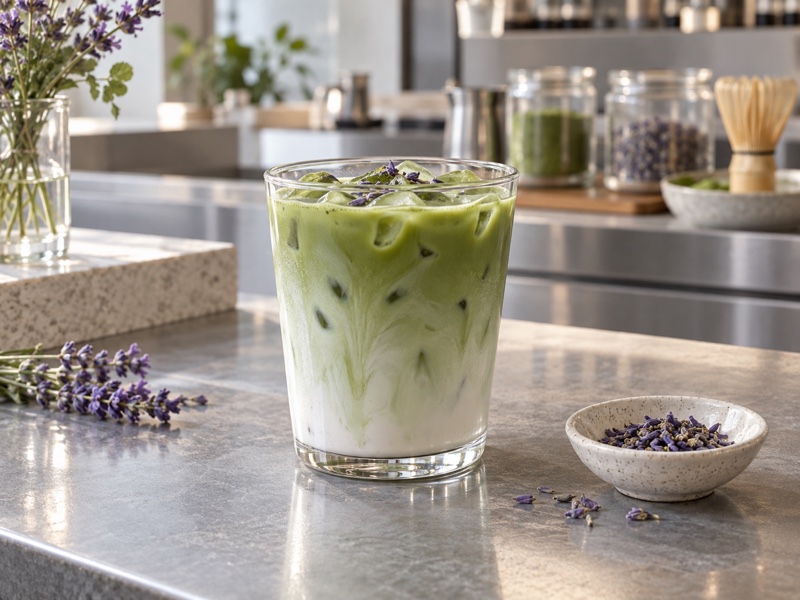
Lavender matcha needs a light hand. A café can spend good money on matcha and still serve a cup that tastes like scented soap if the floral syrup is too strong. The best version gives the customer green tea first and a quiet lavender aroma as the cup warms. The Iced Lavender Matcha Latte appearing in current search results shows the appeal of that pairing. For a menu launch, the harder work is controlling the lavender ingredient, measuring each addition, and making the drink taste the same in a rush as it did at the tasting table.
1. What does a balanced lavender matcha taste like?
A well-made cup still tastes of tea. Lavender adds a high, floral note that can make a milky matcha feel lighter, but it should not cover the vegetal flavor or linger as a harsh perfume. Ask a tasting panel to describe the first aroma, the mid-palate, and the aftertaste without telling them what is in the cup. If they say “floral” but cannot detect matcha after stirring, reduce the syrup or change the tea base. If they detect an unpleasant medicinal edge, check the lavender product and dose before adding more sugar.
The target depends on how the drink is sold. A seasonal iced latte can be sweeter and more decorative than a year-round tea service, but customers should still recognize the product they ordered. Draft a one-sentence sensory standard such as “milk-led and lightly floral, with a clear green tea finish.” It gives staff and buyers something to compare against. “Pretty purple-green drink” is a visual brief, not a flavor brief.
| Taste point | Desired observation | Signal to change the recipe |
|---|---|---|
| First aroma | Gentle flower over tea | Perfume dominates before sipping |
| First sip | Milk and matcha both present | Syrup tastes like candy |
| After stirring | Tea remains distinct | Only sweetness remains |
| Finish | Short, clean floral note | Bitter or medicinal linger |
2. Which lavender ingredient belongs in a drink?
The choice is wider than “lavender syrup or no syrup.” A café might use a commercial beverage syrup, an in-house infusion, a culinary lavender extract, or a preblended matcha mix. Each has a different concentration and ingredient statement. Food-grade suitability matters; fragrance oil intended for candles or skin products has no place at the bar. If making an infusion, identify the edible flower used and control its source. A photograph of purple flowers does not substitute for a food specification.
Read labels for added color, sweetener, preservatives, and allergens. If an ingredient is already sweet, its lavender dose and sugar dose are tied together. A very sweet syrup may force the café to choose between a sensible sweetness level and a noticeable floral note. An unsweetened infusion offers more control but adds preparation and holding work. Test the ingredient in the final milk-and-matcha drink. A syrup that smells elegant in its bottle can taste flat or sharp after dilution.
3. How should a café set a first trial dose?
Start with the approved plain iced matcha latte. Keep its powder, milk, water, and ice fixed. Add the lavender ingredient in a small, measured range. For a commercial syrup, a trial might compare 5 ml, 10 ml, and 15 ml in the same cup size. The right numbers depend on syrup concentration and cup volume; they are test points, not a ready-to-print recipe. Measure with a pump only after confirming that the pump dispenses the stated volume. Different bottles and pumps can make “one pump” a poor unit.
Taste the three cups blind. Choose the lowest addition that delivers the intended aroma after stirring. Then check whether sweetness has moved too high. A café that already sweetens its base should subtract the lavender syrup from the plain sweetener rather than stacking both. Note the matcha lot and the milk used during the trial. Changing to a weaker tea or sweeter oat drink later can make the approved syrup dose taste heavier.
| Trial | Floral syrup per cup | Other sweetener | Question |
|---|---|---|---|
| A | 5 ml | None | Can tasters identify lavender? |
| B | 10 ml | None | Is the finish still clean? |
| C | 15 ml | None | Does fragrance overtake tea? |
4. Which matcha handles a floral pairing?
Use a powder that stays recognizable through milk and the chosen lavender ingredient. A very delicate matcha may be pleasant whisked with water yet disappear in a flavored latte. An aggressively bitter powder can clash with a floral syrup. Compare candidates at the same gram dose in the finished cup. Evaluate the aftertaste; floral aromas can make rough tea notes seem sharper, especially as ice dilutes the drink.
Ask suppliers for a lot-linked sample and the information your business needs: origin, ingredient declaration, storage recommendation, pack size, and repeat supply. The word “premium” does little work in a recipe specification. Record the dose required to reach your sensory target and calculate powder cost per cup. If one powder costs more per kilogram but needs less in the drink, it may be the better commercial choice. Recheck the recipe when the supplier changes lots.
5. Does milk choice change the lavender note?
Yes. Dairy milk can make the cup round and familiar. Oat drinks may add sweetness or a cereal note; coconut can turn the combination toward a dessert profile; soy can bring body and a different finish. Those are tendencies, not promises about every product in a category. Compare the specific milks available to your café, at the same temperature and quantity. Taste both immediately and after a few minutes on ice.
Milk also changes the visual result. A strongly colored floral syrup may tint the milk, while a darker tea concentrate can leave distinct layers for a short time. Do not choose a milk solely for the photograph. If customers frequently request plant-based versions, select one that tastes good after stirring and state any surcharge clearly. Check allergens and cross-contact processes with the team responsible for the menu. A lavender ingredient can also have its own ingredient and labeling details, which need to be captured in the master recipe.
| Milk to test | What to watch | Practical decision |
|---|---|---|
| Dairy | Roundness and tea clarity | Standard recipe baseline |
| Oat | Added sweetness | Syrup reduction |
| Soy | Texture and finish | Plant-based option |
| Coconut | Coconut dominance | Separate dessert variant |
6. Should lavender matcha be hot or iced?
An iced format shows layers and keeps the initial aroma restrained. A hot format releases floral aroma faster and may expose a perfume-like note that seemed quiet in a cold trial. Treat the two as different drinks. Test hot and iced recipes separately, including different milk temperatures and tea preparation methods. Do not use the exact same syrup dose by default. A consumer may want one version in summer and the other in winter, but the sensory standard should survive each service style.
For iced service, whisk matcha with a measured amount of water so powder does not gather at the bottom. Add syrup to milk, or place it in a lower layer, according to the intended first sip. Stir one test cup fully; that is the flavor the customer eventually gets. For hot service, prepare tea and warm milk consistently, then evaluate aroma as the cup cools. A perfume-heavy finish often becomes more obvious when the cup is no longer piping hot.
7. How can staff prepare it without a fragile ritual?
Write a bar card with cup size, syrup volume, matcha grams, water grams, milk grams, ice weight or fill line, and pour order. Name the allowed lavender product. If staff can substitute another syrup without a trial, the recipe is not really standardized. Train with a scale during setup, then validate pumps and scoops against the scale if those tools are needed for speed. Have another shift make the drink without the developer nearby.
Keep garnish functional. A few edible lavender buds may suggest the flavor, but loose flowers can end up in a straw or make the drink look dusty. Check whether the garnish is safe and pleasant to consume. Some cafés will get a cleaner result with no flower garnish and a clear menu name. If the syrup has a purple tint, avoid promising a saturated purple layer; the actual drink may look soft gray or brown against green matcha. Photograph the approved cup in the takeaway vessel customers receive.
8. What holding and food-safety checks matter?
An in-house lavender infusion or syrup needs a documented preparation and holding method. Ingredient quality, boiling or steeping step, cooling, storage vessel, date marking, and cold-chain practices all affect whether staff can use it safely. Do not lift a shelf-life claim from a home recipe. Have the café’s food-safety lead set the rule for its jurisdiction and operation. A commercial syrup has its own directions after opening; read the actual label instead of assuming every bottle can sit on the counter indefinitely.
The matcha base also changes once hydrated. Dry powder stored in a closed pack and matcha whisked into water have different handling needs. Keep batches small enough to avoid stale flavor and uncertain holding. When testing a bottled version of lavender matcha, involve a qualified product developer; stability and microbial control cannot be inferred from a fresh café cup. A pretty layer after twenty minutes says little about a sealed product’s safety.
| Component | Record | Why it helps |
|---|---|---|
| Lavender ingredient | Brand, lot, opened date | Flavor and traceability |
| In-house syrup | Batch, process, approved hold | Safe repeatability |
| Matcha powder | Lot and opening date | Sensory comparison |
| Finished cup | Prep time and service time | Flavor at handoff |
9. How should a buyer calculate the cost per cup?
Use the approved formula, including the actual syrup and tea dose. Price out milk, ice, cup, lid, straw, garnish, and labor as well. A rare lavender ingredient can look cheap per bottle while costing heavily per serving if staff free-pour. Conversely, a low dose can make the flavor distinctive without materially changing the cup cost. Record waste from short-lived house syrup and slow seasonal sales; otherwise the margin estimate will look better than the cash result.
If a café wants a seasonal special, estimate likely sales before purchasing a case of syrup. For a chain, ask whether the ingredient can be distributed to all sites before the marketing date and whether a replacement lot tastes the same. A one-location pilot should track remakes and customer feedback, especially “too sweet” and “tastes like perfume.” The first complaint suggests a formula problem; the second can damage the whole matcha menu if staff keep serving it unchanged.
10. When is the recipe ready to launch?
Invite tasters who did not design the drink and include at least one person who normally orders plain tea. Serve unlabeled cups with different lavender doses. Ask them to describe the aroma and aftertaste, not merely to vote for a favorite. Then have staff prepare five cups from the bar card and check their volume and flavor. A launch-worthy recipe should survive a shift change, an alternate milk request, and a ten-minute hold without turning harsh or shapeless.
Review the menu words last. “Lavender matcha latte” is clear if the cup contains real matcha and a food-grade lavender ingredient. If the floral note comes from a flavored syrup, that is still a legitimate drink; do not imply an infusion of fresh flowers when none is used. Keep a retained powder sample and a photograph of the finished cup under normal bar light. Your next useful test is small: three syrup doses in the existing latte base, tasted after stirring. Let the lowest convincing dose win.
FAQs
Can dried lavender go straight into a latte? Use only culinary-grade material and a tested method. Loose buds can feel unpleasant in a drink; an infusion or approved syrup is easier to control.
Can lavender matcha be made without dairy? Yes. Test the exact plant-based milk with your tea and lavender ingredient, then verify the full recipe and service process for any claim.
Why does my drink taste soapy? The floral ingredient may be too concentrated or poor in the finished recipe. Lower its measured dose and taste again after stirring.
Does a purple color prove there is lavender in the drink? No. Color can come from other ingredients. Read the supplier’s declaration and describe the drink accurately.
Can I use the same formula for hot and iced cups? Test each format. Heat changes aroma, and ice changes dilution, so one dose may not suit both.