
“Roasted matcha” is a search term often used for finely ground roasted green tea, commonly sold as hojicha powder. The wording can confuse buyers because conventional matcha and roasted tea powder differ in color, flavor and production route. Hojicha Co.’s explanation of roasted matcha uses the term for its hojicha powder and describes the roast before grinding. A café or brand should specify the actual tea in its purchasing documents and menu copy, then test the powder in the intended drink or dessert.
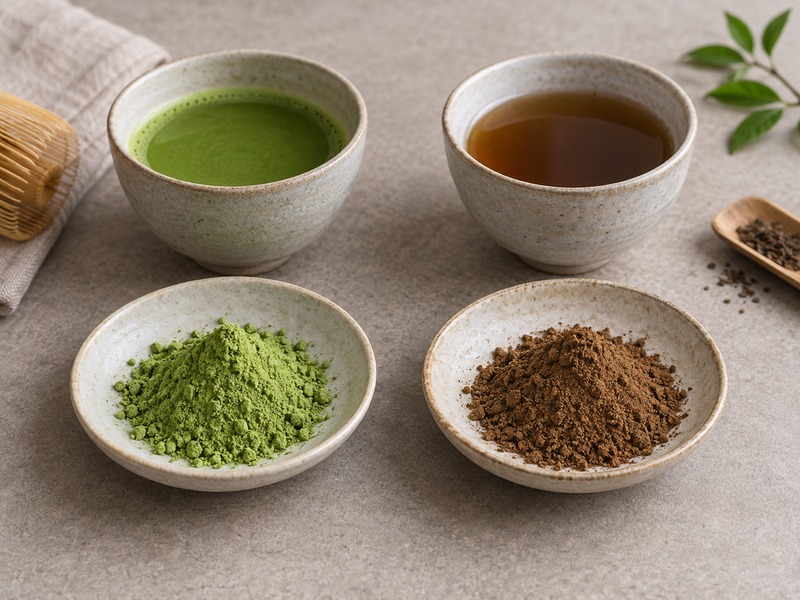
For: tea buyers, café operators, product developers and private-label teams. Decision: whether the desired product is green matcha, roasted tea powder or a blend, and how to describe it accurately.
1. What does “roasted matcha” mean on a supplier page?
Ask for the underlying tea
The phrase is a useful clue to consumer search behavior, but it is not a complete raw-material specification. A supplier may mean powder made from roasted green tea leaves, often called hojicha powder. Another product may blend roasted tea with green matcha. Ask what leaves are used, when roasting occurs, how the powder is ground and whether any ingredients are added. Record the supplier’s product name and the legal name proposed for the sale market. Do not infer process from a brown or green photograph alone.
Explain the distinction in copy. A buyer can use “roasted matcha” to help readers find the topic, then state plainly what the actual ingredient is. A menu that promises bright green matcha but serves a brown roasted-tea latte creates the wrong expectation. The most useful description names both the powder and its flavor: roasted, nutty or toasty where that is supported by tasting.
| Supplier description | Confirm | Customer expectation |
|---|---|---|
| Hojicha powder | Roasted tea, ground | Brown, toasted profile |
| Matcha | Actual matcha specification | Green, vegetal profile |
| Tea blend | Ingredients and proportions | Mixed flavor and color |
2. How does roasting change the intended flavor?
Taste against the product goal
Roasted tea powder often has toasted, nutty or cocoa-like notes rather than the grassy green character associated with matcha. The exact result depends on tea and roast. Prepare coded samples at equal measured doses in water, then in the planned milk or dessert base. Compare aroma, sweetness, bitterness and finish. A roasted powder may suit a chocolate dessert or warm latte where its brown color is coherent. A green matcha may work better when color and fresh tea notes are the selling point.
Avoid blanket claims. Do not promise that one powder is automatically smoother, healthier or lower in caffeine without product-specific evidence. Roast intensity can vary. A powder that tastes pleasant alone may become flat under a sweet oat drink, while a stronger roast could dominate a delicate cake. The use case should decide the selection.
3. Which color should the team design around?
Let the ingredient set the palette
Roasted tea powder is commonly brown, so a brown latte or cream should not be treated as a failed green matcha product. Build the menu photography and pack around the real ingredient. If a project needs a bright green dessert, use an appropriate green tea powder or test a blend deliberately. Adding a small amount of green powder solely to support a misleading name will not fix a mismatch between flavor and expectation.
Inspect the finished product. Milk, sugar, cocoa and bake color alter appearance. Photograph a standardized sample under fixed light at production and after the planned hold. In a transparent cup, observe settling and color rings. In a baked product, cut the crumb; the surface may brown for reasons unrelated to the tea. A visual standard belongs to the actual formula, not a supplier’s dry-powder photo.
| Application | Roasted powder appearance | Design implication |
|---|---|---|
| Milk latte | Light to deep brown | Toasted menu language |
| White chocolate | Tan or caramel shade | Avoid green expectation |
| Baked cake | Brown crumb | Use flavor-first cues |
4. How should the powder be dispersed?
Treat it as suspended tea
Finely ground roasted tea is still a powder. It may clump if poured dry into cold milk and can settle if a drink waits. Prepare a measured tea shot in a small amount of water, then combine it with the beverage base. Compare whisk, frother and shaker for clumps, foam and speed. Use the supplier’s preparation guidance as a starting point, not a universal production specification. A baked formula may use a dry preblend with flour, while a ganache may require a fat-compatible route.
Sample after holding. Taste the first and last sip of a drink at the expected customer interval. Look at the bottom of a clear cup. If sediment is heavy, check powder choice, dose and mixing before changing sweetness. In a production vessel, compare early and late fills. A smooth-looking top layer does not prove each portion received the same tea mass.
5. What dose creates a clear roasted-tea note?
Measure the finished formula
Build a small dose ladder in grams per serving for drinks or grams per kilogram of finished mix for food. Hold the base and process constant. Taste blind at the actual service temperature. The first detectable dose may still be too quiet for a menu that calls the drink roasted tea; a very high dose can become dry or overly smoky. Select a range that meets the agreed flavor and appearance, then cost it per sale unit.
Compare on equal terms. A green matcha and a roasted powder will not necessarily have the same optimal dose. If a supplier suggests a one-for-one recipe swap, treat that as a trial starting point rather than a guaranteed result. Recheck sweetness, fat and heat exposure. Record the chosen dose and acceptable sensory window so later lot changes can be judged consistently.
| Trial level | What to record | Decision |
|---|---|---|
| Low | Is roast identifiable? | Minimum useful dose |
| Middle | Balance and mouthfeel | Candidate formula |
| High | Dry or smoky finish | Upper boundary |
6. Which applications fit the roasted profile?
Match flavor to the base
Milk lattes, ice cream, chocolate, pastry cream and baked goods can all carry roasted tea, but each filters its flavor differently. Dairy fat can round a strong roast; cocoa can make the tea harder to distinguish; a plain cookie may display it clearly. Test the complete product at the intended sweetness and serving temperature. A chilled dessert can mute aroma that seems obvious in a hot saucepan. A baked item needs a tasting after baking and after its normal retail hold.
Choose one lead application. Trying to qualify a powder for every use with one tasting creates vague buying decisions. Start with the product that will consume the most tea or define the launch, then add other applications as separate trials. If the same powder works across formats, record distinct doses and processes rather than printing one general instruction.
7. What should a supplier specification include?
Ask for an identified ingredient
Request the product’s tea type, processing description, ingredient list, origin information appropriate to planned claims, lot traceability, pack size, storage guidance and required food-safety documents. If the product is a blend, ask what changes are permitted between lots and how those changes are communicated. A roast profile can shift even when the product name stays the same. Retain a reference sample and compare incoming lots in the finished application.
Use precise purchase language. A purchase order for “roasted matcha” alone leaves room for misunderstanding. Name the supplier SKU and agreed specification. If the brand intends to use “hojicha” or “roasted green tea powder” on pack, have the label and translation reviewed for the destination market. Marketing shorthand should not replace ingredient identity in the quality file.
| Document | Why the buyer needs it | Review point |
|---|---|---|
| Specification | Defines actual powder | Ingredient and process |
| Lot record | Supports traceability | Incoming acceptance |
| Storage guidance | Preserves flavor | Pack size and handling |
| Claim evidence | Supports label | Origin or certification |
8. How should the team test storage and shelf quality?
Observe the real package
Tea powder can change aroma with handling. Compare freshly opened powder and working-container powder prepared in the same recipe. Record pack opening date, seal condition, storage temperature and exposure to light or humidity. For a finished latte concentrate or dessert, run separate product-specific stability and safety tests. A supplier’s dry-powder date does not establish the shelf life of a milk drink.
Retaste after hold. Roast notes can seem inviting when fresh and flat after a long display. Photograph the finished product under fixed light and taste it at planned intervals. A brown color may hide visual changes that would be obvious in green matcha, so aroma and flavor checks are important. Define an end-of-sale standard rather than relying on color alone.
9. How should the cost comparison be made?
Price the accepted flavor
Compare roasted tea powders by the dose needed to achieve the sensory target in the chosen product. Include pack size, shipping, labor for mixing, rejected product and storage loss. A more expensive powder can be economical if it needs less per cup and arrives in a pack the café uses promptly. Conversely, a low price does little good if the roast varies between lots and forces menu remakes.
Plan a fallback. Ask suppliers about lead time, minimum order and change notice. Trial a backup powder before production depends on it. If the menu claims a regional origin, a substitute may require new copy and label review. Keep procurement, quality and marketing aligned on the ingredient’s actual identity rather than on the search phrase alone.
| Cost input | Measure | Why it matters |
|---|---|---|
| Tea dose | Grams per approved serving | Converts price into cup cost |
| Pack use | Days after opening | Shows avoidable waste |
| Remakes | Failed cups per service | Captures inconsistency |
| Label change | New pack or menu work | Cost of substitution |
Make two small cost cases: the primary powder at its accepted dose and the backup at its own accepted dose. Do not assume equal grams provide equal flavor. Include discarded powder from packs that exceed the business’s handling period. This simple model gives purchasing a usable answer when a higher-priced powder is proposed and keeps a seemingly cheap substitution from quietly changing the menu’s taste or description.
10. What test supports an honest launch?
Run a named-product pilot
Prepare the final latte, dessert or bakery item with the selected tea, equipment and pack under ordinary production conditions. Have several staff members follow the written method. Compare first and last units for dose, color, aroma and taste. Present samples to tasters without telling them whether the ingredient is matcha or hojicha; record the descriptors they use. If people expect green matcha and receive toasted brown tea, change the wording before launch.
Approve the details. Record the exact supplier SKU, ingredient name, dose, preparation and release checks. Retest when tea lot, milk base or process changes. The useful next step is a small menu trial with accurate “roasted tea” language and the actual sale cup. That resolves both a product question and a communication question.
Reference: What is Roasted Matcha? is the SERP article that describes a supplier’s use of the term for hojicha powder. Its terminology is attributed here rather than treated as a universal product definition.
FAQ
Q1: Is roasted matcha always conventional green matcha? No. The term can refer to ground roasted green tea such as hojicha powder; confirm the actual ingredient.
Q2: Why is roasted matcha brown? Roasting can create a brown powder and toasted flavor; judge the supplied product against its specification.
Q3: Can hojicha powder replace matcha one for one? Treat a suggested swap as a trial starting point, then adjust dose, sweetness and process.
Q4: Is a roasted tea latte caffeine-free? Do not make that claim without product-specific evidence and applicable label review.
Q5: What name should appear on a purchase order? Use the exact supplier SKU and agreed ingredient specification, with “roasted matcha” only as an additional search or marketing term if appropriate.