
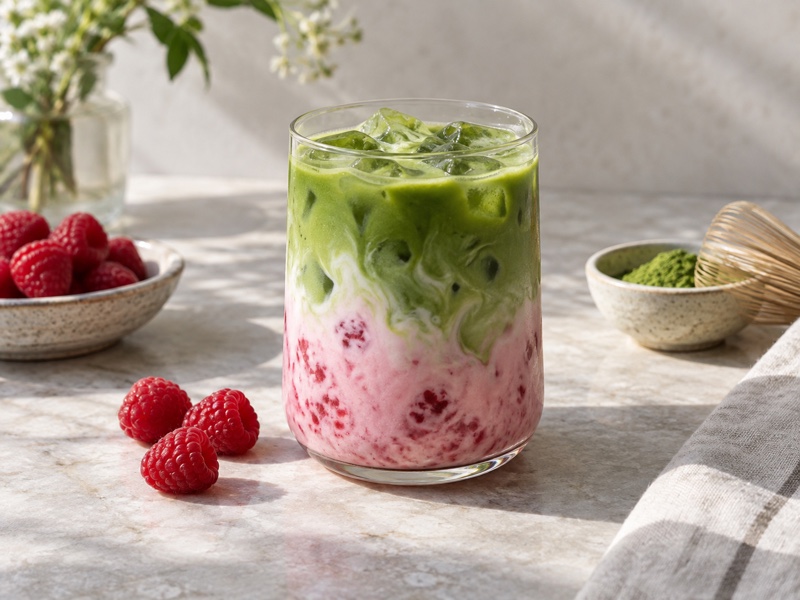
Raspberry matcha combines tart fruit, powdered green tea, and often milk in one striking glass. The colors can sell the first order, but an acidic fruit base can make milk split or push tea bitterness too far. Cafés need a recipe that tastes balanced after the layers mix and still meets its cup margin. The iced raspberry matcha latte from The Healthful Ideas shows the consumer direction. These ten tests focus on fruit format, tea dose, seeds, stability, service, and actual cost.
1. What should raspberry matcha taste like after stirring?
Decide whether raspberry should lead with a bright tart note, whether matcha should lead, or whether the cup should feel like a sweet fruit latte. The answer affects syrup, tea, and milk choices. Evaluate both the first sip from a layered glass and a fully mixed sample. Customers often stir, walk, or drink through a straw that reaches the fruit base first. The finished beverage must work under those ordinary behaviors. A vivid photograph cannot compensate for a final sip that tastes of sour fruit residue and tea sediment.
Set a simple sensory brief
Ask panelists to score fruit identity, tea identity, sweetness, acidity, texture, and finish. Give each person a complete cup rather than a tasting spoon. A syrup can taste excellent in a small sip but become cloying halfway through. A puree can feel authentic but leave seeds in the straw. Record whether the drink still tastes balanced after ice begins to melt. Use a plain matcha latte as a control to show what the raspberry addition contributes.
| Sensory point | Desired result | Typical failure |
|---|---|---|
| Fruit | Recognizable raspberry | Generic red sweetness |
| Tea | Clear matcha note | Buried by fruit |
| Texture | Drinkable through straw | Seeds or pulp plugs |
| Finish | Invites another sip | Acid plus bitter tail |
2. Which fruit format should the café buy?
Compare fresh berries, frozen berries, puree, coulis, and syrup on a cost-per-cup basis. Fresh fruit can support a premium story but varies with season and creates prep waste. Frozen fruit can smooth supply variation but still requires processing. Puree gives stronger fruit body and natural pulp; syrup is fast and usually more uniform. Read the ingredient declaration for sweeteners, colors, acids, and preservatives. A red syrup with little real raspberry is a different product from a puree-led drink, so menu language must match.
Run the same cup with each option
Use one matcha, milk, ice level, and cup. Adjust fruit dose until each candidate reaches a comparable raspberry intensity, then compare sweetness and cost. This is fairer than putting the same mass of syrup and puree in two cups. Record how much of each ingredient remains unusable after opening. A puree carton that must be discarded before it is finished may cost more per saleable drink than its invoice suggests. Test the actual storage and dispensing method at the bar.
| Fruit format | Operational benefit | Test before buying |
|---|---|---|
| Fresh berries | Visible fruit cue | Seasonality, prep, waste |
| Frozen berries | Broader availability | Thaw method and texture |
| Puree | Strong fruit body | Seeds, acidity, opened life |
| Syrup | Fast dosing | Real fruit content and sweetness |
3. How much raspberry acidity can the milk tolerate?
Acidic fruit and milk can form visible curds or a rough mouthfeel, especially when a concentrated fruit layer contacts milk directly. Test the intended fruit product with each milk option. Build the cup, stir it, and inspect immediately and after a normal pickup delay. Do not judge only the neatly separated layers. A product that looks stable for a photograph may split when a straw mixes it. Different plant-based drinks can also separate or taste chalky under acidity.
Change assembly before changing ingredients
A measured syrup or puree dilution, a different pour order, or a milk formulated for acidic drinks may improve performance. Test one change at a time. If the formula needs so much sweetener to hide tartness that raspberry becomes candy-like, choose a different fruit source or revise the concept. For a packaged latte, acidity and dairy compatibility require a formal process and shelf-life study. A café’s five-minute visual check cannot establish safety or long-term stability.
4. Which matcha grade remains audible beside berries?
Raspberry can dominate delicate tea or sharpen a harsh one. Test several powders in the exact fruit and milk matrix. Keep tea dose, cup, ice, and fruit source fixed while comparing. Judge the fully mixed cup and the last sip, where powder may collect. A dark green layer is not proof of good tea flavor. A high dose can create a dry finish that combines badly with berry acidity. Choose the lowest dose that delivers a recognizable, pleasant matcha note after normal dilution.
Ask for relevant samples
Matcha Village’s bulk wholesale matcha page is a starting point for requesting candidate grades, specifications, and supply information. Tie any approved sample to its lot. Test replacement lots against the winning full drink, not against dry color alone. If the company needs a certified or tested ingredient for a market, verify documents for the particular product and shipment. A company profile cannot replace a lot-specific purchasing review.
| Tea trial | Early sip | Mixed cup | Final sip |
|---|---|---|---|
| Low dose | Is tea present? | Is fruit balanced? | Any sediment? |
| Mid dose | Tea and fruit together? | Pleasant finish? | Any roughness? |
| High dose | Bitter edge? | Milk still readable? | Powder concentration? |
5. Do seeds and pulp belong in the drink?
Raspberry seeds can signal real fruit but can also block a narrow straw and leave a gritty bottom. Compare a strained puree and an unstrained version at the same fruit intensity. Taste both without warning panelists which one is which. If straining improves the drink, measure the yield loss and labor. A smoothie-style cup may tolerate pulp that an iced latte cannot. The package and straw diameter must match the chosen texture. A garnish of whole berries does not solve a gritty puree in the beverage itself.
Standardize fruit preparation
If a café makes its own raspberry base, specify thawing, blending, straining, portioning, and safe holding. Record actual yield from fruit purchased to usable base. If a supplier provides a finished puree, test several lots for acid and seed level. Do not assume the same red color means the same flavor. Use the site’s food-safety procedure for cut or thawed fruit, and discard according to validated limits. A beautiful batch made with peak-season berries may not describe year-round supply.
6. How should layers be built and served?
A red raspberry base, pale milk, and green tea top layer create a strong visual. Density and pour speed control the boundaries, while ice shape changes the path each liquid takes. Use fixed masses and a written pour order. Have two baristas make multiple cups and compare them at handoff. If the layers collapse quickly, decide whether the menu photo should show a mixed drink instead. A layer can also make the first sip too sweet or too sour; test with the actual straw position and a stirred control.
Check the travel version
Lids, walking, and delivery vibration mix the cup. Test a realistic pickup delay and short transport, then open and taste. If the drink only works when its layers remain pristine, it may need dine-in service or a redesigned fruit base. Some cafés may offer the fruit component on the side, but that adds packaging and asks the customer to finish the recipe. Cost and test that choice rather than treating it as a free fix.
| Service moment | Appearance check | Taste check |
|---|---|---|
| At handoff | Clear layers or intended blend | First sip balanced? |
| After wait | Streaking and ice melt | Tea still present? |
| After stirring | Milk stability | Fruit-tea harmony? |
| After travel | Leaks and sediment | Acceptable final sip? |
7. How sweet should the raspberry component be?
Sweetness balances both berry acid and tea bitterness, but excess syrup can make the cup heavy. Start with the fruit candidate’s own sugar contribution, then create measured low, medium, and high sweetener versions. Keep tea and milk fixed. Ask panelists which they would finish, not which tastes best in a single sip. If using sweetened milk or a premixed matcha latte powder, account for that sugar too. A little sweetness can clarify fruit, while too much conceals the quality of both fruit and tea.
Check nutrition wording
If the drink is packaged or promoted with a sugar claim, review the entire formula. The FDA’s explanation of nutrient-content claims is relevant in the US; other markets use their own rules. “Made with real fruit” also requires an ingredient and naming review. Menu descriptions should say what the cup contains without suggesting unsupported health benefits. A syrup substitution can change both taste and the accuracy of the description.
8. What safety and allergen checks apply?
Milk and some plant bases introduce allergens. The FDA’s food-allergy guidance explains US major-allergen labeling and cross-contact issues. Keep a current ingredient matrix for dairy, alternative milks, matcha premixes, and fruit syrups. Do not assume a drink is dairy-free when a topping or sweetened tea mix contains milk. For a café, train staff on the actual cleaning and utensil procedure between drinks.
Fruit prep and refrigerated components need documented handling. The FDA Food Code is a US model for retail temperature controls, while local law and the site’s own plan decide specifics. A packaged raspberry matcha latte requires manufacturing validation, microbiological review, and real-time shelf-life work. Acid fruit mixed with milk makes that especially important. A café build card cannot serve as a processing specification for a bottled product.
9. What is the true cost per saleable cup?
Weigh the tea, fruit base, milk, ice, and garnish used in a standard cup. Add cup and lid, prep labor, fruit yield loss, opened-container waste, and remakes. If a puree is strained, use the post-straining yield in cost calculations. If fresh berries decorate every cup, include their seasonal price and damaged-fruit loss. Compare contribution margin at the proposed menu price against the plain matcha latte it might replace. A visually dramatic variant should earn its extra ingredients and service time.
Audit actual pours
Watch staff make ten drinks without coaching. Weigh fruit base and matcha concentrate before and after the run. Pumps and squeeze bottles can vary, and a generous berry pour may create both sourness and margin loss. A measured depositor or calibrated pump can improve consistency. If a complex layered pour slows peak service, time it and include the effect in menu planning. Calculate with saleable cups, not ideal formula yield.
| Cost input | Use actual yield from | Watch for |
|---|---|---|
| Fruit | Prepared or strained base | Seed and pulp discard |
| Tea | Weighed concentrate dose | Overpour for stronger color |
| Milk | Finished-cup volume | Ice displacement |
| Service | Ten-cup timing and remakes | Slow layered pour |
10. What should be fixed for launch?
Approve the fruit format and source, tea grade and lot, milk options, measured doses, ice, cup, straw, pour order, and topping. Include a photograph of the acceptable fresh cup and a note on how it should taste after stirring. Set a service or pickup quality window based on the actual trial. Keep allergens and menu wording tied to the same recipe version. If a fruit or tea supplier changes, retest the mixed cup and update the cost sheet before allowing the substitution.
A small chain pilot should include a store that did not develop the drink. Give its staff only the build card and normal equipment, then inspect their cups. If they cannot reproduce the balance without a development chef present, simplify the process. A raspberry matcha that tastes good after mixing and a short wait has a stronger chance of repeat orders than one built only for a launch photograph.
FAQ
Q1: Is puree better than syrup? Puree can give fuller fruit flavor, while syrup is easier to dose. Compare cost, seeds, acidity, and the complete cup.
Q2: Why does the milk curdle? Concentrated fruit acid can destabilize it. Test fruit source, dose, milk, and pour order.
Q3: Can the drink be served layered? Yes, if the first sip and stirred cup both taste balanced and staff can reproduce the look.
Q4: Should raspberries be strained? Let the intended straw and texture target decide; measure straining yield and labor.
Q5: Can a café bottle the drink for retail? Only after a separate validated process, package, label, and shelf-life program.
Start by comparing fruit formats in the same tea and milk recipe. Once the fully mixed drink tastes right, test the visual build, service delay, and true cup cost. That sequence turns a good-looking raspberry matcha into a repeatable menu item.