
Matcha latte tools have to disperse powder, prepare milk and get a consistent drink across a busy counter. A kit that looks elegant in a kitchen may add needless steps to a café line. Map the drink first, then trial tools against your own recipe, milk choices and cleaning schedule. Breville Shop’s iced-latte article offers a home preparation reference; the checks below address commercial service.
Contents
- 1. Which drink format should the tools serve?
- 2. Where should powder be measured and sifted?
- 3. Which tool makes a consistent matcha base?
- 4. How should hot and cold workflows differ?
- 5. What milk-texturing equipment is required?
- 6. Which vessels and strainers fit the station?
- 7. How should ice and drink assembly be tested?
- 8. Can staff maintain speed without cutting steps?
- 9. What cleaning and spare-parts plan is needed?
- 10. When is a latte-tool purchase ready?
1. Which drink format should the tools serve?
Begin with the menu, not a gadget
An iced latte, a hot latte and a bottled milk drink are different jobs. Decide whether staff will whisk a small matcha base and add milk, shake the entire drink, or mix a prepared concentrate into a cup. Write the cup size, matcha dose, milk options and service temperature for each SKU. The tool list follows those decisions. One handheld frother cannot be assumed to work equally well in every vessel or batch size.
Run a timed recipe walk-through. Watch where the barista reaches for powder, water, milk, ice and cups. Note whether the person has both hands free, whether equipment must be shared with coffee service and where a finished drink can wait. Distinguish a tool that affects cup quality from one that only changes appearance. If two formats use the same powder, test both before standardizing equipment. The most useful matcha latte tools reduce variation without making the station harder to reset between orders.
A second planning check is consistency across ingredients. If the menu uses a sweetened blend for one drink and pure matcha for another, label their containers clearly and trial the chosen tools with both. A tool that disperses a formulated powder quickly may leave clumps with the pure tea, or vice versa. Keep those findings attached to each recipe rather than writing one general equipment rule. Staff should see the correct powder and tool combination on their station card before service begins.
2. Where should powder be measured and sifted?
Control the dose before mixing
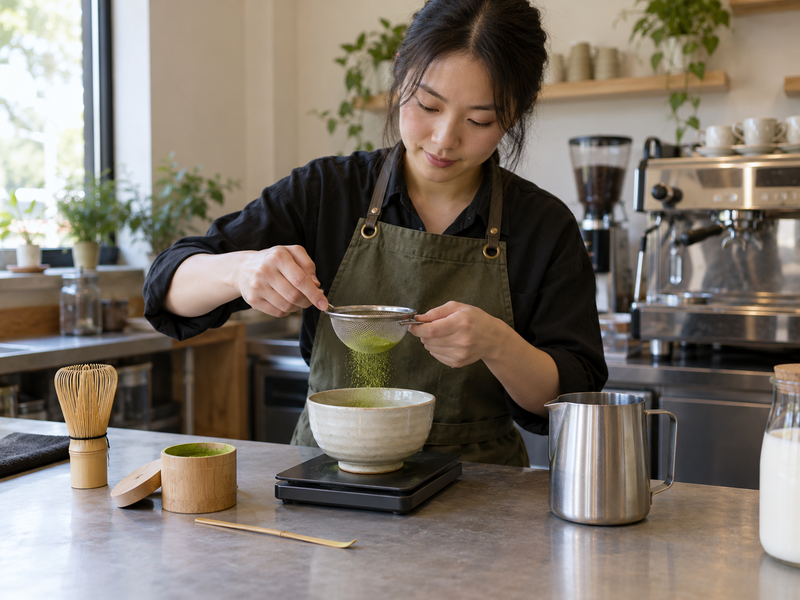
A staff member can produce different strengths with identical-looking scoops. Use a scale during recipe development and decide how production staff will repeat the approved dose. Pre-portioned cups or a calibrated dispenser may suit high volume; a counter scale may suit a small menu. Test powder loss during transfer, because fine matcha can cling to a scoop, mesh or container. Keep the product code and lot visible at the station.
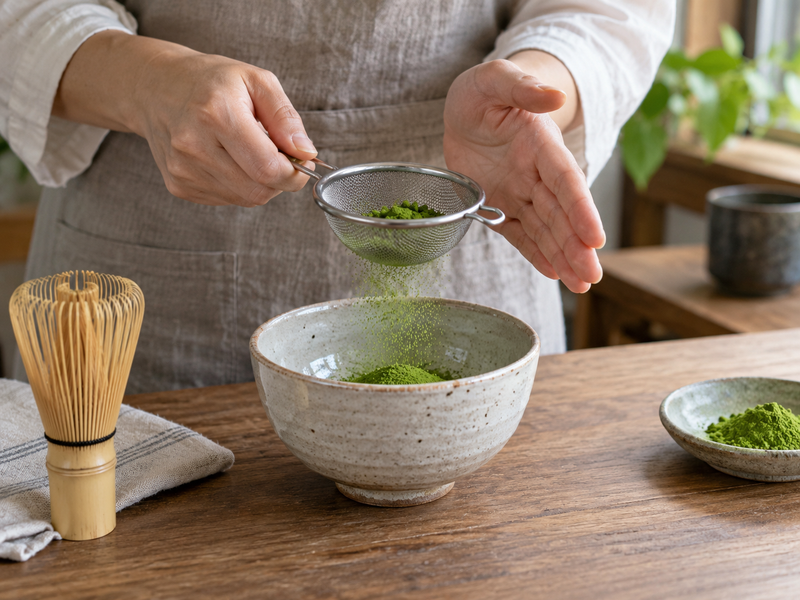
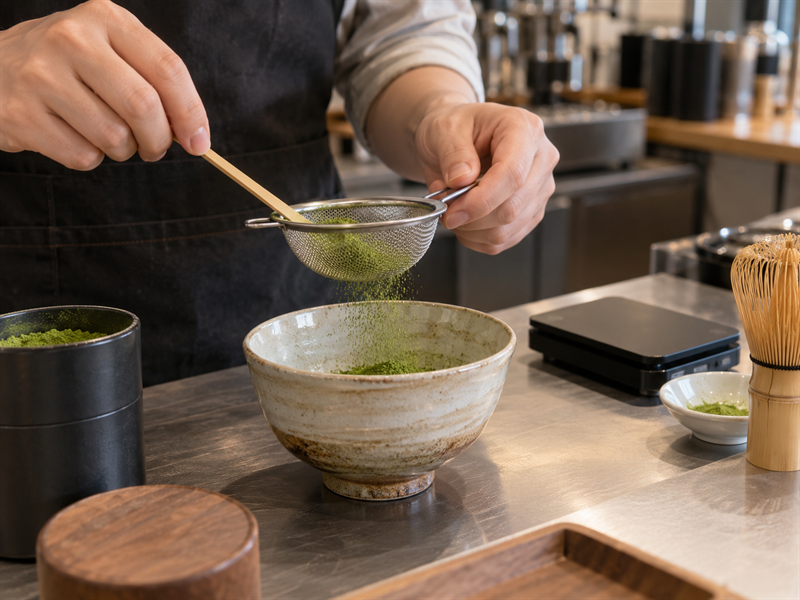
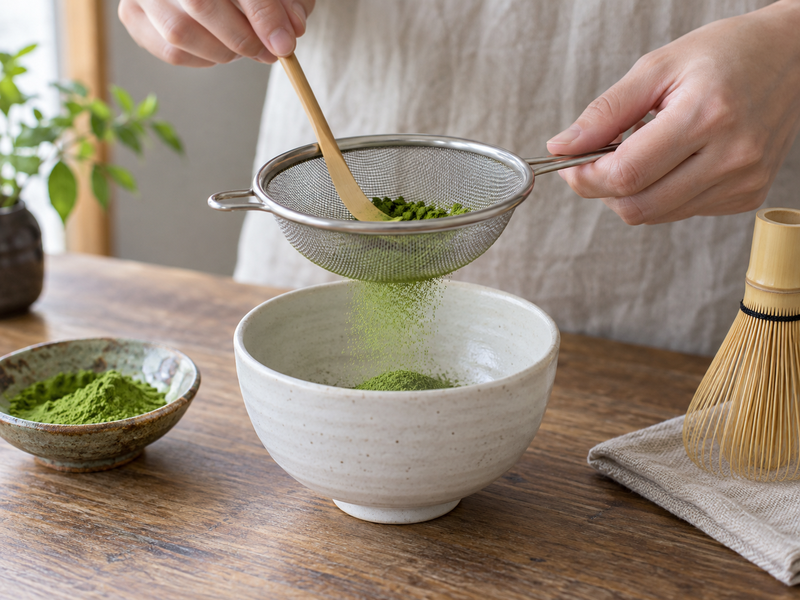
Treat sifting as a trial step. Ippodo’s matcha sieve is used to loosen powder before preparation. For your latte, compare equal doses with and without sifting in the actual mixing method. Record clumps in the finished drink, powder left on the mesh and seconds added per serving. If a powered mixer already disperses the powder well, a separate sieve may add work without a measurable benefit. If it helps, choose one that fits the receiving vessel and can be cleaned between tasks.
| Dosing option | Trial question | Operational risk |
|---|---|---|
| Scoop | How variable is mass? | Inconsistent strength |
| Scale | Can staff use it at rush pace? | Queue delay |
| Pre-portioned dose | Does pack-out stay accurate? | Extra packaging |
3. Which tool makes a consistent matcha base?
Compare preparation in the same cup
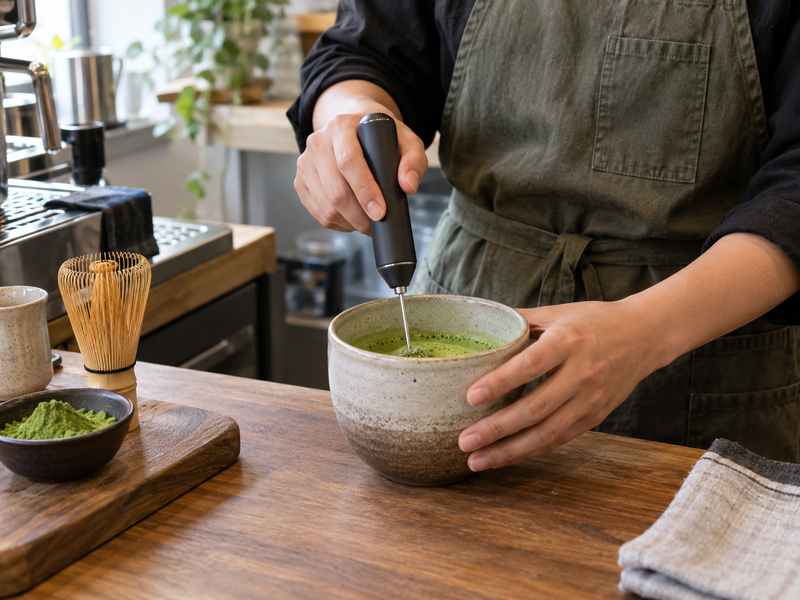
A bamboo whisk, resin whisk, small frother or purpose-built mixer can disperse matcha in a small volume of water. Test candidates using the same powder lot, water amount and operator. Record visible lumps, surface foam, sediment after standing and flavor once milk is added. Choose the device that works with the vessel you already plan to use. A great result in a wide bowl may not translate to a narrow pitcher.
Respect each maker’s limits. Ippodo’s bamboo-whisk care page says its chasen is used with matcha and water, with milk added afterward for lattes. Other tools may be designed for heated milk, but verify their instructions before use. Try the method with two operators and more than one drink in sequence. Observe fatigue, splashing and how much base remains on the vessel walls. The goal is a reproducible concentrate, not a dramatic foam photograph.
4. How should hot and cold workflows differ?
Separate temperature decisions
An iced drink may use cool water for its matcha base; a hot drink may use warmed water and heated milk. Each path needs equipment suitable for its liquid and container. Avoid taking a hot-drink method and pouring it over ice without checking dilution. Define when powder is dispersed, when milk enters and how long the drink stands before service. That sequence matters as much as the mixer brand.
Test the served drink, not only the concentrate. For iced service, compare color and clumps after ice has partially melted. For hot service, check whether milk texture survives combining and whether staff can handle vessels comfortably. If you pre-mix a base for a rush period, set a hold-time trial under your own food-safety procedures instead of assuming a universal safe window. The bar should use one written process for each format, with a clear handoff between preparation and final assembly. Tool selection becomes easier once those stages are fixed.
| Format | Mix stage | Check after assembly |
|---|---|---|
| Iced | Powder and cool liquid | Dilution and visible clumps |
| Hot | Powder and suitable water | Texture after milk |
| Batch base | Controlled preparation | Hold and trace record |
5. What milk-texturing equipment is required?
Choose for the intended finish
Some menus need a smooth hot latte with textured milk; others need a cold drink assembled without foam. A steam wand, automatic frother or simple measuring pitcher serves a different job. Test equipment with the dairy and plant-based milks your menu actually lists. The same setting may not produce the same texture in every base, and supplier demonstrations often use one favorable milk.
Measure the cost of switching. If the coffee station shares a steam wand, observe the cleaning and reset between drink types under your own allergen-control procedure. If a separate frother is proposed, check capacity, cycle time, noise and where used parts are washed. Ask whether the manufacturer permits the intended liquid and service temperature. For cold lattes, a measuring pitcher and mixing vessel may be enough; buying a steamer for a visual effect can crowd the counter. Staff should be able to prepare each milk option without guessing at a hidden setting.
6. Which vessels and strainers fit the station?
Test the physical transfer
A matcha base often moves from a bowl or pitcher into a serving cup. Compare spouts, handle clearance and the amount left behind after pouring. If a sieve is used, check that it sits securely over the chosen vessel. A large bowl may offer whisking room but require two hands to pour; a narrow pitcher may pour cleanly yet restrict a bamboo whisk. Match tool dimensions as a system.
Observe one complete service cycle. Place every vessel where it will live, then have a barista prepare, pour, rinse and reset. Watch for drips on the counter and powder trapped in corners. A vessel that is awkward to clean can cost more time than it saves during mixing. Request material and care instructions for the exact item, especially when it contacts hot liquid or enters a commercial dishwasher. Record the results alongside drink quality rather than selecting the most attractive piece from a catalogue.
| Vessel feature | Trial | Decision signal |
|---|---|---|
| Opening | Whisk clearance | No wall strikes |
| Spout | Pour into final cup | Low drips |
| Interior | Wash after use | No trapped powder |
7. How should ice and drink assembly be tested?
Check what customers actually receive
Ice quantity affects cup volume, drink strength and the appearance of layered lattes. Set a repeatable ice fill method and test it with the final cup. Add milk and matcha in the intended order, then observe whether the color and flavor remain appealing after a normal handoff. A drink made for photography may be stirred immediately by the customer; make sure it still tastes balanced.
Use a fixed assembly card. Record the powder dose, liquid volumes, cup, ice fill and order of pouring. Try the recipe with multiple staff members and compare finished weight or fill level. Note spills, foam collapse and whether the customer needs a straw or stirrer to combine layers. If a shaker is used for the whole drink, confirm that its capacity leaves room for agitation. For a branded cup, check that the design does not hide the fill line staff need. These are practical trial measures, not universal rules about how every matcha latte must look.
8. Can staff maintain speed without cutting steps?
Trial the peak-period version
A tool may appear efficient when one drink is made in isolation, then create a bottleneck when five orders arrive together. Time a small simulated queue with your approved recipe. Count walks to storage, shared-equipment waits and cleaning stops. Include a less experienced barista. If the method requires an expert wrist movement, decide how training will make it repeatable or select another tool.
Keep quality checks in the timed trial. Speed is useful only if finished drinks remain within your sensory target and portion range. Compare drinks from the start and end of the sequence. Watch for dose shortcuts, incomplete mixing and milk texture drift. Try a layout change before buying a faster device; moving a scale and powder closer to the mixing point can be enough. If a machine is proposed, confirm its actual throughput with your recipe and cleaning cycle rather than its advertised no-load speed.
| Bottleneck | Observation | Possible adjustment |
|---|---|---|
| Dosing | Waiting for scale | Pre-portion approved dose |
| Mixing | Shared tool queue | Duplicate small tool |
| Cleaning | Slow reset | Change station layout |
9. What cleaning and spare-parts plan is needed?
Include the reset in tool cost
Matcha powder can cling to mesh, whisks and tight corners. Milk adds a different cleaning requirement. Ask for the maker’s care instructions for each proposed item and compare them with your venue’s cleaning rules. Test how long staff need to rinse, wash, dry and store equipment after a realistic run. If a part cannot be reached or replaced, note that before buying multiple units.
Plan for ordinary failures. Keep spare whisks, gaskets, batteries or compatible chargers where the selected tool requires them. Check whether a broken part can be ordered without replacing the entire device. Record who inspects tools before service and what condition takes one out of use. For a bamboo whisk, use the manufacturer’s guidance on drying and damaged tines. For powered equipment, follow the maker’s instructions on liquid exposure and maintenance. Total operating cost includes downtime and cleaning labor, not only invoice price.
10. When is a latte-tool purchase ready?
Approve a station, not a box
The purchase file should identify each tool, its use, the approved drink method and a replacement source. Include product samples or specifications, staff trial results and care instructions. If a supplier offers a kit, check every component against the recipe; a bundled scoop does not fix an unsuitable mixing vessel. A vendor’s demonstration with another powder or milk is useful context, not approval evidence for your menu.
Document the change gate. If matcha grade, cup size or milk supplier changes, decide whether the tool trial must be repeated. Matcha Village’s company materials describe product selection support and matcha blends; request current powder specifications and samples when pairing an ingredient with your station. Do not infer that it supplies every accessory or a proven latte recipe. A sound order lists quantities by site, spare parts and a receiving inspection. The operator should be able to reproduce the chosen drink before the purchasing team commits to rollout.
| Approval item | Evidence | Owner |
|---|---|---|
| Drink quality | Repeatable sensory trial | Product team |
| Station speed | Timed multi-order run | Operations |
| Equipment | Care and parts plan | Procurement |
Before rollout, make one drink with a newly opened matcha pack and another with the pack handled under your normal daily routine. This isolates whether a tool appears effective only with a favorable sample. Keep the same milk and recipe in both trials. If cup quality drifts, investigate powder handling and dose before buying a stronger mixer. The tool purchase should address the actual cause.
FAQ
Q1. Are traditional whisks required for matcha lattes? No. Compare the approved drink using tools suitable for the vessel and liquid.
Q2. Should matcha be sifted before every latte? Trial both methods and keep the step if it improves your result reliably.
Q3. Can one frother handle all milk choices? Test each listed base and follow the equipment maker’s instructions.
Q4. What should a chain standardize? Dose, preparation method, cup, milk options, cleaning and replacement parts.
Q5. Which metric matters beyond service time? Check drink consistency and cleaning time across a short queue.
Send suppliers your actual latte recipes and station dimensions, then trial candidate tools through several consecutive orders. Approve the combination that makes a repeatable drink staff can clean and reset. A simpler station often gives the customer a better cup than a crowded display of equipment.