
Pumpkin spice matcha can be an appealing fall special, but a seasonal name does not tell a cafe how the drink should taste or how staff should make it. A strong spice base can erase the tea; a light one may taste like a standard matcha latte with a new label. Start with an intentional flavor target, then test the drink hot and iced using the equipment, milk and cup your stores actually use. The reference home recipe provides one combination of pumpkin, spice and tea. This guide addresses the decisions a foodservice team must make before selling that combination repeatedly.
Contents
- 1. What should pumpkin spice matcha taste like?
- 2. Which matcha holds up to spice and milk?
- 3. What belongs in the pumpkin-spice base?
- 4. How should the tea and spice be mixed?
- 5. What changes between hot and iced service?
- 6. How can sweetness be controlled?
- 7. How should the recipe be tested at service speed?
- 8. What do ingredient and allergen reviews cover?
- 9. How should buyers compare supplier samples?
- 10. When is the seasonal drink ready to launch?
1. What should pumpkin spice matcha taste like?
Write a flavor brief that names the tea
Decide whether the drink is primarily matcha with a warm-spice finish or a dessert-style pumpkin latte with tea in the background. Either can work, but the menu name and price should set the correct expectation. Taste the drink without a topping first. If the base needs whipped cream or a thick cold foam to feel complete, the core formula may need work. List the intended notes in order: tea, pumpkin, cinnamon, ginger, milk sweetness and aftertaste. That gives tasters a common language when they compare trials.
Use a standard cup and serving temperature in the tasting. Cold drinks can seem less aromatic than hot ones, and melted ice changes sweetness and matcha strength. Ask a person outside the development team to taste blind; the team that mixed the drink may unconsciously fill in the promised pumpkin flavor. A short flavor brief should also state what the drink must avoid, such as gritty spice, overly dark matcha bitterness or a syrupy finish. Keep the brief with the recipe version so a later supplier change can be judged against the same target.
2. Which matcha holds up to spice and milk?
Test powder in the final drink, not only in water
Ask matcha suppliers for a grade intended for milk-based drinks and request a lot-linked sample. Mix each candidate at the same starting dose and compare its flavor under the pumpkin-spice base. A powder that tastes elegant as plain tea may disappear under cinnamon and milk. Another may have enough strength at a lower dose to improve the cost per cup. Review dispersion as well as taste: clumps are harder to spot in a dark spice syrup and can appear as bitter spots in the finished drink. Use the same water, cup and mixing method for every candidate.
Do not approve a powder because the dry sample looks bright or because a supplier calls it ceremonial. Those details may be relevant to positioning, but they do not answer the service question. Check the hot and iced drink after normal waiting time. Some tea notes fade as the drink cools; a chilled trial may expose harshness that was hidden by warmth. A second lot is valuable before a multi-site commitment. If it performs differently, discuss the specification and source with the supplier rather than quietly increasing syrup to cover the change.
| Matcha decision | Trial evidence | Buyer question |
|---|---|---|
| Tea presence | Taste with full spice base | Which grade is proposed? |
| Dispersion | No dry green spots | What preparation method is recommended? |
| Repeatability | Second-lot comparison | How are changes disclosed? |
| Economics | Powder dose per accepted cup | What is landed cost? |
3. What belongs in the pumpkin-spice base?
Separate pumpkin, spices and sweetener in the trial
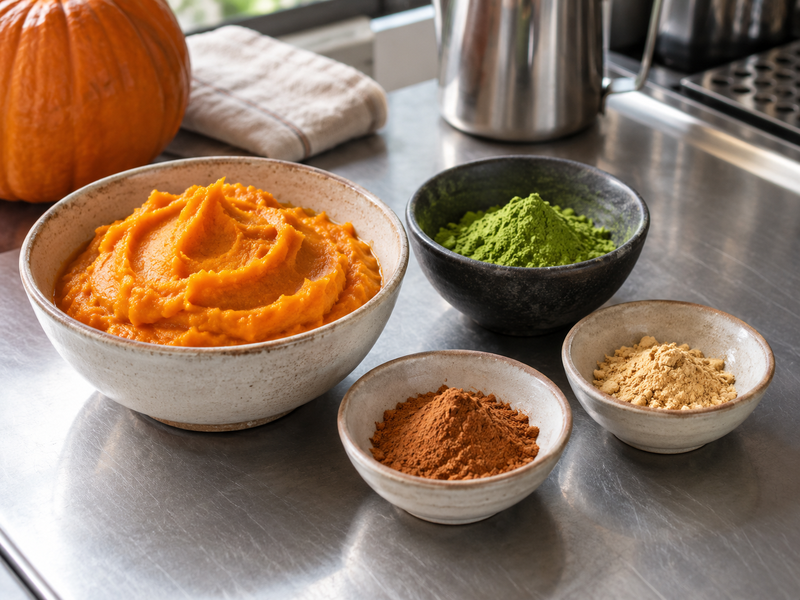
“Pumpkin spice” often refers to a spice blend rather than a large quantity of pumpkin. A cafe should decide whether its drink contains pumpkin puree, a flavored syrup, ground spice or a combination. Each option affects mouthfeel, sweetness, storage and what the menu can accurately claim. Start with a small set of trial bases and label them by ingredients, not by a marketing name. Compare how much actual pumpkin flavor reaches the finished cup. Ground spice can settle or create grit; puree can make the texture heavier. A syrup may be easier to portion but can bring more sweetness than intended.
Review every purchased base’s ingredient list and allergen information. A home recipe can be changed at the kitchen counter; a commercial menu needs a controlled formula and a supply plan. If your stores make a base in house, document batch size, mixing method and approved holding procedure. If they buy a ready-made syrup, ask whether the proposed product and its flavor remain available for the full season. Do not copy health claims from a recipe page into menu copy. The drink can stand on flavor and preparation quality without promising an effect from cinnamon, pumpkin or matcha.
4. How should the tea and spice be mixed?
Avoid the dry-powder shortcut
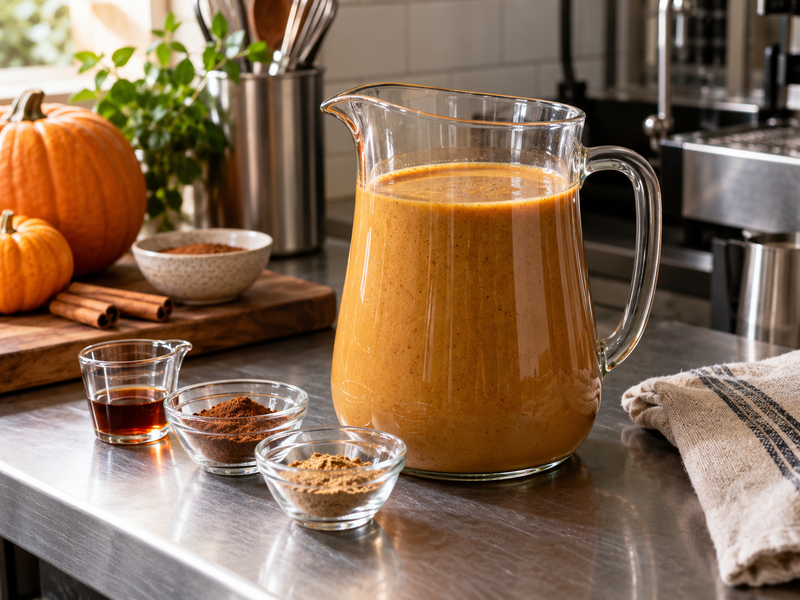
Whisk matcha into a measured amount of water or other approved liquid until smooth before it meets a thick syrup or puree. This makes clumps visible while they can still be corrected. Mix the spice base separately if it contains powder that needs hydration. Combine the two only after each component meets its own standard. The sequence should be written for the equipment your baristas use, whether a bamboo whisk, electric mixer or blender. A method that succeeds only with a development-kitchen tool is not ready for a store.
Observe the drink in a clear cup and taste through its layers. If spice collects at the bottom, stirring may help at service, but the customer should not need an elaborate instruction to make the cup drinkable. If a hot drink has a grainy finish, change the spice format or filtration method rather than adding more milk. Photograph the accepted appearance, but use a taste and texture test as well. Good color cannot prove good dispersion. When suppliers change either powder or spice base, repeat this mixing trial before accepting a new purchase order.
| Mixing step | What staff should see | If it fails |
|---|---|---|
| Matcha wetting | Even, smooth green liquid | Rework or remake concentrate |
| Spice base | No dry pockets | Adjust base preparation |
| Combination | No heavy streaks | Review order and equipment |
| Finished cup | Drinkable through full cup | Reformulate before launch |
5. What changes between hot and iced service?
Treat them as two approved versions
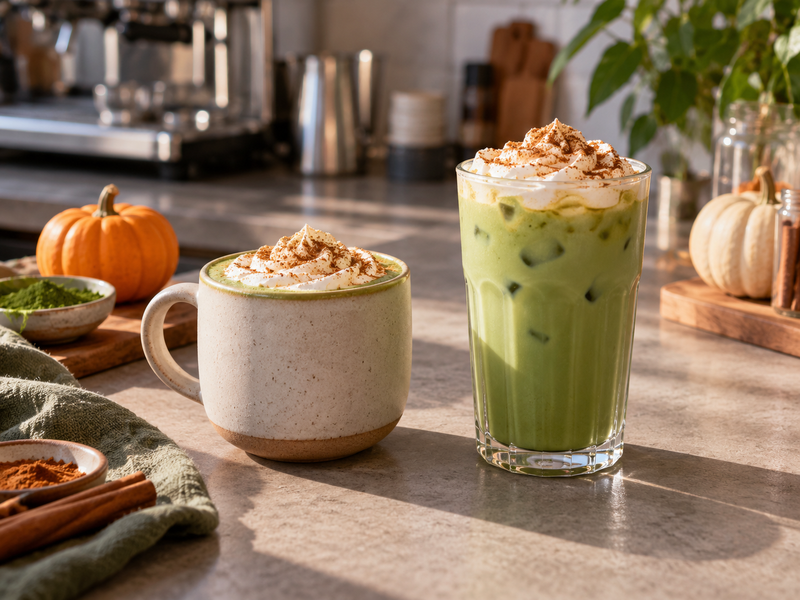
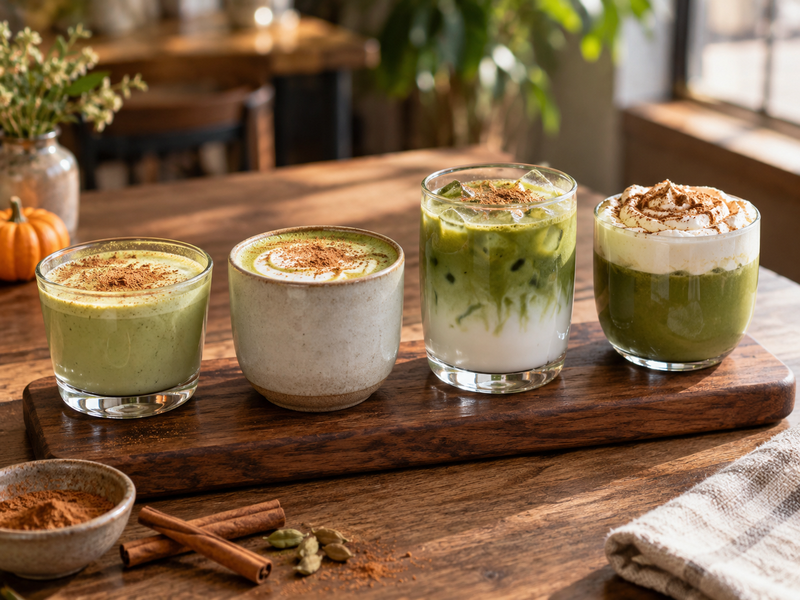
A hot pumpkin spice matcha releases more aroma from tea and spice, while an iced version brings dilution and a different texture. Do not assume one recipe will serve both by simply adding ice. Build two controlled versions from the same flavor brief. The hot cup needs a safe, repeatable heating process for its milk and base. The iced cup needs a defined ice portion and an acceptance test after a realistic waiting interval. If the product is sold for delivery, test it in the lidded cup and travel bag customers receive.
Consider presentation only after the base works. A dusting of spice can look attractive on foam, but it may leave a dry, bitter mouthful. A thick topping can make the first sip sweet while hiding the tea below. Serve both versions to a small tasting group without telling them which formula is newer. Ask whether matcha is still identifiable and whether the spice level feels seasonal rather than medicinal. Record the exact milk and base versions used. If stores cannot execute both well, a single well-made version is a better launch than two inconsistent ones.
6. How can sweetness be controlled?
Count sweetness from every component
Map all sources of sugar in the drink: spice syrup, sweetened milk, pumpkin base and any cold foam. A less-sweet order is difficult to honor if most sweetness is locked into a premixed base. Decide whether the standard formula should use a neutral spice base plus separately measured sweetener. That adds a step, but it can give the barista more control. Test a standard and reduced-sweetness version. Both should still deliver matcha and spice flavor. If the reduced version tastes thin, the problem may be ingredient quality or balance rather than missing sugar.
Use measured portions during development and service. A pump count is only meaningful if the pump and syrup viscosity stay consistent. Check the actual amount dispensed and retrain after a syrup change. Do not describe the drink as low sugar or healthy without product-specific nutrition review and a lawful claim for the destination market. The menu can say what is in the cup and how it tastes. Clear, accurate copy is more useful than a health promise that the formula has not earned.
| Sweetness source | Where it enters | Control point |
|---|---|---|
| Spice syrup | Base | Measured dose |
| Sweetened milk | Main liquid | Approved milk SKU |
| Pumpkin mixture | Base or puree | Ingredient review |
| Topping | Finish | Standard portion |
7. How should the recipe be tested at service speed?
Run a shift-scale trial with ordinary staff
Have staff make several drinks in sequence using the written recipe, not verbal coaching from the developer. Watch for pauses: weighing powder, rinsing tools, heating milk and cleaning a sticky spice vessel. Time is not the only measure. Count remakes, note inconsistent layers and ask staff which instruction was unclear. Test both a quiet period and a short rush. The most attractive single cup may be a poor choice if the method slows every order or leaves frequent clumps in the pitcher.
Keep a simple record of drink version, ingredients, operator, observed fault and correction. If the tea sinks or the topping collapses, change one part of the process and retest. Do not create a fictional “customer favorite” claim from an internal tasting. Actual customer feedback can be collected after launch. Before then, the team can establish that ordinary staff can make the drink to the accepted standard. A seasonal promotion has a short window; resolving operational faults before release protects the limited weeks when it must sell.
8. What do ingredient and allergen reviews cover?
Check the complete build, including toppings
The ingredient list is more than matcha, pumpkin and spice. Milk alternatives, flavored syrups, cream and garnishes may introduce allergens or additives that affect menu information. Review each supplier document against the exact recipe version. If a store substitutes an oat milk brand or whipped topping, the approved description may no longer match the cup. Train staff on substitutions they can make and those that require a new review. Keep preparation equipment and cross-contact procedures consistent with the operation’s food safety plan.
For a packaged version, the destination market may require a different label review from an unpackaged cafe drink. The FDA Food Code offers a model for retail food handling, while the legal requirements for a packaged product depend on the market and formula. Ask the qualified reviewer to approve claims before print. A marketing line about energy or antioxidant benefits is especially easy to overstate. The drink’s strongest promise is sensory: carefully balanced tea and warm spice, served consistently. Keep that promise testable.
| Review item | Document or check | Owner |
|---|---|---|
| Matcha and spice | Supplier specification | Purchasing |
| Milk and topping | Ingredient/allergen data | Food safety lead |
| Menu wording | Exact recipe and claims | Marketing and reviewer |
| Substitution | Approved alternative list | Operations |
9. How should buyers compare supplier samples?
Price the accepted drink
Request the matcha SKU, lot code, specification, packing format and lead time. Ask spice-base suppliers for the same level of clarity. Make each candidate drink using the identical service recipe, then adjust dose only in a documented second trial. Compare finished flavor, mixing effort and waste. A lower kilogram price does not guarantee a cheaper cup if the powder needs more grams or leads to remakes. A very strong tea might perform well at a lower dose, but check that it does not make the less-sweet version harsh.
For a multi-site menu, repeat the trial with a second lot and with the equipment typical of stores. The best sample should be available at the volume and timing your seasonal plan requires. Ask how supplier changes will be communicated and what happens if an ingredient is temporarily unavailable. Consider whether the same matcha can serve another drink after fall; that may reduce leftover stock, but only if it passes a separate application trial. Keep the buying decision tied to actual cup performance and operational fit.
10. When is the seasonal drink ready to launch?
Close the recipe, training and supply loop
Approve the drink when hot and/or iced versions meet the flavor brief, staff can repeat them, the ingredients are available and the cost sheet matches the recipe. Keep an approved photo, measured build, supplier codes, allergen notes and a short correction guide in the same versioned file. Test the lidded takeaway cup if that is how the drink will be sold. A limited-time item can still generate a large number of complaints if the first real shift reveals clumps, excess sweetness or slow preparation.
Set a review date soon after launch. Compare actual sales, remakes and waste with the trial assumptions. If customers ask for less spice, decide whether to change the standard formula or offer an approved variation; do not let each store improvise. If you need matcha for a seasonal drink program, ask suppliers for samples that can support both the intended recipe and a repeat-lot check. The important outcome is not a dramatic first-day photo. It is a cup that tastes like pumpkin spice matcha throughout the season, in every store that offers it.
| Launch gate | Evidence | Action if missing |
|---|---|---|
| Sensory | Hot/iced accepted trials | Rebalance formula |
| Service | Shift-scale test | Simplify method |
| Compliance | Ingredient and allergen review | Hold menu copy |
| Supply | Confirmed SKU and lead time | Change plan |
FAQ
Q1: Does pumpkin spice matcha need pumpkin puree? Not necessarily. Decide what the menu promises, then choose a base that delivers the intended flavor and texture with accurate ingredient wording.
Q2: Can the same recipe be served hot and iced? Use one flavor target, but validate separate builds because temperature, ice and milk texture change the cup.
Q3: Which matcha grade should a cafe buy? Test supplier samples in the finished spice and milk formula. Grade labels alone do not predict service performance.
Q4: How can a cafe offer a less-sweet version? Keep sweetness separately measurable where practical, then test the reduced version for tea and spice balance.
Q5: What should buyers ask suppliers before a seasonal launch? Request lot-linked samples, specifications, packing and lead times, ingredient data where relevant, and a process for communicating changes.