
Matcha chia seed pudding can be assembled in a home jar in minutes. Producing it for a cafe or prepared-food line asks different questions: Will every cup hydrate evenly? Will the green color hold after refrigeration? Can staff identify which batch is ready to sell? The reference recipe is a useful starting point for flavor. This guide turns the dessert into a repeatable service product, with separate decisions for recipe, purchasing, handling and customer experience. Use your own trials and applicable food safety plan to set the final limits.
Contents
- 1. What should the finished pudding be like?
- 2. Which matcha gives a clear flavor after chilling?
- 3. How should the powder be dispersed?
- 4. How can chia hydration be controlled?
- 5. Which milk and sweetener choices matter?
- 6. How should toppings and layers be added?
- 7. What does a refrigerated trial need to show?
- 8. How can a team scale a small recipe?
- 9. What should a matcha supplier provide?
- 10. When is the pudding ready to sell?
1. What should the finished pudding be like?
Define an eating standard before adjusting the formula
Describe the product in terms a kitchen can check. Is it spoonable and soft, or firm enough to hold a layered presentation? Should matcha be the first flavor, or a quieter note behind fruit and milk? Define the container, portion weight and intended time between preparation and sale. A dessert that looks excellent after one hour may be too dense the next morning. Taste at the time a customer will actually eat it, including any fruit or granola served with it. Otherwise the trial selects a base that may never be experienced on its own.
Use a small reference set of accepted cups rather than a single adjective such as “creamy.” Photograph the color under stable light, note whether seeds are distributed evenly, and record any liquid pooling at the bottom. The goal is a repeatable experience, not a demand that every seed sit in the same place. Decide what staff should do with a cup that falls outside the standard. If the top looks dry, is it a presentation issue, a hydration issue or an unapproved batch? A clear answer protects both quality and service pace.
2. Which matcha gives a clear flavor after chilling?
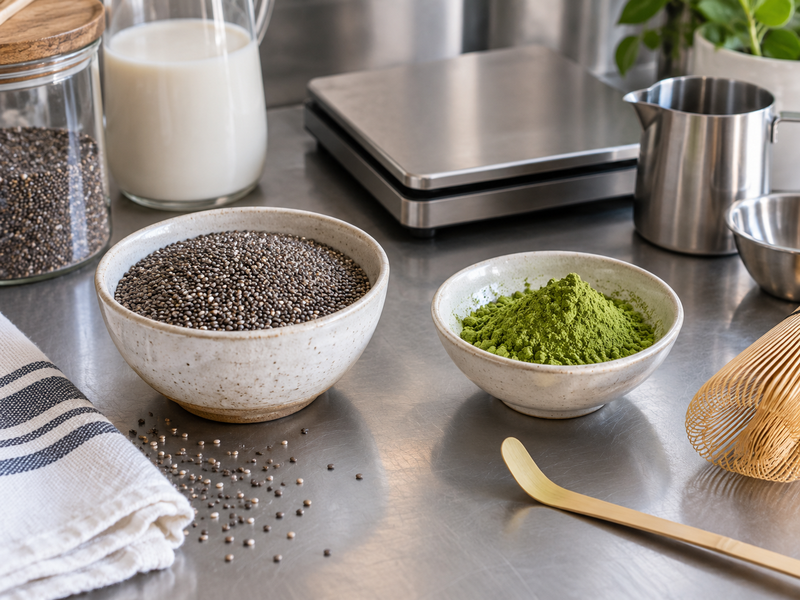
Compare powders in the finished base
Cold milk and chia can mute tea aroma. Ask suppliers for the powder grade they propose for prepared desserts, then test samples at the same dose in your base recipe. Assess color, bitterness and aftertaste after the planned refrigeration period. A dry powder that looks vivid may taste thin once diluted. A higher-priced powder may improve the dessert, but only a blind side-by-side trial can show whether the improvement justifies its cost. Do not use a marketing grade name as a substitute for tasting and a lot-linked specification.
Check preparation behavior as well as flavor. Some powders form small dry islands when added directly to cold liquid. That can create dark specks that look like seeds but taste intensely bitter. Keep the source lot on the trial sheet so a repeat sample can be compared. Ask for the proposed commercial SKU, storage guidance and records your buyer normally requires. If the supplier proposes a different grade after a trial, treat that as a new ingredient. A stable menu needs a powder your purchasing team can order again, not merely one attractive sample jar.
| Matcha attribute | Trial observation | Buying question |
|---|---|---|
| Flavor after chilling | Clear tea note or flat base? | Same grade available repeatedly? |
| Color | Stable, natural green? | How is powder packed? |
| Dispersion | Clumps after normal mixing? | Handling guidance available? |
| Cost | Dose per accepted cup | Cost per usable portion? |
3. How should the powder be dispersed?
Make a smooth base before chia goes in
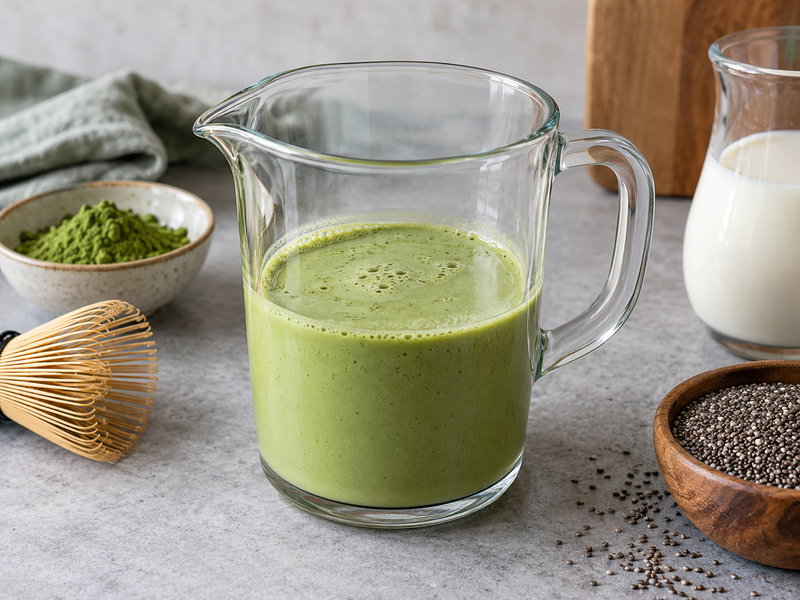
Mix matcha into a small measured amount of liquid before adding the rest of the milk and seeds. This lets staff see and remove dry clumps while the mixture is still thin. A whisk, blender or other tool can work; choose the method that fits your batch size and clean-up process. If a fine strainer helps, define when it is used. Sifting every batch may add labor without benefit for one powder, yet be worthwhile for another. The right choice comes from a service trial, not a ritual performed for appearance.
Keep a record of mixing order, vessel size and batch amount. A small recipe can fail when multiplied because powder collects on a wide container wall or a blender creates foam that makes portion weights inconsistent. Check the mixture before chia is added: it should have an even color and no dry green pockets. If the base is already clumped, more waiting will not solve that problem. Teach staff to stop and correct the dispersion at this stage. It is far easier to fix a liquid than to sort dark flecks from dozens of finished cups.
4. How can chia hydration be controlled?
Test distribution and time in the real container
Chia hydration changes texture over time. Make a small trial matrix using a defined seed-to-liquid ratio and a controlled mixing sequence, then check the pudding at several points during the planned holding period. Note whether seeds gather in clusters, settle at the bottom or leave a watery layer above. Stirring partway through hydration may help in some recipes, but the team must test when and how to do it. A half-filled test jar and a full retail cup may behave differently, so use the container you plan to sell.
Do not write a universal set time into the recipe before testing your chia source, liquid and sweetener. Seeds from a new lot or supplier may behave differently enough to matter in a high-volume operation. Record actual preparation time and a release check for each batch. A visual pass at the surface is insufficient if the bottom remains runny. Stir or spoon through a sample cup from the batch. If it fails, define whether the batch can be corrected under the approved process or whether it must be discarded. Texture should be a release decision, not a customer discovery.
| Hydration check | What to observe | Response if it fails |
|---|---|---|
| Seed distribution | No large clusters | Review mixing sequence |
| Surface | No dry cap | Review fill and covered hold |
| Bottom | No free liquid pool | Review ratio and hydration time |
| Spoon texture | Intended softness | Hold for review or reject |
5. Which milk and sweetener choices matter?
Change one ingredient at a time
Dairy and plant-based milks can produce different body, sweetness and color. Some are already sweetened; others have a flavor that competes with matcha. Establish one baseline, then change only the milk while holding matcha, chia and sweetener constant. Taste after refrigeration. A fresh mix can disguise a sweetener that becomes too prominent when cold. Ask the purchasing team to confirm ingredient and allergen information for every version. “Plant-based” is not a complete allergen statement, and substitutions need controlled communication to stores.
If the pudding is sold as a prepared retail item, ingredient declaration and nutrition information may require review for the destination market. Do not borrow a nutrition panel from a home recipe. A formula change can affect both what customers taste and what the label must say. Consider a less-sweet option only after the base version is stable. The name matcha chia seed pudding should still describe an identifiable tea flavor; if a large syrup dose is needed to conceal harsh bitterness, compare powders before increasing sweetener. Keep the accepted formula and its cost sheet under the same version number.
6. How should toppings and layers be added?
Protect texture through the customer’s eating time
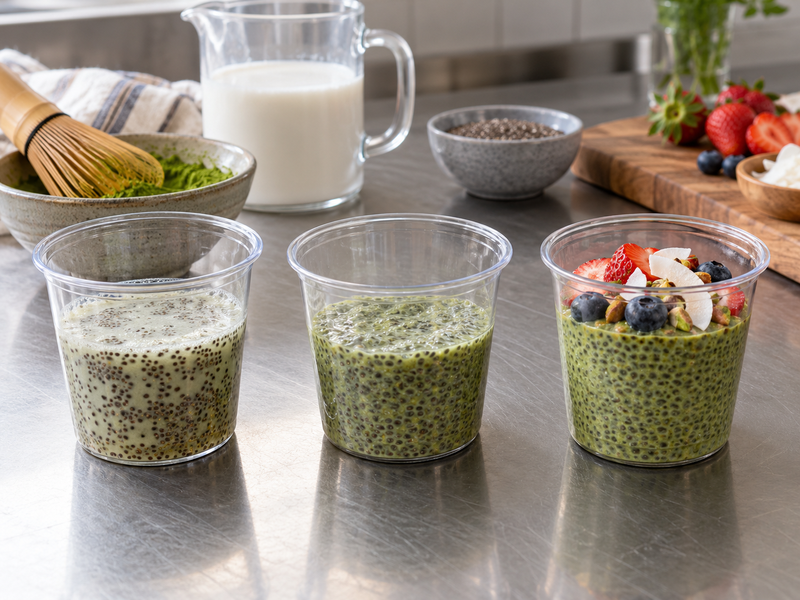
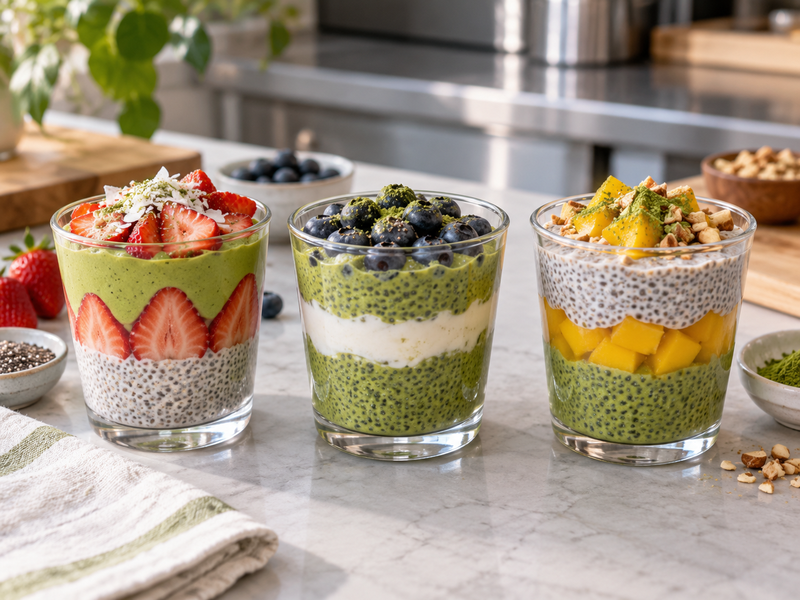
Fruit, granola and cream can make a simple pudding feel complete, but each creates a new holding question. Wet fruit may release juice and streak the green base. Granola can soften if sealed against pudding too early. A dairy topping can change the allergen profile and may need different handling. Try each garnish in the exact container and time window you plan to sell. Photograph and taste the assembled cup at release and at the realistic end of its shelf-life trial. A layered presentation should remain legible rather than turning into an accidental mix.
Separate garnishes when that gives a better result. A small, lidded topping pot adds packaging and labor, so calculate those costs alongside quality. Avoid claiming that fruit “preserves” matcha color without a controlled test; acid, oxygen and light can change color, and the result depends on the actual formula. Give staff a build diagram with portion weights and a photo, then verify that they can assemble it during a normal shift. The garnish should support the tea and seed base, not compensate for a pudding that was never approved on its own.
| Garnish | Benefit | Trial question |
|---|---|---|
| Fresh fruit | Contrast and acidity | Does juice bleed into base? |
| Granola | Crunch | Should it be packed separately? |
| Cream | Softer finish | Does it alter allergen handling? |
| Citrus zest | Aroma | Does it dominate tea? |
7. What does a refrigerated trial need to show?
Keep quality and safety decisions distinct
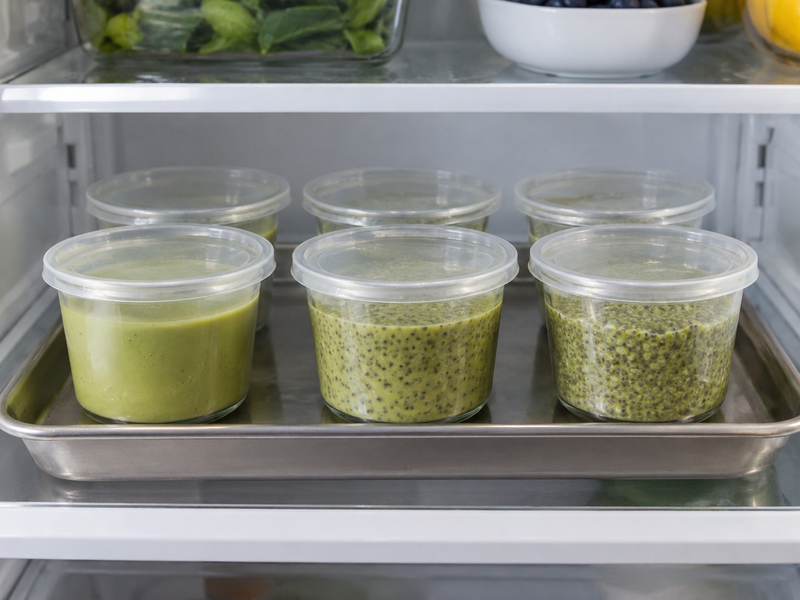
Refrigerate trial cups in the planned packaging and check them at defined intervals. Look for water separation, color change, seed clumps, off aromas and damage from toppings. Record preparation time, ingredient lots and storage conditions for each sample. Sensory checks show whether the pudding remains appealing; they do not establish microbiological safety or a legal shelf life. A manufacturer needs a product-specific validation plan. A cafe should follow its food safety procedures and the rules that apply where it operates.
The FDA Food Code is a reference model for retail handling of ready-to-eat foods, including controls for items that require time and temperature management. It does not make every chia pudding safe for a fixed number of days. A food safety lead should classify the actual recipe and set the hold, date-marking and discard rules. Staff need to know which cup belongs to which batch. If a label is missing, do not rely on visual freshness to infer age. Preserve trial records as the formula and packaging change.
8. How can a team scale a small recipe?
Increase volume only after defining the mixing endpoint
Scaling is more than multiplying the ingredient list. A larger batch may take longer to wet matcha and disperse seeds. It may also sit longer before filling, leaving later cups thicker than earlier ones. Trial a batch at the largest volume the team expects to make in one vessel. Sample cups from the beginning, middle and end of filling. Compare texture and portion weight. If those cups differ, change the mixing or filling method before increasing production. Do not hide variation behind a wide acceptance range that customers will notice.
Map the preparation sequence in the real kitchen: receiving, weighing, mixing, hydration, filling, garnish, covered storage and release. Decide which steps require a second check. A scale may be more reliable than scoops for chia and powder; it also makes cost calculations easier. Train staff using the exact tools available at every site. A recipe developed with a powerful test-kitchen blender may fail in a cafe using a hand whisk. The goal is a method that can be repeated, cleaned and documented, not a laboratory-perfect cup made once.
| Scale-up point | Common variation | Useful check |
|---|---|---|
| Powder wetting | Dry pockets | Inspect liquid before seeds |
| Seed addition | Clusters | Defined addition and stirring |
| Filling | Early/late cup difference | Sample across the batch |
| Storage | Uneven cooling | Follow approved handling plan |
9. What should a matcha supplier provide?
Ask for records tied to the dessert trial
The matcha sample should carry a SKU and lot identity that can be linked to the supplier’s specification and relevant test documents. Ask about packaging, lead time, minimum order and how a change of source or grade is communicated. These details matter if the pudding will be sold across sites or seasons. A powder that performs well in one trial is useful only if the business can buy the same intended product again. Test a second lot before a major launch and compare it in the unchanged recipe.
Do not let a low price per kilogram decide the purchase. Calculate matcha cost per accepted portion at the dose needed for clear tea flavor after refrigeration. Include preparation waste and any extra labor needed for sifting or remaking clumped batches. Ask for a sample size that supports a real production trial rather than a single tasting spoon. If you use Matcha Village for sourcing, specify the dessert format and target sensory profile so the proposed grade can be tested against a written brief. Keep supplier and kitchen records linked by the sample code.
10. When is the pudding ready to sell?
Approve a product, not just a good recipe
Approval requires an accepted eating texture, recognizable matcha flavor, stable presentation in the intended sales window and a handling plan the team can follow. The formula, ingredient identities, packaging, cost sheet and training photo should all describe the same version. Review labels and allergen communication with the appropriate market specialist. Run a trial under normal staffing and record any cups rejected for texture, color or portion weight. If the reject rate is high, fixing the process is better than writing the waste into the price.
After launch, retain batch records and review customer comments alongside actual waste. A new chia supplier, milk, topping or matcha lot can change the dessert. Update the recipe and repeat the relevant checks when an ingredient changes. The value of matcha chia seed pudding for a cafe is that it can be prepared ahead while still offering a distinct tea flavor. That advantage disappears if the next shift cannot tell which batch is ready or why one cup is watery. Make the release decision clear before the first display case is filled.
| Launch requirement | Evidence | Decision if missing |
|---|---|---|
| Taste and texture | Accepted trial cups | Reformulate |
| Holding | Approved food safety plan | Delay sale |
| Repeatability | Shift-scale trial | Retrain or change process |
| Commercial fit | Current portion cost | Reprice or redesign |
FAQ
Q1: Can matcha chia seed pudding be made without dairy? Yes, but test the chosen plant milk for taste, texture and separation, then review ingredient and allergen information.
Q2: Why are there green clumps in the pudding? Matcha may not have been fully wetted before the chia was added. Inspect the liquid base before combining it with seeds.
Q3: How long should chia pudding hydrate? Set the time through trials with your seed source, liquid and container. Release on the intended spoon texture, not on an untested number.
Q4: Can a cafe keep finished cups for several days? Only under a product-specific handling and food safety plan that complies with local rules. Appearance alone cannot establish safety or shelf life.
Q5: What should a buyer request from a matcha supplier? Ask for a lot-linked sample, specification, relevant test records, packaging details and a clear policy for grade or source changes.