
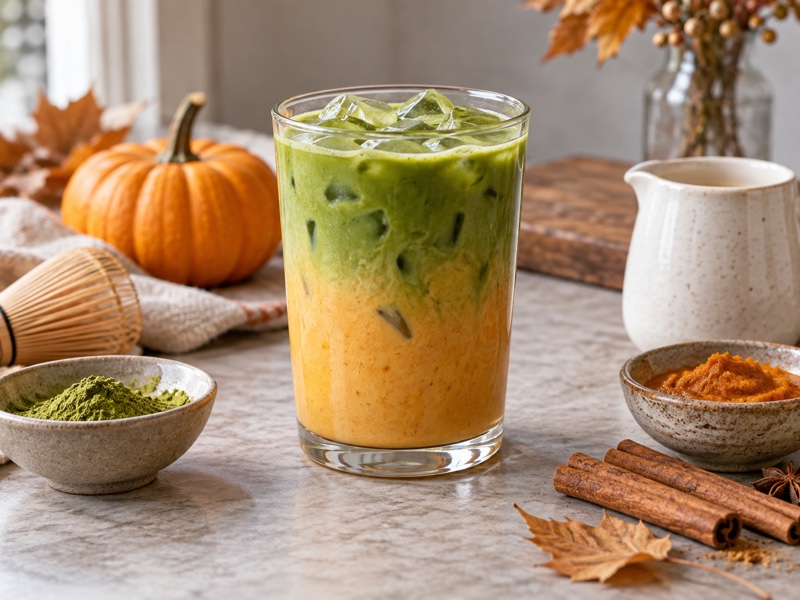
Pumpkin matcha can make a seasonal menu stand out, but pumpkin spice, puree, and sweet syrup can overwhelm the tea. A layered drink may look striking at handoff, then turn brown-green once stirred. The Nutrition to Fit pumpkin matcha recipe shows one consumer approach. A café chain needs a precise recipe, a service method staff can repeat, and an honest name that matches the ingredients. Test the drink after mixing, because that is how most customers will drink it.
1. What does “pumpkin” mean in this drink?
A pumpkin matcha can use pumpkin puree, pumpkin spice, a pumpkin-flavored syrup, or a combination. These are different products. Puree adds body and an earthy vegetable note; spices add aroma; syrup may add sweetness and flavor without much pumpkin material. Decide what the menu promises, then check the ingredient declaration against that promise. A photo of an orange layer does not prove the drink contains pumpkin puree.
Create a short sensory brief: tea should be recognizable, spice should support rather than bury it, and sweetness should fit the café’s normal range. Prepare three candidate versions with the same matcha base and milk. Taste them blind, then evaluate appearance. Record whether a guest could identify pumpkin, spice, and tea after stirring. A drink that tastes like cinnamon milk with a green top may need a different name or recipe. Make the standard recipe before offering multiple customizations.
| Ingredient route | Main contribution | Operational concern |
|---|---|---|
| Pumpkin puree | Body and pumpkin taste | Settling and cold handling |
| Spice blend | Seasonal aroma | Clumping and dominance |
| Flavored syrup | Sweetness and speed | Tea dilution |
| Combined base | More complete flavor | Recipe complexity |
2. How much spice lets matcha remain clear?
Cinnamon, ginger, clove, and nutmeg differ in intensity and particle behavior. Set a measured spice blend rather than asking staff for “a dash.” Start with the normal matcha latte and add small, weighed spice increments. Taste after the drink has sat for a normal pickup delay. A spice that smells attractive at the pass can grow harsh at the bottom if it does not disperse. For a syrup, check whether the spice impression stays consistent from the first pour to the last.
Test the blend in both hot and iced drinks. Warm milk releases spice aroma differently from cold milk, and cold drinks may expose powder grit. If the drink contains a sweet pumpkin sauce, evaluate the spice within that sauce rather than dosing the cup separately. Too much clove or cinnamon can turn the tea into a background color. Let a blind panel identify which component leads and whether the aftertaste remains pleasant. Keep a retained spice blend and write its supplier and lot on the recipe sheet.
Treat garnish as part of the formula
A dusting can add a sudden spice hit even when the base is balanced. Weigh the garnish or remove it. A visual flourish is not free of flavor or labor cost.
3. Which matcha works beside pumpkin and dairy?
Use lot-linked powder samples in the finished drink. A delicate tea can vanish beneath puree and spice; a stronger one may hold its place but taste rough if the dose rises too far. Compare powders at equal mass first, then at equal perceived tea strength. Evaluate hot and iced versions separately. Keep milk, sweetener, cup size, and ice fixed. A dry powder tasting or a plain-water cup cannot make this decision for a seasonal latte.
Inspect texture as well as flavor. Matcha clumps can collect around puree particles or appear as dark spots in a layered drink. Pre-disperse the tea with a repeatable method. If a café uses a sweetened matcha blend, include its sugar in the full recipe calculation. Matcha Village offers pure matcha powder for beverage trials; ask for the exact lot, specification, storage guidance, and pack size needed for a seasonal program. The selected powder should remain available through the promotion or have a tested replacement.
| Powder comparison | Keep fixed | Decide from |
|---|---|---|
| Equal dose | Milk, spice, puree | Tea flavor and color |
| Equal tea strength | Finished cup | Cost and bitterness |
| New lot | Approved recipe | Consistency |
| Hot versus iced | Powder and base | Service-specific dose |
4. How should puree or syrup be incorporated?
Puree can add attractive body but may leave a dense bottom layer if it is not blended well. A syrup may pour quickly but make the drink sweeter than intended. Test each in the actual cup and service sequence. Build the drink with normal equipment, photograph it at handoff, then stir or shake as a guest would. Check for separation, foam, and a muddy color. If the recipe depends on a perfect gradient, decide whether staff can achieve it at volume.
A pump may not handle a thick puree reliably. Weigh several strokes from a full container and again near empty. If output varies, use a measured pour or a standardized sauce bottle. For an in-house base, define the mixing and straining method and inspect for fibrous particles that block a nozzle. Avoid topping up an old container with fresh product. That makes batch identification and opening-life control difficult. Choose the service format that balances speed with drink consistency.
Keep the pumpkin component honest
If a product is flavored primarily by spice or syrup, menu wording should say so. A recipe containing real pumpkin can state that when the formula and supplier records support it. Marketing should follow the finished drink, not the development concept.
5. What sweetness level works hot and iced?
Pumpkin syrups and latte mixes can contribute sugar before any additional sweetener enters the cup. Calculate the whole drink and taste it after ice dilution or hot service. A syrup that balances bitter tea in a small hot cup may become cloying in a larger iced one. If the café offers “less sweet,” test whether lowering pumpkin syrup also removes the seasonal flavor. Separating spice, puree, and sweetener can give more flexibility, though it adds service steps.
Run a simple sweetness ladder in the intended milk. Ask tasters to score tea recognition and willingness to finish the whole cup, not merely first-sip preference. A sweet first sip often wins quickly but may tire customers before the bottom. Check whether spice garnish shifts perceived sweetness. The selected recipe should still have a clear tea finish when the drink warms or ice melts. A seasonal drink earns repeat orders through balance, not only a promotional image.
| Recipe change | What it may solve | What to recheck |
|---|---|---|
| Less syrup | Excess sweetness | Pumpkin identity |
| More puree | Weak pumpkin note | Texture and holding |
| More matcha | Tea lost under spice | Bitter finish and cost |
| Different milk | Mouthfeel | Allergens and dispersion |
6. Will the drink work with dairy and plant milks?
Milk choice changes color, sweetness, texture, and how spice reads. Test the standard dairy recipe and the plant-based options that stores sell most often. A thick oat beverage may make puree feel heavy; a thinner base may leave powder visibly suspended. Do not assume one dose works for every milk. Choose whether customization uses a single recipe or adjusted measures, and make the training card explicit. Include the same cup, ice, and mixing sequence in each trial.
Ingredient and allergen information must follow the actual products. Dairy milk, soy drinks, and nut drinks can have different allergen implications, and toppings may add more. For US packaged foods, the FDA allergen page explains major allergens; cafés should also follow local menu and cross-contact requirements. A “high protein” description needs evidence for the sold serving and should not be borrowed from a reference recipe with different ingredients.
Watch color after stirring
A layered orange-and-green photo can become a muted tan drink after mixing. Taste and photograph both states. If the mixed appearance disappoints, simplify the visual promise or adjust the components rather than relying on a photo that lasts only seconds.
7. What prep and holding controls does pumpkin require?
A refrigerated puree base and a shelf-stable commercial syrup need different handling. Define the storage instructions from the actual supplier and validate any in-house prepared base. Date each batch, use clean containers, and follow the operation’s food safety plan. The FDA Food Code is a US model for retail handling; local adopted rules and the product’s formulation determine controls. Do not copy a home recipe’s holding time into a chain standard.
Pilot the base through a full shift. Sample the top and bottom of the container at opening and near close. If spice or puree settles, decide whether a specific agitation step restores uniformity. Check pump and bottle cleaning. Record waste from batches that expire before sale; a seasonal menu can have uneven demand across weekdays and weather changes. Small batch sizes may protect quality even if prep takes more time.
| Control point | Record | Why it matters |
|---|---|---|
| Prep batch | Date, lot, recipe version | Traceability |
| Storage | Actual product temperature | Safe handling |
| Dispensing | Dose across container | Drink consistency |
| Cleaning | Pump and bottle routine | Residue control |
8. How should caffeine and nutrition claims be handled?
The caffeine in a pumpkin matcha depends on the powder amount and product. The FDA explains that caffeine levels vary by product and serving size. Avoid generic claims that it has a fixed fraction of coffee’s caffeine or that it gives “calm energy.” If a menu needs a quantitative statement, substantiate the final cup at the sold size and use a clearly defined comparison.
Nutrition claims require the same discipline. A version made with protein-enriched milk may differ from a standard dairy or oat version. Do not call the whole menu family “high protein” unless each relevant serving meets the target market’s rules. Keep supplier data and calculations linked to recipe versions. Seasonal staff may change syrup dose during service; a claim based on one laboratory recipe is weak if the actual pour varies widely. Make accurate ingredient descriptions the default and reserve quantified claims for reviewed products.
9. Does the drink earn its menu price?
Calculate cost per finished cup from measured ingredients, labor, cup and lid, garnish, and waste. Pumpkin puree may cost less per kilogram than a specialty syrup yet require more prep and spoil sooner. A syrup may save labor but demand a larger dose or make the matcha less noticeable. Run a timed service trial and count remakes. Compare the proposed price with the café’s other seasonal drinks, using actual margin rather than a powder-only estimate.
Seasonal supply risk belongs in the decision. Ask matcha and pumpkin-component suppliers for lead times, case sizes, minimum orders, and a replacement process. A promotion should not depend on one untested powder lot. Keep a retained drink reference and ingredient samples. If demand exceeds forecast, the buyer can then qualify a replacement without changing the menu midseason. The best concept is one stores can make consistently when orders peak.
10. What should a seasonal launch pilot prove?
Make the drink in the final hot and iced sizes during a realistic rush. Have several staff members follow the recipe without developer coaching. Weigh syrup or puree output, time each build, and taste cups from the beginning and end of the shift. Test the common milk substitutions. Photograph layered and stirred drinks under store lighting. Ask customers about the actual flavor: can they identify tea, pumpkin, and spice, and would they order it again?
Approve one standard recipe, clear customization rules, a prep and discard plan, supplier lot controls, and menu wording. Track sales, remakes, waste, and complaints during a limited rollout. Adjust one variable at a time. If tea disappears, do not automatically increase powder; check syrup sweetness and spice first. Request lot-linked matcha samples and test them in the full seasonal recipe before committing to the promotion’s purchase volume.
| Pilot measure | Launch decision it informs |
|---|---|
| First and last drink tasting | Base uniformity through shift |
| Measured pour and build time | Recipe and labor cost |
| Stirred-drink photo | Honest menu imagery |
FAQs
Q1: Does pumpkin matcha need real pumpkin? It depends on the menu promise. Puree, spice, and flavored syrup are distinct ingredients and should be described accurately.
Q2: Can it be served iced? Yes. Test dispersion, spice texture, sweetness, and appearance after ice dilution.
Q3: Why does a layered drink turn brown? Orange pumpkin and green tea mix into a muted color. Evaluate the stirred drink before approving imagery.
Q4: Is it automatically high in protein? No. Any protein claim needs support for the exact sold recipe and market.
Q5: Which matcha should a chain buy? Compare lot-linked powders in the finished pumpkin drink for tea clarity, color, cost, and supply continuity.