
Matcha tea ceremony tools can make a café demonstration memorable, but a display set may slow ordinary service. Decide whether you are teaching chanoyu, serving a quick bowl, or selling a retail kit before ordering utensils. A practical trial with your staff will expose handling and cleaning problems that product photographs cannot show. Urasenke’s introduction to chado describes a host-and-guest practice; a commercial service needs its own operating plan.
Contents
- 1. What job should the tools perform?
- 2. Which utensils belong in the core kit?
- 3. Where does ceremonial teaching differ from cafe service?
- 4. How should a buyer evaluate the bowl?
- 5. What makes a whisk suitable for the operator?
- 6. When do a scoop and sifter help?
- 7. Which water and waste tools are needed?
- 8. How can a team train a repeatable presentation?
- 9. What cleaning and replacement plan fits the set?
- 10. When should a wholesale order be approved?
1. What job should the tools perform?
Define the customer moment
A tea-room lesson, a café counter demonstration and a boxed gift create different requirements. In a lesson, the host may explain the role and handling of each utensil. At a busy counter, the customer may see only a bowl and whisk for a few seconds. A gift purchaser may care most about whether every promised component survives shipping and can be used without special equipment. Write one use case before building a set.
Start with the actual service sequence. Note where powder is weighed, where water is added, who whisks, how the bowl reaches the guest and where used utensils go afterward. Count the counter space and staff time available during a realistic rush. Decide whether the tools are for preparation, presentation or both. The distinction prevents decorative items from occupying the working area. A retailer can offer a ceremonial-interest kit and a daily-use kit with different contents, provided the label explains what each enables.
2. Which utensils belong in the core kit?
Name pieces by function
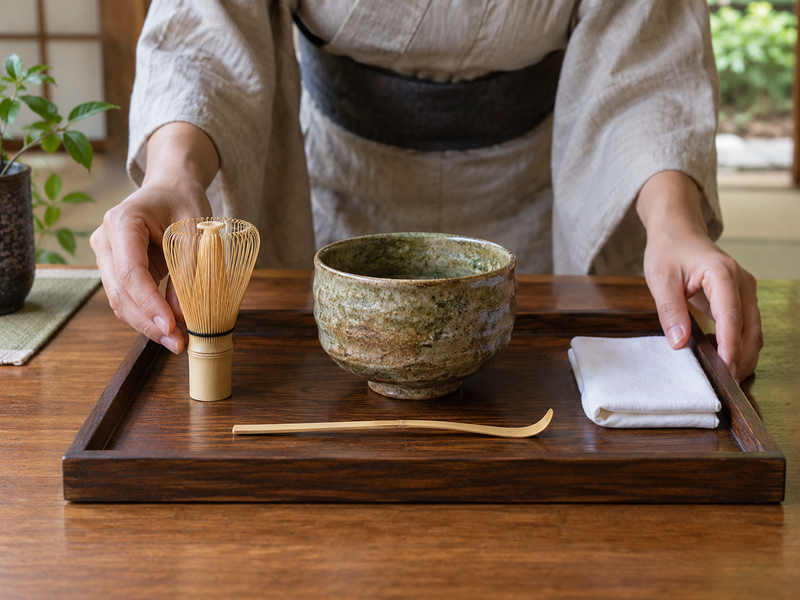
Urasenke’s utensil guide identifies the chawan bowl, chasen whisk and chashaku scoop among a much wider range of tea-room implements. For a simple matcha preparation kit, those three are a useful starting point. A sifter, measured scale or whisk holder may make daily work easier, but none should be added merely to increase the printed piece count. A formal ceremony requires context and instruction beyond a retail box.
Check completeness against the intended drink. Ask a new staff member to prepare one serving using only the proposed contents and the facilities the customer will have. Record which item they borrow from the kitchen. If they need a scale to meet your recipe, a scoop alone may not be a reliable dosing tool. If they need a place to dry bamboo, specify a holder or provide clear care instructions. Set contents by the task rather than by a rival kit’s marketing list.
| Item | Primary role | Buyer check |
|---|---|---|
| Bowl | Whisking and serving | Working clearance |
| Whisk | Dispersion in water | Tine condition and grip |
| Scoop | Handling powder | Dose instruction |
| Holder or sifter | Care or powder preparation | Need in actual workflow |
3. Where does ceremonial teaching differ from cafe service?
Keep the context honest
A tea ceremony is not simply a slow version of a take-away drink. Urasenke presents chado as a practice centered on the host and guest sharing a bowl of matcha. A café may borrow an appropriate utensil or teach a basic preparation without claiming to reproduce a complete tradition. Train staff to describe what they are doing accurately. If a workshop presents a specific school or form, involve a qualified instructor.
Separate demonstration from queue service. A scheduled class may use a water container, ladle, waste-water bowl and cloth as part of instruction. A takeaway counter can use its normal clean-water and washing setup, then show the whisking stage in a bowl. Test whether guests can see safely without crossing a hot-water route. Build a short script explaining bowl, whisk and tea preparation without implying that every retail sale is a formal ceremony. The result respects the practice and keeps service manageable.
4. How should a buyer evaluate the bowl?
Test geometry with the whisk
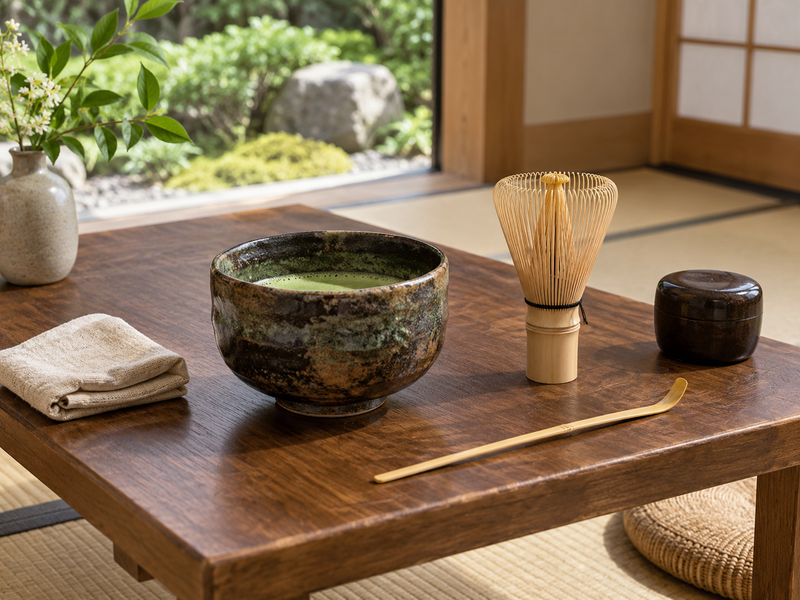
The bowl must allow the chosen whisk to move without striking a steep wall or crowded rim. Compare internal opening, usable base area, depth, weight and how comfortably staff lift it after mixing. A bowl can look generous in a product photograph while offering little flat working space. Test it with the actual water volume and powder dose used in service, then note splashes and wrist clearance.
Inspect the whole batch, not one display sample. For a wholesale order, ask for tolerances and check several units for wobble, rough contact points and visible glaze defects. Request current product-specific food-contact information suitable for the destination market where needed; a generic “food safe” sticker is weak evidence. Decide whether the bowl will enter a commercial dishwasher and obtain care instructions for that exact ceramic finish. If a pouring lip is offered, test it with a filled bowl. A sound bowl fits the operator, the drink and the cleaning route.
| Bowl feature | Trial | Failure to record |
|---|---|---|
| Internal opening | Whisk at normal stroke | Tines hit wall |
| Base and foot | Set on service counter | Rocking or slip |
| Rim and lip | Pour or present tea | Drips and awkward grip |
5. What makes a whisk suitable for the operator?
Watch the tines in use
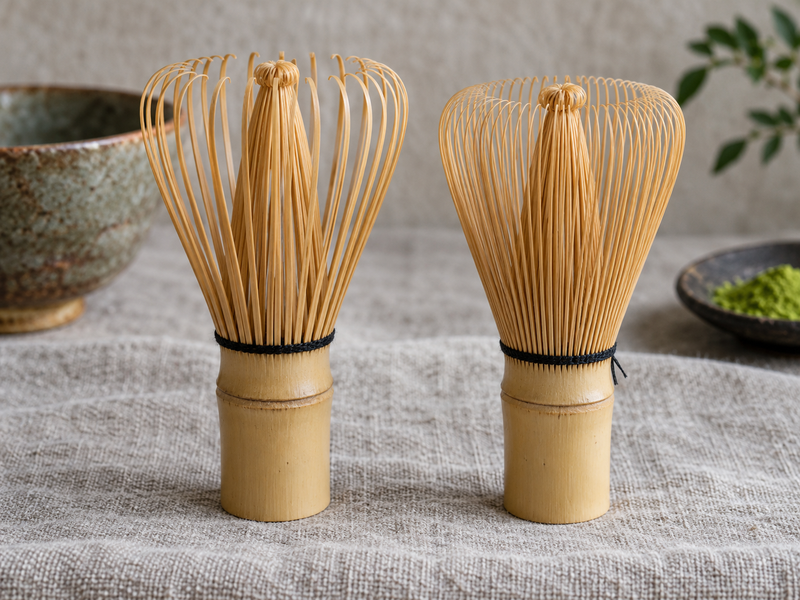
The chasen should create a smooth suspension in the bowl and survive normal handling. Inspect a sample for evenly cut tines, rough edges, secure binding and a handle staff can hold without excessive grip pressure. Test it with your matcha, water and bowl; compare both beverage result and operator comfort. Do not assume a larger advertised tine count automatically fits every bowl or preparation style.
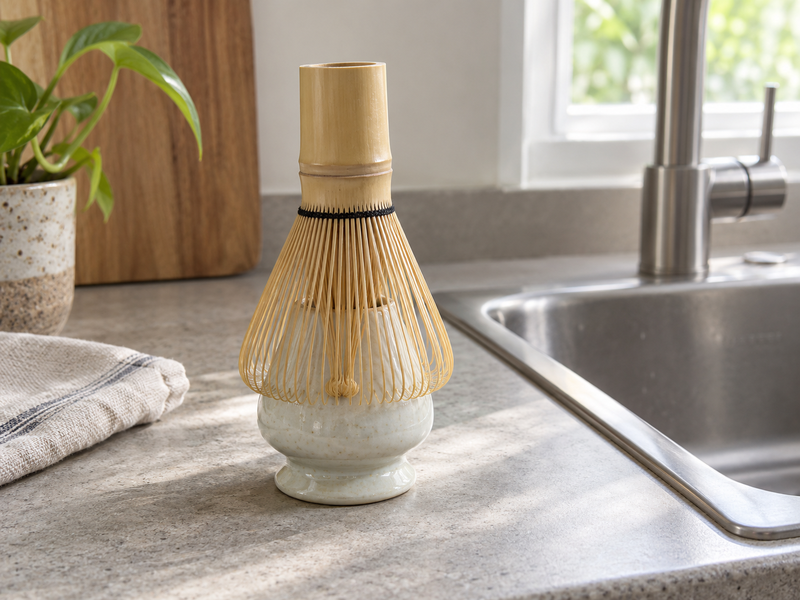
Include care in the trial. Ippodo’s whisk-care guidance advises wetting bamboo before use, rinsing it promptly and drying it in open air. Ask staff to complete that sequence at the actual station. A whisk that produces a good bowl but has nowhere to dry may fail in a café workflow. Record any broken or loose tines during the pilot and ask the supplier how defects and replacement pieces are handled. For milk-based drinks, check the whisk maker’s use limits instead of assuming the bamboo tool belongs in a hot milk jug.
6. When do a scoop and sifter help?
Give each tool a measurable role
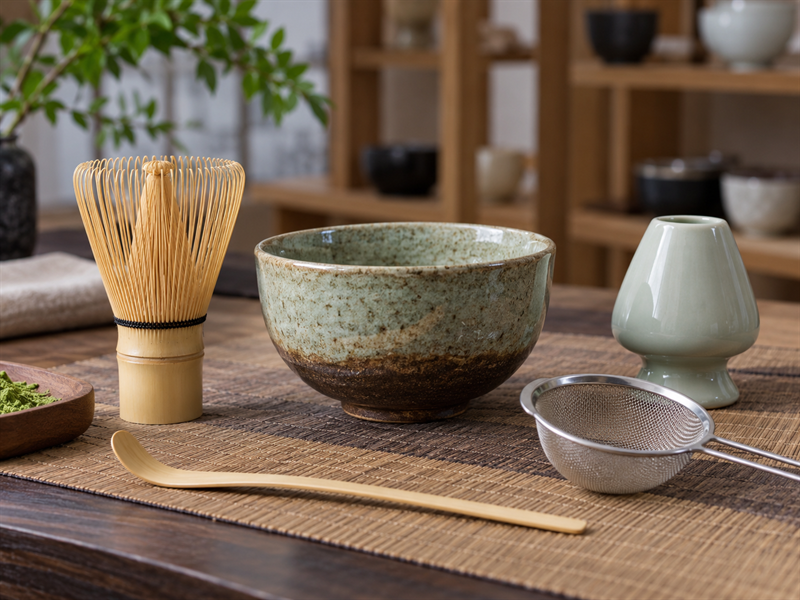
A chashaku carries powder neatly from a tea container to a bowl, but a scoopful is not a calibrated mass. If recipe consistency matters, weigh several staff members’ normal scoops and decide whether the variation is acceptable. A small sifter can help break dry clumps before whisking. Ippodo sells a matcha sieve for powder preparation, which illustrates the function without prescribing a specific model.
Test the sequence rather than the accessory list. Try a measured dose with and without sifting under the same whisking method. Record visible clumps, preparation time and powder left on the mesh. Check whether the sieve fits above the bowl and can be emptied and cleaned without losing product. For a gift kit, tell users whether a scale is recommended for recipe accuracy. For a café, keep the weighing method in staff instructions even when the presentation uses a traditional scoop. That prevents a decorative gesture from silently changing drink strength.
| Tool | Useful measurement | Decision |
|---|---|---|
| Scoop | Dose variation by operator | Weigh or train |
| Sifter | Clumps after preparation | Include if it helps |
| Scale | Dose repeatability | Use behind counter |
7. Which water and waste tools are needed?
Fit them to the venue
A formal tea-room arrangement has utensils for transferring clean water and receiving used water. Urasenke’s guide names the hishaku ladle and kensui waste-water bowl among those implements. A café counter may already have appropriate water and washing facilities, so duplicating full ceremony equipment can add clutter without improving the cup. Map clean and used items separately before choosing any additional vessel.
Plan for hands and movement. Mark where hot water is poured, where the prepared bowl waits and where rinsed utensils dry. Ask whether staff must cross the customer path carrying a vessel. Check vessel stability, capacity and cleaning access under normal service. If the set will be used for a teaching event, align its pieces with the instructor’s procedure rather than improvising names and functions. A wholesale kit aimed at beginners can include a concise diagram of what is supplied and what the venue must provide. This keeps expectations clear for importers and cafés.
8. How can a team train a repeatable presentation?
Rehearse one complete serving
Choose a short preparation method that fits the business: powder measured, bowl prepared, water added, whisk used, drink presented and tools cleared. Give each step an owner. Staff should know which details are customer-facing and which happen behind the counter. Training should include pronunciation and accurate identification of any Japanese utensil names the business chooses to use, without turning a beverage sale into a scripted lecture.
Observe a real trainee. Time several complete servings in normal conditions and record where the operator hesitates. Note if the scoop rolls away, the whisk drips over a customer-facing surface or the bowl becomes difficult to grip. Repeat the trial with a new employee rather than relying on the product developer who selected the set. Use the findings to adjust placement, training card and spare stock. A ceremony-inspired experience succeeds when staff can give customers a calm, accurate explanation while maintaining an orderly work area.
| Step | Staff cue | Observable check |
|---|---|---|
| Prepare | Confirm measured powder | Correct dose |
| Whisk | Use agreed bowl and method | Even drink |
| Clear | Move used tools to wash point | No cross traffic |
9. What cleaning and replacement plan fits the set?
Treat wear as an operating cost
Bamboo, ceramic, metal and textiles have different care needs. Follow the maker’s instructions for each item and test them against the venue’s cleaning procedure. Ippodo advises air drying a chasen and replacing it when tips break. A bowl may tolerate a different washing method; verify rather than assuming. A decorative cloth used in a teaching setting should have an assigned laundering and storage procedure.
Keep spares where failure occurs. Count how many whisks and bowls are needed during a peak period plus washing time. Record breakage or wear during a small pilot before setting reorder quantity. Ask whether the supplier sells individual replacements; buying a full set every time a whisk wears out can distort total cost. For a retail kit, provide care instructions that match its exact materials. An importer should inspect sample packaging for chipped ceramics and crushed tines after transit, then agree a defect process before scaling orders.
10. When should a wholesale order be approved?
Close the product and service file
Approve a defined bill of materials, sample of each component, care text, package design and defect criteria. The kit should pass a preparation trial in its intended venue and a pack-out check after representative transport. If the product includes matcha powder, approve its lot, label and quality documents separately from the utensils. Matcha Village’s company information lists tea and gift-set combinations among its cooperation options; request a current quotation and exact contents before describing any particular bundle as available.
Order against the approved sample. Record bowl dimensions, whisk type, component counts, packaging revision and permitted substitutions. Decide who authorizes a change if the maker cannot supply one item. Ask for replaceable pieces and carton identification so defects can be traced to a shipment. A useful wholesale decision weighs the customer experience, staff handling and landed cost together. The set is ready when buyers know what will arrive and operators can use it without rewriting the service routine.
| Approval area | Evidence | Owner |
|---|---|---|
| Components | Signed sample and bill | Buying team |
| Use | Staff trial | Operations |
| Pack | Transit and defect check | Quality |
For a multi-site pilot, send the same kit and service card to two locations with different counter layouts. Ask each manager to record preparation time, washing space and any component staff leave unused. Compare the notes before locking carton quantities. If one site needs a different bowl or holder, decide whether the program should have two defined configurations rather than letting staff swap pieces informally. That decision keeps training and replenishment records clear.
FAQ
Q1. Are all matcha tea ceremony tools needed for cafe service? No. Specify the serving method and choose only tools that support it.
Q2. Can a chashaku replace a scale? It can carry powder, but weigh doses when recipe consistency matters.
Q3. How should a bamboo whisk dry? Follow its maker’s guidance; Ippodo recommends open-air drying and a stand.
Q4. What should an importer inspect in a sample kit? Check contents, bowl stability, whisk tines, instructions and pack protection.
Q5. Can a café call its counter service a tea ceremony? Describe the actual practice accurately and involve a qualified instructor for formal teaching.
Send suppliers one use case, a component list and the service test you will run. Ask for production samples and replacement terms before agreeing to a wholesale carton. A well-chosen set helps people make and understand matcha without turning daily service into an obstacle course.