
A matcha storage tin can make daily powder handling easier, but “airtight” on a product listing tells a buyer little about closure performance. Choose a tin around the pack, refill routine and opening frequency your customer will actually use. Inspect its lid, lining, cleanability and labeling, then test it with the proposed matcha pack. Ippodo’s storage guidance distinguishes frequent-use cans from longer-term storage choices; your specific SKU needs its own evidence.
Contents
- 1. What role should the tin play?
- 2. Which closure design can be checked?
- 3. Should the powder stay inside its inner pack?
- 4. What capacity fits normal consumption?
- 5. How should lining and food-contact materials be reviewed?
- 6. What happens during daily opening and dosing?
- 7. How should tins be cleaned before refilling?
- 8. Which storage instructions belong on the pack?
- 9. How should filled tins be shipped and inspected?
- 10. When is the tin ready for a retail or cafe program?
1. What role should the tin play?
Separate packaging from a countertop vessel
A factory-filled retail tin and a refillable café canister face different requirements. The retail pack may need tamper evidence, label space, lot coding and transport protection. A countertop tin may hold an already sealed pouch or a small daily portion. Decide whether the vessel is primary packaging, secondary protection or a display accessory before comparing suppliers.
Write the opening routine. Count how often a user will remove the lid, where the tin sits and whether powder touches its interior. If a café refills from bulk packaging, define who transfers material and how the original lot identity follows it. If a retail brand sells powder inside a separate pouch, tell customers whether to leave it in that pouch. Do not imply that every decorative tea caddy has been validated as a commercial food pack. The role determines which material, closure and label evidence the buyer must request.
A receiving check should include closure samples from the beginning, middle and end of a packed run where the supplier can identify those positions. Dents or uneven seams may cluster after a machine adjustment. Open, close and inspect each sample using the same method. If the tin carries an inner pouch, check that its seal remains intact despite movement inside the can. These observations help the packaging team distinguish a transport problem from a can-making or filling problem.
2. Which closure design can be checked?
Inspect more than lid feel
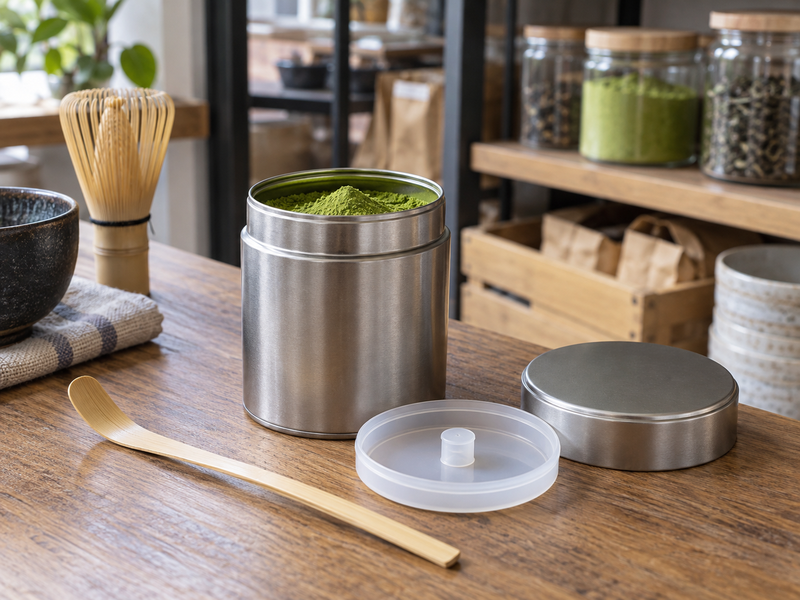
Press-fit lids, screw caps and inner lids may each feel secure while behaving differently after repeated use. Request a production sample with its final finish and liner. Check whether the lid seats evenly, whether a user can close it without pinching the liner and whether powder collects in the closure. Try opening and closing the tin many times under the way it will be handled.
Define what “airtight” means for this purchase. A simple inversion or water test may reveal gross gaps, but it cannot establish oxygen or moisture barrier performance for matcha. Ask a packaging specialist for appropriate test data if the claim is part of your shelf-life case. Examine closures from multiple units for variation. Record dents and out-of-round rims that prevent seating. For retail distribution, confirm whether a tamper-evident element is separate from the reusable lid. The order should state closure construction and allowable changes, not just a photograph of a closed can.
| Closure item | Sample check | Evidence gap |
|---|---|---|
| Lid fit | Repeated open-close | Long-term seal |
| Liner | Position after use | Material specification |
| Inner seal | Arrival integrity | Tamper evidence |
3. Should the powder stay inside its inner pack?
Choose a refill method deliberately
Some brands supply matcha in a sealed pouch within a tin. This can keep the factory seal intact until opening and make refills easier to identify. Others fill powder directly into a qualified tin. Neither format should be assumed better without checking barrier, handling and customer use. Ippodo explains that frequent users may transfer powder to a can for convenience; it also gives product-specific storage guidance.
Trial the actual transfer. If a pouch stays inside, check whether its top folds without interfering with the lid. If users pour powder into the tin, observe dust loss, clumps at the rim and whether they can clean the vessel before a different lot enters. Include instructions about retaining original lot information. A café should not pour a new batch over an unidentified remainder. The packaging decision should account for traceability as well as appearance. Keep a sample of the final pouch-and-tin combination for future packaging changes.
4. What capacity fits normal consumption?
Match volume to the portion plan
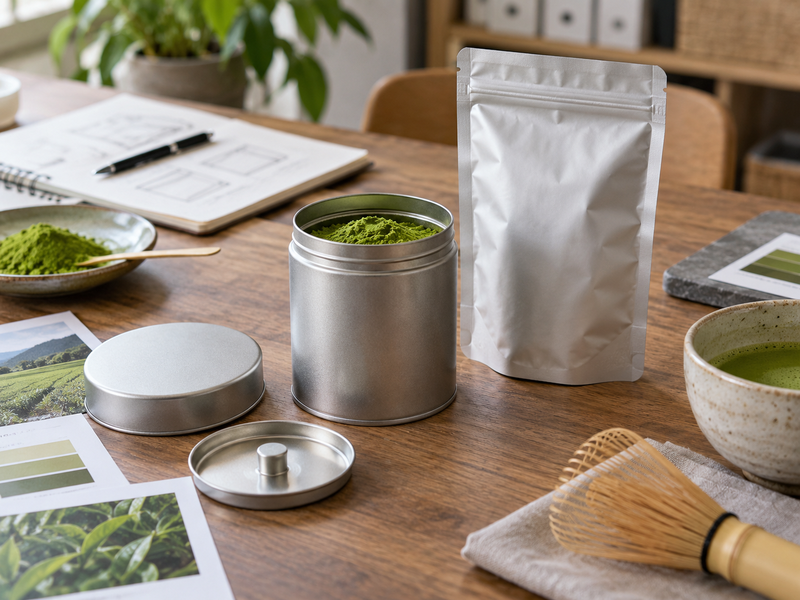
Capacity should be based on the powder quantity a user reasonably opens at one time, not only how much a large tin can hold. Measure the fill volume of the proposed matcha grade and leave room for a scoop without digging into a narrow neck. Powder density can vary, so confirm fit with the actual product and pack weight. A tin marked for one gram amount may not comfortably hold another powder at the same weight.
Test the last serving. Ask staff to dose from a full tin and a nearly empty one. Note whether the scoop reaches the corners and whether powder spills around the rim. For cafés, compare a small daily-use tin with a larger refill container kept under the supplier’s recommended storage conditions. For retail, confirm that label space and shipping size still make sense at the chosen fill. Do not promise a freshness duration from capacity alone. Record the serving estimate as a calculation from your actual recipe rather than a universal matcha rule.
| Capacity question | Test | Decision |
|---|---|---|
| Fill room | Proposed powder mass | No lid contact |
| Access | Full and near-empty tin | Clean dosing |
| Usage | Servings per pack | Sensible refill cycle |
5. How should lining and food-contact materials be reviewed?
Ask about every contact layer
The tin body, coating, liner, inner lid and any seal may contact powder or the pouch. Request material and intended-market food-contact information from the actual pack supplier. A metal exterior can hide an internal coating that deserves separate review. Check whether decoration, ink or adhesive reaches a contact surface. Do not treat a general “food grade” marketing claim as a complete product file.
Inspect the manufactured sample. Look for scratches, coating gaps, sharp internal seams and loose liner edges. Test whether normal scooping damages the finish. If the product is meant for direct fill, quality should assess the complete packaging system for its target market and product. If a pouch provides the primary barrier, document that design instead of implying the tin alone does all protective work. Keep certificate scope and material revision with the approved pack. A cosmetic change may be harmless, but a lining change can require another review.

6. What happens during daily opening and dosing?
Observe ordinary users
Place the tin where it will sit and watch a staff member open, measure, close and return it during a normal drink sequence. A lid that requires two hands may be fine for home use but awkward at a rush station. A wide mouth may improve scooping while exposing more powder during use. The correct balance depends on the service pattern and the supplier’s storage guidance.
Track small failures. Does powder accumulate on the lid edge? Does a damp scoop enter the tin? Can staff identify the open date and lot when several tins are in use? Test whether the container tips when the scoop reaches its bottom. Give a new user the instructions and observe whether closure is obvious. For retail customers, the lid should be intuitive and accessible without compromising the designed seal. A trial in the actual workflow is more informative than an attractive tabletop photograph.
| User action | Observe | Possible fix |
|---|---|---|
| Open | Grip and lid force | Different closure |
| Dose | Spillage and reach | Wider mouth |
| Close | Seated seal | Clear tactile cue |
7. How should tins be cleaned before refilling?
Keep the refill rule simple
If a tin is reusable, decide when staff empty it completely and how they remove residue. Ask the pack maker whether washing is permitted and how the vessel must be dried. Metal seams, liners and paper labels can limit water exposure. If cleaning leaves moisture behind, refilling with dry powder is a poor practice. A dry-wipe method may suit some tins, but it must fit the business’s hygiene procedure.
Test the next-lot change. Empty a sample tin, clean it under the approved method and check rim, seam and lid for old powder. Make sure it is dry before adding material. Record the old and new lot identities in a café refill log where traceability is needed. A consumer kit can provide clear care instructions without promising that every household cleaning method is suitable. If the tin is not intended for direct powder contact after its original contents are used, say so rather than implying unlimited reuse.

8. Which storage instructions belong on the pack?
State conditions the brand can support
Instructions should tell users how to close the container, where to keep it and how to handle the inner pouch if present. Ippodo’s matcha storage article discusses managing exposure during storage, but your label should follow your own product and package evidence. Avoid absolute guarantees such as “fresh for months after opening” without a defined study and conditions.
Write for the real customer. A café needs a staff rule for open date, lot, refill and where daily stock sits. A retail buyer needs concise instructions that fit the label. If cold storage is recommended, address opening a cold pack in a warmer room using supplier guidance so condensation is not overlooked. Have quality review any best-before statement and its supporting method. The storage tin is one part of the system; the matcha’s original packaging, handling and time after opening also matter.
| Instruction | Why include it | Evidence owner |
|---|---|---|
| Close after use | Limits open exposure | Product team |
| Retain lot details | Trace and questions | Quality |
| Follow pack conditions | Matcha performance | Supplier |
9. How should filled tins be shipped and inspected?
Test pack integrity after transport
Ask for the final retail carton, protective inserts and shipper configuration. Inspect a representative shipment for dents, lids that have loosened and inner seals that shifted. A dent near the rim may affect closure even if the tin still looks saleable from the front. Check that lot and date codes remain legible after handling.
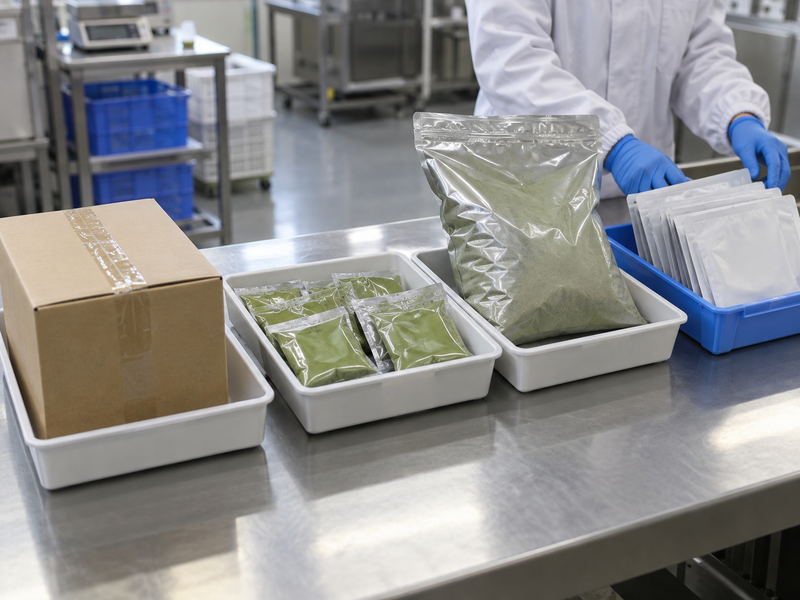
Separate cosmetic and functional defects. Agree which marks can be sold and which require rejection. Open samples from different cartons and inspect the powder or inner pouch under your quality procedure. If tins are shipped empty for local filling, confirm how they remain clean and protected before use. Record carton identity so a defect can be traced to a manufacturing or shipping lot. A low unit price loses value if retailers spend time sorting dented packs or customers cannot close a damaged lid.
10. When is the tin ready for a retail or cafe program?
Approve the package and routine
The purchase file should name the tin maker, dimensions, closure, liner, artwork, direct-fill status and care method. Attach a signed sample, material documents, fill trial and transport inspection. If the tin contains matcha, link it to the product code, lot and supported storage instructions. Matcha Village’s company materials list cans among its packaging options, but availability, fill size and exact construction must be confirmed for a current order.
Set a change-control boundary. A different coating, liner, cap or seam may need another review. Keep a visible reference sample for receiving teams. Staff should know whether the tin is disposable, refillable or a holder for an inner pouch. The best choice is a container that users can close correctly, buyers can trace and quality can support with product-specific evidence. Do not let a decorative finish substitute for those basics.
| Approval area | Evidence | Owner |
|---|---|---|
| Closure | Repeated-use and pack test | Packaging |
| Material | Supplier documents | Quality |
| Use | Refill or retail trial | Operations |
For a refill program, give each café a simple identification method that survives daily wiping. A removable paper note can fall off or become unreadable; a permanent marker may leave unwanted residue. Trial the chosen label holder or log alongside the tin. Staff should be able to answer which matcha lot is in the container without opening several cans or guessing from color. That traceability decision belongs in the tin specification.
FAQ
Q1. Does a tin alone guarantee long matcha shelf life? No. Storage claims need evidence for the powder and full package system.
Q2. Should powder be poured out of its inner pouch? Follow the supplier’s pack instructions and test the intended routine.
Q3. Is a tight-feeling lid necessarily airtight? No. Ask for defined closure and barrier evidence.
Q4. Can cafés refill tins indefinitely? Set cleaning, drying, lot and condition rules for the selected tin.
Q5. What should receiving teams reject? Flag damaged rims, loose lids, broken inner seals and unreadable codes.
Request a final tin sample with its real powder pack, then test opening, dosing, cleaning and transport. Ask suppliers for material and closure evidence that matches that sample. A storage tin earns its place when the everyday routine supports the product claim printed on it.