
A matcha parfait sells through its visible layers, but a cup that looks crisp at assembly can become wet, streaked, or uneven after display. Cafés and dessert chains need a layer plan that remains appetizing at the point of purchase and fits a realistic assembly time. The consumer matcha parfait example from On and Off Keto shows one way to combine tea and cream. This guide treats the format as a commercial dessert: define the eating sequence, test moisture movement, control portions, and validate refrigerated handling.
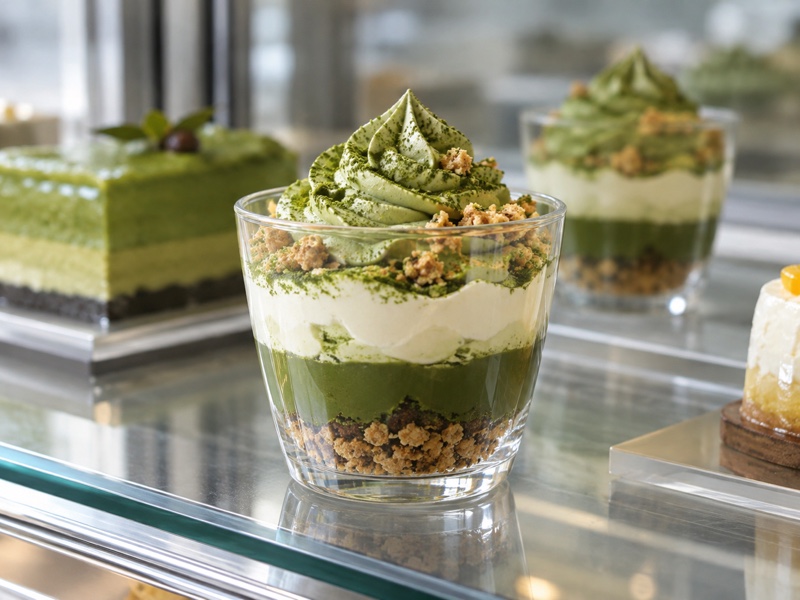
1. What should each spoonful deliver?
A parfait is eaten from the top down, so its layers create a sequence rather than one blended flavor. Decide whether the first spoonful should be creamy, crunchy, or tea-forward. Then decide whether the last spoonful should feel like a complete dessert instead of leftover syrup or dry crumble. Sketch the cup in cross-section with approximate layer thicknesses. Use a transparent cup during development even if the final package is opaque. It reveals smearing, trapped air, uneven filling, and a layer that disappears behind another.
Set an eating target
Give panelists a full cup and ask them to describe the top, middle, and bottom. A beautiful cup can fail because the tea is concentrated in one thin stripe while the rest tastes of sweet cream. If the customer must stir everything to balance the flavor, reconsider the architecture. Define acceptable contrast between soft and crisp parts at sale time. The target should reflect the channel: a dessert served immediately can carry delicate crisp pieces, whereas a refrigerated grab-and-go cup may need them packed separately.
| Layer role | Desired contribution | Failure to watch |
|---|---|---|
| Cream | Body and gentle sweetness | Weeping or tea masking |
| Matcha layer | Recognizable tea | Bitter concentrated stripe |
| Crisp element | Texture contrast | Soggy crumbs |
| Fruit or sauce | Brightness | Color bleed and excess liquid |
2. Which matcha format belongs in the cup?
Matcha can enter as a cream, syrup, cake, crumble, or dusting. Each places tea differently on the palate and affects stability. A dry dusting gives aroma at first but can hydrate into dark spots. A matcha cream spreads flavor widely but may need a higher tea dose to remain perceptible. A cake layer can carry tea while absorbing moisture from adjacent cream. Make small cups that differ only in tea placement, then judge them after the intended display hold. Do not choose from the assembly photograph alone.
Select powder in the finished matrix
Compare candidate grades in the sweet and dairy-rich layer where they will be used. A powder with delicate flavor in water may vanish in cream. A lower-cost powder may taste coarse in a smooth mousse. Matcha Village’s pure matcha range offers a route to request food-use samples and specifications. Check the actual lot and market documents for any purchase. Record dose by cup and by batch. If tea appears in two layers, count both contributions when evaluating flavor and cost.
3. How should the cup be built?
Use a layer map with sequence, target mass, and tool for each deposit. A wide cup gives room for a visible spiral or piping pattern but can make a small portion look sparse. A narrow cup builds height while making clean deposits harder. Test two cup shapes with the same edible mass. Photograph the cup from front and side, then eat it. A tall, pretty cup may make it hard for a spoon to reach a bottom layer without spilling. Cup geometry belongs in product development, not only packaging procurement.
Minimize smear
Piping bags, depositors, and spoons leave different marks on transparent walls. Train two people to build ten cups each using the proposed tools. Count cups that need wiping or rework. A layer that requires delicate hand placement may be feasible in a small dessert bar and expensive in a chain. Record assembly seconds and grams per layer. If the team cannot keep the same cross-section across operators, simplify the design or choose a container that tolerates variation.
| Build variable | Trial option | Record |
|---|---|---|
| Cup shape | Wide versus narrow | Visibility and spoon access |
| Deposit tool | Piping bag versus spoon | Time and wall smear |
| Layer count | Fewer versus more | Taste and assembly time |
| Fill height | Target line | Portion and lid clearance |
4. Which components migrate moisture?
Cream, fruit, syrups, cakes, and crumbs exchange water during storage. Put each candidate crisp element against the wet layer it will touch and check texture after the planned hold. A crumble can soften in minutes, while a cake layer may become pleasantly moist before it becomes pasty. Define the intended texture and measure it by tasting at several time points. An attractive boundary at assembly tells little about the cup after delivery or display.
Try barriers only if they taste good
A thin fat-based coating or a separate sealed topping can protect crunch. Both add cost and process steps. A barrier can also make a hard bite or interfere with spooning. Test it in a full cup, not as an isolated component. If the cup needs a crisp garnish added at handoff, tell operations and cost the labor. For retail, a two-compartment lid may work better than asking stores to assemble the final layer. The best architecture is the one that survives the intended channel with acceptable work.
5. How strong should the tea layer be?
Matcha tastes different in plain cream, sweet syrup, cake, and yogurt. Prepare a low, medium, and high tea dose in the chosen carrier while holding its sweetness and mass steady. Assemble full cups and taste vertically through the layers. Ask whether the tea is distinct at more than one spoonful. A small dark-green stripe may have too much powder for its volume and create a bitter pocket. A pale green cream may be visually gentle yet too weak beside fruit or chocolate.
Consider customer mixing
Some customers deliberately stir parfaits. Taste one cup as layered and another after mixing. The mixed cup should still taste balanced; otherwise, the dessert fails under a common way of eating. Check powder graininess when the tea carrier is cold. If a matcha cream needs more powder than its texture can bear, place tea in a second component rather than forcing dose higher in one layer. The formula should deliver a coherent dessert, not merely a green photograph.
| Tea carrier | Benefit | Limitation to test |
|---|---|---|
| Matcha cream | Even tea presence | May be muted by dairy |
| Matcha syrup | Strong localized note | Bleeding and sweetness |
| Matcha cake | Familiar texture | Moisture uptake |
| Surface dust | Immediate aroma | Wet spots after hold |
6. How long should components and assembled cups hold?
Separate component holding from finished-cup holding. A cream may remain usable under its validated refrigerated procedure while a fully assembled parfait loses crunch much sooner. Prepare components under the actual kitchen method, then build cups at different times and compare them at sale. Keep an assembly-time label on every cup. A dessert can look acceptable at the start of display but fail near closing. Use the intended case temperature and real packaging, including a lid if sold for pickup.
Link quality and safety decisions
Cream, yogurt, fruit, and cooked components can require time and temperature control. The FDA Food Code is a US model for retail controls, but the kitchen must follow local law and its approved food-safety plan. A quality hold such as “crumble stays crisp for two hours” does not determine microbial safety. Conversely, a microbiologically acceptable product may have lost the texture that justifies its price. Set both limits and use the shorter one for sale.
7. What happens under a lid or during delivery?
A lid can touch the top layer, trap condensation, and make a crisp garnish damp. Test cups with the exact lid and label, then stack or transport them as the business would. A tall cream swirl that survives an open display may smear against the lid. A fruit sauce can slip down the cup wall after vibration. Open and eat a cup after the delivery simulation, not only photograph it. If the product cannot travel, restrict it to counter service rather than promising an experience it cannot deliver.
Make travel a separate variant if needed
A pickup format may need lower fill height, sauce in a different position, and a crisp topping packed apart. Those changes affect portion and packaging cost. Keep separate build cards for dine-in and delivery if the designs differ. Do not ask staff to improvise by leaving off a topping without changing the menu description. Evaluate a realistic customer opening: does the lid lift cleanly, and can the topping be added without spilling?
| Format | Typical stress | What to inspect |
|---|---|---|
| Open counter cup | Display time | Drying and layer slump |
| Lidded pickup | Condensation | Top texture and smear |
| Delivery | Vibration | Sauce migration and leakage |
| Retail case | Long chilled hold | Color, texture, date basis |
8. How should the team control portions and waste?
Weigh each component during a short production run. A spoonful of cream or crumble can vary more than expected, and small errors compound across several layers. Use pre-portioned containers or a marked depositor where practical. Record the actual yield from a batch of cream and the number of complete cups it fills. Count leftover components at the end of service. If the matcha layer is costly, a larger-than-specified stripe can erase margin while making flavor worse.
Price the saleable cup
Include edible ingredients, cup and lid, decoration, assembly labor, refrigeration, and unsold finished cups. Components that can be safely held for later use have a different waste profile from fully assembled cups that must be discarded. A lower-cost cup with two clear layers may outperform a complex five-layer design once labor and waste are counted. Check whether the recommended selling price fits the portion. Customers judge a transparent cup against what they can see.
9. What must allergen and label review cover?
Cream, cake, granola, nut garnish, and flavor pastes can introduce milk, egg, wheat, soy, sesame, or tree nuts. The finished formula controls the declaration. The FDA’s food-allergy resource explains US major-allergen labeling and cross-contact concerns; apply destination-market rules for other locations. A gluten-free claim needs evidence for every crumb and topping, not only for the tea. Ingredient substitutions should go through label and allergen review before reaching stores.
For packaged cups, confirm ingredient order, net quantity, storage instructions, date marking, and nutrition requirements with the appropriate specialist. For in-store service, keep an accurate allergen matrix available to staff. If a nut topping is optional, specify how utensils are controlled. A label printed for one parfait variant can be wrong for another with a different crumble or cream. Version each recipe and package artwork together.
| Label review item | Source of truth | Change trigger |
|---|---|---|
| Allergens | Approved component recipes | New cream or crumble |
| Ingredients | Final cup formula | New sauce or garnish |
| Storage | Validated handling plan | Package or process change |
| Date | Quality and safety studies | Longer distribution route |
10. What should the launch trial prove?
Run the complete process with normal staff: component prep, chilling, assembly, lidding, display, customer handoff, and disposal. Retain cups from the beginning, middle, and end of the intended sale window. Evaluate taste, crispness, visual boundaries, temperature records, and saleable yield. If a fault appears, trace the layer responsible and change one variable. A successful trial produces a build card with masses, tools, sequence, holding limits, and approved photos.
Ask suppliers for samples and specifications tied to the chosen tea grade and any purchased inclusions. Keep a control cup photograph and a written sensory description for future lot changes. If the parfait depends on a crisp layer that cannot survive display, move that layer to handoff or redesign the format. The most valuable result of the trial may be a simpler cup that every store can make well.
FAQ
Q1: Can a matcha parfait be assembled the day before sale? Only if the full cup passes quality and safety checks for that hold; crisp layers often need separate handling.
Q2: Is surface dusting enough matcha? It may provide aroma, but test whether the whole cup still tastes of tea.
Q3: What is the best container? Compare visibility, spoon access, lid clearance, leakage, and cost with the actual layer design.
Q4: Why do clear layers bleed? Water and colored sauces move between adjacent components; test barriers or a different sequence.
Q5: How should a chain set portion standards? Weigh each layer, specify a depositor, and audit finished-cup mass and appearance.
Build the parfait for its full sale window, not for the minute after piping. When the layers remain attractive, the last spoonful tastes balanced, and the assembly cost fits the price, the dessert has a workable commercial design.