
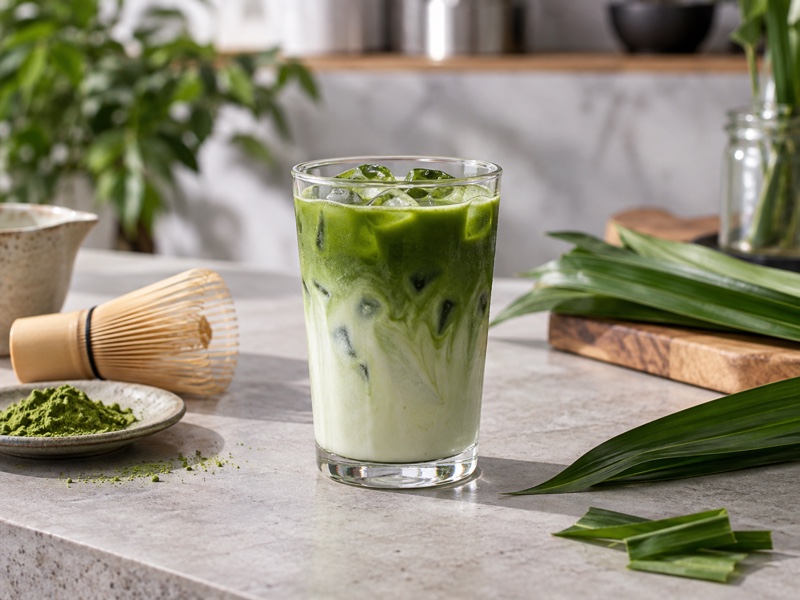
Pandan matcha combines powdered green tea with the warm, grassy aroma of pandan leaf, usually in a milk-based drink. A café can make a striking layered glass that tastes mainly of syrup, or a fragrant drink that turns muddy after ice melts. Develop it as two interacting ingredients, not a green photo opportunity. The iced pandan matcha latte from Sift & Simmer shows the consumer format; a multi-store menu needs measured pandan source, tea dose, sweetness, and assembly instructions. Taste the drink both layered and stirred before deciding what customers should receive.
1. What flavor should a pandan matcha latte deliver?
Pandan offers an aromatic note often associated with vanilla-like and grassy impressions; matcha adds tea, umami, and mild astringency. In milk, both can become soft. Write a sensory target that names which flavor arrives first and what remains after swallowing. A brief menu description such as “pandan aroma with a clear matcha finish” gives a tasting panel a useful test. If the pandan dominates, the drink becomes a pandan latte colored by tea. If the matcha dominates, pandan becomes an expensive decoration.
Test a plain matcha latte, a plain pandan milk, and the combined drink at equal sweetness. This reveals whether an apparent balance comes from both flavors or from sugar masking defects. Taste cold at handoff and after a normal drinking interval. The odor above the cup may be pandan-heavy while the liquid tastes tea-heavy. Capture those observations separately. A layered drink changes as the guest stirs or sips through a straw, so judge the first sip, mixed sip, and final sip.
| Sensory point | What to record | Why it matters |
|---|---|---|
| Aroma at handoff | Pandan and tea intensity | Menu expectation |
| First sip | Sweetness and dominant flavor | Guest impression |
| Mixed sip | Balance after stirring | Actual drinking experience |
| Last sip | Tea sediment or syrup pool | Recipe consistency |
2. Should the café use pandan leaf, extract, or syrup?
Each form solves a different operating problem. Fresh or frozen leaf can produce an appealing ingredient story, but aroma strength changes with leaf quality, cut size, extraction, and storage. Extract provides a concentrated format that may be easier to dose, yet its carriers, color, and flavor profile vary. A purchased syrup offers fast service but fixes sweetness and pandan intensity together. Read the full specification and ingredient statement rather than relying on the phrase “natural pandan” on a sales sheet.
Compare sources in the same cup
Make three small pandan bases at a similar perceived aroma and add them to the same tea and milk recipe. Compare color, aroma, cost, preparation time, and how each behaves after refrigeration. If a leaf infusion is chosen, document leaf mass, liquid mass, heating or steeping method, filtration, and yield. A restaurant can refresh an infusion daily; a beverage chain may favor a validated concentrate for consistency. Neither route is automatically superior. The correct choice fits the menu promise and the staff time available.
3. How should matcha be selected for this aromatic blend?
Choose matcha by tasting it in the full pandan-milk matrix. A powder that shines in water may seem too delicate beneath pandan, while an assertive culinary powder can turn the aftertaste harsh. Compare two supplier samples at the same dose, then compare the most promising ones at a dose that gives similar tea intensity. That second test shows the real cost per acceptable drink. Keep the pandan source and milk fixed during comparisons. Otherwise a change in syrup lot can look like a powder difference.
For a café latte, Matcha Village lists selected culinary and premium grades as sampling points. Obtain the actual ingredient and lot documentation for the proposed grade. Look for tea flavor and a clean green appearance in the finished drink, not simply a high grade name. A fine powder that disperses evenly can reduce green flecks in a pale pandan layer. Taste after ice has diluted the drink as well as immediately after assembly.
| Matcha trial | Hold fixed | Look for |
|---|---|---|
| Candidate A | Pandan, milk, sugar, ice | Tea clarity and color |
| Candidate B | Same full recipe | Astringency and sediment |
| Adjusted dose | Same base and cup | Cost per approved flavor |
4. How much pandan and matcha should go in one cup?
Measure ingredients by mass or calibrated volume, including the water used to whisk matcha. Create a small matrix rather than increasing both flavors together. Keep the tea dose fixed and vary pandan; then hold pandan fixed and vary tea. This identifies a useful balance without wasting full pitchers. Include a control with no pandan and one with no matcha. If tasters cannot distinguish the combined drink from the control, one component may be below its useful dose.
Record the finished cup volume and sweetness for each trial. A rich syrup may add more sugar than expected when increased for aroma. A stronger matcha slurry adds less water if mixed differently. These small shifts alter the perceived strength of milk and tea. Use the same cup, ice mass, and drink temperature for each coded tasting. The preferred sample should still taste balanced when stirred thoroughly, because a guest will rarely preserve a neat layer throughout a whole drink.
5. Which milk gives the flavors room?
Dairy milk, oat drink, coconut drink, and other plant bases carry different sweetness, fat, and background aromas. Coconut can complement pandan, but it can also create a third dominant note. Oat may add cereal sweetness; dairy can soften tea astringency. Do not assume a “barista” label predicts performance in a cold layered drink. Test the exact product at the exact serving temperature. Note ingredient statements and allergen implications before marketing any option as suitable for a specific diet.
Compare the base milks in the same recipe and ask tasters to rank pandan aroma, matcha clarity, mouthfeel, and aftertaste. A milk that gives the best layers may taste less balanced after mixing. Decide whether visual layering or integrated flavor has priority. Also test whether the milk foams or separates when a concentrate is poured onto ice. A café selling several milk choices may need separate sweetness settings rather than one syrup dose for every variation.
| Base | Potential benefit | Test risk |
|---|---|---|
| Dairy | Round texture | Milk allergen and muted tea |
| Oat | Familiar café body | Added sweetness or grain note |
| Coconut | Natural flavor pairing | Coconut dominates pandan |
| Other plant base | Menu flexibility | Separation or thin body |
6. Can a layered drink stay attractive through handoff?
Layering depends on density, pouring speed, cup shape, ice, and the order of addition. The technique that works in a tall photo glass may fail in a takeaway cup with a wide lid. Build the drink using the actual cup and normal bar tools. Photograph it at assembly, at handoff, and after the expected pickup delay. Record whether the line stays distinct and whether tea collects on one side. If the visual disappears within minutes, either speed up service or sell the drink as a mixed latte.
Train staff to pour over ice or a spoon only if the method survives a rush. A method requiring a slow, delicate stream may become inconsistent when several orders arrive together. Taste layered and mixed versions. If a guest sipping from the top receives only matcha while syrup waits at the bottom, the drink needs either a stir instruction or a different build. Attractive strata are useful only if the first and final sips still fit the menu promise.
7. How should the team set sweetness?
Pandan syrup can make sweetness inseparable from aroma unless the recipe uses a separate extract or infusion. If customers ask for less sugar, test whether a half-syrup drink still smells of pandan. If it does not, develop a second pandan source or avoid a “less sweet” option that removes the defining flavor. Measure syrup mass per pump and teach staff the target. A pump may dispense differently after a syrup change or as a bottle empties.
Check a lower-sugar order
Run a sweetness ladder with both the standard and the lowest practical sugar option. Taste after ice melt; dilution can make a sweet first sip feel balanced later, or it can wash out both tea and pandan. For packaged beverages, review nutrition and ingredient declarations from the finished formulation rather than estimating sugar from a recipe card. Keep health claims out of the menu unless they have a sound regulatory basis. Flavor and aroma are enough to sell a well-made drink.
| Sweetness trial | Pandan source | What it answers |
|---|---|---|
| Standard syrup | Fixed | Baseline aroma and sugar |
| Half syrup | Same | Does pandan disappear? |
| Infusion plus sugar | Separate controls | Can sweetness vary independently? |
8. What can be prepared ahead safely?
Separate the components. A pandan infusion, tea concentrate, and milk base each have different handling and quality limits. Document preparation time, covered container, refrigeration, and discard rule for the actual recipe. A premixed layered drink cannot keep its visual structure in a pitcher. Even individual components can change: tea settles, leaf infusion loses aroma, and milk mixtures may separate. Run a service hold test at realistic preparation volumes and inspect the first and last pours.
For US retail foodservice, the FDA Food Code is the model reference for temperature-controlled foods. It does not set one universal life for pandan latte bases. Apply your food safety plan and local requirements, especially for dairy or prepared plant bases. Do not use pleasant aroma as evidence that a held infusion is safe. A short prep schedule that staff can follow often produces better flavor and less waste than a large speculative batch.
9. How should labels and allergens be checked?
Review every ingredient in the exact brand and format purchased. Extracts may include carriers; syrups may contain colors or preservatives; prepared plant milks can include gums and added sugar. For US packaged food, the FDA allergen guidance identifies major allergen declaration requirements. Other markets have their own requirements. For a café, train staff on ingredients and cross-contact risk before advertising a dairy-free variation. A shared blender or steaming pitcher can undermine an otherwise suitable formula.
Avoid implying that the drink comes from fresh pandan leaves if the production recipe uses only a flavored syrup. If both are used, describe that honestly and keep a source specification for procurement. A distributor or chain buyer should request lot and ingredient documentation from both pandan and tea suppliers. The goal is a menu description that matches the liquid in the cup and stays accurate when purchasing substitutes an ingredient.
| Review item | Owner | Release evidence |
|---|---|---|
| Pandan ingredient statement | Purchasing | Exact SKU and lot |
| Matcha identity | Quality team | Supplier specification |
| Milk and cross-contact | Operations | Staff procedure |
| Menu wording | Brand/legal review | Approved description |
10. What would justify a broader café rollout?
Run the selected formula during a normal rush and through the intended holding window. Weigh ingredients for several consecutive cups, then compare aroma, tea flavor, layer appearance, preparation time, and waste. Ask a staff member who did not develop the drink to follow the written build. If that cup fails, edit the recipe card before rolling out. A multi-store launch should include more than one water and ice setup so a central kitchen result is not mistaken for chain consistency.
Buy enough matcha samples to compare lots in the finished pandan recipe. Approve the powder and pandan source together, then keep retained controls for reorder checks. The drink is ready when a guest can identify both ingredients after stirring and staff can make it without a slow ceremonial build. That is a more durable standard than the neat green line in the first promotional photograph.
FAQ
Q1: Is pandan matcha always a latte? No. This guide focuses on a milk-based café version; a water or coconut-based drink needs separate tests.
Q2: Can pandan syrup be swapped for extract? Only after reformulation. Syrup contributes sugar and water as well as aroma.
Q3: Why does the layered glass taste uneven? The flavor ingredients occupy different layers. Test a stirred sip or change the build.
Q4: Can a plant milk make it dairy-free? Check every ingredient and the equipment flow before using that description.
Q5: Which matcha grade should be sampled? Compare beverage-suitable grades in the actual pandan and milk matrix, then choose by finished flavor and cost.