
A handsome bowl and a tidy box do not necessarily make a usable matcha set. A buyer may find that its whisk snags against the bowl, the powder is missing, or replacement parts cannot be sourced once a café starts serving drinks. The best matcha set is the one that works for a defined drink, user, and sales channel. Start with a sample, prepare several cups, clean every component, and record what breaks the workflow. The checks below turn that trial into a purchase brief a supplier can actually answer.
Contents
- 1. Who will use the set and for what drink?
- 2. Which pieces belong in the box?
- 3. Does the bowl suit the chosen whisk?
- 4. How should you judge whisk construction?
- 5. What role should the scoop and sifter play?
- 6. Should a set include matcha powder?
- 7. Can staff and customers clean every piece?
- 8. Will packaging protect the contents?
- 9. Can you reorder and replace components?
- 10. What should a buyer test before approval?
1. Who will use the set and for what drink?
Write the use case before viewing samples
A seated tea service, a takeaway latte bar, and a first-time home buyer will handle the same tools differently. In tea service, the guest may see and hold the bowl. At a busy bar, staff may whisk a small concentrate, pour it into a cup, and immediately rinse the bowl. A retail customer needs clear instructions and forgiving equipment. Write one use case for each intended buyer before comparing products. Include drink size, powder dose, water volume, handling time, cleaning method, and available counter space.
Start at the counter: prepare the actual recipe with a sample, then ask a colleague who has never used the set to repeat it. Their hesitation often reveals a poor fit more clearly than a supplier photograph. A best matcha set claim is meaningful only when attached to a specific user and routine. A shop may therefore choose one set for gift shelves and another for staff training.
2. Which pieces belong in the box?
Separate working tools from decorative additions
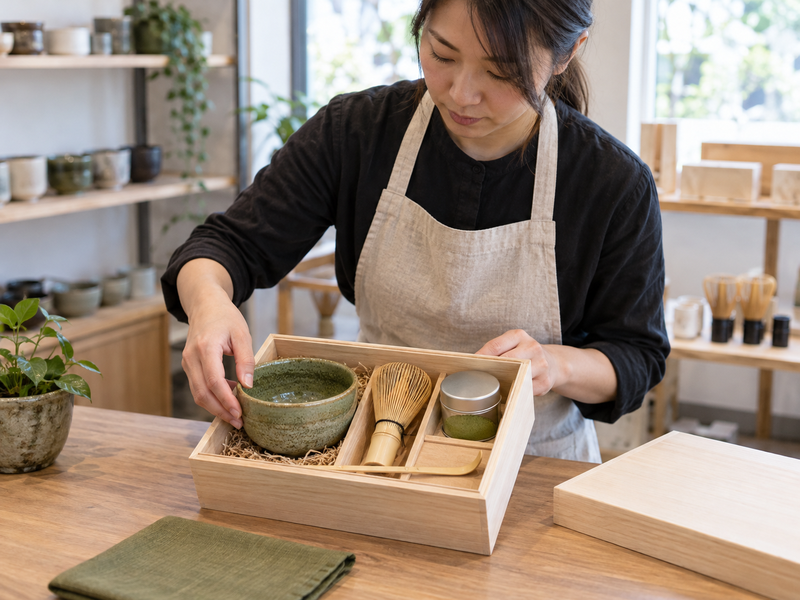
For a basic whisked bowl, the working kit is a bowl, a bamboo whisk, and a way to measure powder. A sifter can help when powder clumps. A whisk holder may protect the whisk’s shape during drying; instructions and powder can matter more than an ornamental tray for a new user. Make a bill of contents and test each item’s job. If a piece adds cost but does nothing for preparation, ask whether the target customer would actually value it.
A useful test: remove one item from the sample set and make the drink again. If nobody notices, that piece may be optional rather than standard. For a café, purchasing individual replacements matters more than an elaborate gift box. For a retailer, a giftable presentation may justify more packaging if it survives transit. Write both versions explicitly rather than forcing every channel into one bundle.
| Component | Basic function | Buyer question |
|---|---|---|
| Bowl | Gives the whisk working room | Does its interior fit the recipe? |
| Whisk | Disperses powder in water | Can it move without hitting the wall? |
| Scoop or measure | Makes dosing repeatable | Are the instructions clear about quantity? |
| Sifter and holder | Help with clumps and drying | Are these needed for this user? |
3. Does the bowl suit the chosen whisk?
Test the pair rather than buying by diameter
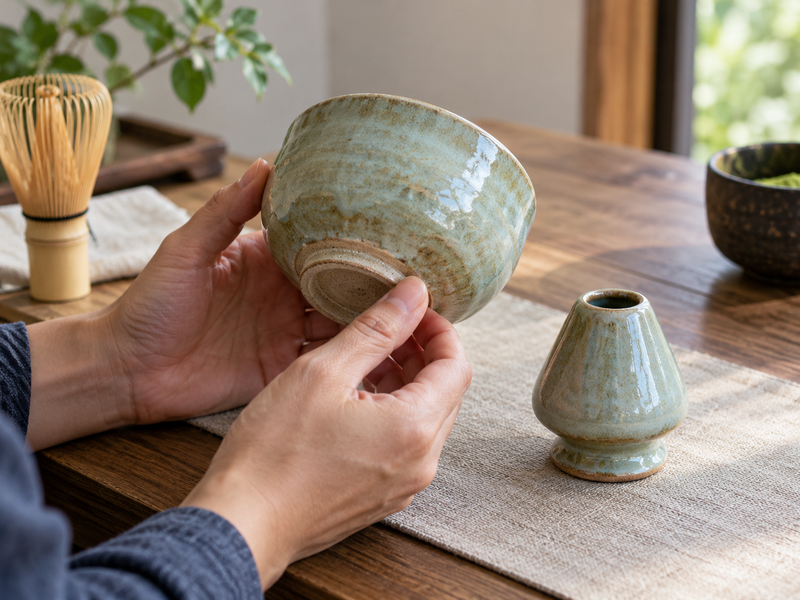
A wide-looking rim does not guarantee that the lower bowl offers enough working area. Place the included whisk on the bowl’s inside floor and make the normal wrist movement. Watch whether its tines hit a steep wall, flatten against the base, or flick liquid over the rim. Then test with the planned water volume and powder dose. The bowl should stay stable on the counter without a hand pressing it down. If staff pour whisked concentrate into another cup, check the rim for drips.
If customers drink directly from the bowl, check lip comfort and heat handling. Measure what happens: record interior width, working depth, and filled weight on the sample card. Compare several units, since a single display sample may conceal production variation. The review of matcha sets discusses bowls and complete kits; a commercial buyer still needs a repeatable trial with their own recipe and service pace.
4. How should you judge whisk construction?
Look beyond tine count
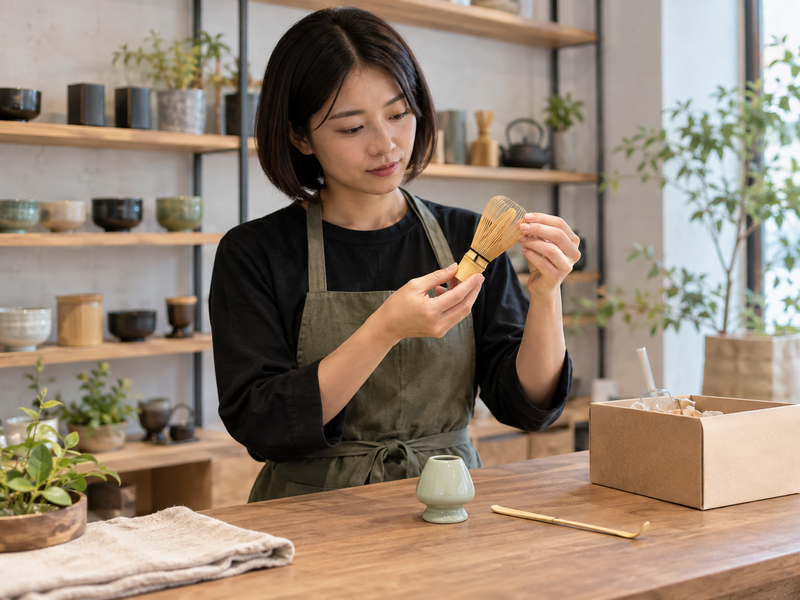
Marketing often reduces a whisk to a tine number, yet the quality of its cuts, tip finish, flexibility, and fit with the bowl also affect use. Inspect the sample before wetting it: look for splinters, uneven cuts, crushed tips, and a handle that feels uncomfortable over repeated cups. Soak and use it according to the seller’s instructions, then rinse and let it dry as customers would at home. A whisk that performs once and quickly loses shape is a poor partner for an otherwise attractive set.
Run a repeat test: have the same operator make several cups with each candidate, noting foam, mixing time, splashing, and any loose fragments. Do not promise a fixed lifespan from a brief trial; record observed wear and ask for replacement terms. Buyers should also confirm that the photographed whisk is the one shipped in production. Substitutions can change the whole experience without changing the box’s exterior.
| Inspection point | Good question to ask | Trial record |
|---|---|---|
| Tine finish | Are tips smooth and intact? | Photograph before and after use |
| Flexibility | Does the whisk spring back? | Note any permanent bend |
| Grip | Can the operator whisk comfortably? | Test several consecutive cups |
| Replacement | Is the same model sold alone? | Request SKU and lead time |
5. What role should the scoop and sifter play?
Make dosing easy for an unfamiliar user
A bamboo scoop looks at home in a traditional set, but its heap size varies with the person and powder. A café needs a scale or measured dosing method during recipe development. A retail buyer may still prefer a scoop if the leaflet explains that scoopfuls are an approximate starting point, not a precise weight. Powder can arrive with small clumps from storage and handling. A fine sifter may make whisking easier, provided it is wide enough, simple to clean, and does not scatter green powder across the counter.
Try the messy version: ask a new operator to open the powder, portion it, sift if needed, and clean up afterward. Observe spills, residue, and time. A kit that photographs beautifully but makes the first cup frustrating will draw complaints. Match the sifter to the bowl opening, and keep a plain measured recipe beside every sample so reviewers compare drinks on equal terms.
6. Should a set include matcha powder?
Decide how the buyer will make the first cup
Powder turns an equipment box into a usable first-cup gift, but it creates extra questions for a business. Which matcha suits straight tea versus milk drinks? How is the pack sealed, dated, and traced? How long will it sit in a retailer’s warehouse before sale? A café buying tools for staff may already have a specified powder and does not need a small sachet in every set. A consumer gift often benefits from a trial pack, as long as the amount supports more than one attempt.
Check the full process: prepare a cup using only what the customer receives. If they must search for powder, a scale, or instructions, the packaging should say so plainly. Matcha Village supplies matcha and works with branded packs and tool-and-gift combinations; a buyer should request the actual powder specification and packaging sample rather than assuming every blend fits every preparation. Keep any food claims tied to verified documents for the target market.
| Buyer scenario | Powder in set? | What to verify |
|---|---|---|
| Café equipment | Usually separate | Recipe match and replenishment |
| Retail gift | Often helpful | Pack freshness and clear use directions |
| Training kit | Small trial pack can help | Same powder as training recipe |
| International shipment | Depends on market | Label and import requirements |
7. Can staff and customers clean every piece?
Test care with real time constraints
Cleaning instructions are part of product design. A bowl with an awkward lip can retain a ring of matcha; a tiny sifter may be difficult to rinse; a bamboo whisk needs appropriate drying space. Ask for care guidance for each material and try it after several cups, not only after a dry display inspection. At a café, compare the steps with the actual sink and staff routine. At home, imagine a buyer with a small kitchen and no dedicated tool rack.
This is where sets fail: they include a holder that cannot fit the whisk properly or a lid that traps moisture. Record the drying footprint, number of parts, and how quickly residue can be seen and removed. Do not infer dishwasher suitability from appearance. Request written material guidance and any required food-contact documentation for the sales market. If instructions are complicated, simplify the bundle or produce a clear illustrated care card.

8. Will packaging protect the contents?
Pack for delivery and shelf display
The bowl and whisk may be fine individually but break when they touch inside a moving carton. Request a packed production sample, then inspect each compartment and closure. Shake it gently, reopen it, and look for contact marks or loose items. For mail-order sales, consider the shipping carton as part of the set rather than judging only the retail sleeve. For wholesale imports, ask how master cartons stack and how many saleable units fit a case. Follow one box: map factory packing, freight, warehouse picking, customer delivery, and unboxing.
Each stage can expose a different weak point. A custom insert should hold the ceramic piece without placing pressure on delicate whisk tines. Clear labels on the exterior help staff identify variants without opening stock. If the set includes powder, check whether food packaging stays sealed and separate from surfaces that could chip or shed fibers.
| Packaging check | Failure it catches | Record for approval |
|---|---|---|
| Component separation | Bowl striking whisk or scoop | Photos after transit trial |
| Retail closure | Items falling out on shelf | Open-close test |
| Master carton | Crushing in distribution | Pack count and stacking plan |
| Variant label | Picking the wrong set | SKU and barcode sample |
9. Can you reorder and replace components?
Ask what happens after a successful launch
The best matcha set should still be serviceable when a whisk wears out or a bowl breaks. Ask suppliers whether every part has its own SKU, whether the same finish can be reordered, and what lead times apply during seasonal demand. For a café, an inexpensive replacement whisk can protect the original set investment. For a retail brand, consistency across reorders affects product photographs, instructions, and customer expectations. Look past the launch carton: request a second production sample or documented tolerance for size, color, and finish.
A handmade bowl may reasonably vary, but the acceptable range should be described before a large order. If the supplier plans a component substitution, require notice and a new trial before it enters the branded box. Keep the accepted sample and purchase specification together. That record prevents arguments over whether a changed bowl or whisk still meets the program’s practical requirements.

10. What should a buyer test before approval?
Use one scorecard across suppliers
Bring each candidate through the same trial: inspect incoming condition, make the planned recipe, clean every piece, pack and unpack it, then repeat with a colleague who has not seen the product before. Note failures separately from preferences. A slightly heavier bowl might be acceptable for a gift yet troublesome during high-volume service; a decorative sleeve may matter in a store and add no value at the bar. Make the decision traceable: record the sample SKU, supplier, date, operator, drink recipe, and photographs. Attach food-contact and powder documents where relevant.
Agree on pass criteria before asking for a wholesale quote. Otherwise a cheaper set may appear to win simply because its missing items are discovered after purchase. A small pilot order gives buyers evidence about transit damage and customer instructions. Only then commit to a larger range or private-label version.
| Trial stage | Pass question | Evidence to retain |
|---|---|---|
| Preparation | Can both operators make the intended drink? | Recipe and notes |
| Care | Can all pieces be cleaned and dried? | Care test photographs |
| Delivery | Does every component arrive intact? | Packed sample inspection |
| Repeat order | Can matching pieces be sourced? | SKU list and written terms |
A practical next step
Choose the best matcha set for the drink and buyer you actually serve. Test the bowl with its whisk, keep dosing and cleaning simple, and verify that packed units and replacement parts match the approved sample. The attractive option may still win, but its appearance should be the final preference after basic function is proven. Ask the supplier for a complete sample and specification, then run one witnessed preparation and unpacking trial. That small effort can prevent a disappointing first cup and a costly range change later.
For more context, compare the published set review with your own sample notes rather than treating any list as a substitute for testing.
FAQ
Q1: Does the best matcha set always include powder? No. A café may already buy powder separately, while a consumer gift often works better with a clearly dated trial pack and instructions.
Q2: Is a higher whisk tine count automatically better? No. Finish, flexibility, bowl fit, and repeat-use performance matter alongside the stated tine count.
Q3: What should a café test first? Prepare its standard drink with the sample bowl and whisk, then clean both pieces using its normal station routine.
Q4: Can one set serve retail and foodservice buyers? Sometimes, but the channels value different packaging, replacement terms, and service speed. Test both use cases.
Q5: What belongs in a wholesale approval record? Keep the sample identifier, full component list, drink trial, care instructions, packing evidence, and agreed replacement terms.