
Whisks often look interchangeable in a listing. Put them into the same bowl, however, and differences appear quickly: one catches on the rim, one sheds a splinter, and another leaves dry powder against the base. The best matcha whisk set supports the drink you intend to make and survives ordinary care. For café or retail buying, ask for a production sample and test its whisk, holder, scoop, and any bowl as one working system. These ten checks give staff a consistent way to compare candidates without mistaking accessories for function.
Contents
- 1. What drink will the whisk prepare?
- 2. Does the whisk fit its bowl?
- 3. How should you inspect bamboo tines?
- 4. Does the handle suit repeated use?
- 5. What does a holder actually contribute?
- 6. Should the set include a scoop or sifter?
- 7. How do you judge mixing performance?
- 8. Can the whisk be cleaned and dried safely?
- 9. Can individual pieces be replaced?
- 10. What evidence belongs in a buying decision?
1. What drink will the whisk prepare?
Match the tool to the method
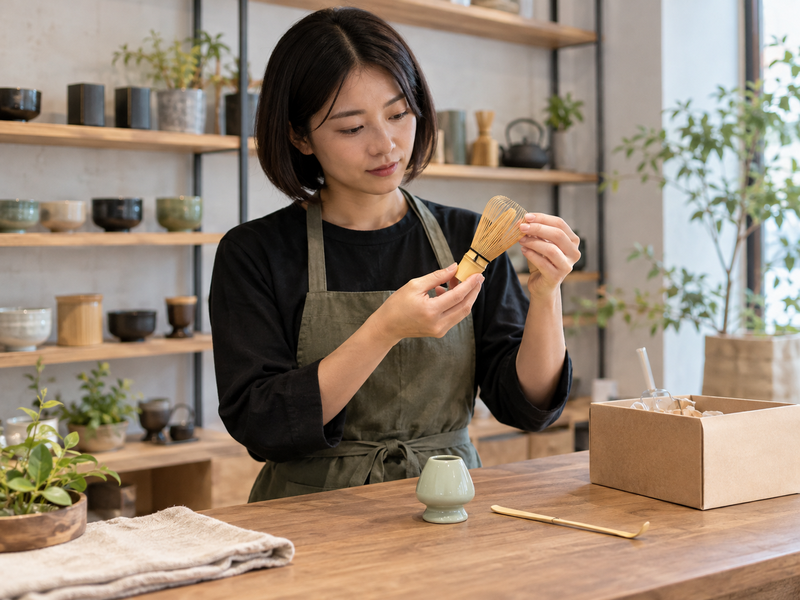
Whisking a small amount of matcha and water for a latte concentrate differs from preparing a bowl intended for direct drinking. The recipe changes the liquid depth, movement, and desired finish. A training set may need forgiving tools that show a beginner what properly dispersed powder looks like. A café may need a whisk that feels manageable through repeated orders. Write the intended recipe on a test card before opening sample boxes: powder amount, liquid amount, bowl, and mixing time.
Watch the first attempt: ask a new user to follow the supplied instructions without coaching. Where do they hesitate or splash? Their questions can expose missing directions and awkward tool choices. Do not label any whisk universally superior based on appearance or tine count. The best matcha whisk set for one channel might be less useful in another, even when both contain good bamboo work.
2. Does the whisk fit its bowl?
Check the usable interior, not the outer diameter
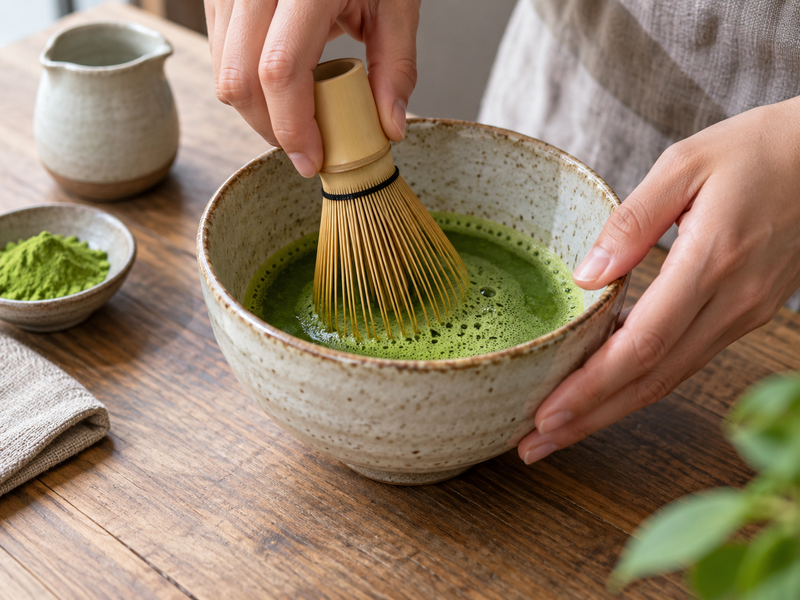
A narrow or sharply curved bowl can crowd a wide whisk. A deep bowl may let the operator hold it securely while a shallow vessel may splash at the same water volume. Put the whisk into the actual bowl sold with the set. Move it as staff will move it, including a brief faster whisk and a slower finishing motion. Check whether the tines touch walls or compress against the base. A whisk that is excellent in one bowl may wear quickly in another.
Use a simple comparison: draw a line on the sample sheet for each observed wall strike and splash. Also note the bowl’s stability and the clearance around the handle. If the set has no bowl, list compatible dimensions and test it in a representative vessel. Buyers should not rely on a product photo that places the whisk beside a bowl without showing it in use.
| Fit question | Sample test | Why it matters |
|---|---|---|
| Tine clearance | Whisk at normal speed | Reduces wall contact |
| Liquid depth | Use actual recipe volume | Reveals splash and reach |
| Base shape | Sweep across the center | Finds unmixed powder |
| Bowl stability | Work without gripping hard | Reflects service handling |
3. How should you inspect bamboo tines?
Look at finish and alignment
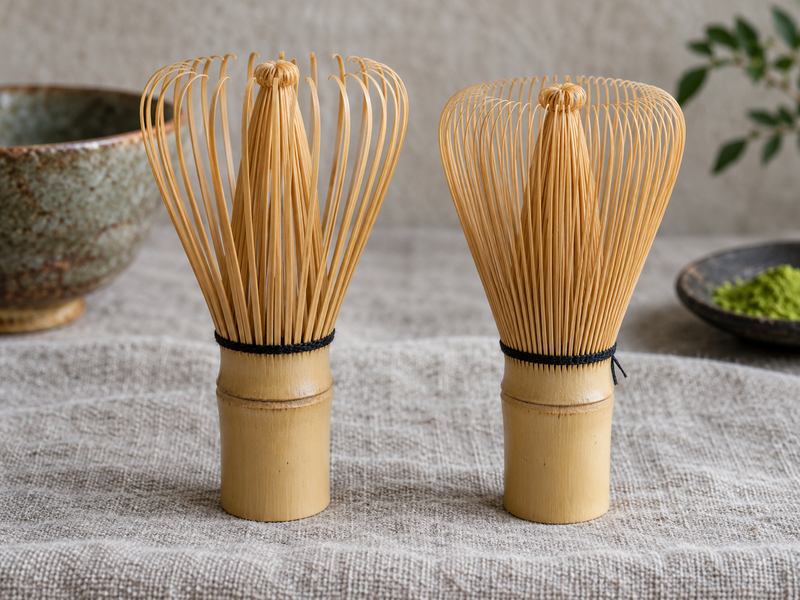
Counted tines are easy to advertise, but neat cuts and intact tips tell a buyer more about the sample in hand. Examine several whisks under good light. Look for loose fibers, uneven lengths, cracked or crushed tips, and rough edges near the binding. Photograph each before use, then compare after a few cups and a proper rinse. Some variation is natural in bamboo; the question is whether variation changes function or introduces fragments.
Do the same work twice: test multiple units from the same lot rather than a single polished showroom piece. Ask the supplier how they inspect production pieces and what happens if a shipment contains visibly damaged tines. Avoid an arbitrary universal pass number: match the acceptance criteria to the recipe, bowl, and price point. A set intended for first-time users should tolerate a normal learning curve without demanding delicate handling that the instructions never explain.
4. Does the handle suit repeated use?
Test grip and wrist motion
A whisk handle that feels pleasant for one photograph may strain a hand during a rush. Have two operators make several cups, including one person unfamiliar with the tool. Note grip position, handle diameter, balance, and whether fingers slide after a rinse. A small handle might suit a compact travel kit but feel cramped during foodservice training. The bowl also affects grip: if it rocks, operators compensate with the whisk hand.
Ask the operator, not only the buyer: where does the wrist feel the work, and what movement produces the best dispersion without striking ceramic? Record those answers while the task is fresh. A comfortable handle does not guarantee a durable whisk, but a consistently awkward grip is a clear reason to compare alternatives. For retail, instructions can show a simple hold and movement; for cafés, a short hands-on demonstration may prevent needless damage.
| Handling observation | Record | Possible response |
|---|---|---|
| Slipping grip | When it happens | Try another handle finish |
| Cramped fingers | Who experiences it | Compare handle size |
| Wall strikes | Frequency in test | Recheck bowl fit |
| Uneven foam | Recipe and operator | Adjust method before judging tool |
5. What does a holder actually contribute?
Give the whisk a place to dry
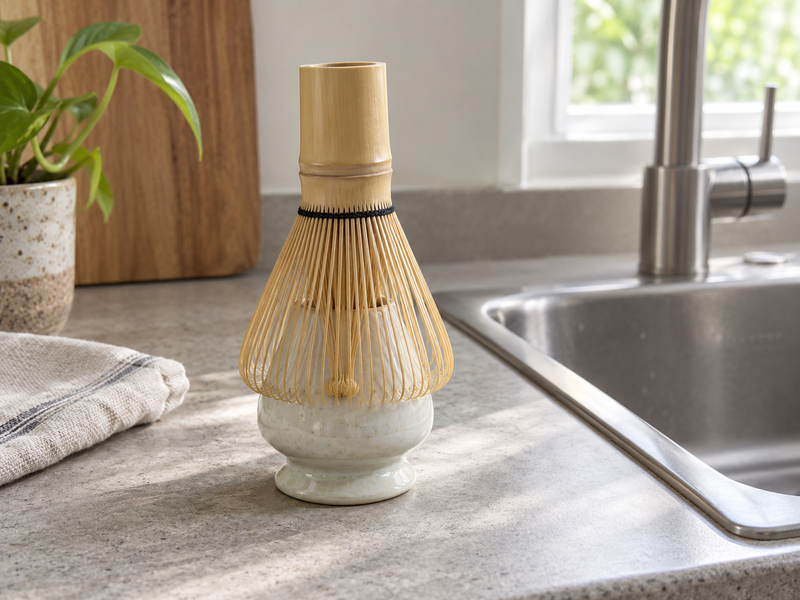
A ceramic whisk holder is useful when it supports the tool’s shape and keeps damp tines away from a crowded work surface. Yet it must fit the particular whisk in the box. Test the pair after rinsing; a holder that presses the tines apart or leaves the whisk unsteady adds risk rather than care. At home, the holder may sit beside a sink. In a café, staff need a designated drying area away from spills and storage bins.
Check the footprint: measure the holder and whisk together, then place them on the real counter. Ask whether the holder is easy to wipe and whether a wet base leaves a mark on shelving. Some customers may prefer a plain drying rack already in use. Do not make a holder compulsory simply because a competing kit includes one. Document its role and include it only when the user can maintain it.
6. Should the set include a scoop or sifter?
Include pieces that change the first cup
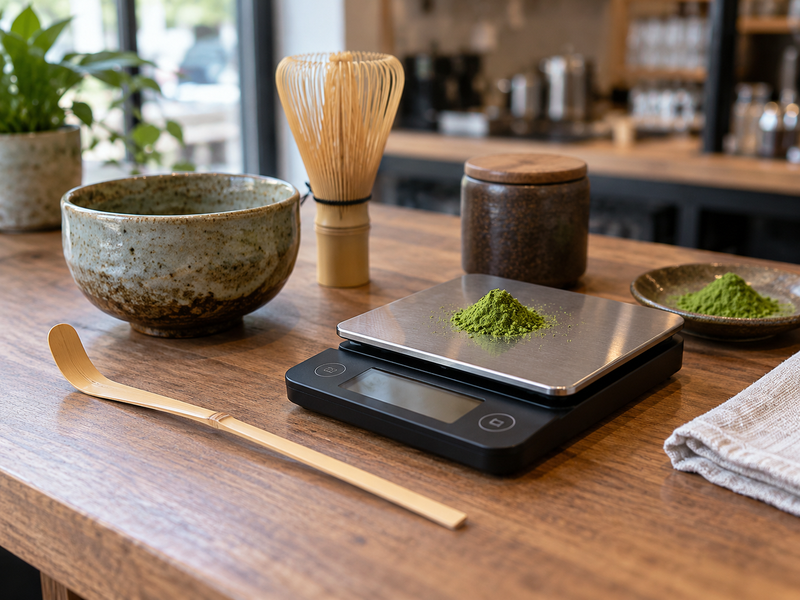
A bamboo scoop offers a familiar way to transfer powder, but its amount is approximate. A scale is better for setting a café recipe or comparing powders. A sifter can break up clumps before whisking, especially when the pack has been opened and handled repeatedly. Neither item fixes stale powder or a poor whisking technique. Ask a first-time user to make a cup with only the supplied pieces, then with a scale and sifter added.
Notice the friction: does powder scatter, does the scoop fit the tin, and can the sifter be cleaned without leaving green residue in its rim? If the kit includes a sifter, make sure its diameter suits the bowl. If it omits one, explain when a customer might benefit from buying one later. A set that is easy to use is more valuable than a larger set of pieces nobody wants to wash.
| Optional piece | Practical use | Include when |
|---|---|---|
| Scoop | Transfers powder | Gift use values simplicity |
| Sifter | Breaks visible clumps | Recipe or powder benefits from it |
| Scale | Checks repeatable doses | Training or recipe development |
| Care card | Explains rinse and drying | New users receive the set |
7. How do you judge mixing performance?
Keep the recipe constant
Comparing whisks with different powders, temperatures, or bowls produces a noisy result. Use one matcha lot, a fixed dose, consistent water conditions, and the same bowl where possible. Time how long it takes to disperse powder, then check the bottom for dry spots. Observe foam if that matters for the intended drink, but do not treat foam height alone as a verdict: the operator’s motion and recipe change it. Taste the result: dry powder and lumps are easier to notice in a prepared cup than in a photograph.
Have each operator use each candidate in a changed order to reduce the effect of practice. Record practical notes rather than declaring a laboratory score from a brief trial. A commercial buyer can then decide whether a more expensive whisk saves enough time or reduces enough waste to justify its cost.
8. Can the whisk be cleaned and dried safely?
Observe the entire care routine
After preparation, rinse the whisk as the maker recommends and check whether powder remains between tines or near the handle. Let it dry in the space customers or staff will actually have. Bamboo should not be put away wet in a closed box; a gift set therefore needs care directions that explain where the whisk belongs after use. For a café, the routine should fit staff handover and the day’s cleaning schedule.
Try a busy shift scenario: place several used whisks beside a sink and see whether they can remain separate, identifiable, and free from contact damage. Ask the supplier for written care advice. Do not infer that a ceramic holder makes any whisk maintenance-free. Inspection after cleaning may show a cracked tine that was hidden by green residue during use. Replace visibly damaged tools under the program’s agreed procedure.
| Care step | Check | Record |
|---|---|---|
| Rinse | No visible powder between tines | Time and method |
| Dry | Air can reach tines | Space and holder fit |
| Store | Tool is not compressed | Storage photo |
| Inspect | Damage is noticed early | Replacement trigger |
9. Can individual pieces be replaced?
Plan beyond the first sale
A bowl might last for years while a whisk remains a consumable tool. Ask whether the same whisk and holder are available separately, in what pack sizes, and with what lead time. A retail customer should be able to replace a worn whisk without buying another gift box. A café should hold enough working stock to cope with broken tools during service. Think about continuity: if a supplier changes whisk shape, will it still fit existing holders and bowls? Request notification of substitutions and test new components before calling them equivalent.
Keep the accepted sample and SKU list with the order record. This matters for private-label sets because a component change can alter both the drink experience and the accuracy of printed instructions. A slightly lower initial price loses appeal if every worn whisk forces a full kit replacement.
10. What evidence belongs in a buying decision?
Build a small, repeatable scorecard
Make one form for all candidates. Record sample identification, bowl dimensions, whisk condition, recipe, operators, mixing observations, cleaning time, packing quality, and separate replacement availability. Keep supplier claims in a different column from what the trial actually showed. Make one last cup: let a new operator follow the printed instructions and tell you what seems unclear. Then inspect the packed set as a purchaser would see it. This test catches missing care information and accessories that shift in transit.
An editorial tool list such as Food & Wine’s hands-on equipment article can give buyers ideas, but the final approval belongs to a controlled trial under their own service conditions. Ask for a production sample before a bulk order and retain the approved unit for later shipment comparisons.
| Decision field | Evidence | Pass question |
|---|---|---|
| Fit | Whisk and bowl trial | No damaging contact? |
| Preparation | Same recipe across samples | Smooth, repeatable cup? |
| Care | Rinse and dry test | Practical for users? |
| Supply | SKU and lead-time list | Replacements available? |
A practical next step
Choose a whisk set around a real recipe, not a checklist of decorative pieces. Inspect several bamboo whisks, use them in their intended bowl, observe a new operator, and confirm that care and replacement are straightforward. The best matcha whisk set will make a predictable cup without demanding unusual skill or fragile handling. Ask suppliers for a full packed sample and a separate replacement list, then test both during a short pilot. Staff will notice the difference at the counter, and retail customers are more likely to keep using a set they can maintain.
FAQ
Q1: Is a whisk with more tines always better? No. Tine finish, flexibility, bowl fit, and the intended recipe matter alongside a published tine count.
Q2: Does every whisk set need a holder? A fitted holder can support drying, but buyers should test its size and whether users have room for it.
Q3: How should two sets be compared fairly? Use the same powder, dose, water conditions, bowl where practical, and more than one operator.
Q4: Can a whisk go back into its gift box after rinsing? Wait until it has dried according to the maker’s instructions; closed damp storage can create problems.
Q5: What should a café stock separately? Spare whisks are sensible. Confirm the same model can be reordered without purchasing complete gift sets.