
“Keto matcha” may describe a low-carbohydrate latte, a dry mix, or a café customization. Those products can have very different ingredient lists and nutrition panels. Pure matcha does not make a sweetened drink suitable for a particular diet by itself. A brand must define the complete serving, choose fats and sweeteners deliberately, calculate and verify nutrition, and review the proposed label in every market. This guide addresses that product-development work without promising weight loss, treatment, or a universal dietary threshold.
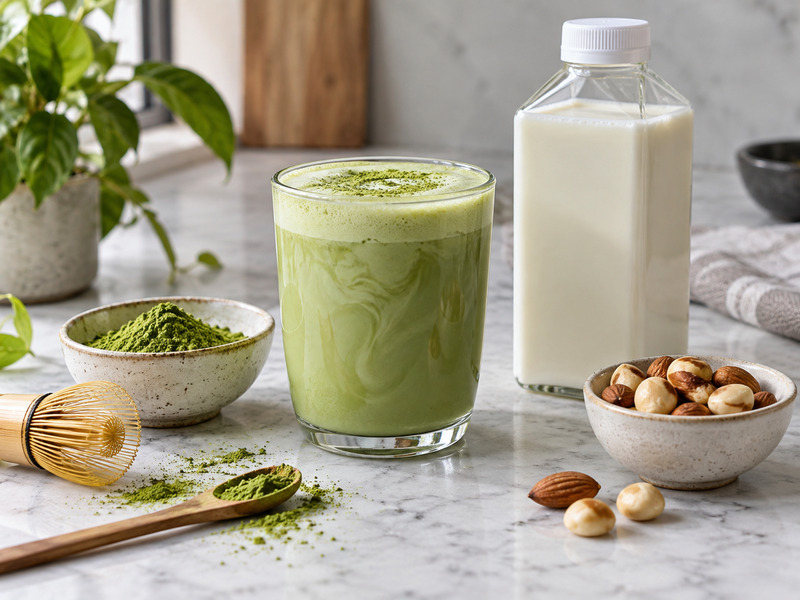
1. What does the product name mean for the buyer?
The term “keto” often signals a low-carbohydrate formulation, but it is not a complete technical specification. A retailer needs an actual serving size, ingredient declaration, nutrition data, and clear preparation directions. A café needs a recipe that staff can repeat when milk or sweetener is changed. A dry mix manufacturer must decide whether the nutrition panel describes powder alone or a prepared drink with a specified liquid. The buyer should set a written target with regulatory review before asking suppliers for a “keto matcha” sample.
Define the serving on paper
State whether the sold product is pure matcha, a premix, a ready-to-drink beverage, or a made-to-order latte. Record cup volume, powder grams, liquid, sweetener, added fat, and toppings. A cream cap or flavored syrup changes the finished drink even if the base is unchanged. If a brand sells sachets, the preparation instructions must match the nutrition information and the ingredients customers are told to add. Use a complete ingredient list for each variation. A product cannot be approved solely because a development cup tastes creamy and contains green tea; the nutrition and label must follow the actual recipe.
2. Which matcha format makes formulation easier?
Pure matcha gives the formulator control over sweetener and fat additions. A sweetened premix can simplify service but may not fit the intended carbohydrate position. An unsweetened blend may add texture ingredients or flavoring, which still require review. Test pure matcha powder and any latte powder against the same finished-serving brief. Read the full ingredient declaration; a product name is not evidence of carbohydrate content.
Compare equivalent prepared cups
Prepare each route at the target volume and tea strength. Weigh every ingredient, including the liquid used to disperse powder. Taste for tea presence, sweetness, mouthfeel, and finish after the normal service delay. Calculate nutrition from supplier data and verify it through the appropriate method before artwork. A premix that saves staff time may have less room for customer customization; a scratch formula may require more training. Record both effects. If a chain offers dairy and plant-based versions, each version needs its own recipe and nutrition assessment rather than a single umbrella claim.
| Format | Formulator control | Main review |
|---|---|---|
| Pure matcha | Sweetener and fat chosen separately | Staff steps and consistency |
| Unsweetened blend | Some texture built in | Full composition |
| Sweetened premix | Fast fixed recipe | Nutrition and claim fit |
3. How should sweeteners be chosen?
A sweetener changes taste, aftertaste, body, labeling, and sometimes digestive tolerance. The brand should choose against a target cup rather than a fashionable ingredient list. A sweetener that works in a hot latte may taste different in a cold one; some leave a lingering note that clashes with matcha bitterness. Blending sweeteners can smooth taste but adds formulation and sourcing complexity. Ordinary sugar, syrups, and flavored creamers must be counted if they are part of the served drink.
Run a blind sweetness ladder
Hold matcha, liquid, and fat constant while testing several sweetness levels and candidates. Ask tasters to score the first sip, tea presence, and aftertaste after several minutes. Then test the selected formula with the actual topping or flavor addition. A high sweetness level can hide a weak or stale tea powder; reducing sweetness later may expose that flaw. The development team should document both the approved taste and the ingredient quantities. Regulatory staff should review any “sugar free,” “no added sugar,” or related claim under the destination market’s rules. The FDA’s guidance on sugar-free claims shows why exact wording matters in the United States.
4. What does the liquid base contribute?
Dairy milk, cream, unsweetened plant milks, and water have different carbohydrate, fat, protein, flavor, and allergen profiles. An unsweetened carton is not automatically equivalent to another brand or another size of serving. A café should approve specific products and a substitution rule. A packaged mix should state what liquid its nutrition and sensory directions assume. If a customer adds a sweetened oat drink to an otherwise unsweetened matcha powder, the resulting beverage differs from the brand’s standard example.
Test the base in the final build
Measure liquid volume, temperature, and any cream or added fat. Prepare the cup hot and iced if both are advertised. Check dispersion, body, color, and whether the tea remains identifiable after dilution. For a chain, train staff on carton selection and storage; similar packaging can lead to the wrong base at the bar. Build a matrix of approved liquids with their supplier nutrition data and allergen declarations. If a liquid supplier changes formulation, repeat both sensory and nutrition review. Do not describe every plant-based version as “dairy-free” until toppings, premixes, and cross-contact controls have also been checked.
| Base decision | Beverage effect | Buyer check |
|---|---|---|
| Dairy or cream | Richness and milk allergens | Exact quantity and label |
| Plant-based carton | Distinct flavor and solids | Sweetened versus unsweetened |
| Water-led | Clearer tea character | Mouthfeel and powder texture |
5. When are added fats useful?
Some formulations add cream, coconut ingredients, or oils for richness. The decision should begin with flavor and product positioning, not a promise that added fat changes a consumer’s health. Oil can separate or form a surface layer if the drink is not emulsified well. A dry mix containing fat-bearing powder may face caking or shelf-life questions. More fat also changes cost and the nutrition panel. A beverage with a visibly oily ring is unlikely to meet a café’s sensory standard even if its arithmetic matches a target.
Test emulsion and service behavior
Add fats at measured levels and use the mixing tool available in production. Compare appearance and mouthfeel at handoff and after the planned waiting period. If a drink is blended, check whether the same result can be achieved on the chain’s equipment during peak service. For a packaged beverage, the formula needs a formal stability and safety program in its final pack. Record any residue left in blenders or cups. If the ingredient list grows to solve separation, reassess whether the commercial benefit justifies added formulation complexity. A simpler latte may be the better product.
6. What should a café recipe card control?
The card should specify matcha grams, water for a slurry, liquid base, sweetener, optional fat, ice, and cup size. “One scoop” or “a splash of cream” will not support nutrition consistency. The build order matters: dry powder can clump in cold fat-rich liquid, and an oil may separate if added at the wrong stage. Staff should know which customizations alter the advertised nutrition profile. Menu software may need a clear distinction between the standard cup and modified orders.
Rehearse the recipe under load
Ask several baristas to make consecutive drinks while a trainer weighs the final cups and records preparation time. Taste a hot and an iced version after a realistic pickup wait. Check for clumps at the bottom, a surface oil ring, and unexpected sweetness from a wrong carton. If the product is offered as a dry sachet, test whether a new customer can follow its instructions without special equipment. A recipe that requires a high-shear laboratory blender is not suitable for a café equipped with a spoon and shaker. Simplify the method or change the product format before scaling.
| Recipe control | Record | Drift to watch |
|---|---|---|
| Matcha dose | Grams and lot | Weak or bitter cup |
| Liquid base | Brand, type, volume | Nutrition mismatch |
| Mix sequence | Tool and timing | Clumps or separation |
7. Which nutrition and claim checks belong before launch?
The complete formula determines nutrition, including optional flavors sold as part of the standard drink. A “keto” phrase should be reviewed by qualified regulatory staff for each market and channel. If the pack also says “low sugar,” “sugar free,” or gives a carbohydrate figure, each statement needs the proper basis. Avoid turning a dietary-positioning term into a treatment or weight-loss promise. The relevant evidence should be tied to a defined serving and final product, not a supplier’s generic page about matcha.
Keep a claim-evidence ledger
List the precise wording proposed for packaging, menu, ecommerce, and sales materials. Next to each, record the calculation or test, serving size, regulatory review, and approved version. If the formula changes, reopen the ledger before printing more labels. A dry mix can be prepared with different liquids, so the brand should clearly separate “as sold” from an illustrative prepared serving where required. Customer service staff need the same approved facts. A carefully formulated drink can lose credibility quickly when a menu number, sachet panel, and website chart describe three different recipes.
8. How do allergens and storage affect the offer?
Milk, tree nuts, soy, and other allergens may enter through cream, plant-based beverages, flavorings, or premixes. The FDA food allergen guidance can support U.S. packaged-product review; other markets and foodservice settings need their own checks. A “keto” name does not tell an allergic customer what the product contains. Keep an ingredient matrix for the standard drink and approved substitutions. Cross-contact procedures matter where a frother or blender serves several recipes.
Protect the powder and prepared drink
Pure matcha and dry blends need a pack that limits exposure during storage and repeated opening. A fat-containing dry mix can have different caking and flavor stability from pure matcha. Test the final pack across the intended selling period. For café preparations containing dairy or other perishable ingredients, food safety staff should set cold holding, cleaning, and discard rules. Do not apply a dry-powder shelf life to a mixed drink. If a store pre-batches a base, define how the batch is identified and how staff know when to discard it.
| Risk | Where it appears | Control record |
|---|---|---|
| Undeclared allergen | Premix, base, topping | Approved ingredient matrix |
| Powder caking | Opened dry pack | Storage and pack trial |
| Prepared-base handling | Café station | Food safety procedure |
9. How should cost be compared across formulas?
A fat-rich or specialty-sweetened cup can cost more even if its matcha dose stays low. Compare complete accepted servings: powder, base, sweetener, fat, cup, labor, and normal waste. A premix may save staff time but fix the recipe; scratch preparation may be flexible but yield more variation. Include the cost of label verification and formula revision in a packaged-product launch. A nutrition target that customers dislike will not be rescued by a strong gross margin on paper.
Model customer modifications honestly
A café may sell the standard cup with extra cream, flavored syrup, or a different milk. Those options change cost and may change any nutrition statement attached to the base recipe. Separate them in the point-of-sale build and train staff on what they can say. Pilot a small set of clearly named options rather than a matrix too complex to prepare accurately. Record remakes from clumps or taste complaints and opened-pack disposal at quiet outlets. The commercial test should ask whether customers reorder the measured standard drink, not whether they liked one customized tasting made by the development chef.
10. What should purchasing and product teams approve?
Approve a formula, a representative powder lot, exact base and sweetener inputs, measured recipe, sensory reference, nutrition file, claim language, packaging, and supplier change process. Bulk matcha supply can be evaluated after the target drink is defined. Request current specifications and ingredient declarations for every supplied component. A formula revision made to solve mouthfeel may alter the claim; purchasing, R&D, and regulatory teams need one controlled version of the truth.
Plan for the next ingredient change
Keep retained samples and a record of how the approved drink tastes after its intended holding time. A new matcha lot, alternate sweetener, changed milk carton, or larger sachet should trigger a targeted retest and nutrition review. If sales expand to another country, check local labeling before repeating the same pack. Train stores on the standard recipe and on how to answer customer questions without offering medical or weight-loss advice. The product is ready when its taste, numbers, label, and daily preparation all refer to the same serving.
| Approval item | Evidence | Recheck when |
|---|---|---|
| Finished formula | Measured recipe and sensory sample | Ingredient substitution |
| Nutrition and claims | Verified serving and review | Dose or market change |
| Service or pack | Store trial or final-pack study | Equipment or material change |
FAQ
Q1: Is plain matcha automatically a keto product?
A finished product needs its own formula, serving size, nutrition assessment, and claim review. The ingredient name alone is insufficient.
Q2: Can a café use any plant milk in a keto matcha latte?
No. Different products have different ingredients and nutrition. Approve specific bases and review the complete serving.
Q3: Does added oil improve every matcha drink?
No. It may change mouthfeel, separation, cost, and nutrition. Keep it only if the finished cup passes sensory and stability tests.
Q4: Can a brand promise weight loss?
Do not infer such an outcome from matcha or a low-carbohydrate formula. Claims require qualified evidence and regulatory review.
Q5: What should trigger a new label check?
A change in powder, sweetener, base, serving size, preparation instructions, or destination market should reopen the nutrition and claim file.