
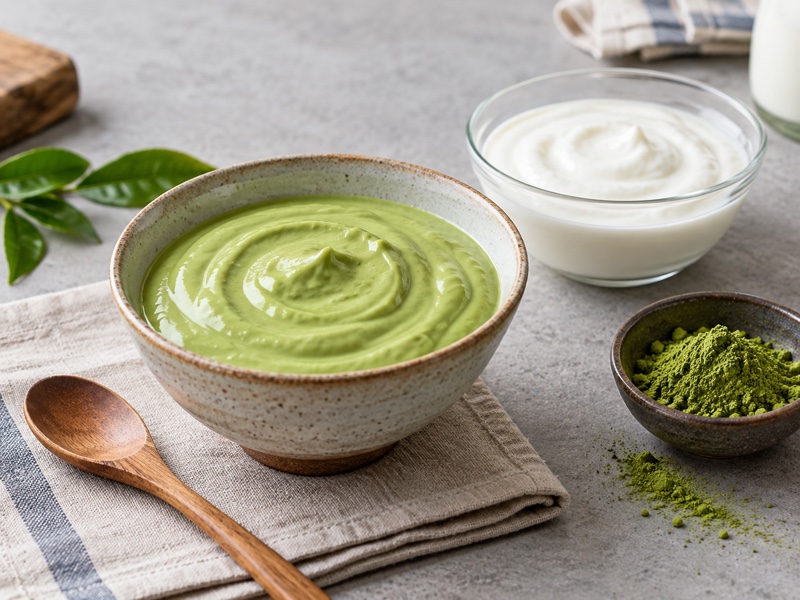
Matcha yogurt brings green tea into an acidic cultured base. That acidity can sharpen tea bitterness, while a thick yogurt can make dry powder difficult to disperse. For a food manufacturer or café, the winning version must taste balanced after refrigeration and match its label. The simple matcha yogurt example from Greenbowl2soul shows the consumer idea. The ten checks here cover base selection, mixing, sweetness, cultures, stability, and the choice between a stirred product and a visible swirl.
1. What kind of yogurt product is being developed?
Decide whether the product is a fresh café bowl, an individually packed stirred yogurt, a fruit-on-bottom cup, or a matcha swirl in plain yogurt. Each has a different preparation and holding problem. A café can mix near service; a factory must fill many cups consistently. A swirl may photograph well but deliver tea in only a few spoonfuls. A fully blended yogurt may taste even but look less dramatic. Write a target for texture, tea intensity, sweetness, portion, and shelf condition before choosing powder.
Test a full serving
Ask panelists to eat the whole portion without guidance, then note whether tea remains noticeable, whether the yogurt’s tang feels sharp, and whether the last spoonful is gritty. A one-spoon tasting can exaggerate a pleasant top layer or miss a bitter bottom. Include a plain-yogurt control made from the same base. This shows whether matcha improves the product or simply adds cost and green color. Take observations at the temperature customers will actually eat it.
| Format | Benefit | Main check |
|---|---|---|
| Fresh mixed bowl | Flexible preparation | Staff dosing and clumps |
| Stirred retail cup | Even tea flavor | Color and texture over time |
| Matcha swirl | Visual contrast | Uneven eating experience |
| Layered cup | Distinct components | Water migration |
2. Which yogurt base gives tea enough room?
Base acidity, fat, protein, viscosity, and sweetener influence how tea reads. A very tangy plain yogurt can make matcha seem harsher. A rich, sweet base can bury tea. Obtain the actual base specification and taste several candidates with one fixed matcha dose. Include a dairy base and any plant-based alternative the brand intends to sell. Do not assume that an oat or coconut cultured base behaves like dairy. Each can change color, grain, and aftertaste.
Use controlled comparisons
Prepare equal masses of yogurt in identical cups, then add the same tea slurry. Keep mixing time and chill time fixed. Score tea clarity, acid balance, spoon thickness, and visible whey. If one base separates after stirring, the defect may belong to the base or the added liquid, not the powder. Check the ingredient list of sweetened yogurts before adding further sugar. A commercial yogurt already formulated for fruit may respond differently to a dry tea ingredient.
3. How much matcha survives acidity and cold?
Build a low, medium, and high dose series in the preferred base. Weigh powder and yogurt precisely, then judge the mixed product after a standardized chill. Cold temperatures can reduce aroma perception, so a dose that seems sufficient during warm mixing may taste faint at sale. At the same time, more powder can make the finish dry and accentuate acidity. Choose a dose from full-portion tasting, not a single spoon or color preference.
Compare supplier samples in yogurt
Matcha Village’s pure matcha range is a relevant starting point for requesting food-use grades and specifications. Compare actual lots in the finished yogurt, including after the proposed hold. A powder that wins in plain water may not win in acidic dairy. Record color drift and sediment as well as flavor. Ask procurement for the exact product and destination-market documents rather than assuming a general company statement describes the shipment.
| Dose series | Hold constant | Decide from |
|---|---|---|
| Lower | Base, sweetener, mixing | Tea recognition |
| Middle | Base, sweetener, mixing | Balance and color |
| Higher | Base, sweetener, mixing | Bitterness and grain |
4. How can the powder be mixed without thinning yogurt?
Dry matcha folded into thick yogurt often leaves dark pockets. A small slurry can disperse it, but extra water may loosen the texture or trigger whey separation. Compare a water slurry, a slurry made from a portion of yogurt, and direct high-shear mixing if equipment permits. Keep the total ingredient mass the same. Examine specks against a white bowl and taste for dry powder. The best method should work in a full production batch, not only in a laboratory cup.
Check first and last units
During a pilot fill, sample early, middle, and late cups. Uneven green or tea intensity can signal poor mixing or a settling tea premix. High shear can also alter yogurt structure. Record mixing speed, time, vessel size, and product temperature. If a café staff member stirs each bowl by hand, specify a simple method and audit portion weight. If manufacturing, involve a dairy technologist before changing a cultured base’s process; a quick mixer change can affect viscosity and culture handling.
5. Is a swirl better than a stirred formula?
A swirl creates contrast, but its tea concentrate must be compatible with yogurt. A thin syrup can bleed and pool. A thick paste can remain as bitter streaks. Build both a stirred control and a swirl version using the same total matcha per cup. Photograph fresh and held cups, then have panelists eat them normally. Note whether the last bites contain most of the tea or sweetness. The swirl is worthwhile only if its visual value survives the planned hold and the eating experience remains balanced.
Make the pattern reproducible
Test the deposit tool and sequence at production speed. A hand-drawn pattern may vary across operators. A depositor can make a stable ribbon but may need a different concentrate viscosity. Count rejected cups and cleanup time. A fruit-on-bottom product adds another interface where color and moisture can move. If the swirl bleeds after refrigeration, adjust its carrier or accept a fully blended appearance rather than asking stores to sell a degraded pattern.
| Design | Visual benefit | Holding risk |
|---|---|---|
| Fully stirred | Uniform green | Color drift across whole cup |
| Surface swirl | Striking top | Smear under lid |
| Internal ribbon | Visible cross-section | Bleeding and uneven tea |
| Separate topping | Fresh control | Extra pack and user step |
6. How should sweetness be set?
Start from the selected yogurt’s existing sugar and acidity. Add sweetener in measured steps while holding tea dose constant. Ask whether sweetness softens the tea’s rough edge without making the yogurt taste like dessert sauce. If a fruit component is present, evaluate the whole cup; fruit can provide most of the perceived sweetness. Do not accept a sample solely because the matcha note becomes less bitter. It might have disappeared. A product marketed as plain or lightly sweetened needs a taste that matches that description.
Review claims against the formula
The FDA’s guidance on nutrient-content claims explains that US terms characterizing sugar or other nutrient levels have rules. Use a target-market reviewer for final label language. “No added sugar” requires an ingredient and label assessment; it cannot be inferred from a spoon tasting. Calculate nutrition from the approved formula and verify as required. Any tea or fruit premix may contribute sugar that procurement overlooked when it compared only the yogurt base.
7. What happens to cultures and labels?
Yogurt production relies on cultures, but processing and later ingredient additions can affect what the finished product contains. If the brand wants a live-culture claim, validate it in the finished product over the intended shelf life. The FDA’s yogurt compliance guide discusses US labeling of yogurt and statements about live and active cultures. Do not infer a live-culture count from the base supplier’s claim after adding matcha or after any heat treatment. For export, review the destination market’s yogurt standard and culture-claim rules.
Track ingredient timing
Specify whether tea enters before or after fermentation. Heat, acidity, and process timing can alter tea color and taste as well as the cultured product. A post-culture addition might simplify flavor control but brings its own hygiene and mixing questions. A pre-culture addition could interact with the fermentation process and must be tested by the dairy team. Record pH and texture across pilot batches as process controls, but do not use a pH reading alone to establish safety or a printed date.
8. How should refrigerated stability be tested?
Store the exact filled cup under its intended distribution condition. Check at production, after transport simulation, mid-shelf life, and near the proposed date. Inspect whey release, matcha flecks, color, flavor, lid contact, and off aromas. A stir may hide visible whey but change the customer’s experience. If instructions say “stir before eating,” test whether a normal spoon movement restores a pleasant texture. Keep retained samples from several production lots before assigning a commercial shelf life.
Separate quality from safety
A dairy food-safety specialist should assess the formulation, process, package, and target market. The FDA Food Code is a US retail handling model; manufacturing rules and local requirements must also be considered. A yogurt cup may remain safe yet become visually unsaleable due to watery separation or muddy green. Set an acceptable quality endpoint as well as a safety endpoint. Any change in tea, base, swirl, or cup can require a stability retest.
| Storage point | Observe | Action if poor |
|---|---|---|
| Day of fill | Specks and uniformity | Fix mixing |
| After transit | Layer shift and lid smear | Adjust pack or deposit |
| Midlife | Whey and color | Review base and process |
| End of life | Flavor and safety results | Revise date or formula |
9. What allergens and ingredient statements need review?
Dairy yogurt contains milk; plant-based bases can bring soy, tree nuts, or other relevant allergens. Fruit and granola components add more possibilities. The FDA food-allergy resource explains US major-allergen labeling and cross-contact controls. Check the finished formula, including tea premixes and flavor carriers. A plain matcha powder does not make the entire yogurt gluten-free or dairy-free. Avoid such claims without a complete ingredient and process assessment.
For packaged cups, link artwork to the approved formulation version. Ingredient order, net quantity, nutrition, storage statement, and any culture claim need final review. If a distributor translates the label, confirm the tea ingredient and allergens survive translation accurately. In cafés, keep an allergen matrix for bowls and optional toppings. Staff should know when a supposedly simple matcha bowl includes sweetened syrup or a nut-based granola.
| Release record | What it proves | Recheck after |
|---|---|---|
| Fill weight | Portion consistency | Depositor adjustment |
| Tea lot | Approved flavor and color | Supplier change |
| Culture evidence | Accuracy of any live-culture statement | Formula or process change |
| Stored samples | End-of-life quality | Package or shelf-life change |
10. What belongs in a release specification?
Lock the yogurt base, matcha grade and dose, mixing method, sweetener, swirl if any, fill weight, cup, lid, and refrigerated handling. Include photos of acceptable color and separation at several points in the sale window. Record culture-claim evidence if such a claim is used. QA should inspect early and late units from each pilot run. Procurement should retain the approved tea lot and a procedure for comparing substitutes. Finance should price saleable units after filling loss and rejected cups.
For a café bowl, write a short build card and train on the exact scoop or scale. For a retail cup, complete the manufacturing validation and shelf-life study. The best formula may be a stirred version with modest tea strength rather than a dramatic swirl that turns uneven by the time it reaches a store. Let the full eating experience and end-of-life sample settle that choice.
FAQ
Q1: Can matcha be mixed into plain yogurt? Yes. Wet the powder carefully and test the finished texture and taste after chilling.
Q2: Why does a green swirl bleed? Its carrier may be too thin or incompatible with the yogurt base; test viscosity and deposit method.
Q3: Does adding matcha preserve live cultures? That cannot be assumed. Validate any culture claim in the finished product.
Q4: Can a plant-based version be called yogurt? Naming rules vary by market, so review the exact product and destination rules.
Q5: What should buyers request from a matcha supplier? Get a sample, lot-specific specification, and documents needed for the intended market and product.
Choose the yogurt base and tea as a pair. A controlled dose and mixing trial, followed by real refrigerated storage, will show whether the product is balanced in the cup that customers buy.