
Matcha wholesale negotiation often begins with a price per kilogram and ends with arguments about a different product: a changed grade, a larger bag, a shorter remaining dated life, or a shipment later than expected. Buyers can prevent that drift by agreeing on an approved sample, measurable specification, order bands, and acceptance process before discussing discounts. This guide is a working agenda for importers, food brands, and café chains. The U.S. International Trade Administration’s pro forma invoice guide lists the commercial details a quotation should carry; the buyer still has to define matcha quality and operating needs.
Contents
- 1. Which product should the parties price?
- 2. How should a buyer set the quality specification?
- 3. What can a minimum order quantity include?
- 4. How should price bands be compared?
- 5. What belongs in an allocation agreement?
- 6. When should a price review occur?
- 7. How should payment and delivery be stated?
- 8. What should happen if a lot fails acceptance?
- 9. How can concessions stay visible?
- 10. What must the final order confirm?
1. Which product should the parties price?
Fix the SKU before comparing offers
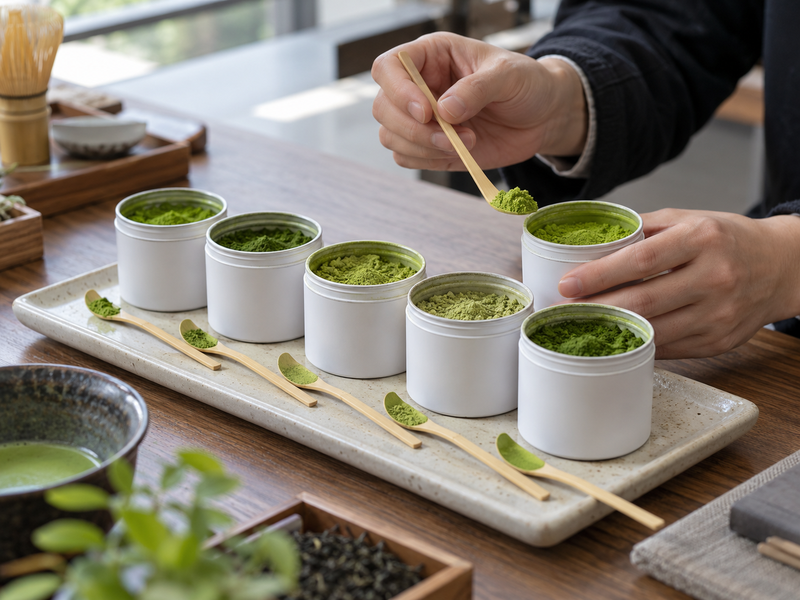
Ask each supplier to quote the same intended application and pack format. A latte blend, straight matcha powder, and a product positioned for drinking tea are different purchases even if all arrive in green bags. Provide a brief that names the menu or finished product, target taste, color expectation, dose under trial, inner-pack size, destination, and projected order rhythm. Keep an approved physical sample labeled with its supplier code and lot. If the first offer lacks those details, request a corrected quotation before comparing unit prices.
The grade word on a sales sheet cannot replace a usable specification. “Ceremonial” may mean different things across sellers and it may not suit a smoothie or sweetened beverage. Make the buyer’s application the decision point. An importer can request documentation relevant to its destination market, but should avoid treating a certificate headline as proof that every future lot will match a tested sample. U.S. importers should examine their own duties under FDA foreign supplier verification guidance with qualified advisers where applicable.
| Quote input | Buyer states | Supplier confirms |
|---|---|---|
| Intended use | Drink or food application | Proposed product code |
| Sensory target | Tested flavor and color reference | Approved sample and lot |
| Pack format | Inner bag and master case | Available configuration |
| Market | Destination and documents needed | Document scope and timing |
2. How should a buyer set the quality specification?
Turn tasting notes into acceptance criteria
Run the same recipe with every shortlisted sample. Record powder dose, liquid, preparation method, serving size, and tasting time. Then note the attributes that actually decide the purchase: color in the finished drink, bitterness against other ingredients, dispersibility, residue, and consistency between replicate preparations. Attach an agreed reference sample and define which characteristics require documented testing. A supplier may already have a specification sheet; mark any missing buyer requirement rather than assuming that all sheets measure the same things.
Write how future lots will be checked and how disagreements will be resolved. The process can include receiving inspection, sample retention, review of a lot-specific document, and agreed testing where warranted. Do not insert an arbitrary tolerance into a contract because it sounds scientific. Use a method and limit suited to the product, destination, and risk assessment. A FDA supplier evaluation resource explains why supplier performance and relevant records matter to regulated importers. For a café buyer, the approved recipe trial makes a useful commercial control alongside the formal food-safety program.
| Specification element | Evidence | Acceptance discussion |
|---|---|---|
| Sample identity | Sealed reference and lot | What variation is acceptable? |
| Recipe result | Blind or coded preparation record | Which sensory traits matter? |
| Analytical requirement | Agreed method and document | Who provides and reviews it? |
| Package | Approved artwork and inner bag | What change needs approval? |
3. What can a minimum order quantity include?
Ask what actually drives the MOQ
An MOQ may apply per product, per pack size, per label design, or per production run. Ask the seller to separate those thresholds. A buyer seeking two flavors in three bag sizes can face six different minimums despite one headline quantity. Request a sample order or a small production lot where available, then model a realistic reorder schedule. A steep discount for a large initial quantity loses value if stock ages before the brand can sell it.
Test alternatives in the negotiation. Could a standard bulk pack support a first market trial while branded retail packs wait for demand evidence? Could several stores share one carton size without opening inner bags? Could the seller hold a forecast and ship smaller confirmed call-offs? Each option changes storage, freight, and supplier scheduling, so ask for a written quote rather than an informal promise. Do not represent a requested flexibility as an established Matcha Village policy. The final minimum should be tied to the chosen SKU and pack configuration, with a clear treatment of overrun and underrun if production is involved.

4. How should price bands be compared?
Calculate delivered and usable cost
Compare offers on one basis: same product, same pack size, same currency, same destination, and same delivery responsibility. Add freight, insurance where applicable, import costs, testing, relabeling, storage, and expected handling waste to the quoted product price. Keep uncertain costs as ranges. A price band should state the volume needed, whether it is measured per order or over a period, and whether mixed SKUs qualify. Ask when a higher-volume tier takes effect and what happens if actual purchases miss a forecast.
The International Trade Administration notes that sale terms, payment method, taxes, and tariffs affect export pricing. A buyer should make those items visible beside the powder price. Request the validity date of each quote. If a seller offers a lower number only in return for a much larger opening order, estimate the cost of carrying that stock through its remaining dated life. A spreadsheet with assumptions stated openly helps both sides negotiate a feasible commitment instead of trading unsupported claims about market price.
| Cost line | Offer A | Offer B | Verification needed |
|---|---|---|---|
| Product per usable kilogram | Quoted figure | Quoted figure | SKU and pack basis |
| Transport and insurance | Estimate | Estimate | Delivery term and point |
| Import and local handling | Estimate | Estimate | Broker or internal record |
| Stock exposure | Expected range | Expected range | Sell-through forecast |
5. What belongs in an allocation agreement?
Convert a forecast into shipment decisions
For a chain or manufacturer, the hard question may be availability during a promotion rather than price. Give the supplier a rolling forecast split into firm orders and nonbinding estimates. Ask which quantities, if any, the supplier will reserve, when the buyer must call them off, and what notice applies to an increase or reduction. Name the product code and acceptable substitute policy. A different grade or origin should not silently replace an approved ingredient in a printed recipe.
If a buyer needs a launch window, discuss the schedule backward from the required usable receipt date. Include production, testing, packing, export documentation, freight, customs, and local distribution in the timeline. The parties can agree on a status update cadence and escalation contact when a milestone slips. A broad statement such as “priority supply” gives neither team a quantity or date to manage. Keep the supplier’s actual commitment distinct from a planning forecast; write both in the order record so an optimistic spreadsheet does not become a disputed promise.
6. When should a price review occur?
Name triggers before costs move
A contract with a fixed term can still need a price review mechanism. Define the review date, notice period, supporting evidence, currency, and affected future orders. If the parties discuss changes related to packaging, freight, or raw material availability, name those categories in the clause and state how an adjustment is proposed and accepted. Avoid automatic formulas using inputs neither side can verify. Confirm whether already accepted purchase orders keep their agreed price.
Reviewing price should also reopen any linked assumption. A new inner bag may change unit cost but improve site handling. A cheaper grade may demand a higher dose per drink. A freight change may alter delivered cost while leaving product price untouched. Record each proposal as a revised commercial package rather than arguing about one number in isolation. Have contract counsel review clauses with legal effect for the destination and governing law. The ICC’s Incoterms questions and answers makes clear that delivery rules do not decide sale price, payment timing, or breach remedies; those require separate agreement.

| Review trigger | Information to bring | Decision to record |
|---|---|---|
| Scheduled renewal | Performance and demand data | New price validity |
| Pack change | New dimensions and handling cost | Revised SKU or price |
| Freight change | Comparable transport quotations | Delivered-cost change |
| Product change | New sample and specification | Reapproval before order |
7. How should payment and delivery be stated?
Put every commercial term in one document
The quotation should identify buyer and seller, product, quantity, price, currency, payment milestones, delivery point, named Incoterms rule where used, estimated shipping date, and quote validity. The International Trade Administration’s pro forma checklist includes these fields. Ask who arranges freight and customs work for the chosen route. If a buyer compares an origin price with a delivered price, adjust for the separate obligations before declaring one offer cheaper.
Use the rule and named place precisely, for example the chosen Incoterms 2020 rule plus the agreed location. The ICC guidance explains the rule’s scope and its limits. Payment method, ownership, technical specification, delay remedy, and rejection process still need contract language. Confirm whether a deposit applies to sampling, packaging artwork, a production slot, or the full order. A clear payment calendar can protect both parties from a shipment ready to leave while the account team debates an invoice they never approved.
| Term | Write down | Common gap to close |
|---|---|---|
| Currency and price | Unit and total basis | Exchange-rate assumption |
| Payment | Method and milestone | Meaning of “balance before ship” |
| Delivery | Rule, year, named place | Freight and risk handoff |
| Documentation | Responsible party and deadline | Missing import paperwork |
8. What should happen if a lot fails acceptance?
Agree on the evidence and clock
Define a receiving inspection window, how samples are taken, which records accompany a complaint, and how stock will be isolated pending review. Separate visible transport damage from a sensory disagreement or failed agreed test. The buyer should document lot code, quantity affected, photographs, pack condition, and the method used. The seller needs a contact and a response period. The process should say who decides whether the lot is usable, reworked where appropriate, replaced, credited, or returned.
A reference sample is useful, but no sealed sample stays identical to a commercial lot forever. State how a later lot can vary and how a disagreement is escalated. For food-safety issues, follow the applicable regulatory obligations and the parties’ incident procedures; commercial remedies do not replace those duties. A buyer importing to the United States may also need records for its foreign supplier verification program. Negotiate this process before the first shipment, when both sides can still design a fair sampling and evidence trail.

9. How can concessions stay visible?
Keep one version of the deal sheet
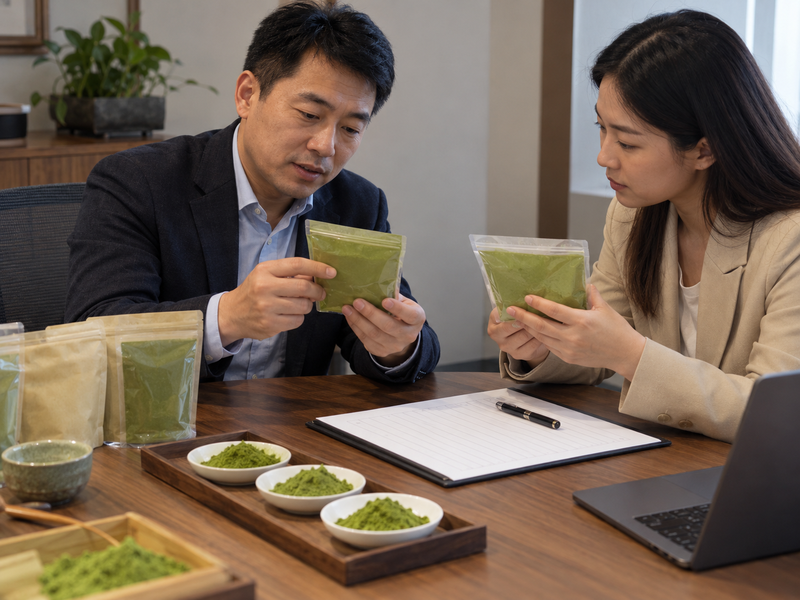
Record every offer and concession in a shared comparison sheet with date, owner, and status. If the supplier reduces price in exchange for a higher MOQ, note the MOQ beside the price. If the buyer asks for smaller inner packs, record any change in lead time and packaging cost. Put tentative proposals in a separate column from accepted terms. Meeting notes should identify decisions, open questions, and who must provide evidence before the next call.
This discipline matters when purchasing, quality, marketing, and logistics join a long negotiation at different times. A buyer may approve flavor and color while logistics assumes a carton size that does not fit its distribution center. Ask each function to sign off on the fields it owns before sending a purchase order. The sheet is a commercial working tool, not a substitute for the executed agreement. Its value lies in making the trade-offs visible before a draft contract or pro forma invoice compresses them into a headline total.
| Proposal | Buyer benefit | Buyer cost or risk | Status |
|---|---|---|---|
| Lower unit price | Lower product cost | Larger opening inventory | Open or accepted |
| Smaller inner packs | Less exposed powder | Higher packing cost | Open or accepted |
| Reserved volume | Better launch planning | Firm call-off commitment | Open or accepted |
| Longer payment period | Cash-flow relief | Possible price change | Open or accepted |
10. What must the final order confirm?
Match the contract to the tested product
Before signature, compare the final order with the approved sample and the latest agreed deal sheet. Check product code, specification revision, lot-document requirements, packaging artwork, MOQ, price tier, currency, payment dates, delivery rule and place, shipment window, acceptance process, and contacts. An attachment may be more practical than crowding every detail into a short purchase order. Number its version and require approval for later changes. Keep the sample and recipe trial record accessible to the receiving team.
Ask the supplier to acknowledge the order in writing. Acknowledgment should resolve conflicting standard terms rather than adding a second set of unnoticed conditions. For Matcha Village inquiries, send the application brief and requested pack configuration with projected first and repeat orders; ask the team to confirm what it can quote for that exact case. Then have purchasing, quality, and operations review the same final version. The strongest matcha wholesale negotiation ends when both teams can describe the same product, the same shipment, and the same response if something goes wrong.
Use our matcha supply agreement guide to turn the negotiated terms into an order document both teams can check.
FAQ
Q1. Is the lowest price per kilogram the best offer? Compare usable, delivered cost at the same specification and pack size, including stock exposure and documented service needs.
Q2. Should an MOQ be negotiated per order or per year? Ask which basis the seller uses. Agree on a structure the buyer can meet and the seller can schedule.
Q3. Can an Incoterms rule cover product quality? No. The ICC says specifications and payment terms require separate contract provisions.
Q4. What if an approved sample is unavailable for future lots? Agree on a documented replacement reference and run the intended recipe trial before accepting a product change.
Q5. When should legal or regulatory specialists join? Bring them in before agreeing on import obligations, regulated claims, governing law, or remedies that the commercial team cannot assess alone.
Send a specification, not a price-only request
Prepare a one-page brief with the recipe, approved sample, pack choice, expected order cadence, destination, and documents needed. Ask each shortlisted supplier for a written quotation against that brief. The resulting offers can be compared line by line, and any concession can be tied to the change that earned it.