
Matcha wholesale for smoothie bars has to work in the cup and behind the counter. A powder that tastes pleasant whisked with water can disappear under banana, clash with tart fruit, or settle visibly in a thick blended drink. A cheap large bag may also slow staff if each portion needs extra sifting. This guide gives operators a trial plan before they commit to volume: compare finished recipes, time the workflow, calculate powder used per serving, and set a reorder specification. A published study of matcha beverage properties measured meaningful differences among powders; a bar still needs to test its own ingredients and equipment.
Contents
- 1. What job should matcha do in the smoothie?
- 2. Which samples deserve a recipe trial?
- 3. How should the bar compare fruit combinations?
- 4. What changes with dairy or plant milk?
- 5. How can staff test blending and texture?
- 6. What powder dose makes commercial sense?
- 7. Which pack size fits peak-hour service?
- 8. What should cleaning and allergen controls cover?
- 9. How should a chain set its reorder standard?
- 10. What should the first wholesale order include?
1. What job should matcha do in the smoothie?
Decide the menu promise before grading powder
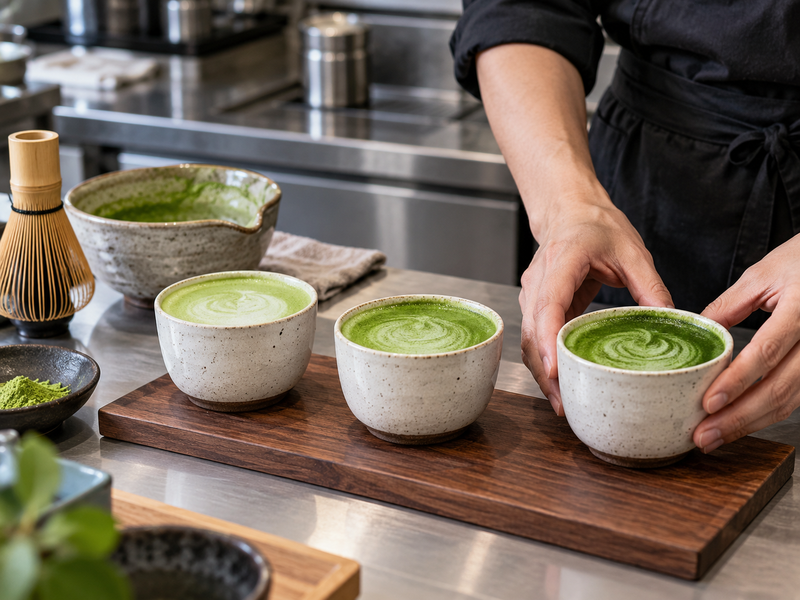
Define the drink a customer will buy. Is matcha the main flavor, a green visual cue, or one ingredient among fruit and yogurt? A banana-heavy base can soften bitterness and obscure tea aroma. A tart-fruit base may put a different pressure on taste and color. Those outcomes must be measured in the actual formula, not guessed from a spoonful of dry powder. Write a target for flavor, appearance, mouthfeel, and price, then make the team taste samples blind at normal serving temperature.
Do not rely on grade labels alone. A product sold as “premium” might still be too mild for a strongly flavored smoothie, while a less expensive powder might work in a sweet formula. The matcha beverage study compared physical and sensory properties across multiple powdered teas, illustrating why powders are not interchangeable. For procurement, the useful test is whether a powder produces the approved drink repeatedly at a dose the business can afford. Keep a coded sample of the selected lot so staff can recognize later changes.
| Menu role | Test in finished drink | Buying implication |
|---|---|---|
| Clear matcha flavor | Tea note remains after blending | Favor the sample that meets flavor target |
| Green appearance | Color at handoff and after service wait | Compare powders under the same light |
| Sweet fruit blend | Balance against fruit and sugar | Judge dose and total recipe cost |
| High-volume signature | Result across operators | Prioritize repeatability and pack handling |
2. Which samples deserve a recipe trial?
Ask suppliers for comparable candidates
Request samples intended for blended beverages and identify each by product code and lot. Ask for ingredient statements, pack sizes, storage instructions, lot documentation, and any records needed for the destination market. A straight matcha powder and a sweetened latte mix require separate trials: the mix adds other ingredients and may alter both recipe cost and allergen review. Keep the initial comparison small enough for staff to prepare each candidate correctly. Three plausible options usually tell a buyer more than a counter covered with loosely labeled sachets.
Before tasting, set a common recipe with specified liquid, fruit, ice, matcha mass, blending time, and cup size. Code the samples so price or origin story does not influence the first sensory round. Review commercial terms only after the candidates pass the cup test. If a supplier proposes a substitute during scale-up, require another trial. A powder’s name on a quote cannot prove it will behave like the tested lot, especially when its specification or pack format changes.
| Sample record | Capture | Prevents |
|---|---|---|
| Product identity | Supplier, SKU, lot | Confusion after tasting |
| Formula | Ingredient statement | Comparing powder with sweetened mix |
| Trial recipe | Gram dose and base | Unequal sensory test |
| Commercial pack | Inner bag and case | Surprise at launch |
3. How should the bar compare fruit combinations?
Build a short recipe matrix
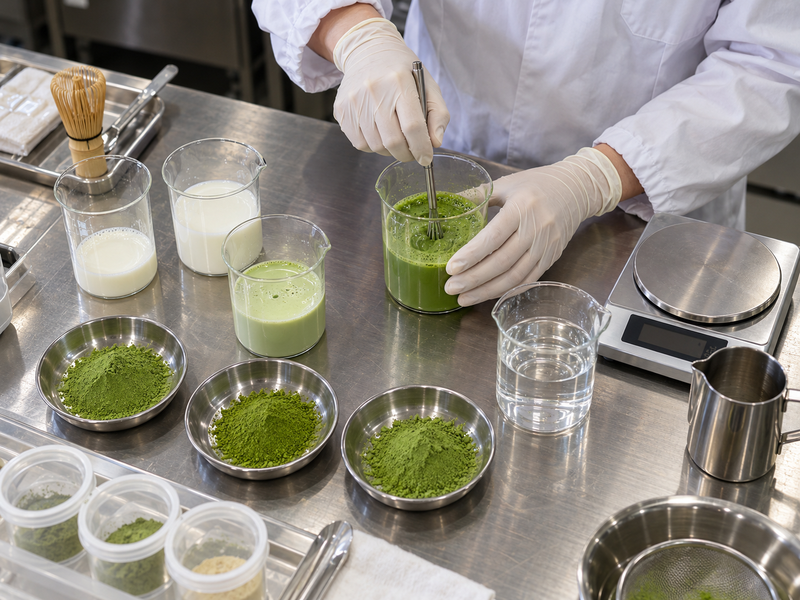
Choose two or three likely menu bases, such as banana, berry, and mango, then prepare every matcha candidate at the same measured dose in each base. Keep fruit weight, liquid, sweetener, ice, blender program, and serving time fixed. Taste immediately and again after the normal customer wait. Record whether the tea note survives, whether sweetness seems balanced, and whether the color meets the menu photograph. A difference in fruit ripeness can overwhelm a small powder comparison, so use a controlled batch for the trial.
Do not write a universal rule that acidic fruit always ruins matcha. The effect depends on the complete formula and time in the cup; make the comparison observable. Have the team photograph drinks under the same light without color filters. If color shifts during a delivery interval, include that interval in the test rather than assuming an immediate counter sample predicts it. The bar’s final purchasing decision should be tied to specific recipes and acceptable results, with one backup sample if the primary product becomes unavailable.
| Recipe base | Observe at handoff | Observe after normal wait |
|---|---|---|
| Banana | Matcha visibility and sweetness | Separation or flavor fade |
| Berry | Flavor balance and color | Appearance at pickup |
| Mango | Tea note through fruit aroma | Texture and aftertaste |
4. What changes with dairy or plant milk?
Judge the finished base, not the powder alone
Milk, yogurt, oat beverage, and other plant bases can change sweetness, body, color, and how strongly matcha registers. Test the exact brand and portion used in service. If a chain changes milk supplier later, repeat the recipe check. A tasting panel should note the finished drink’s texture and aftertaste without assuming that a powder praised in water will win in every base. Matcha dose may need adjustment, but keep every change in a written formula so cost and flavor move together.
Ingredient changes also affect customer information. A straight matcha powder does not make a smoothie free of allergens introduced by milk, yogurt, nut ingredients, or shared equipment. The FDA food allergen page describes allergen labeling and cross-contact concerns; applicable obligations differ for packaged products and retail service. Have the food-safety lead review local requirements and the whole recipe. Do not promise an allergen-free drink based on the matcha supplier’s ingredient statement alone.
5. How can staff test blending and texture?
Time the operation during a real shift
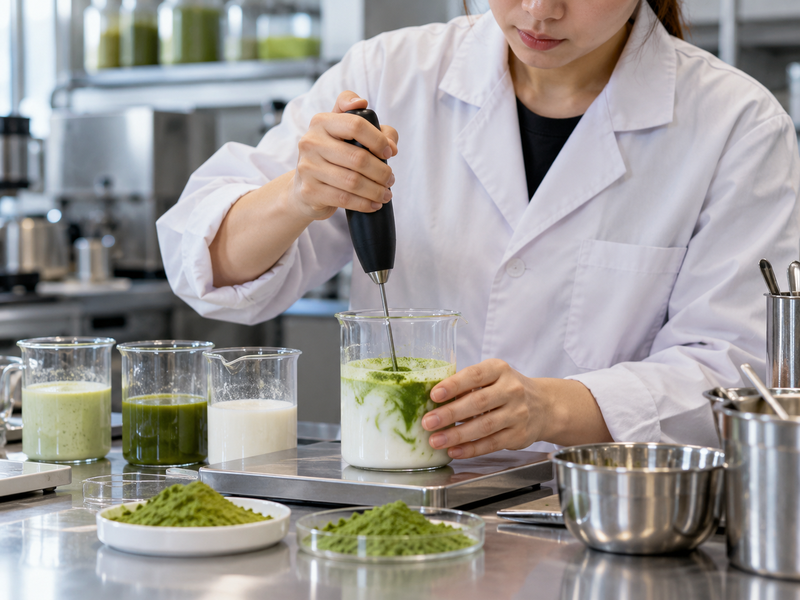
Measure a portion of powder by weight and follow the intended preparation sequence. Some bars may disperse matcha in a small liquid portion before adding thicker ingredients; others may blend all ingredients together. Compare methods under the same recipe and equipment. Inspect the first sip and the bottom of the cup for dry pockets, visible specks, grit, or layering. Record preparation time from portioning to handoff, then repeat with a second operator during a normal service period.
Do not use a perfect laboratory blend as the only approval test. Staff will work with full blender jars, changing ice, and queues. Ask whether the selected method requires an extra cup, pre-mix vessel, or wash cycle. Those tasks affect labor and cleanliness. The research on technological properties of matcha assessed measures such as water solubility index and water-holding capacity; those findings show why physical behavior merits attention, while the operational result must still be measured on the bar’s blender. Keep photographs and time logs with the recipe card.
| Trial step | Fixed input | Result to record |
|---|---|---|
| Portioning | Weighed powder | Scoop error and time |
| Pre-dispersion | Same liquid and sequence | Lumps and extra equipment |
| Blending | Same program and load | Texture at handoff |
| Waiting | Normal pickup interval | Settling and appearance |
6. What powder dose makes commercial sense?
Price the serving customers will taste
Build a dose ladder in the approved smoothie base. The bottom step should be a plausible low-use trial rather than an advertised health amount; the top step should be constrained by taste, ingredient cost, and the finished drink. Have tasters rank matcha presence, bitterness, balance, and texture without seeing the dose. Select the lowest dose that achieves the menu promise reliably, then confirm it across batches of fruit and more than one operator. Record grams rather than a scoop count because scoop fill varies.
Serving cost equals powder price per kilogram multiplied by grams per drink, divided by 1,000, plus any process waste. Compare that number with the whole recipe and menu price. A cheaper powder requiring a much larger dose may cost more per serving. If a sweetened mix replaces straight matcha, adjust other sweeteners and compare the complete bill of materials. Keep the approved dose on the recipe card and in purchasing forecasts so the buyer and bar manager work from the same number.
| Candidate | Powder cost per kilogram | Dose per drink | Powder cost per drink |
|---|---|---|---|
| A | Quote to enter | Tested grams | Calculate from quote |
| B | Quote to enter | Tested grams | Calculate from quote |
| C | Quote to enter | Tested grams | Calculate from quote |
7. Which pack size fits peak-hour service?
Separate storage stock from working stock
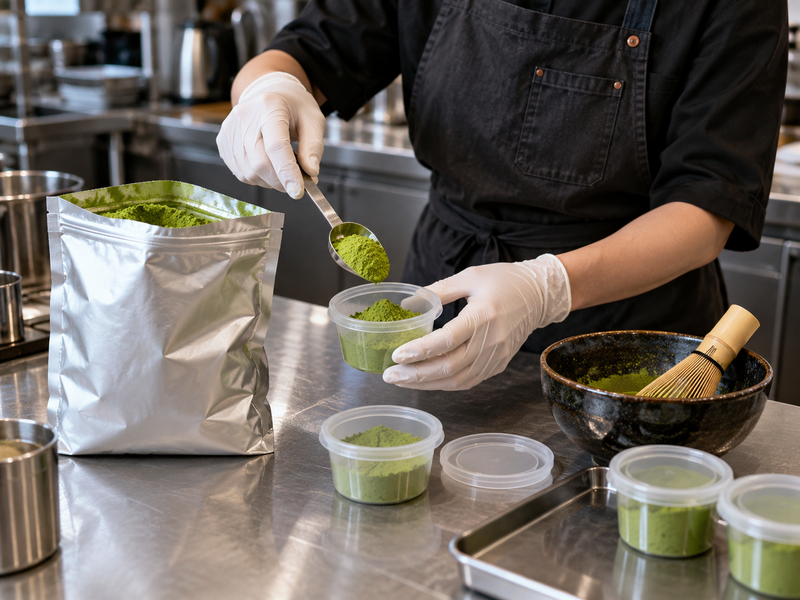
Ask how quickly each location consumes a sealed inner bag at the approved dose. A master carton of smaller opaque bags may let a bar open one working pack at a time while keeping the rest sealed. A large bulk bag could suit a central kitchen with controlled dispensing, but can be awkward on a small counter. Trial the physical bag: can staff open, measure, reseal, label, and store it without spilling or introducing moisture? Choose the pack from those observations rather than a photograph in a catalog.
Keep the working container away from steam and splashes and follow the supplier’s storage instruction for opened product. Record the original lot and opening date when transferring powder. The matcha storage research on light and water activity supports limiting exposure under the tested conditions; it does not establish a fixed open-pack life for a café. Plan deliveries around real depletion. A lower cost on a bag that sits open for too long can be a poor bargain even before staff count handling time.
8. What should cleaning and allergen controls cover?
Include the whole station in the trial
Blender jars, lids, seals, scoops, pre-mix vessels, and counters all touch the process. The site’s cleaning and sanitizing procedure should identify each item, who handles it, and how the station changes between recipes. Test the procedure during a busy period, when a smoothie with dairy or nut ingredients may be followed by another customer’s order. A quick water swirl should not be described as a validated allergen control without the site’s assessment. Train staff on the actual equipment and ingredients rather than a generic “clean blender” instruction.
The FDA Food Code is a model for retail and foodservice safety practices; local jurisdictions decide adoption and requirements. The FDA allergen guidance also makes the distinction between ingredients and cross-contact. For procurement, request an accurate ingredient statement from the matcha supplier and pass it to the site’s food-safety lead. Keep menu claims conservative until the entire recipe, packaging if any, and service process have been reviewed.
| Control point | Responsible record | Trial question |
|---|---|---|
| Matcha package | Supplier ingredient statement | Does it match the ordered SKU? |
| Recipe | Approved bill of materials | Which allergens enter through the base? |
| Equipment | Site cleaning procedure | Does staff follow it under load? |
| Customer information | Menu or packaged label review | Are statements accurate for this market? |
9. How should a chain set its reorder standard?
Make one tested drink repeatable across stores
Keep a master recipe with powder code, dose, fruit specifications, liquid brand or allowed equivalent, ice quantity, blender program, and target serving size. Train two or more stores with the same materials. Ask them to report use per day, waste, customer response, color at handoff, and any difficulty with pack handling. A central buyer can then forecast from actual grams issued, not only from menu-unit sales. Investigate a large difference between stores before simply increasing orders.
Attach an approved supplier sample and a written substitute process. If a new lot produces an unexpected taste or appearance in the standard recipe, pause that lot’s rollout and compare records under the same preparation conditions. Do not alter both powder and fruit at once, or the team will not know which change caused the result. Order points should include supplier lead time, site stock, promotions, and usable dated life. A chain needs enough flexibility for demand changes without placing slow stores under pressure to use older stock.
10. What should the first wholesale order include?
Buy a documented trial, then scale
The first order should name the approved SKU, pack size, quantity, lot-document requirements, remaining dated life at receipt, storage instruction, delivery point, and a receiving contact. Ask for the same product used in the recipe trial. Make a written plan for checking cartons, recording lots, and holding damaged packs. If multiple sites will receive stock, state how cases are allocated and who keeps the master lot record. A sample invoice or label layout can expose gaps before a full shipment leaves the supplier.
Once a small launch provides sales and usage data, revise the forecast and discuss the next price or volume tier. Matcha Village buyers can send the intended fruit bases, milk options, target drink size, sample recipe, destination market, and projected weekly volumes when requesting a quotation. Ask for candidate powders and pack formats suited to that brief, then test them in the actual bar. The contract should capture the approved product and change-control path so the next shipment makes the same drink without another round of guesswork.
Record the sample’s taste and appearance consistently; our matcha sensory evaluation guide gives buyers a repeatable way to compare lots.
FAQ
Q1. Is ceremonial matcha necessary for smoothies? No grade label decides the result. Test shortlisted powders in the actual recipe and compare dose, flavor, appearance, and cost.
Q2. Should matcha be pre-mixed before blending? Compare pre-dispersion with direct blending using the same equipment and recipe, then choose the method that gives repeatable texture and acceptable service time.
Q3. Can one powder work across banana and berry smoothies? It may, but assess both formulas separately. Their flavors and appearance can make the same powder perform differently.
Q4. Does straight matcha make a smoothie dairy-free? Only if the entire recipe and service process support that statement; milk, yogurt, other ingredients, and cross-contact must be reviewed.
Q5. What is the most useful figure for wholesale comparison? Cost per approved finished serving is more useful than price per kilogram alone.
Run one paid-service trial before scaling
Choose the best two samples, prepare the final recipes during ordinary service, and record portions sold, powder used, extra preparation time, and customer feedback. Then place the opening wholesale order against the sample that passed. A buyer can share those records with the supplier to set a pack size and replenishment schedule that match real drinks rather than a sales forecast alone.