
Matcha macarons are almond-meringue sandwich cookies with tea in the shell, filling, or both. A bakery can produce a vivid tray that hollows, cracks, or loses crispness once filled. A useful development plan separates shell structure from flavor and later tests the assembled cookie in its package. The matcha-yuzu macaron example at Freddy’s Harajuku shows one flavor pairing; commercial success depends on repeatable meringue, macaronage, humidity control, filling migration, and transport. Keep a plain approved macaron as a control whenever matcha changes.
1. What should a finished matcha macaron be like?
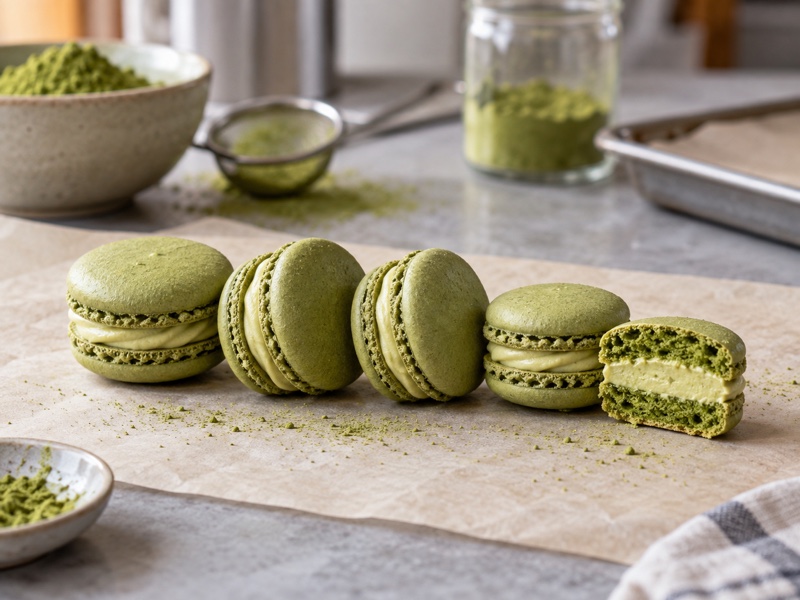
Write a target for shell, filling, and assembled bite. A good shell has a smooth top, defined foot, and interior that is neither hollow nor gummy. After maturation with filling, the surface should retain a light resistance while the center yields cleanly. The tea should be recognizable without a dusty or bitter aftertaste. Decide whether matcha belongs primarily in the shell or filling. A shell-only version may look green but taste faint after a rich filling; a filling-only version may taste clear but need another way to signal the flavor.
Photograph and weigh paired cookies after filling. Cut one through the center to show any hollow space or uneven filling. Taste immediately and after the planned holding period. Do not approve by shell appearance alone. The cookie guests buy has absorbed some moisture from its filling and spent time in a box or case. A result that seems crisp and perfect when fresh from the oven may be brittle, dry, or sticky after assembly.
| Component | Approval check | Common failure |
|---|---|---|
| Shell | Smooth top and formed foot | Cracks or hollows |
| Filling | Tea taste and even deposit | Leakage or overpowering sweetness |
| Sandwich | Balanced bite after hold | Soggy or brittle shell |
| Pack | Intact cookies on arrival | Crushed tops or smears |
2. Where should matcha go: shell, filling, or both?
Test three routes with the same plain base: tea in shell, tea in filling, and tea in both. Keep the total intended tea character similar rather than assuming equal powder mass yields equal perception. Heat can mute shell aroma; a cold buttercream or ganache may preserve a more immediate tea note. Yet adding powder to a filling can change viscosity or feel gritty. Shell additions also displace part of the dry blend, which can affect structure. Record any almond flour or sugar adjustment made to keep the formula balanced.
Use coded tasting after the same maturation time. Ask tasters to score tea flavor and cookie texture separately. If shell-only tastes weak, do not automatically double the powder; the filling may be the better delivery point. If both components carry tea, watch for an overly bitter finish and higher ingredient cost. A contrasting yuzu or white chocolate filling may be attractive, but it should not erase the product’s matcha identity. Let the target customer and price point decide.
3. Which matcha is suitable for the bakery formula?
Begin with pure culinary-grade matcha rather than a sweetened latte blend. A blend changes sugar and potentially dairy content in an already sensitive dry formula. Compare at least two powder lots or grades in the same shell and filling tests. Dry color and aroma are screening clues; bake color and finished taste determine approval. A powder that looks beautiful in a bowl may brown in the oven or taste faint under almond and butter. Keep powder sealed during development so open-pack age does not confuse the comparison.
Matcha Village’s pure matcha range includes culinary options for desserts. Ask for relevant specifications and a sample large enough for multiple trays. The bakery should define an acceptance profile for finished macaron color and flavor. If a new lot arrives, compare it with retained approved material using the same oven, shell size, and filling. This catches a material shift before dozens of gift boxes are assembled.
| Powder test | Keep constant | Record |
|---|---|---|
| Shell comparison | Plain meringue and oven | Foot, color, hollows |
| Filling comparison | Same base filling | Flavor and texture |
| New-lot check | Approved recipe | Difference from control |
4. How should matcha be incorporated without streaks?
Sift matcha with the dry almond and sugar mixture, then mix according to the bakery’s chosen macaron method. Fine powder can still form green pockets, especially if added late to a finished batter. A separate slurry introduces extra water and may upset the shell, so test rather than improvising. Record sieve size and any material retained. If coarse almond particles are removed, make sure the dry ingredient balance remains understood. A darker streak may be a clump, not a desirable tea pattern.
Disperse tea in the filling
The same care applies to filling. Disperse powder into a small amount of suitable fat or liquid before adding it to a large batch, then taste for grain. Some ganaches thicken after cooling; assess piping texture at the actual assembly temperature. If adding matcha changes a filling’s water balance or firmness, treat it as a reformulation. A smooth bowl of filling is only the start. Check how it behaves between shells after maturation and during shipping.
5. Which meringue and macaronage controls matter most?
Pick one meringue method and keep it stable during tea trials. French, Italian, and Swiss methods create different workflows and may have different tolerance to staff variation. The key is to record egg-white condition, mixer speed, sugar addition, peak endpoint, and the batter’s flow after folding. Matcha adds dry solids and can make a familiar formula behave differently. A team that adds tea and then folds to the old time may under- or overmix. Train staff to judge a defined batter ribbon and surface recovery, not a fixed number of spatula turns alone.
Pipe a consistent diameter and spacing. Compare shells from the start and end of the bag to see whether batter deflates or thickens during a production run. Resting conditions also matter: a tray left under an air vent can form a skin faster than one near a humid wash area. Record room temperature and humidity during failures so the bakery can spot patterns. A plain control tray baked alongside the green tray can reveal whether the day’s environment, rather than matcha, drove cracking.
| Process point | Record | Defect clue |
|---|---|---|
| Meringue endpoint | Peak and gloss | Weak or coarse structure |
| Macaronage | Ribbon and recovery | Cracks or spread |
| Piping | Diameter and tray | Mixed shell sizes |
| Rest | Room conditions | Uneven skin formation |
6. How can the oven preserve shape and color?
Use the actual tray, mat or paper, rack, and load planned for production. Matcha color can dull with longer heat exposure, while an underbaked shell may stick and collapse. Bake a small series at controlled settings and compare foot shape, top color, interior, and release after cooling. Avoid judging only the surface. Cut shells from different tray positions; hot spots can produce dark rims and hollow centers. A full oven behaves differently from one development tray.
If a lower temperature keeps a greener top but requires a much longer bake, check whether the resulting shell is dry enough for filling. A visually bright shell with a sticky base will not survive assembly. Record the cooling time before lifting shells from the liner. Pulling too early can tear the bottoms and inflate the reject rate. Use fixed-light photos so a change in room lighting does not get mistaken for a better oven program.
7. Which filling protects texture and tea flavor?
Buttercream, ganache, and fruit-based fillings move moisture into shells at different rates. White chocolate can support matcha but add substantial sweetness; citrus can brighten tea while also introducing acidity and water. Test filling as a measured deposit per shell pair. Too little filling leaves a dry bite; too much squeezes out, smears packaging, and softens the shell quickly. A firm filling may travel better but feel waxy when served cold. Taste at the intended service temperature.
If using yuzu or another fruit ingredient, verify its exact concentration and ingredient statement. A fruit puree, concentrate, and flavored syrup are not equal substitutions. Test the assembled cookie after normal maturation and at the planned sale time. Check a cross-section for moisture migration and a bite for shell resistance. A filling that tastes sharp alone may balance beautifully with sweet almond shell; decide from the sandwich, not from a spoonful of filling.
| Filling | Potential strength | Risk |
|---|---|---|
| Buttercream | Easy piping control | Masks matcha with sweetness |
| Ganache | Smooth, rich bite | Can soften shell |
| Fruit filling | Bright contrast | Moisture migration |
8. How should humidity and maturation be managed?
Macarons change after assembly. Filling moisture moves into the shell, giving the classic bite but eventually removing crispness. Establish a defined maturation and sale window through testing rather than repeating a rule from a home recipe. Store samples in the actual box or tray, at the temperature required by the filling, and inspect at planned intervals. Note condensation when moving a chilled box into a warm display area. A clear lid can protect a cookie but also trap droplets that spot the green top.
Validate the holding plan
Food safety depends on the filling and process. A dairy or egg filling needs appropriate controls, and local rules determine holding practice. The FDA Food Code is a model reference for US retail operations; it does not assign a universal shelf life to matcha macarons. Validate sensory life and safety for the final recipe and pack. A crunchy shell at day one says nothing about a cream filling’s safe life without proper handling data.
9. What should a wholesale packaging trial include?
Box size, insert design, cookie diameter, and filling firmness all affect breakage. Pack a sample case as staff normally would and send it through the actual delivery route. Count cracked shells, shifted sandwiches, smears, and condensation on receipt. Photograph the packed case before dispatch and after arrival. A bakery may lose more margin to broken tops than to a higher-grade matcha. Include a realistic handling delay in the test, not just a gentle walk around the kitchen.
For retail labels, review almond and any milk, egg, wheat, soy, or other major allergen sources. The FDA allergen guidance describes US labeled-food requirements; destination markets may differ. Ask for ingredient statements from purchased fillings and decorations, not only the tea supplier. A macaron can be naturally flourless yet still pick up wheat from a biscuit inclusion or shared ingredient. Label review belongs to the finished sandwich.
| Pack test | Measure | Buyer decision |
|---|---|---|
| Transit | Broken units per case | Insert design |
| Temperature change | Condensation and texture | Route and pack |
| Label review | All ingredient sources | Market compliance |
| Sale window | Flavor and shell bite | Order schedule |
10. When is the recipe ready for a larger run?
Approve a full production pilot with normal staff and oven load. Check shell yield, pair matching, filling mass, maturation, packaged breakage, and cost per saleable cookie. Taste coded samples from the beginning and end of the run. If only the first tray looks green and smooth, the formula is not ready. Keep one approved powder lot and sample box as references for future deliveries. When problems arise, change one factor at a time so the next bake answers a real question.
Request dessert-suitable matcha samples and choose them in the assembled macaron, where almond, filling, and storage all matter. A scalable cookie has a visible tea cue, a recognizable tea flavor, and a controlled bite through the expected sales route. Once those are documented, procurement can buy to a useful standard and bakers can teach the process to another shift without relying on one expert’s memory.
FAQ
Q1: Can latte powder go into macaron shells? It changes dry ingredients and may add sugar or dairy. Reformulate and review the label if you use it.
Q2: Why do green shells crack? Meringue, folding, resting, tray, and oven conditions can all matter. Compare a plain control tray.
Q3: Should matcha go in both shell and filling? Test shell-only, filling-only, and both after the same maturation period.
Q4: How long can filled macarons be sold? Validate the final filling, package, temperature, and quality window for your operation.
Q5: Does a darker shell mean stronger flavor? Not reliably. Heat and powder type affect color; taste the finished sandwich.