
Matcha waffles must be judged after the iron, not in the mixing bowl. A bright batter can cook brown, a crisp grid can soften under syrup, and a generous tea dose can disappear behind toppings. The easy matcha waffles recipe in search results offers a home starting point. A café needs a repeatable batter, a heat and deposit specification, and a plan for the minutes between cooking and eating. The best waffle is the one staff can reproduce during a breakfast rush.
1. What is the target waffle?
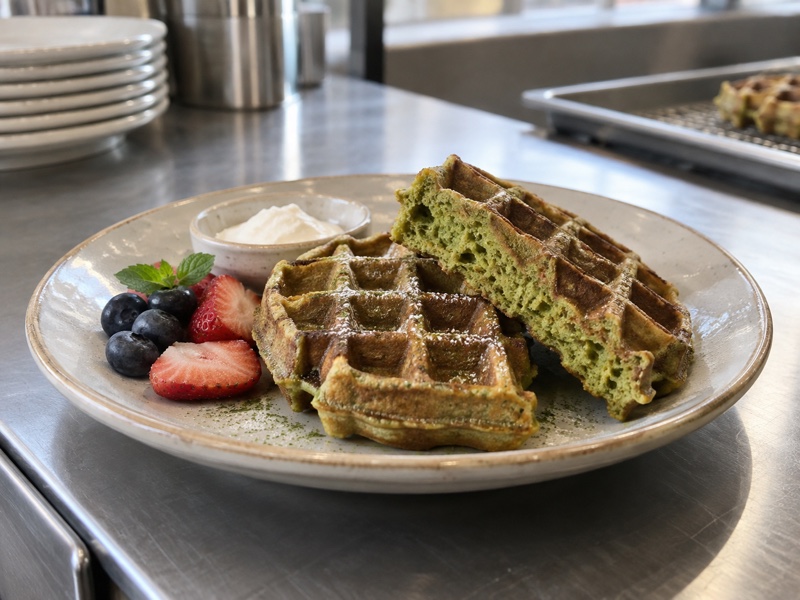
Choose the style before changing powder dose. A thin, crisp waffle and a thick, soft Belgian-style waffle need different batter and cooking conditions. Define size, finished weight, surface color, center texture, and serving window. Matcha should remain clear in a plain bite; toppings can follow. If the product is meant for takeaway, test it in the intended box. Steam from a hot waffle can soften the grid quickly when trapped under a lid.
Taste a corner, the center, and a bite with the planned topping. A crisp rim and undercooked center may look acceptable from above but fail as a dish. Record the time from iron to customer. A plated waffle served in one minute and a delivery waffle eaten twenty minutes later are different product challenges. Decide which channel the recipe is built for and write that into the brief.
| Target | Test | Failure to catch |
|---|---|---|
| Crisp surface | Plain waffle after normal wait | Steam-softened grid |
| Tender center | Cut thickest point | Wet batter or dryness |
| Tea flavor | Plain and dressed bites | Topping hides matcha |
| Portion | Finished weight | Variable batter deposit |
2. Which batter base lets the tea show?
Flour, fat, egg, milk, sugar, and leavening determine more of the waffle than its green color. Start with a base the café can run reliably, then replace a measured small portion of dry ingredients with matcha during trials. Too much sugar can accelerate browning and hide tea; too little can make a flat, austere breakfast item. Dairy and plant milks add their own flavor and affect batter thickness. Test the exact SKUs that will be stocked.
Sift matcha with dry ingredients if the lot clumps. Mix to the chosen endpoint and let the batter rest only as long as the validated process allows. If the café preps a batch before service, compare the first and last waffle. Batter can thicken, separate, or lose lift over time. Specify remixing, container, cold hold, and discard under the kitchen’s food-safety plan. A home recipe’s timeline is not a commercial holding rule.
3. How much matcha should be used?
Use grams per batch and grams per saleable waffle. A spoonful is too imprecise for comparison. Run three doses in one base batter with identical iron temperature, deposit weight, and cooking time. Taste the waffles plain after a short cooling interval, then with the intended topping. The highest dose may make the grid bitter; the lowest may produce only a green tint. The chosen dose is the first one that gives a pleasant tea note through the actual service format.
Matcha behaves differently in a cooked batter than in a latte. A supplier sample should be checked in the waffle iron, not approved from a whisked cup. Record the powder lot, cost, and final color under the café’s normal light. A naturally browned exterior may be acceptable if the cut center is green and tastes of tea. Chasing a fully bright-green crust can lead to undercooking.
| Dose trial | Fixed conditions | Decision point |
|---|---|---|
| Light | Same base and iron | Is tea present? |
| Middle | Same deposit and cook | Best flavor-cost balance? |
| Strong | Same topping and hold | Bitter after cooking? |
4. What does the waffle iron change?
Iron design, plate temperature, and how much batter fills the grid change surface area and browning. Weigh the deposit rather than using an uncalibrated ladle. Preheat under the machine’s normal procedure and test consecutive waffles, because the first may cook differently from the fifth. Record the machine setting, observed cook time, steam release, and finished weight. Open the iron too early and the waffle may tear; cook too long and the tea can become a background note beneath browned flavor.
Cut the thickest section after cooking. If the surface is dark but the center wet, adjust fill, heat, or formula systematically. Do not compensate with syrup. If a team has multiple irons, test each or assign a validated setting. Staff need a visual endpoint, such as even browning and steam change, alongside time. A number on one thermostat may not describe a second machine.
5. How can the café preserve crispness?
Move cooked waffles to a rack briefly rather than stacking them on a flat plate. Steam trapped between waffles softens the grid. For dine-in, plate as close to service as possible and keep wet toppings to a measured area. For takeaway, test vented packaging and separate syrup. A crisp sample eaten at the iron tells little about the customer experience after a queue or drive home.
Run a timed test at handoff, five minutes, and the realistic longest wait. Score surface crispness, center texture, and tea flavor. A waffle that softens slightly may still be good, but the menu should not promise crunch if the delivery box cannot preserve it. If holding is necessary during a rush, define a short approved window and a discard or remake rule. Reheating can dry the center and change the color; test it before making it the default process.
| Time point | Surface | Center and flavor |
|---|---|---|
| Just cooked | Crispness baseline | Fully cooked center |
| Normal handoff | Steam effect | Tea still clear |
| Takeaway window | Package performance | No soggy middle |
6. Which toppings support matcha?
Berries, a little whipped cream, red bean, honey, or chocolate can pair with tea, but every topping changes sweetness and labor. Test the plain waffle first. Then add one measured topping combination. A large pour of maple syrup can make the waffle taste like syrup with a green color. A heavy cream can hide tea and soften the grid. Fruit can add moisture. Choose a balance that allows a customer to recognize matcha in the finished dish.
Keep toppings consistent across shifts. Weigh sauce and fruit for cost and nutrition estimates. If berries change seasonally, make an approved substitution list and check the flavor again. Any dairy, nuts, soy, or gluten in toppings must appear in the operation’s ingredient and allergen information. A photograph should show the portion actually served, not a promotional heap that staff cannot reproduce profitably.
7. Can waffles be batched or frozen?
Batching may help a busy café, but it creates a different quality problem from cook-to-order service. Test the texture after the planned cooling, storage, and reheat process. Freezing can be practical for some formulas, yet it can mute aroma or dry the edges after toasting. Set the method through the kitchen’s food-safety plan and record pack date, storage, and discard conditions. Do not assume a home freezer note establishes a commercial shelf life.
Compare freshly cooked and reheated waffles blind. If most tasters can identify the reheated one as dry or stale, the labor saving may not justify it. A smaller fresh batch or a simpler topping station may be a better operational change. For wholesale, test the actual frozen distribution and final operator’s toaster or iron. The retail customer will judge the product after their own preparation, not at the factory test bench.
| Production choice | Benefit | Validation need |
|---|---|---|
| Cook to order | Best fresh texture | Queue speed |
| Short hold | Faster peak service | Crispness at handoff |
| Frozen and reheated | Distribution flexibility | Final texture and safety |
8. How should portions and cost be calculated?
Count saleable waffles from a batter batch. Include batter left in the vessel, torn waffles, matcha, other ingredients, toppings, plate or pack, labor, and waste. A larger deposit may look generous but change cook time and create an underdone center. Weigh first, middle, and last waffles during a pilot. Calculate matcha cost at the chosen dose, then compare it with the larger cost drivers: labor at the iron, toppings, and unsold product.
For a breakfast combo, cost the whole plate, not only the waffle. A cup of fruit and a sauce cup can turn a modest ingredient cost into a tight margin. If a cheaper powder is considered, taste it after cooking at the same dose and calculate cost per accepted waffle. A nominal saving that lowers flavor or increases rejects is not a true saving. Keep the recipe card tied to an approved ingredient specification.
9. What should appear on the production card?
List ingredient weights, powder lot or spec, mixing sequence, batter rest and hold, deposit weight, iron setting, cook endpoint, rack time, topping weight, and service window. Add a photograph of the acceptable cut center. The card should say what staff do when the first waffle sticks, when batter thickens, or when the iron runs cooler during a rush. A written adjustment prevents each cook from adding liquid or raising heat by instinct.
Ingredient and allergen details must reflect the actual batter and toppings. A plant milk does not make an egg-and-wheat waffle vegan. A numerical caffeine or nutrition claim needs a defensible basis for the finished serving. If the product is sold frozen, packaging and preparation instructions need separate validation and review. Keep the café menu version and any wholesale version as distinct product specifications.
| Card field | Target | Control owner |
|---|---|---|
| Matcha and batter | Lot, weights, mix | Prep lead |
| Deposit | Grams per waffle | Line cook |
| Cook endpoint | Setting, time, cut check | Line cook |
| Topping and release | Measured portion, hold | Service lead |
10. When is the waffle ready for the menu?
Run a service pilot at the expected breakfast pace. Have a cook who did not develop the formula make several orders. Check batter deposit and finished weight, taste plain and topped waffles at the customer’s likely eating time, and record remakes. Test the actual packaging if takeaway is offered. If crispness or flavor falls off too quickly, revise the process before publishing the menu photograph.
For matcha sourcing, compare a lot-linked sample from Matcha Village’s wholesale range in the approved waffle batter. Judge the cooked product and cost per saleable unit. Approve the item when the team can meet texture, tea flavor, timing, label, and margin together. The best indicator is a repeatable breakfast plate, not the greenest raw batter.
FAQs
Why are matcha waffles brown outside? The iron browns the batter. Check the center and flavor before changing the formula solely for color.
Can pancake batter be used in a waffle iron? It may cook, but the crispness and structure can differ. Test as a waffle recipe rather than assuming equivalence.
Does more matcha make a better waffle? Not automatically. Higher doses can add bitterness and cost without improving the cooked flavor.
Can waffles be frozen for sale? Yes only with validated production, storage, reheat, quality, and labeling for that channel.
What topping is best? The one that supports the tea and survives the planned service window at a measured cost. Taste the plain waffle first.