
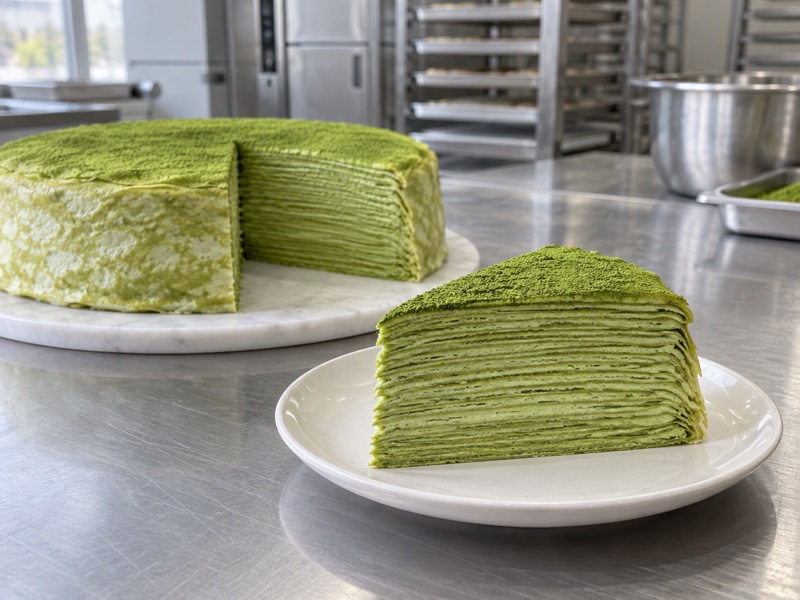
A matcha crepe cake is judged on its slice. Thin crepes and cream must stack without sliding, the cut surface should show even layers, and the tea should remain noticeable beside dairy and sugar. The mille crepe cake recipe in current search results is a helpful home reference. A bakery selling slices needs additional controls: batter yield, crepe thickness, cream pickup, chilling, cutting loss, and the condition of the last slice in the case. A good whole cake that cannot be portioned consistently is not yet a saleable product.
1. What should the finished slice look and taste like?
Define the slice before adjusting a recipe. The layers should be thin and visible, but the cake should not feel rubbery. Cream should join the crepes without squeezing out when cut. Matcha should be identifiable in the crepe, cream, or both; a green cake with only vanilla flavor misses the point. Set a slice weight and approximate layer count, then judge a cut piece after the planned chill and display period. Freshly assembled cake can look stable while the cream is still soft and the stack has not settled.
Taste from top to bottom, including the edge. A thick outer crepe or heavy final cream layer changes the experience. Decide whether the product will be sold as a whole cake, individual slices, or both. A whole cake can tolerate some assembly variation that becomes obvious when portions are compared side by side. Write the target in practical terms the kitchen can inspect, rather than asking for “perfect layers.”
| Slice target | Practical check | Reject signal |
|---|---|---|
| Layer definition | Cut face under normal light | Thick or broken crepes |
| Cream stability | Fork and transport test | Filling squeezes out |
| Tea flavor | Blind tasting | Dairy hides matcha |
| Portion | Weighed saleable slice | Large weight spread |
2. Which batter makes thin repeatable crepes?
Use a batter that pours and spreads predictably on the actual pan or crepe machine. Weigh flour, liquid, egg, fat, sugar, and matcha. Sift dry ingredients if the powder clumps, then blend or whisk to a smooth texture without leaving unincorporated green specks. Strain if the formula requires it, but record the loss. A home recipe may make a beautiful cake with patient hand cooking; a commercial process must give the next cook a measurable batter quantity per crepe and a workable production pace.
Rest the batter according to the tested method and remix gently before portioning if the tea settles. Compare the first, middle, and last crepes from a batch. If they differ in color or thickness, the batter may be separating or the tool may be inconsistent. Do not thin the last portion by eye. Record added liquid by weight and retest the yield. The pan diameter and usable crepe diameter should be part of the formula because trimming waste affects cost.
3. How much matcha belongs in the crepes?
Make a dose ladder in one base batter. Keep pan temperature, deposit weight, and cooking time fixed. Tea can look vivid in raw batter but darken in a hot pan. Taste cooled crepes without cream before judging the finished cake. The lowest dose that gives a clear tea note in plain crepe may still be hidden by sweet cream. The highest dose may be bitter and make the batter seem dry. Use the complete slice to choose the final level.
If matcha also goes into the cream, test the two locations separately. A cake with lightly flavored crepes and a stronger cream differs from one with tea mainly in the crepes. The latter may hold color better but taste weaker when cream dominates. Record grams of powder per cake and per saleable slice, and request a lot-linked sample for any supplier comparison. A powder price should be judged against the approved dose and trimming loss, not only its price per kilogram.
| Tea placement | Benefit to test | Risk to watch |
|---|---|---|
| Crepes only | Defined green layers | Flavor lost under cream |
| Cream only | Immediate tea taste | Filling color and stability |
| Both | Stronger overall profile | Bitterness and higher cost |
4. What pan method keeps layer thickness even?
Measure batter per crepe and use a repeatable spread. Pan heat affects both color and texture: too hot can brown matcha before a thin sheet cooks evenly, while too cool can produce a pale, leathery crepe. Establish a heat setting through observed results rather than assuming a dial number transfers between machines. Cook a small run, then stack the cooled crepes in order to compare diameter, color, and flexibility. Reject torn or unusually thick pieces rather than hiding them in the middle.
Production speed is a design constraint. If the cake needs many layers, the time to cook and cool them can dominate labor cost. Test a crew’s real throughput and specify a safe cooling surface. Stacking warm crepes may trap steam and make layers stick. A quick production trial also reveals whether the cook can maintain diameter and weight over a full batter batch, not just the first three showpiece crepes.
5. How should the cream be chosen and weighed?
Cream must spread in a thin, even film and hold after chilling. A loose filling can squeeze out; a very stiff one makes the cake dense and difficult to fork. Test the exact dairy or plant base, sweetener, and any stabilizing ingredient used in production. If the recipe includes matcha in the cream, disperse it first so no bitter pockets remain. Taste the cream alone and in a slice. A rich filling can mute the tea and tempt the team to over-dose powder.
Weigh cream per layer. “A thin spread” may vary wildly between staff. Assemble two small cakes with the same crepes but different measured cream pickups, then compare height, stability, and mouthfeel after chilling. A little cream on every layer becomes a large cost over the whole cake. Track cream left on bowls and spatulas to estimate actual yield. Do not use a filling’s attractive texture immediately after whipping as evidence that it will survive a display period.
| Cream check | When | What it reveals |
|---|---|---|
| Spreading | During assembly | Ease and evenness |
| Chilled slice | After set | Layer grip and sweetness |
| Display hold | End of sale window | Weeping or sliding |
6. How long should the assembled cake chill?
The stack needs time for cream and crepes to settle enough to cut cleanly, but the holding period must fit the operation’s food-safety plan. Define a minimum tested chill for quality and an approved maximum sale window separately. The former is a texture decision; the latter needs ingredient, process, packaging, and safety review. A home recipe’s storage note does not validate a commercial case. Keep the assembled cake covered appropriately so it does not pick up refrigerator odors or dry at the edge.
Test cutting at several planned points. An early slice may slump, while a much later slice can show dry edges or absorbed cream. Record cake height before and after chill and take a cut-face photograph under the same light. If the cake slides when lifted, more chilling may help, but an uneven cream load or warm crepes may be the real cause. Change one variable at a time to learn which one matters.
7. What is the cleanest way to cut and serve it?
Choose a knife and cleaning routine that produces consistent wedges without dragging green cream across the layers. Mark portions before the first cut and weigh a few pieces. Test the first and last slices from a whole cake. A presentation that works only for the first wedge may fail in a busy case. If the cake is packaged, put a slice in the actual box and carry it through a short transport simulation. Look for tilted layers, smeared cream, and moisture on the lid.
Garnish lightly. A dusting of matcha can look appealing for minutes then absorb moisture and turn patchy. Fruit or chocolate may add color but also change the flavor and package height. If a garnish is promised on the menu, include it on every saleable slice and in the cost. For takeout, stable and honest presentation is better than a delicate finish that touches the lid.
| Service test | Record | Possible failure |
|---|---|---|
| First slice | Weight and cut face | Uneven opening cut |
| Middle slices | Weight spread | Portion drift |
| Box carry | Position and lid contact | Sliding or smearing |
| End of case hold | Edge condition | Dryness or weeping |
8. What does a saleable slice cost?
Cost ingredients and labor for the whole cake, then divide by saleable portions. Include crepes lost to tearing and trimming, cream left in the vessel, matcha dose, chill space, garnish, box, and unsold slices. A nominal ten-slice cake may produce fewer acceptable portions if the edge is uneven. Record the actual yield over multiple runs. Compare whole-cake orders and case slices separately because packaging and waste differ.
If labor is the largest cost, simplify the process through controlled deposit and assembly rather than removing tea from the formula. A little cheaper powder may not matter next to an hour of crepe cooking. If a supplier change is proposed, bake a side-by-side test and calculate cost per approved slice. Preserve a retained reference for color and flavor. The fastest way to lose a repeat purchase is to make the cake green in one batch and dull or bitter in the next.
9. What must be documented before sale?
The production sheet should include ingredient weights, matcha lot, batter rest, crepe deposit weight, pan method, usable diameter, cream pickup, layer count, chill, cut size, and approved hold. Add a photo of a normal accepted slice. Record allergens from flour, egg, dairy, nuts, or other ingredients in the actual formula. Do not label a plant-based filling as vegan until every ingredient and preparation control supports it. Any nutrition or caffeine statement should use the tested finished portion and appropriate evidence.
Assign the checks. A cook records crepe yield, the assembler records cream usage and cake height, and the service team checks slices at opening and near the end of the case hold. If the cake is sold to another outlet, include transport temperature, packaging, and handoff responsibilities in the product specification. A beautiful recipe card without these steps will not keep layers intact across locations.
| Production field | Target | Owner |
|---|---|---|
| Crepe weight and diameter | Approved range | Cook |
| Cream per layer | Measured grams | Assembler |
| Chill and release | Tested time and quality | Shift lead |
| Slice weight | Saleable range | Service lead |
10. When is the cake ready for the display case?
Run a full-size pilot using the normal staff and equipment. Cook all the crepes, build the cake, chill it, cut every planned portion, and assess the first and last slices at the intended sale time. Measure labor and saleable yield. Invite tasters to judge whether the tea survives the cream. Repeat with a second production run before calling the process stable. If the two cakes differ, look at deposit weight, pan heat, and cream pickup first.
For powder approval, compare a lot-linked sample from Matcha Village’s wholesale matcha selection against the current ingredient in the final cake. Use the same batter and cream formula. Approve only when slice flavor, structure, appearance, label, and cost meet the product brief. The case can then present a cake that tastes as carefully made as it looks.
FAQs
Does a matcha crepe cake need matcha in both crepe and cream? No. Test both placements and choose the one that gives balanced flavor and stable slices.
Why do the layers slide when cut? Cream may be too loose or heavy, crepes may be warm, or the cake may need its tested chill. Check the measured assembly first.
Can crepes be prepared ahead? Yes if the kitchen validates quality and safe holding for its process. Check sticking, drying, and final slice texture.
Why is the outer edge brown? Pan heat and cooking time affect the exposed crepe. Compare a full cut slice before changing tea dose for color alone.
Can the bakery use a home recipe’s storage period? No. The commercial recipe, handling, packaging, and sale window need their own validation.