
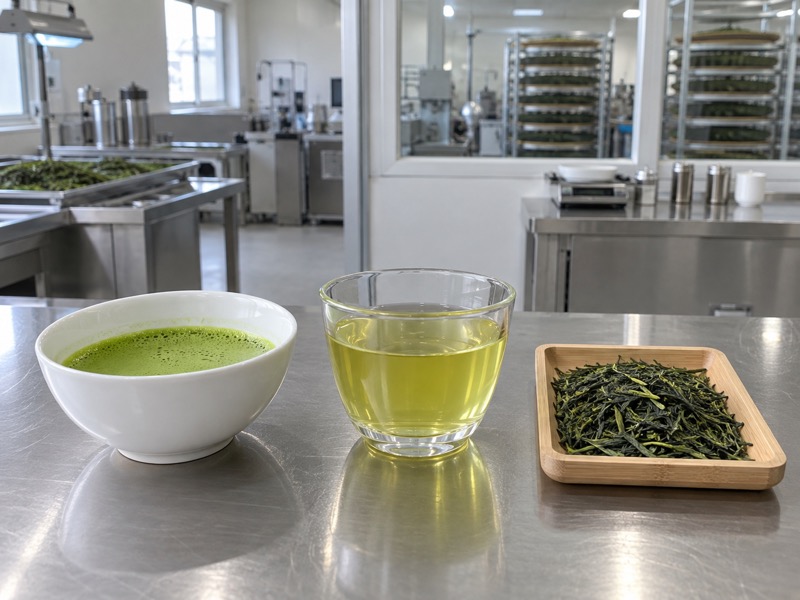
Matcha and sencha are both Japanese green teas, but the customer receives them in different forms. Matcha is powdered tencha dispersed into the drink. Sencha is leaf tea infused in water, then separated from the liquor. A café that substitutes one for the other changes the preparation, flavor, texture and cost of the cup. Buyers should compare finished servings made by the methods each tea needs, then choose the format that fits the menu and staff workflow.
For: tea buyers, café menu planners and importers. Decision: which tea format meets a defined menu use at a repeatable cost per accepted serving.
1. How do matcha and sencha differ in production?
Start with leaf identity
The distinction begins before either tea reaches a café. Japan’s Ministry of Agriculture, Forestry and Fisheries describes matcha as finely ground tencha. In its description of traditional Uji tea, tencha comes from covered leaves that are steamed and dried without rolling; stems and veins are removed before grinding. Sencha is made from leaves grown in sunlight, then steamed, rolled and dried. Processing varies by producer, so request the specification for the exact lot rather than assuming every pack follows one picturesque story.
That production difference matters because it leads to two different inputs: a fine powder and an intact or cut leaf. Powder disperses through water and remains in the drink; sencha is brewed and removed. A buyer comparing only dry color misses the customer’s cup. The comparison should record cultivar or blend where known, production region, harvest, pack, lot and proposed preparation. It should also avoid treating sencha as an inferior grade of matcha. They solve different menu jobs, and quality has to be judged inside each format.
2. Which customer use is each tea meant to serve?
Define the drink before choosing a lot
A straight tea cup, sweet latte and bottled beverage place different demands on tea. Matcha can give a visible suspended green body to a latte, but it also needs wetting and dispersion and may settle during a long hold. Sencha can make a clear infusion with a lighter body, but spent leaves need time and space to brew and drain. A café can serve either as a straight tea; a production line may prefer a brewed extract for one drink and powder for another. Neither choice follows from a single tasting bowl.
Write the menu promise first: serving size, temperature, milk or water base, expected wait and how much tea flavor should remain after other ingredients are added. Then make a sample by the proposed route. A matcha sample in water cannot approve a milk drink if the milk masks its aroma. A sencha sample brewed carefully by a tea buyer cannot approve a fast counter method if staff lack a timer or strainer. State the accepted result in sensory and operational terms, not as a vague “premium green tea” requirement.
| Intended use | Matcha question | Sencha question |
|---|---|---|
| Straight cup | Can staff disperse it cleanly? | Can staff control infusion time? |
| Milk drink | Does tea flavor survive the base? | Is an infusion concentrated enough? |
| Packaged drink | Does suspension remain acceptable? | Does the brewed liquor remain stable? |
3. How should matcha vs sencha be tasted fairly?
Prepare each tea properly
Fair comparison does not mean forcing identical brewing instructions onto both teas. Use the supplier’s recommended starting method for each and document the actual tea mass, water mass, temperature, time and serving yield. Prepare coded cups when possible so brand and price do not decide the result before tasting. Use the same water source, cup type and tasting schedule. Repeat the tasting on another day or with another operator before making a bulk purchase.
Record aroma, sweetness, umami, bitterness, astringency, body and finish separately. Matcha’s suspended particles affect texture and the last sip; inspect both top and bottom of the cup after the proposed wait. Sencha changes with steep time, so taste the approved infusion and a deliberately oversteeped control. Those observations show whether a busy counter can hold the intended profile. If the menu includes milk or syrup, run a second tasting in the complete drink. The winner in plain water may not be the best ingredient in the finished product.
| Tasting field | Matcha record | Sencha record |
|---|---|---|
| Dose | Powder grams | Leaf grams |
| Method | Water, mixing and wait | Water, steep and drain |
| Result | Flavor, texture and residue | Flavor, clarity and astringency |
4. What preparation card should staff receive?
Make the method executable
A preparation card should fit the site, not a ceremonial demonstration. For matcha, state powder dose, water mass and temperature, vessel, order of addition, mixing tool and endpoint. Include the point at which a poorly mixed cup is remade. For sencha, state leaf dose, water mass and temperature, steep time, draining method and whether a second infusion is part of service. A word such as “hot” is too loose for a multi-site operation; staff need measurable settings and a sensory reference.
Observe ordinary operators using the card. Watch the first cup and a cup during a rush. If matcha clumps, check wetting and tool clearance before changing tea lots. If sencha turns harsh, check timer use and whether brewed leaves sit in the liquor after the pour. Record active labor and total handoff time. A method that tastes excellent when one trained buyer makes it but fails when the next shift follows the written card is not ready for rollout. Keep the supplier’s preparation suggestion as a starting point and approve the house method through the actual service trial.
5. Which defects point to tea, and which point to method?
Use a control cup
Matcha can show visible clumps, a dull color after poor storage, coarse mouthfeel or a bitter finish. Sencha can taste thin from under-extraction or sharp and drying from a long steep. These are different failure mechanisms. When a cup misses the target, make a control with a known tea lot and the documented method. Change one factor at a time: water, dose, timing, tool, lot or storage. This keeps the team from replacing an acceptable tea because the counter procedure drifted.
Inspect more than the first fresh sample. Taste a matcha cup after the normal customer wait and look for residue. Taste sencha immediately after draining and again when the cup reaches a typical drinking temperature. If one lot changes substantially during a planned hold, record that as a menu limitation. A buyer may still choose the tea for made-to-order service while rejecting it for delivery or packaged use. Write pass rules for aroma, flavor, texture and appearance separately so “looks green” cannot stand in for a good cup.
| Observed defect | First control | Likely next check |
|---|---|---|
| Matcha clumps | Same lot, fixed method | Wetting and mixing tool |
| Sencha harshness | Same lot, shorter steep | Time and temperature |
| Dull aroma in either tea | Fresh retained lot | Pack and storage history |
6. How should the teas be packed and stored?
Protect the purchased format
Both products need dry, protected storage, but their pack use differs. Fine matcha exposes more surface area and a café may open its bag repeatedly for small doses. Sencha leaves can be damaged by crushing and by a pack that admits moisture or odors. Follow each supplier’s storage and open-life directions for the exact item. Record arrival date, lot, seal condition, opening date and remaining stock. Do not create an open-life rule from a single pleasant sniff test; use supplier information and the site’s quality plan.
Match pack size to sales pace. A large low-cost matcha bag may lose desirable color or aroma before it is used; a tiny sencha pouch may create labor and packaging cost if the bar sells hundreds of cups. Test the actual service container, not just the unopened wholesale pack. If staff transfer tea to a counter jar, document the transfer date and cleaning. Keep a retained sample for comparison when a complaint arises. For a packaged drink made from either tea, the finished beverage needs its own process and shelf-life validation; dry-tea guidance does not establish finished-drink safety.
7. What must suppliers document?
Link claims to the lot
Request product code, lot identification, country and region claims where used, ingredient statement, processing description, pack format, storage instructions, lead time and agreed sensory reference. For matcha, ask what tea material was milled and how the powder is specified. For sencha, ask how the leaf style, cut and steaming level are described. These details let a buyer reorder a comparable product and investigate a complaint. They also prevent a menu writer from treating “matcha” or “sencha” as a substitute for a full item specification.
Check any certification or origin claim against documents for the purchased SKU, not a company brochure. Include safety and contaminant records required by the business and sales market. If the supplier changes a blend or pack, retest the function that matters to the menu. A new sencha leaf cut can change infusion speed; a new matcha particle profile can change dispersion. Keep tasting sheets with procurement records so the approved reference is a cup made under a known method, not a packet admired at a trade show.
8. How do labor and waste change the price comparison?
Cost an accepted serving
Price per kilogram is a starting point. Calculate grams of powder or leaves used per accepted serving, then include preparation labor, tools, filters where used, packaging, shipping, remakes and discarded stock. For sencha, account for spent leaves and the time to brew and drain; do not assume that all purchased leaf mass transfers to the cup. For matcha, include residue left in the bowl or mixer and cups remade because of clumps or sediment. A stronger tea may cost less per cup if it achieves the target at a smaller dose.
Use the actual approved serving and the same menu price when comparing margins. If the two teas create different customer products, show that openly instead of pretending the cost difference is the only decision. Include the cost of a second station or staff training if one format needs equipment the site does not own. Project pack waste from realistic weekly volume. A supplier’s minimum order can make an attractive unit price irrelevant if the tea ages on the shelf before staff use it.
| Cost item | Matcha | Sencha |
|---|---|---|
| Tea used | Powder per accepted cup | Leaves per brewed cup |
| Process | Mixing, cleaning, remakes | Brewing, draining, spent leaves |
| Stock loss | Opened powder and residue | Opened leaf and breakage |
9. Which tea fits the menu and brand language?
Write what customers will receive
Describe the preparation honestly. A sencha infusion is not a powdered matcha drink. A matcha latte is not a clear steeped tea. If a menu names a region or production method, confirm that the chosen lot supports the wording. If a bottled product uses sencha extract or a blend with matcha, list the actual ingredients rather than relying on a broad green-tea image. Accurate wording helps staff answer questions and prevents a buyer from approving a visually similar but functionally different substitute.
Run a small customer-use test after the internal tasting. Serve each tea as it would appear on the menu, at the normal price and temperature. Ask staff to note common questions, not to steer buyers toward one format. A straight-cup customer may value clarity and a fresh leaf aroma; a latte customer may expect color and body. Those observations can guide the range without claiming that one tea is universally better. Keep the result tied to the venue’s audience and the actual preparation card.
10. What pilot is enough to choose a tea?
Approve a cup and a method together
Choose two or three realistic lots for each format and test them under the documented service method. Have more than one operator prepare cups across several shifts. Record accepted cups, defects, preparation time, waste and customer-use observations. Hold the menu base constant when comparing lots within a format. When comparing matcha with sencha, state that the methods differ and judge which finished product better meets the menu promise. The decision should include procurement, service and quality staff so no one buys a tea that the counter cannot prepare.
Keep a retained reference lot and the approved recipe card. If the first delivery differs from the pilot, make a control cup before accepting or rejecting it. A limited launch at one site can reveal actual stock drawdown and whether the preparation holds up under a rush. Expand only after the cup, method, pack use and cost repeat. The result may be a straight sencha, a matcha latte or both in different roles. The pilot should explain that choice in customer and operating terms.
| Pilot checkpoint | Evidence | Release question |
|---|---|---|
| Matched tasting | Coded cups and method cards | Which serving meets the target? |
| Service shift | Time, defects and remakes | Can staff repeat it? |
| Stock review | Open packs and actual drawdown | Will the lot stay usable? |
The production distinction above follows Japan’s Ministry of Agriculture, Forestry and Fisheries. For more on sensory selection, see the matcha flavors guide.
Further reading: Sencha vs Matcha: Key Differences Explained.
FAQ
Q1: Is sencha a lower grade of matcha? No. Sencha is a leaf tea brewed as an infusion; matcha is powdered tencha dispersed into the drink. Judge quality within the chosen format.
Q2: Can a café use one preparation card for both? No. Matcha needs a dispersion method; sencha needs controlled steeping and draining. Record each method separately.
Q3: Does matcha vs sencha have one universal winner? The better choice depends on the finished drink, customer expectation, staff workflow and cost per accepted serving.
Q4: What should a buyer taste first? Taste coded, correctly prepared straight cups, then repeat the comparison in the actual milk, syrup or packaged base if that is the intended product.
Q5: What supplier evidence matters? Keep lot identity, item specification, storage instructions, claim support and a dated sensory reference tied to the approved service method.