
Matcha udon is a wheat noodle with tea powder incorporated into the dough. A good result should still behave like udon: thick strands, a satisfying chew and a clean surface after cooking. Green color alone is a weak target. Too much powder can make the dough harder to handle, while a noodle that looks appealing before boiling may lose its tea note in broth. A restaurant group or noodle maker needs a defined format, controlled dough trials and evidence from the actual cooking and packaging route. These ten checks focus on udon production and purchasing, distinct from thinner soba noodles or a general matcha pasta concept.
Table of contents
- What kind of matcha udon will the buyer sell?
- Which flour and matcha belong in the first trial?
- How should matcha be added to the udon dough?
- What controls hydration and strand structure?
- How should cooking performance be tested?
- What should the cooked noodle taste and look like?
- Which pack format suits the distribution route?
- What evidence supports handling and shelf life?
- How should a producer cost and scale the noodle?
- What should the matcha supplier receive in the enquiry?
1. What kind of matcha udon will the buyer sell?
Choose the channel before the dough formula
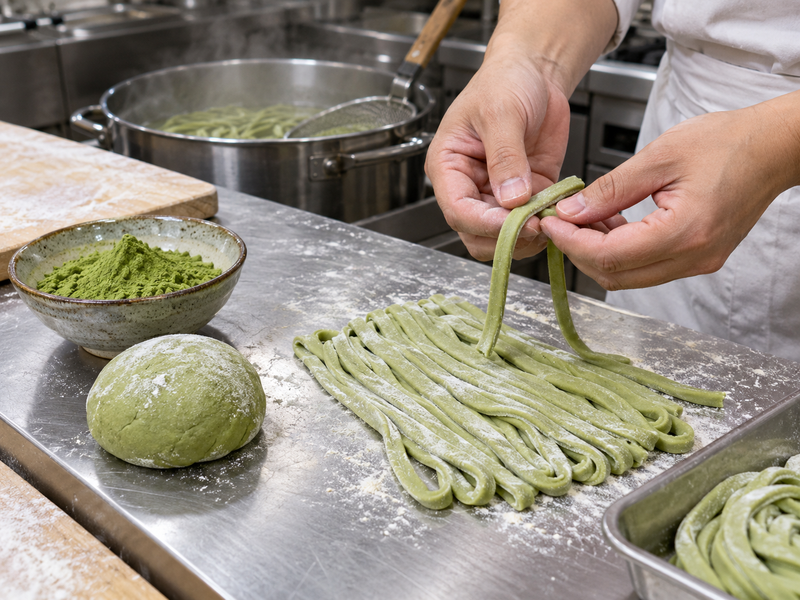
A restaurant making fresh noodles for one evening, a chain buying chilled portions and a retail brand selling frozen packs each need a different release plan. Define the serving route, target strand thickness, pack weight and whether noodles will be cooked from fresh, chilled or frozen. If the product is meant for a light broth, the tea note has room to show. A strongly seasoned stir-fry may hide it. Choose one primary dish for the first trial and judge the noodle in that context rather than approving a handful of attractive raw strands.
Set a physical udon reference. Udon is typically thicker and chewier than soba, so a thin green noodle may satisfy neither the menu description nor the guest expectation. Measure cut width and cooked strand condition from several points in the batch. Decide whether the brand wants a visible natural green, a gentle tea aroma, or both. Agree on the finished bowl and the intended packaging before negotiating a matcha grade.
| Route | First product decision | Trial condition |
|---|---|---|
| Fresh restaurant | Same-day dough and cooking workflow | Normal service rush |
| Chilled foodservice | Portion and storage method | Cook after expected delivery |
| Frozen retail | Pack, freeze and thaw route | Consumer cooking instruction trial |
| Prepared meal | Broth or sauce interaction | Finished meal hold |
2. Which flour and matcha belong in the first trial?
Test tea inside a wheat-dough system
Wheat flour, water and salt establish the udon dough’s handling and chew. Changing flour protein or milling style can shift texture even when the matcha dose stays fixed. Record the actual flour specification and ingredient lots before comparing tea samples. Matcha may add fine solids and an earthy note, but it cannot replace the structure developed from wheat gluten. Treat a change to a gluten-free base as a new noodle project, not a simple substitution. The buyer should disclose wheat as required in its market and assess any other ingredients in the finished pack.
Matcha Village’s supplied information lists culinary, premium and other matcha grades with application-selection support. Request named samples and current specifications, then make dough trials at equal weighed doses. The matcha soba noodles guide covers a different noodle base; keep the udon wheat trial separate. Compare dispersion in the dough, raw color, cooked color and tea flavor after the planned cooking method. A powder that looks vivid dry may appear muted in a thick cooked noodle; another may taste rough when used at a dose chosen only for color.
| Incoming material | What to record | Why it matters |
|---|---|---|
| Flour | Type, protein range and lot | Dough strength and chew |
| Matcha | Named product, lot and dose | Color and cooked flavor |
| Water | Source and measured amount | Hydration consistency |
| Salt | Dose and mixing method | Dough behavior and taste |
3. How should matcha be added to the udon dough?
Prevent green pockets before sheeting
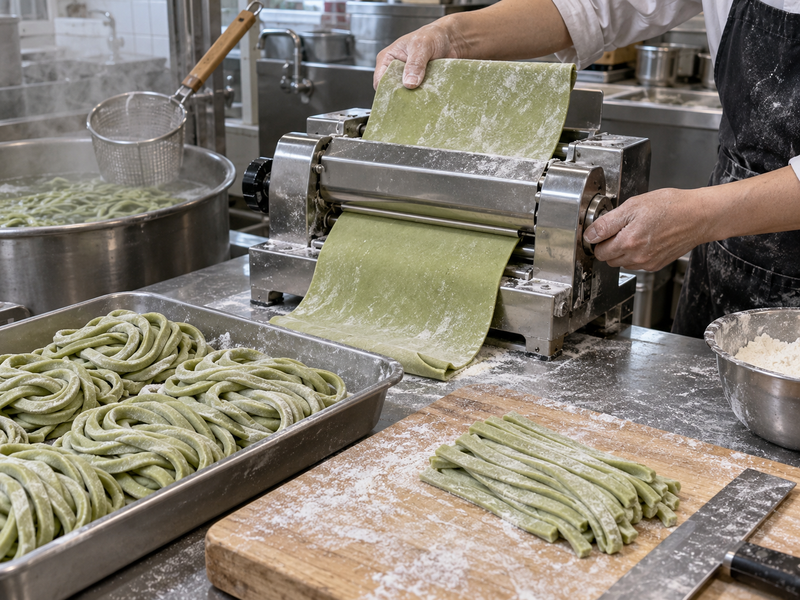
Matcha added directly to partly hydrated dough can leave dark green patches that persist through cutting. Trial a dry premix with flour or a measured dispersion in part of the formula water. Keep total water constant between trials so the team does not mistake a hydration change for a matcha effect. Mix representative small and larger batches, then cut across the dough to inspect the center for streaks. A uniform outer sheet can hide unblended powder inside. Record the addition order, mixer load and time needed to reach a workable mass.
Avoid using a visual green endpoint alone. Extra mixing may improve distribution but change dough temperature and handling. Some powder may cling to the mixer or be lost in dust, so record actual input and yield. If the first trial is patchy, adjust premixing and equipment before increasing matcha. The production team should establish an approved dough appearance and a practical check at the sheeter; if streaks appear, stop and correct the cause rather than cutting hundreds of inconsistent portions.
4. What controls hydration and strand structure?
Let the dough trial set the process limits
Udon dough must sheet and cut cleanly while holding a thick strand that cooks evenly. Too little water may produce ragged edges and breaks; too much may make strands stick. Matcha’s fine particles can alter the way dough feels, so compare hydration in measured steps with the same flour and tea lots. Resting conditions, dough temperature, sheet thickness and cutter setup also matter.
Measure raw strand width, thickness and breakage at the beginning, middle and end of a run. Note clumps and excessive dusting flour because both affect cooked weight and surface quality. The team should define its own acceptable range using actual equipment, not an assumed household recipe time. Keep a record of dough mass entering the sheeter and usable noodles leaving it. A noodle that tastes excellent from a hand-cut sample can still be a poor commercial choice if it tears or sticks during routine production.
| Dough observation | Possible cause to investigate | Production check |
|---|---|---|
| Ragged cut | Low hydration or blade condition | Compare dough and cutter |
| Stuck strands | High hydration or poor dusting | Measure water and handling |
| Green streaks | Uneven powder addition | Inspect dough cross-section |
| Frequent breaks | Flour, rest or sheet setting | Track breakage by run stage |
5. How should cooking performance be tested?
Cook the noodle as the customer will
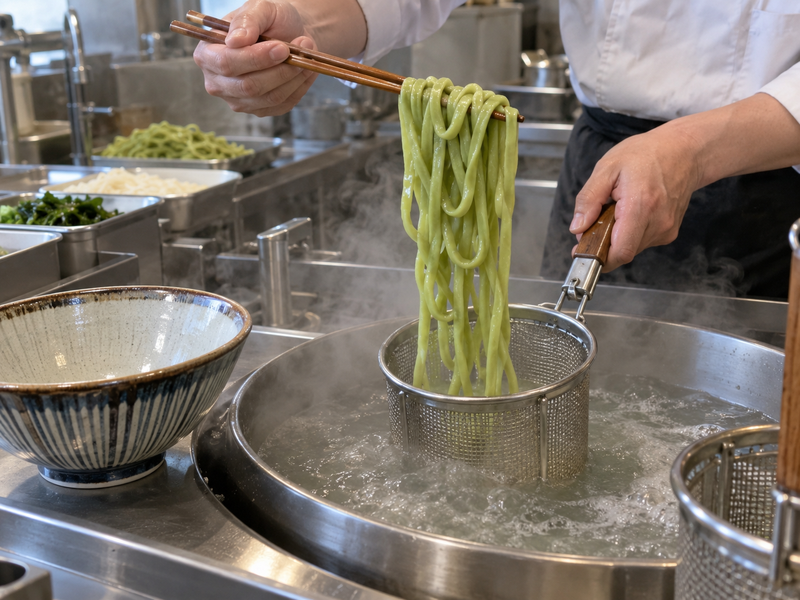
Test the actual portion size in the kitchen’s normal pot or the manufacturer’s stated preparation route. Record water volume, noodle load, cook time and whether the noodles are rinsed or transferred directly into broth. Check for strands sticking together, surface sloughing, uneven centers and excess green color in the cooking water. The aim is a noodle that survives normal handling, not merely one that looks good before it touches boiling water.
Measure cooked weight and assess bite at handoff and after a normal table delay. Thick udon can continue absorbing liquid in broth; the result after several minutes may be softer than the first taste at the pot. Compare the fresh, chilled or frozen versions separately. A frozen product may need a different validated cooking instruction and can show breakage after thaw or direct boiling. Record both success and failure conditions, then write a practical service instruction that staff or customers can follow without special intervention from the product developer.
6. What should the cooked noodle taste and look like?
Judge the strand in its intended broth or sauce
Taste plain cooked noodles first to assess wheat chew and tea note, then taste the full dish. A light broth can reveal matcha’s grassy edge; a strong sauce may mask it entirely. Ask tasters to describe aroma, chew, surface feel, aftertaste and whether the tea makes the bowl more appealing. A brighter raw strand does not always make a better cooked one. Color can change with cooking and holding, so compare in consistent light at the actual serving time. If the tea note is absent, review the complete dish before simply adding more powder.
Make an acceptance photo showing a normal bowl with realistic portion size. Record whether the noodle sheds green flecks or clouds the broth. Check the outer surface and center of a thick strand for even doneness. If a new matcha lot is proposed, repeat the same cook and dish test before purchase approval. Matcha Village’s application guidance may help shortlist candidate powders, but the food business should own the finished-noodle sensory standard.
7. Which pack format suits the distribution route?
Test portions in the package they will actually use
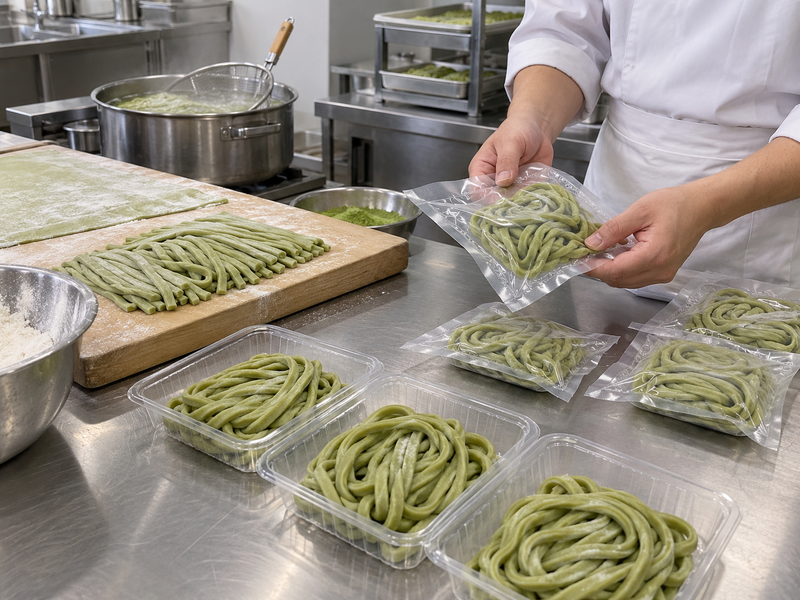
Fresh strands packed too tightly may fuse; loosely packed noodles may shift and break. Trial real portion weights in the intended food-grade container or pouch, then inspect after realistic handling. A chilled product needs a route designed for that condition. A frozen one needs a pack and process that control damage, freezer exposure and preparation performance. Evaluate condensation, stickiness, color transfer and the ability to remove a portion without tearing strands.
The quality team should approve ingredient and allergen information for the destination market. Wheat is a central ingredient in conventional udon; any other recipe ingredient or cross-contact risk also needs assessment. Give packs a lot identity that links flour, matcha and production records. If a restaurant chain buys bulk portions, specify the number and weight per case and check whether staff can separate noodles quickly at service. For retail, validate cooking instructions on the actual pack format, not only with noodles taken directly from the pilot kitchen.
| Pack route | Physical risk | Test to run |
|---|---|---|
| Fresh portions | Sticking and compression | Separation after delivery |
| Chilled packs | Condensation and texture shift | Cook after planned hold |
| Frozen packs | Breakage and freezer effects | Cook from approved state |
| Prepared meal | Broth uptake | Texture at meal handoff |
8. What evidence supports handling and shelf life?
Validate the exact product and route
A noodle’s safe storage life cannot be inferred from a home recipe, the color of matcha or an untested flour formula. The food business should design quality and food-safety studies for its actual fresh, chilled, frozen or prepared-meal format. Record ingredient lots, process conditions, pack, handling and intended distribution. Test the attributes customers notice as well as the safety criteria selected by qualified staff: strand breakage, sticking, color, aroma, texture and cooking performance near the end of the proposed period. A change in pack or formula can invalidate earlier evidence.
Check realistic handling events, including transit and time on the service line. The UK Food Standards Agency’s product-description guidance includes storage and distribution in a hazard review. If noodles arrive chilled, verify the kitchen’s cooking test on noodles from the end of the approved holding period. If sold frozen, test the real pack after the intended storage path. The producer’s quality team owns release limits, date marking and destination-market requirements. A matcha supplier can provide current ingredient specifications and lot traceability, but it cannot validate the finished noodle’s shelf life without the producer’s own data. Keep the records linked to every released lot.
9. How should a producer cost and scale the noodle?
Use saleable portions as the denominator
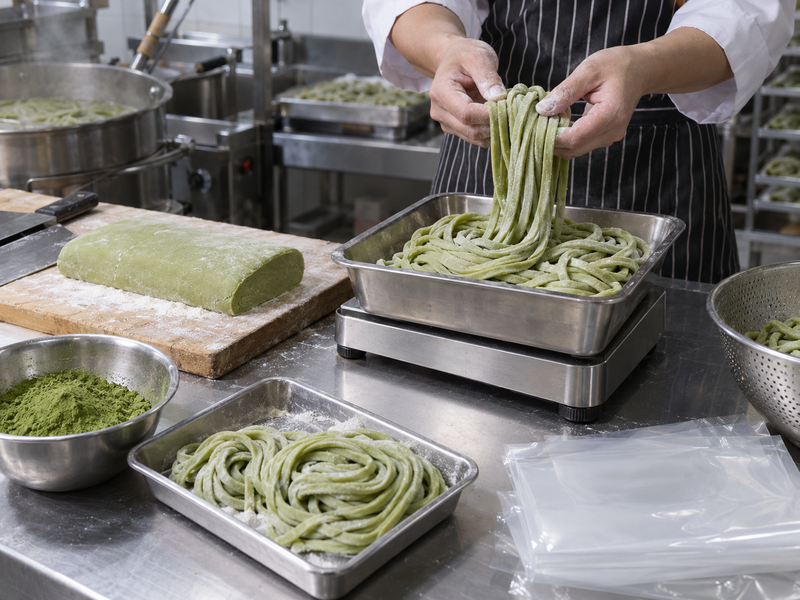
Calculate matcha cost from the approved dose and delivered ingredient price. Add flour, salt, production labor, mixing and sheeting loss, cut rejects, cooking loss if sold prepared, packaging and distribution. A cheap matcha quote may not help if a higher dose is needed after cooking or the dough has a high breakage rate. Count usable portions from a full batch, not only the dough mass before cutting. Cost the fresh, chilled and frozen route separately because their packs and handling differ.
Scale-up should repeat the dispersion, strand and cooking checks on the intended machine. A larger mixer can leave powder pockets or change dough temperature; a faster cutter may change width and breakage. Run several batches and track variance before forecasting monthly matcha demand. Matcha Village’s supplied company profile describes bulk supply and application-selection support, but request current terms for the named product that passed the noodle trial. Purchasing should connect the sample, specification and actual pack size to a realistic production plan.
| Cost input | Pilot record | Scale-up question |
|---|---|---|
| Matcha | Grams per usable portion | Same cooked tea note? |
| Flour and water | Input weight and dough yield | Same handling on larger mixer? |
| Cutting | Breaks and trim | Same saleable strand count? |
| Pack and route | Material, labor and losses | Same performance after delivery? |
10. What should the matcha supplier receive in the enquiry?
Describe a wheat noodle, not a green beverage
Send a short application brief stating udon flour system, estimated matcha range, mixing method, target natural green, cooked tea flavor, strand thickness, intended dish, pack format, destination market and forecast volume. Request named samples, current specifications, lot identity, available packs, lead times and the documents needed for the buyer’s market. Matcha Village’s stated range and application-selection support may help choose candidate products; any product-specific certificate, analysis result, price or minimum order must be confirmed for the actual sample and quote.
Test every candidate in the same dough and cooking procedure. Keep a sample of the accepted noodle, trial record and product identity together. If a supplier later proposes a substitute, compare raw dough, cooked color, tea flavor and breakage before changing the purchasing code. One focused matcha udon project should not be confused with the site’s existing soba or general pasta topics: its defining decisions concern thick wheat strands, chew and udon service. A controlled multi-batch trial gives the buyer a measurable purchasing target.
FAQ
Q1: Is matcha udon the same as matcha soba?
No. Conventional udon is a thick wheat noodle; soba commonly relies on buckwheat and has different texture and ingredient considerations. Test and label each product separately.
Q2: Can matcha replace wheat flour in udon?
No. It adds color and tea flavor at a trial dose. The wheat dough system still provides the strand structure and chew.
Q3: Why can raw noodles look greener than cooked noodles?
Cooking and dilution change visual contrast. Approve color in the cooked noodle and intended dish, not only in raw dough.
Q4: Can fresh and frozen noodles use one cooking instruction?
Only if testing supports it. Validate the preparation route for each pack and storage format the customer will receive.
Q5: What should a matcha supplier know before sending samples?
Share the flour system, trial dose, mixing process, target cooked color and flavor, pack route and expected production scale.