
Matcha tres leches cake depends on the relationship between a light sponge and a measured milk soak. Too little liquid makes a dry cake; too much makes portioning and display difficult. Sylvia Wakana’s matcha tres leches cake offers a home recipe reference. Matcha Village’s sample service can supply candidates for the tea trial. A bakery version also needs a soak target, cold handling plan and slices that remain attractive when the case gets busy.
Contents
- 1. What is the intended slice?
- 2. Which sponge can absorb the soak?
- 3. Where should the matcha flavor go?
- 4. How should the milk soak be formulated?
- 5. How much soak should the sponge receive?
- 6. What cold holding controls are needed?
- 7. How should the cake be topped?
- 8. How can the bakery cut clean portions?
- 9. What belongs in the cost and allergen sheet?
- 10. What makes a trial ready for sale?
1. What is the intended slice?
Describe the eating and selling experience
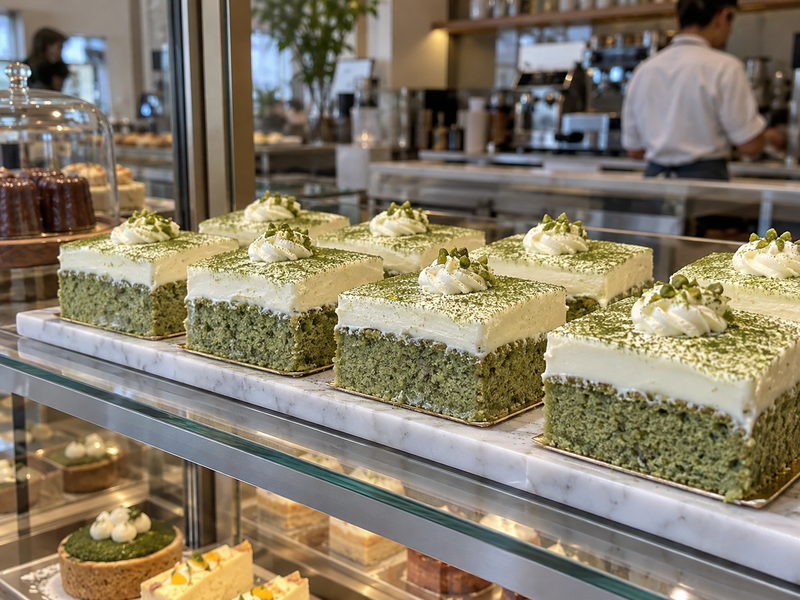
Decide whether the cake is a plated café dessert, a boxed takeaway slice or a whole preordered tray. Each format asks something different of the sponge and topping. A plated slice may tolerate extra sauce on the plate; a takeaway piece must stay upright in a box. Set a target portion size, layer height, topping style and flavor balance. Photograph a cut slice after it has sat under the same conditions as the planned service, not only immediately after assembly.
Taste with a fork from top to bottom. The first bite should not be all sweet cream while the last is soggy cake. Matcha may be the main note or a gentle finish, but the team needs to agree which. The name “tres leches” also creates an expectation of a milk-soaked cake. If the recipe departs substantially from that concept, describe it accurately rather than relying on the familiar name to sell a different dessert.
2. Which sponge can absorb the soak?
Test structure before adding more liquid
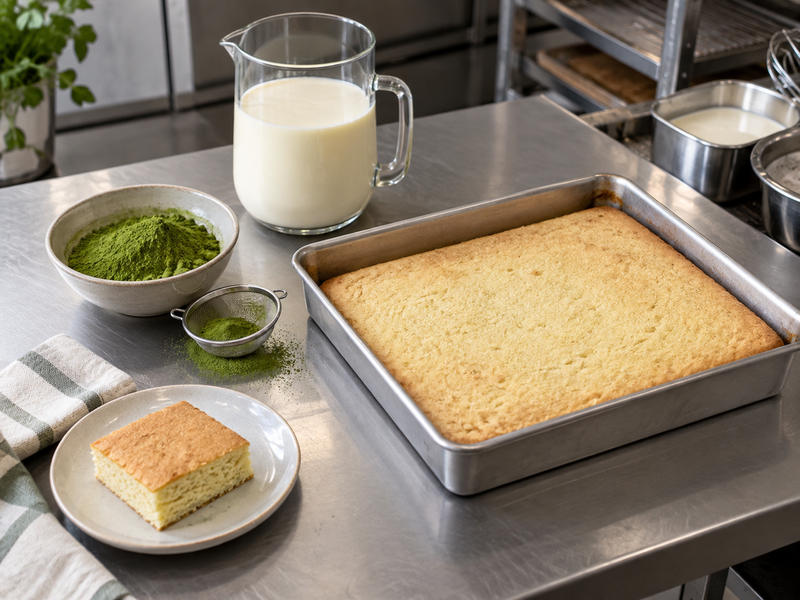
A light sponge with a reasonably open crumb can take up liquid without becoming paste. Use a dependable cake formula as the control and record pan size, batter weight, oven setting and baked weight. Cool the sponge in a consistent way before soaking. If one tray is denser than another, the same measured soak may collect on the surface rather than move through the cake. A cake that tastes dry after soaking may need a different sponge or distribution method, not automatically more milk.
Sylvia Wakana’s version shows one combination of sponge and milk components. For production, cut a small sample from each bake and inspect height, crumb and edge dryness. Test center and corner pieces after soaking. The corners can behave differently from the center, which matters when a tray is cut into equal saleable portions. Keep the sponge formula fixed while comparing soak levels.
| Sponge check | Record | Why it matters |
|---|---|---|
| Batter in pan | Weight and depth | Controls tray yield |
| After bake | Height and weight | Exposes bake variation |
| Cut crumb | Evenness and large gaps | Predicts soak distribution |
| Edge condition | Dry or firm band | Affects corner portions |
3. Where should the matcha flavor go?
Compare cake, soak and topping
Matcha can be baked into the sponge, dispersed into the milk soak or used in the topping. Baking gives a more integrated cake but can dull the color. A matcha soak can deliver a clearer tea note if it is dispersed evenly. A topping makes the flavor obvious in the first bite, yet a thick sweet cream may bury the tea underneath. Test one route at a time before combining them. Otherwise a bitter result gives little clue about which dose caused it.
Weigh the powder and sift or pre-disperse it before adding it to liquid. Inspect the soaked cake for dark streaks or dry pockets. Taste the final slice after its planned chilling period; a fresh assembly sample may be misleading. Use current supplier documentation before stating a powder’s origin, grade or certification. Matcha Village’s general company material does not prove the particulars of the item used in this recipe.
4. How should the milk soak be formulated?
Control sweetness and viscosity
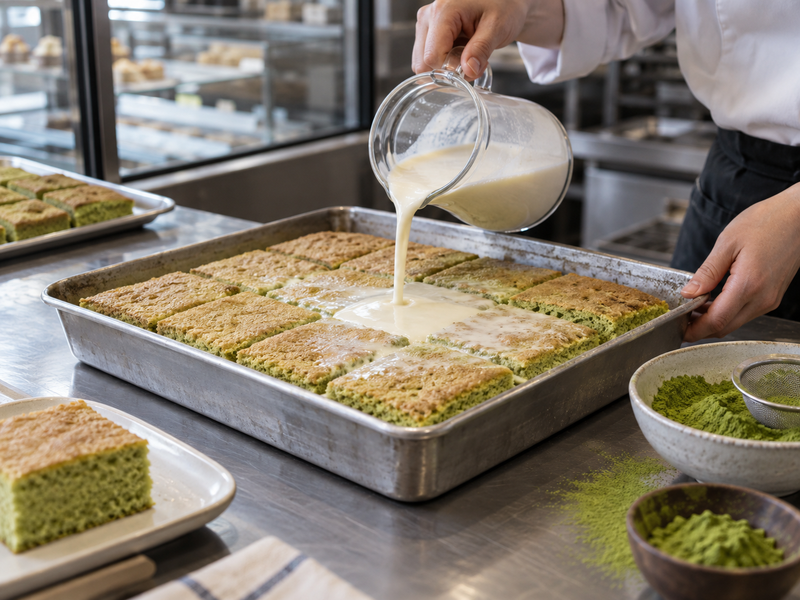
Traditional tres leches styles use a combination of milks, but the exact mix should suit the bakery’s sponge and portion. A very sweet, thick soak may move slowly through the cake and pool near the cut edges. A thinner mix may absorb evenly but taste weak. Record ingredient weights, mixing method and temperature. Make two small trials with the same total soak weight and different milk balance; evaluate them after the same rest.
If changing ingredients for a non-dairy version, treat it as a new product rather than a simple substitution. Plant-based components have different sweetness, viscosity, fat content and allergen implications. The standard recipe card should name the actual components and brands or specifications. Do not describe a cake as dairy-free because the soak is plant-based if the sponge or topping still contains milk.
| Soak variable | Effect to observe | Trial note |
|---|---|---|
| Total sweetness | Tea visibility and finish | Taste chilled |
| Viscosity | Absorption versus pooling | Check cut center |
| Matcha placement | Even flavor | Inspect dark streaks |
| Soak temperature | Handling and consistency | Use the planned process |
5. How much soak should the sponge receive?
Measure absorbed liquid, not only poured liquid
Start with a weighed sponge and a measured amount of soak. Apply the liquid evenly, then record any that remains pooled after the set rest. A large puddle in the tray is not evidence of a generously soaked cake; it may signal poor absorption. Compare a lower and higher application using equal sponge pieces from the same bake. Taste the center and edge, and try lifting a finished portion with the actual service tool.
Make holes or score the surface only if they improve even absorption in the trial. An overly aggressive puncture pattern may weaken slices. The goal is a moist bite that keeps its shape in the box or on the plate. Record the time between soaking and cutting because the liquid continues to redistribute. The approved amount should be expressed as weight of soak per weight or tray of sponge, with a visible endpoint for staff.
6. What cold holding controls are needed?
Build the process around the ingredients
Milk-soaked cake and cream topping require a reviewed cold handling plan. Decide where the sponge cools, where soaking occurs, how trays are covered and labeled, and how slices move to the display case. The FDA Food Code is a U.S. model reference for retail handling; the applicable local rules and the bakery’s food-safety plan set the controls. Do not infer a safe shelf life from how long the cake still looks attractive.
Keep the quality test separate: taste and inspect slices over the intended selling window under the actual case conditions. Watch for weeping topping, dry edges, a wet bottom layer and matcha color change. If a tray must move repeatedly in and out of refrigeration for portioning, redesign the workflow. Portioning an approved number of slices in a controlled session may be easier to manage than opening the whole tray for every order.
| Process point | Question for the food-safety plan | Quality check |
|---|---|---|
| Cooling | Where and how is it done? | Sponge stays intact |
| Soaking | Who records batch identity? | Liquid distributes evenly |
| Storage | How are trays covered and tracked? | No pooling or odors |
| Display | How is stock rotated? | Slices keep shape |
7. How should the cake be topped?
Let the topping support the soaked crumb
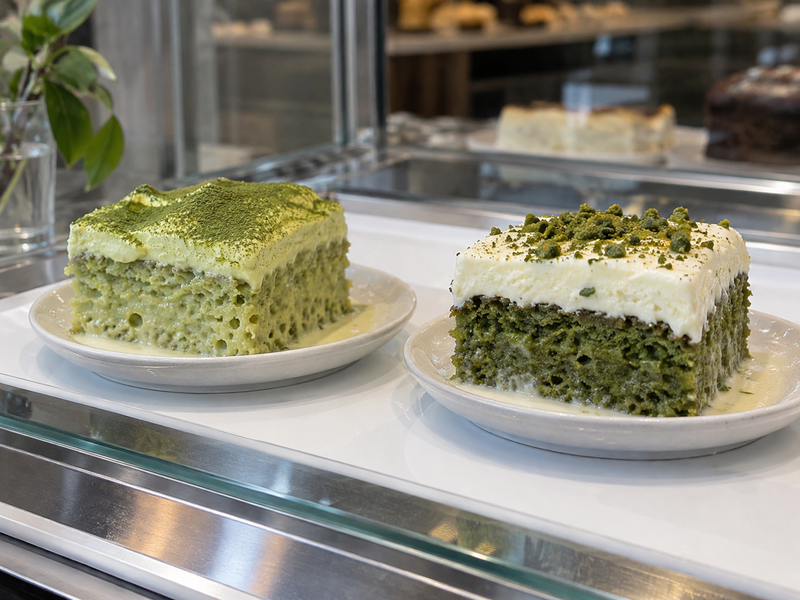
A light whipped topping can balance a sweet soak, but it also adds another perishable component and another texture to manage. Test topping thickness, sweetness and matcha dose on the fully chilled cake. A heavy layer may slide when the cake is boxed; a thin one may dry or show every cut mark. If dusting matcha on top, compare its appearance immediately and after time in the case. Moisture can darken the powder unevenly.
Apply topping only when the sponge is ready under the process plan. Use a measured amount per tray and an approved decoration pattern that staff can repeat. Fresh fruit or other garnish adds handling, cost and potential liquid on the surface; trial it rather than adding it for a photograph. The finished slice should reveal cake, soak and topping in a proportion that matches the menu description.
8. How can the bakery cut clean portions?
Test the cut at the intended selling time
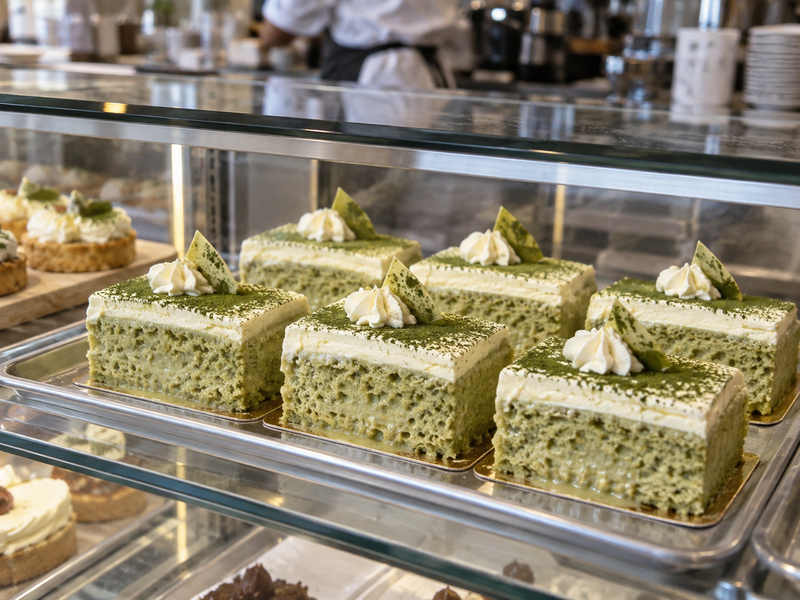
Mark the tray into portions before cutting. A measured grid protects yield and pricing; visual guesses often leave undersized end pieces. Use a clean, appropriate knife and wipe it between cuts if topping smears. Lift each sample with the tool staff will use in service. A slice that looks neat in the tray but falls apart in the box is not yet a production-ready dessert.
Record saleable portions, crumbs and broken pieces from a full tray. Compare center, edge and corner slices. If corners are dry or the bottom layer remains too wet, adjust the sponge or soak distribution before changing the portion size. Select packaging after a transport test: close a box, move it as a customer would and inspect whether topping contacts the lid. A larger box may cost more but prevent an avoidable remake.
| Portion check | Pass condition | If it fails |
|---|---|---|
| Grid | Even stated portions | Change cut guide |
| Lift | Slice stays upright | Review soak or sponge |
| Box | Topping clears lid | Change pack or height |
| Short transport | No major pooling | Review soak and drainage |
9. What belongs in the cost and allergen sheet?
Use actual tray yield
Cost sponge ingredients, milk components, matcha, topping, garnish, packaging and labor against saleable slices. Include broken pieces and any leftover tray that cannot be sold under the bakery’s plan. A slightly larger slice may be attractive, but it changes the number of portions per tray and the margin. Keep cost, visual standard and taste together when deciding the cut size.
Build the allergen list from every component and current supplier labels. Milk, egg, wheat and possible garnish ingredients should be checked. The FDA major allergen guide helps U.S. operators frame the review; labeling requirements depend on where the product is sold. If substitutions are offered, document them as separate recipes. Staff should have a written ingredient answer rather than guessing from a green slice.
10. What makes a trial ready for sale?
Repeat a full tray, not just one square
Write the final specification with sponge formula by weight, pan size, bake check, matcha placement, soak formula and application weight, chilling and handling steps, topping weight, cut grid and pack. Include photos of an approved center slice and corner slice. Have another baker prepare a full tray from the document, then compare both trays at the planned sale time. A single beautiful sample is not enough to confirm yield or case performance.
During a limited sale, record customer comments, remakes, unsold slices and the reason for each rejection. “Too wet” may mean excess soak, weak sponge or poor distribution; identify the cause before cutting the soak blindly. Keep the menu description factual, with ingredients and serving format clear. The product belongs on the regular menu when the ordinary shift can make and serve clean slices within the bakery’s approved cold handling plan.
| Decision | Evidence | Next step |
|---|---|---|
| Launch | Stable slice and repeatable yield | Train the team |
| Revise | One traceable texture issue | Retest one variable |
| Hold | Incomplete handling or label review | Resolve first |
FAQ
Q1. Can matcha go in the sponge and the soak? Yes, but test each placement first so the final tea strength and color are intentional.
Q2. Why does liquid pool in the tray? The sponge may be too dense, the soak too thick or the application too heavy. Compare weighed trials.
Q3. How soon should the cake be cut? Set the cut point through a timed trial after the planned soak and chill, then verify clean portions.
Q4. Can it be sold as a takeaway slice? Yes, if a real packaging and transport test keeps the slice intact under the approved handling plan.
Q5. Does a fresh-looking slice prove its storage period? No. Appearance is a quality observation; storage controls require separate review.
The most useful next bake is one full tray with two measured soak levels tested side by side. Cut and box samples after the planned chill to see which version a customer can actually carry home.