
Mango sticky rice matcha can fail even when every component tastes good alone. Warm rice wilts mango, a heavy coconut sauce hides tea, and a takeaway cup turns careful layers into one sweet mass. For a restaurant or dessert chain, the job is to define each component and test the assembled serving at the time a customer will eat it. The Aiya matcha mango sticky rice recipe shows the consumer idea; the trials below address prep, service, and purchasing at commercial scale.
1. What should this dessert deliver in one bite?
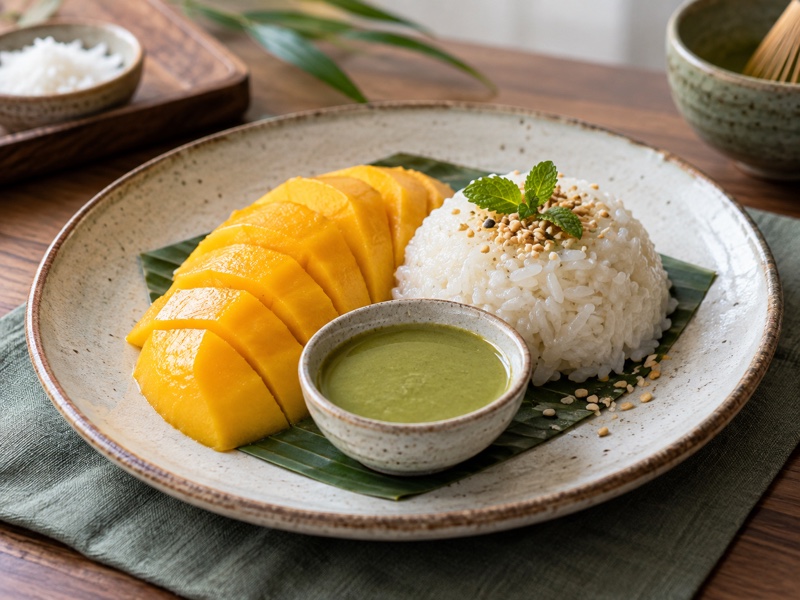
The core dessert combines sticky rice, ripe mango, and coconut. Matcha adds a tea note that should remain recognizable against the fruit and sweet sauce. Write a target before changing ingredients: perhaps creamy coconut first, mango acidity in the middle, and a clean tea finish. A test panel should taste an assembled spoonful, because isolated component scores can mislead. A strong tea sauce may be unpleasant alone but balanced with rice; a delicate one may disappear once mango enters.
Define whether the menu sells a plated dessert, a lidded takeaway cup, or a grab-and-go chilled pot. These formats require different temperatures and textures. Warm rice is pleasant on a plate but creates condensation in a sealed cup. A chilled pot requires rice that remains tender after refrigeration. Photograph the target portion from a fixed angle and weigh its components. Staff can then compare a real service with the approved sample rather than interpreting “generous mango” differently each shift.
| Component | Desired contribution | Failure to watch |
|---|---|---|
| Sticky rice | Tender chew, mild sweetness | Dry clumps or watery grains |
| Mango | Ripe fruit aroma and acidity | Fibrous or bland pieces |
| Coconut | Creamy bridge between fruit and tea | Dominant sweetness |
| Matcha | Clear tea finish and green accent | Bitter pool or invisible flavor |
2. Which rice gives a repeatable texture?
Specify glutinous rice intended for sticky-rice desserts and record its origin, lot, and cooking method. Ordinary long-grain rice behaves differently. Even within sticky-rice types, age and water uptake can change the bite. Run an incoming-lot comparison using the same soak, steaming or cooking method, and coconut addition. Taste rice warm and at the intended service temperature. A sample that works beside the steamer may harden in the chilled display.
A production sheet should give weights, soak conditions, batch depth, cooking endpoint, and the amount of coconut mixture folded through after cooking. It should also state how to handle leftovers. Adding liquid to rescue a dry old batch can give a wet exterior and hard core. If a new rice lot needs a process adjustment, record the change before staff serve it. For multi-site use, send a photo of correctly cooked grains and a short handling video rather than relying only on prose.
Test after a real hold
Portion the rice into the actual container and test it after the expected wait at service or delivery temperature. Check whether grains stick into a single block, whether liquid pools underneath, and whether the spoon can lift a mixed bite. The approval sample should be judged under the same conditions as the customer’s dessert, not straight from the pot.
3. How ripe should the mango be?
Mango variety, ripeness, and cutting yield change both flavor and cost. Approve fruit by eating quality, not skin color alone. Measure edible yield from each delivery and note whether slices hold their edge. Soft fruit can taste rich but collapse under portioning; firm fruit may travel well yet contribute little aroma. A buyer can compare two approved varieties at the same ripeness specification, then choose a seasonal substitution with explicit taste and yield checks.
Precut frozen mango may suit a blended or layered cup but often has different drip and texture from fresh slices. Test thawed fruit in the final presentation before changing the purchasing contract. If mango is prepared ahead, inspect the pieces after the intended hold. Surface browning, juice release, and uneven portion weights can erase the benefit of early prep. Keep knives, boards, and containers clean and follow the kitchen’s produce handling plan. Do not treat the acidity of mango as a safety control for the whole dessert.
| Fruit decision | Trial method | Buyer consequence |
|---|---|---|
| Variety | Blind taste equal-size pieces | Seasonal flavor consistency |
| Ripeness | Cut and hold sample | Texture and waste |
| Fresh versus frozen | Assemble final portion | Drip and presentation |
| Portion cut | Weigh prepared yield | Cost per saleable dessert |
4. Where should the matcha go?
Matcha can enter a coconut sauce, a separate drizzle, a dusting, or a rice layer. Each placement changes how much tea reaches a spoonful. A thin drizzle makes a striking photograph but may leave most of the plate tasting only of coconut. Mixing powder into the whole rice batch can give consistent flavor yet dull the natural contrast with mango. Test two or three placements at the same total matcha addition and let a panel taste from different positions on the plate.
A sauce is often the easiest component to measure. Make a smooth paste with a small portion of liquid before adding the rest, then check for dry specks. A dusting needs a sift and careful timing: humid rice or fruit can turn the powder into dark spots. A separate sauce cup can preserve appearance in takeaway but adds packaging and handling. Choose placement by service performance rather than by the most dramatic overhead image.
Define a whole-spoon tasting rule
Ask tasters to take a spoonful containing all components, then one from the edge where sauce coverage is weakest. If tea appears only in the center, adjust the application pattern. The goal is a dessert that tastes intentional through the last bite, without forcing an excessive powder dose.
5. How should coconut and matcha sweetness be balanced?
Sweet rice, sweet mango, and sweet coconut sauce can leave no room for tea. Build a sweetness map of the whole portion. Make a control dessert without matcha, then add tea through one component at a time. Keep the mango lot fixed while comparing sauce sweetness. Taste after cooling, because a cold dessert may seem less aromatic and more one-dimensional than a warm one. Salt can sharpen the coconut impression, but weigh it and keep it within the brief.
Coconut products vary in fat, water, and stabilizers. A canned coconut milk, cream, and drinking coconut beverage are not interchangeable. Record the label and exact item used in development. If the sauce splits or becomes waxy after chilling, test a different coconut specification before changing tea dose. Dairy substitutions should also be evaluated as new formulas, with ingredient and allergen review. The FDA allergen guidance is useful for US-labeled products; requirements elsewhere need local review.
| Sauce version | Keep constant | Judge at service |
|---|---|---|
| Lower sweetness | Mango and rice | Tea clarity |
| Higher coconut fat | Tea dose and sugar | Coating and separation |
| Tea in sauce | Total tea mass | Evenness across bites |
| Tea on top | Same total tea | Dusting appearance |
6. What temperature should each component reach at service?
Temperature is part of the recipe. Warm rice, cool mango, and room-temperature sauce create a different bite from a fully chilled pot. Choose the intended combination and test it during a normal shift. Do not ask staff to “warm slightly” without specifying a controlled method and a sensory endpoint. If rice is reheated, verify that the process does not dry the surface or leave a cold center. Assemble only when the planned wait to service is known.
Food safety controls need their own plan. Cooked rice and prepared fruit can require time and temperature management under local rules, particularly once packed together. The FDA Food Code is a US model for retail handling, including cooling and holding; the operator should apply the adopted local code and a product-specific safety assessment. Do not infer a safe display period from a home recipe. Record actual product temperature through prep, display, and delivery, then write staff instructions from those measurements.
Check the journey, not only the pass
Place a temperature logger or make documented checks during the intended delivery route. Open a sample when a customer would. The dessert should still have distinct fruit, rice, and tea textures. If it fails, change the format or the service promise before extending a holding time.
7. Will the dessert survive takeaway packaging?
A clear cup helps sell the layers but exposes green tea color to display light and shows any condensation. A low, wide container makes spoon access easier than a tall, narrow one. Build the dessert in candidate packs using normal staff. Seal, carry, tip gently, and open after the proposed travel time. Check lid leakage, sauce migration, fruit bruising, and whether the customer can mix the layers without spilling. A perfect sealed cup that needs a long spoon you do not supply is not finished packaging.
Separate sauce may be worth the extra piece if it keeps matcha fresh and mango bright. Test whether customers understand where to pour it. Packaging waste, extra assembly time, and the chance of a missing sauce cup belong in the same decision as appearance. Take photos after transport, not just immediately after filling. Keep a retained sample in the retail display to compare color change against a protected control.
| Pack choice | Benefit | Test before approval |
|---|---|---|
| Layered clear cup | Visible ingredients | Condensation and light exposure |
| Separate sauce cup | Better component separation | Leakage and assembly time |
| Shallow tray | Easy mixed bite | Carry stability |
| Opaque sleeve | Light protection | Shelf recognition |
8. How can a kitchen portion it without slowing service?
Set a build order and weigh the components in a pilot service. Pre-portioned rice may improve speed but can become firm; pre-sliced mango saves labor but releases juice. Find the latest practical prep point for each item. Keep a small bench sheet showing rice weight, mango weight, sauce measure, garnish, and final appearance. Run the build with both an experienced cook and a new team member. If they need very different times or produce visibly different desserts, the instructions need work.
A sauce bottle should deliver a repeatable amount, and the spout should not clog with tea particles. Check the first and last portions from a filled bottle. If the sauce thickens during service, determine whether temperature, evaporation, or settling is responsible. Count the actual containers, lids, cups, labels, and utensils used per sale. A small packaging item can become a chronic stockout across a chain. Train staff to reject an underripe mango rather than covering it with extra sauce.
9. Which matcha should a commercial kitchen buy?
Select powder in the finished dessert. Compare lot-linked samples at equal addition levels in the exact sauce or rice component. Taste after the planned hold. A powder that shines in plain water may seem weak beside coconut; a stronger culinary powder might remain clear in the assembled bite. Compare finished color under display light as well as flavor. Request the powder specification, origin, storage guidance, packaging options, lead time, and market-relevant quality documents for the offered lot.
A bulk buyer should also ask how replacement lots are approved. Keep a sealed sample of accepted powder and a photograph of the accepted dessert. When a new lot arrives, make a small controlled batch before using it chain-wide. Matcha Village’s pure matcha range can be sampled for food applications, but no grade name alone proves suitability for this mango-and-coconut matrix. The decision belongs to the finished bite and commercial supply terms.
| Supplier item | What it answers |
|---|---|
| Lot-linked sample | Can the powder meet the flavor brief? |
| Product specification | What exactly is being purchased? |
| Pack size and storage advice | Will powder stay usable in the kitchen? |
| Lead time and replacement process | Can stores replenish consistently? |
10. What is a sensible launch test?
Start with one format and one defined service temperature. Make enough portions for a realistic lunch or dessert shift. Track build time, fruit trimming, rice leftovers, sauce waste, and customer comments. Taste a portion early and late in the shift. If the late sample tastes flatter, inspect holding and sauce handling before raising the matcha addition. Ask staff which steps create mistakes; they often find operational friction that a development kitchen misses.
Set release rules for ripeness, rice chew, tea visibility, temperature, and pack integrity. Assign an owner for each ingredient substitution. A new mango variety or coconut product should trigger a small retest. Price from saleable portions after trimming and waste, including any delivery packaging. When the menu photo, actual product, and first bite agree, the dessert is ready for a broader test. Invite the tea supplier to provide two lot-linked options and choose with a side-by-side service trial.
FAQs
Q1: Can the matcha be mixed into the sticky rice? Yes, but test color, flavor distribution, and texture after holding; a separate sauce may give a clearer tea note.
Q2: Is fresh mango always better than frozen? Fresh slices usually suit a plated presentation. Test thawed fruit for drip and texture before using it in a cup.
Q3: Can the dessert be made a day ahead? Only after validating texture and food safety under the actual recipe, pack, and storage route.
Q4: What causes dark green spots? Undispersed matcha or powder placed on a wet surface can create concentrated patches. Pre-disperse sauce and time any dusting.
Q5: How should a chain compare powder bids? Compare finished portion cost, tea flavor after holding, lot documentation, pack size, and supply continuity.