
A crowded matcha tool set can make preparation slower rather than easier. The problem is rarely a missing novelty accessory; it is usually a whisk that cannot move in its bowl, uncertain dosing, or nowhere clean to put wet tools. For a café, importer, or branded retail program, start with the work people do and add pieces only when they solve an observed problem. This guide turns a collection of objects into a usable system. Test it with the planned drink, the intended operator, and the space where it will actually live.
Contents
- 1. What is the smallest workable set?
- 2. Which bowl suits the recipe?
- 3. How should you select a whisk?
- 4. Which dosing tool gives repeatable cups?
- 5. When does a sifter earn its space?
- 6. Where should wet tools dry?
- 7. What changes for a busy café?
- 8. What changes for a retail gift?
- 9. How should buyers check quality and supply?
- 10. How do you approve the final tool set?
1. What is the smallest workable set?
Start with a cup, then list obstacles
To whisk a basic serving, a user needs matcha, water, a suitable vessel, a whisk, and some way to portion powder. A small café may already own scales and cups; a gift recipient may own none of them. Put the proposed pieces on a clear worktop and ask someone new to prepare the intended drink. Watch for pauses. Did they need a measure, a place to rest the scoop, or a card explaining the water amount? Begin with evidence: note each obstacle before adding another accessory.
A sifter can help with clumps; a holder can give a wet whisk a drying place. Neither belongs in every program automatically. This approach keeps the matcha tool set compact and easier to buy again. It also exposes the difference between a set that looks complete in a photograph and one that helps a real person make a good cup.
2. Which bowl suits the recipe?
Measure the working interior
A bowl sold as a chawan may be comfortable for drinking directly but less convenient when a barista needs to pour a concentrate into a takeaway cup. Test the normal liquid volume, not an empty bowl. Move the chosen whisk across the base and near the walls. Check for contact, splashing, and dry powder caught in a sharp bottom curve. The bowl should sit securely on the actual counter mat and feel manageable when filled. Keep the comparison fair: use the same whisk and recipe across candidate bowls.
Record inner opening, working floor, depth, filled weight, and rim behavior. A bowl with extra width may improve whisking yet consume scarce counter space. For retail, include a simple care note and confirm any food-contact documentation relevant to the sales market. Material and glaze claims should refer to the exact item, not a vaguely similar sample from a supplier catalog.
| Bowl check | What to observe | Why buyers care |
|---|---|---|
| Working floor | Whisk clearance | Protects tines and mixing motion |
| Rim | Drips during pouring | Affects takeaway service |
| Base | Rocking on counter | Affects safety and speed |
| Finish | Visible residue after rinse | Affects cleaning time |
3. How should you select a whisk?
Inspect the actual production item
A bamboo whisk is a working tool, not merely a symbol of authenticity. Inspect several samples for intact tines, neat cuts, and a handle that fits the intended operator’s grip. Try them with the selected bowl. Powder dispersion, splash, and operator comfort are more useful measures than tine count alone. Make several cups: one excellent demonstration does not show what happens after repeated rinsing and use. Photograph the tips before and after a short trial and ask for replacement availability.
A home buyer may enjoy a more delicate whisk and take time to care for it; a café needs a tool that staff can use predictably during service. If a bundle vendor substitutes a different whisk after sample approval, repeat the test. A small change in whisk width or flexibility can make the matched bowl feel different, and printed care instructions may no longer be accurate.
4. Which dosing tool gives repeatable cups?
Treat a scoop as a transfer tool
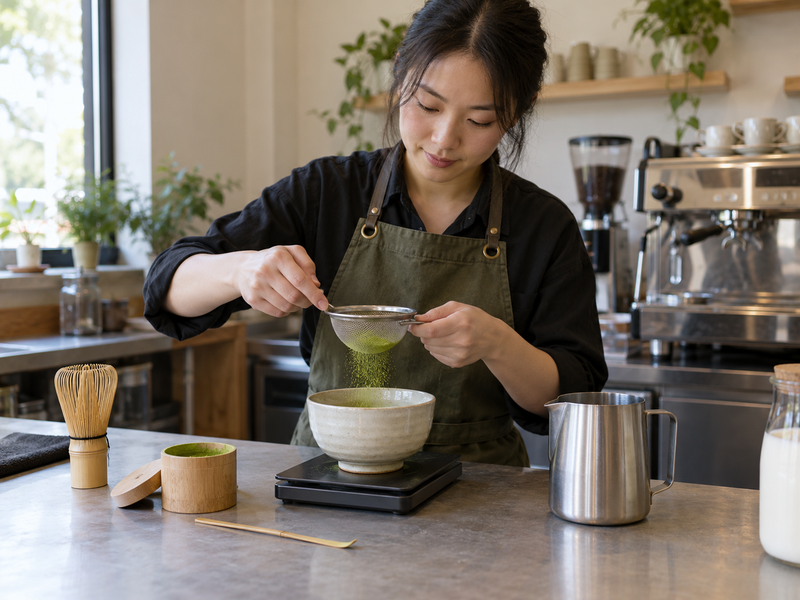
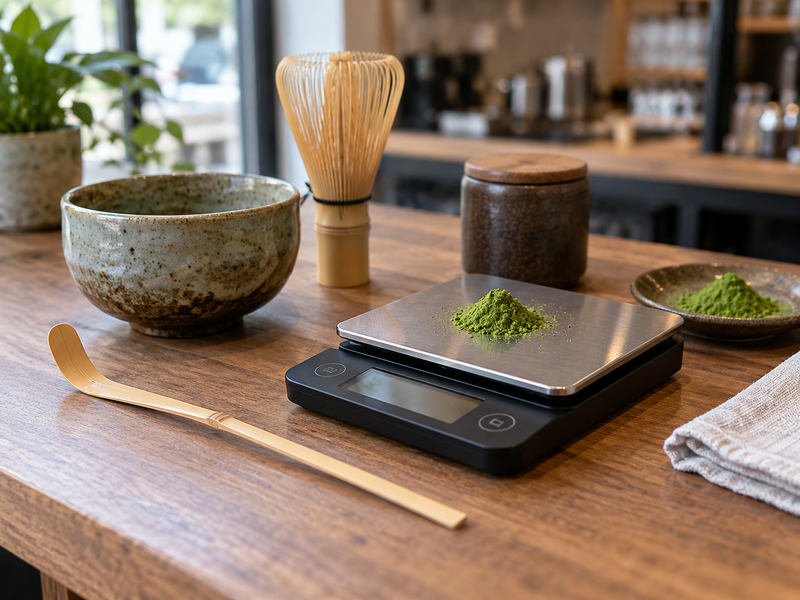
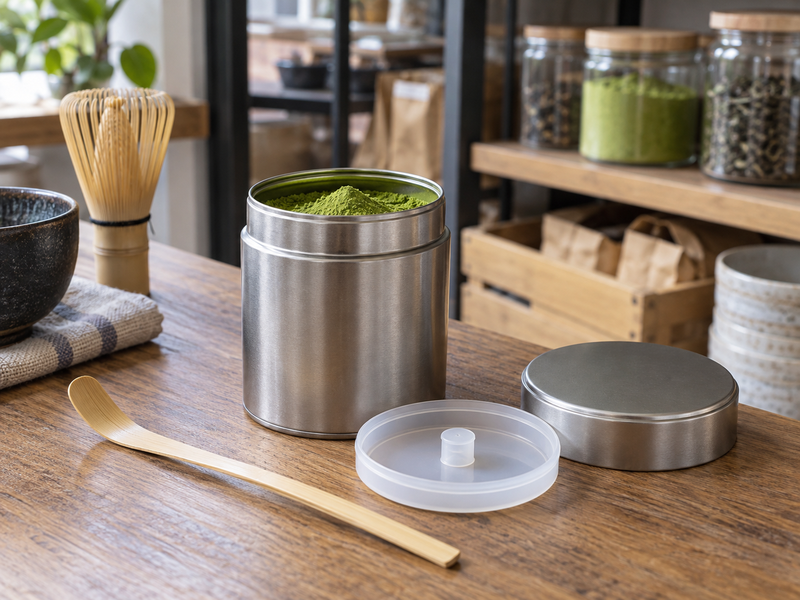
A bamboo chashaku can move powder into a bowl, but a scoopful is not a fixed weight. Heap size changes with the person, powder texture, and packaging opening. For a café, establish a recipe with a scale and train staff against it. For a home kit, state an approximate starting amount and show how a user can adjust taste. Test the actual container: a wide scoop that looks graceful on a table may not fit a narrow tin. A measuring spoon might fit but trap powder in a seam.
A scale takes more room but helps compare recipe changes and cost per serving. Choose the smallest method that supports the level of repeatability the channel needs. Record the intended dose in the tool set specification so a later change in scoop or powder pack does not quietly alter customer instructions.
| Dosing option | Strength | Limitation |
|---|---|---|
| Bamboo scoop | Fits a traditional service | Approximate amount |
| Measuring spoon | Familiar to beginners | Volume changes with powder packing |
| Digital scale | Repeatable recipe work | Requires batteries and space |
| Portion sachet | Simple first cup | Adds packaging and stock complexity |
5. When does a sifter earn its space?
Check the powder and preparation method
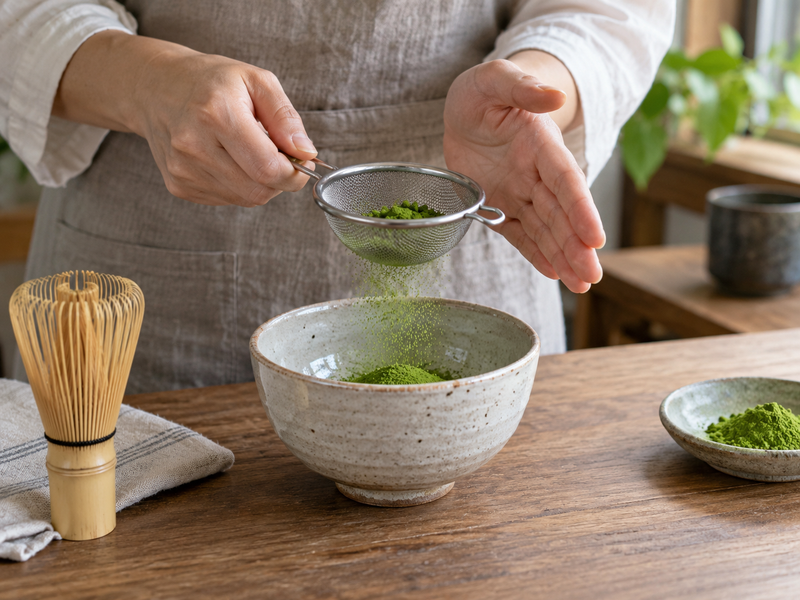
Fine matcha can form small clumps after a pack has been opened. A sifter may help a beginner disperse powder, especially when the preparation uses little water. It also adds a washing step and can make a crowded bar more cluttered. Test the recipe with and without one, using powder from the same open pack. Look for dry spots in the finished cup rather than relying on a neat powder pile in a photograph.
Follow the powder: does it fall into the bowl cleanly, collect on the mesh, or drift across the counter? A sifter should fit the bowl’s opening and be easy to rinse. If it adds little benefit with your recipe, leave it out of a standard café kit. For a retail set, it may still help first-time users; explain when to use it rather than presenting it as a ceremonial requirement.
6. Where should wet tools dry?
Plan a place before the first rinse
A matcha tool set is not finished when the drink has been made. Wet whisks need space to dry without being crushed in a drawer or sealed in a presentation box. A fitted ceramic holder can help, but check that it supports the particular whisk without bending its tines. Bowls and sifters also need surfaces where staff can see that they are clean. Walk through closing time: imagine several drinks prepared near the end of a shift.
Who rinses the tools, where do they sit, and who checks them before storage? For a home gift, care instructions should fit a small kitchen rather than assuming dedicated tea-room furniture. Ask the maker for material-specific care directions. Test those directions with the supplied tools and revise any step that a normal user cannot perform. A beautiful holder that creates a damp contact point is no improvement over a clean open rack.
| Tool | After-use need | Common oversight |
|---|---|---|
| Whisk | Rinse and air dry | Returned wet to a box |
| Bowl | Wash and inspect rim | Powder ring left behind |
| Sifter | Clear mesh fully | Residue trapped at edge |
| Scoop | Keep clean and dry | Stored against wet tools |
7. What changes for a busy café?
Make every move count
A café set should fit a station already holding powder, milk, cups, ice, and cleaning equipment. Lay out the tools at actual service density. Observe reach distance, splash, and whether staff can prepare a second drink while the first bowl is being rinsed. A whisk and bowl that work beautifully at an empty table may block traffic at a narrow counter. Time the complete cycle: portion, sift if needed, whisk, pour, rinse, and reset. Identify the slowest step before buying a different accessory.
Spare whisks, a clear storage rack, or a second bowl might help more than a premium gift sleeve. Train staff with the same powder and recipe they will serve. A durable workflow also reduces variation between shifts. Document the station layout and replacement parts so a newly opened branch can set up equipment without relying on one experienced barista’s memory.
8. What changes for a retail gift?
Design a credible first cup
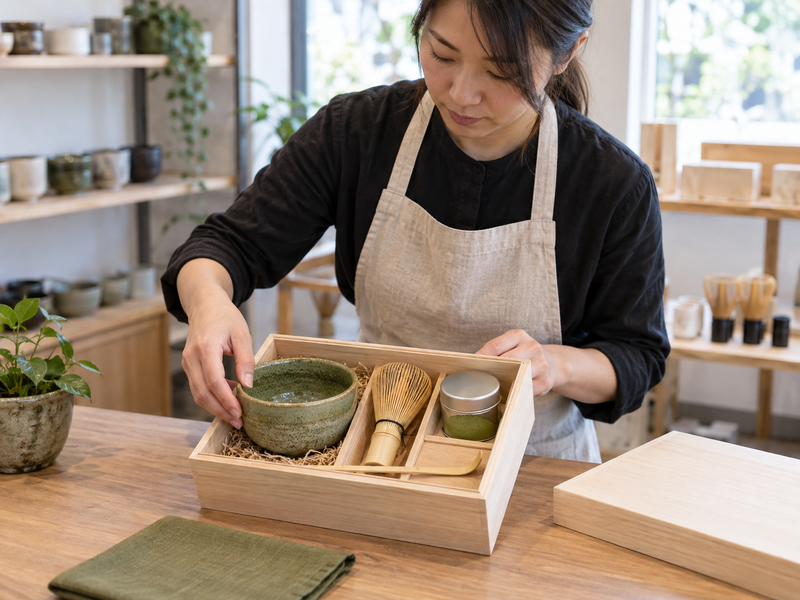
A gift buyer may not know which tools a recipient already owns. The set therefore needs an honest contents list and clear statement about whether matcha powder is included. If it is, verify pack dates, sealing, labeling, and fit with the recipe. If it is not, show that plainly on the box so the first use does not stall. Open the package like a customer: can a beginner identify the whisk, scoop, holder, and bowl without guessing? Can they read the care card before putting a wet whisk away?
Protect ceramic pieces and bamboo tines during shipping, and keep any food pack separate from hard tools. A retail tool set can look generous without adding unused trinkets. It earns repeat use when the instructions make the first few cups achievable and when worn components can be purchased later.
| Gift-box question | Why it matters | Quick check |
|---|---|---|
| Powder included? | Determines first-cup readiness | Read front and contents panel |
| Tools identified? | Reduces beginner confusion | Unbox without coaching |
| Care explained? | Protects bamboo and ceramic | Follow card after preparation |
| Parts secured? | Reduces transit damage | Inspect delivered sample |
9. How should buyers check quality and supply?
Link documents to the pieces shipped
Ask for a component list with material, dimensions, finish, SKU, pack quantity, and replacement terms. Ceramic food-contact information should match the exact bowl or relevant tested product family and destination market. Powder, if included, brings its own labeling and traceability questions. Inspect multiple packed units rather than relying on one display sample. Compare the re-order sample: small visual variation may be acceptable, but a changed bowl opening or whisk width can affect preparation. Write tolerances for functional dimensions and establish when a substitute requires approval.
The Food & Wine tool article shows how individual tools are used; a wholesale buyer must also verify manufacturing consistency and support after launch. Keep quality claims modest until documents and trials support them. Sales material should never imply that a tool is food-safe solely because it looks smooth or expensive.
10. How do you approve the final tool set?
Use a witnessed preparation and care test
Create one comparison sheet for all candidates. Include intended drink, powder, dose, operator, bowl, whisk, mixing result, splash, cleaning steps, packed condition, and separate replacement availability. Ask an experienced operator and a beginner to make the same recipe. Their observations answer different questions: one sees service friction while the other finds unclear instructions. Then test the box: ship or carry a sample through an ordinary route and inspect it at the destination. Record any damage to bamboo or ceramic.
Approve the set only after the supplier confirms the production contents match the tested configuration. A pilot order can expose issues that a single sample missed. If results differ by sales channel, specify two sets instead of compromising the café workflow to fit a gift box. Keep the signed specification with a physical reference unit for future deliveries.
| Approval area | Evidence | Decision |
|---|---|---|
| Drink preparation | Same-recipe trial | Accept or retest |
| User instructions | Beginner observation | Revise if unclear |
| Packed condition | Delivered sample | Improve protection if damaged |
| Continuity | Component SKU list | Confirm replacements |
A practical next step
Build a matcha tool set from the work a customer needs to do. Start with a bowl, whisk, and a reliable way to portion powder. Add a sifter, holder, scale, or powder pack when a trial shows its value for that channel. Run the whole cycle from unboxing through cleaning before approving a wholesale order. This gives cafés a manageable station and retail buyers a first cup that does not require guesswork. Request the component specification and a packed production sample, then repeat the trial whenever a supplier changes a functional piece.
FAQ
Q1: Is a bamboo scoop enough for a café recipe? It can transfer powder, but a scale helps set repeatable doses and compare drink cost.
Q2: Does every matcha tool set need a sifter? No. Test whether the powder and recipe produce clumps that a sifter usefully removes.
Q3: Can a whisk holder be bought later? Yes, provided it fits the whisk and users have a suitable drying space in the meantime.
Q4: Should gift sets always contain powder? Not always. State clearly whether powder is included and make the first-cup steps explicit.
Q5: What is the strongest final check? Ask a beginner and an experienced operator to prepare, clean, and repack with a production sample.