
A matcha tonic brings powdered green tea and tonic water into the same glass. That sounds easy until a café serves one glass that tastes bright and another that tastes sharply bitter. Use a controlled tasting and a timed service trial before putting it on a menu. The consumer matcha tonic recipe from PAPER & TEA shows why the layered drink attracts interest; a commercial version also needs a repeatable pour, an acceptable holding window, and a clear ingredient cost. This guide turns those decisions into ten checks a bar team can run with ordinary equipment.
1. What should a finished matcha tonic taste like?
Define the drink before adjusting grams. Tonic contributes quinine bitterness, acidity, carbonation, and whatever sweetness its brand carries. Matcha adds another bitter edge plus a vegetal, savory finish. Those flavors can make a deliberate adult-style drink, but doubling the bitterness without enough body makes the last sip punishing. Have tasters describe the opening, middle, and finish rather than giving only a single preference score. The first sip should identify both tea and tonic. The finish should make another sip appealing.
Set a sensory target
Make a written target for a chilled glass at service temperature. For example, ask for a clearly perceptible tea note, lively bubbles, moderate bitterness, and no dry powder. This is an internal acceptance criterion, not a claim that every customer shares one taste. Serve a control tonic without tea alongside each prototype. If a candidate tastes worse than that control, find out whether tea strength, sweetener, or pouring technique caused the problem. Tasting immediately after mixing and again after a normal customer wait exposes different failures.
| Sensory point | Ask the panel | Likely adjustment if weak |
|---|---|---|
| First aroma | Is tea noticeable before citrus? | Try another powder or garnish |
| Entry | Does tonic still taste lively? | Reduce dilution or shorten prep |
| Middle | Do tea and tonic coexist? | Rebalance tea and tonic brands |
| Finish | Is bitterness pleasant after swallowing? | Change tonic before adding sugar |
2. Which tonic water should the team compare?
Do not treat tonic as interchangeable sparkling water. Two tonic products can have very different sugar levels, acid profiles, and quinine character. Obtain at least a standard tonic, a lower-sugar tonic, and any house fountain tonic already in use. Keep matcha dose, cup, ice, and garnish unchanged. Taste each version blind, then check the bottle or fountain cost. A low-sugar option may make the tea clearer while also making bitter notes harsher. A sweet product can disguise a mediocre tea sample yet leave a syrupy finish.
Include the fountain line
If a chain uses post-mix tonic, compare actual drinks poured during a slow and a busy service period. Fountain carbonation and syrup ratio depend on equipment condition. A bench sample made from a chilled retail bottle cannot validate that line. Record brand, batch or lot, temperature, sweetness impression, and pour date. If different stores use different tonic sources, either standardize procurement or specify a sensory band broad enough for every permitted source. The word tonic on the menu should still promise a recognizable tonic taste.
3. How much matcha can the tonic carry?
Begin with a modest dose series around the amount used in your existing iced tea beverages. Weigh powder on a scale rather than use a spoon. Make three samples that differ only in tea mass, then blind the cups and ask which retains a tea identity without a rough aftertaste. Do not copy a home recipe’s dose straight into a larger café glass. Ice displacement, tonic sweetness, and serving size change the balance. Keep the selected dose tied to one finished cup size and one tonic brand.
Test the actual dilution
A tea concentrate made with water adds volume before melting ice adds more. Weigh the finished liquid after standard assembly and again after a five-minute wait. Taste both points. A strong initial drink that becomes merely sweet tonic is not ready for delivery or takeaway. If matcha disappears, a slightly stronger tea base may help, but an overly watery concentrate or high ice melt may be the real problem. Matcha does not dissolve like sugar; particles are suspended, so a stronger base can also make sediment more obvious.
| Prototype | Hold constant | Observe at service | Observe after waiting |
|---|---|---|---|
| Low tea | Tonic, ice, cup | Tea recognition | Whether tea disappears |
| Mid tea | Tonic, ice, cup | Balance and texture | Bitterness development |
| High tea | Tonic, ice, cup | Dryness and color | Sediment and last sip |
4. How should matcha be dispersed before pouring?
Sifting helps remove clumps, but it does not make matcha soluble. Build a small, smooth concentrate with measured potable water and a whisk or a validated mixer. Avoid shaking tonic and tea together: agitation strips carbonation and creates foam that can obscure the drink. If the team uses warm water to wet the powder, cool the concentrate before it meets tonic. A warm top layer accelerates bubble loss and ice melt. Document the method that works in a rush, not merely the method that works at a tasting table.
Check the concentrate at the bar
Prepare multiple concentrates consecutively with the tools and staffing expected at launch. Look for visible specks against a white card and feel for grain at the end of each sip. Record mixing time and cleanup time. A prebatched concentrate can reduce service work, but test its behavior after standing: powder can settle, aroma can drift, and hygiene rules depend on its ingredients and storage. Set a validated preparation and discard procedure under the café’s local food-safety plan. A whisked cup made fresh for each order may be simpler if volume remains low.
5. Which assembly order preserves bubbles and appearance?
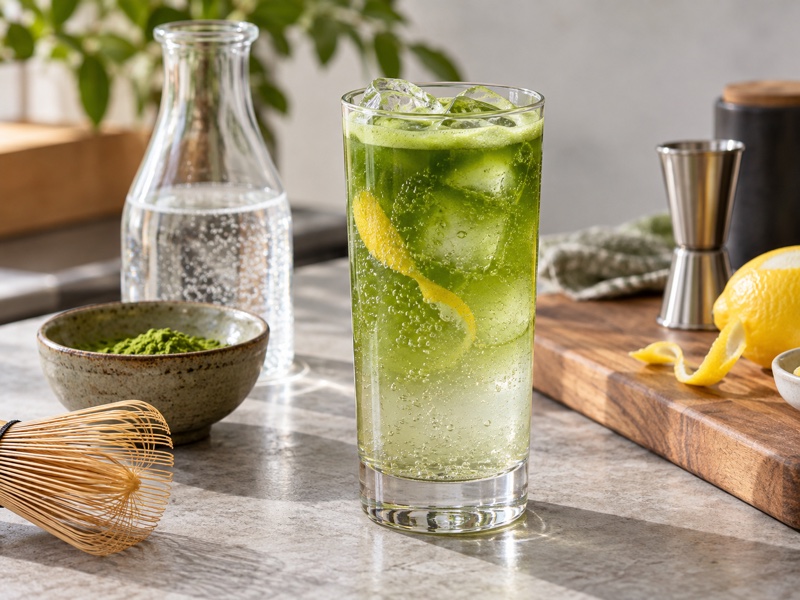
Ice, tonic, and concentrate can be combined in several orders. Pouring carbonated tonic over a small tea base may mix the color quickly but creates foam. Floating a tea concentrate over tonic can produce a striking layer, yet customers may drink mostly tonic until they stir. Test both service styles and decide whether the guest receives a stirrer or a spoken instruction. Appearance matters, but flavor from the first sip through the last matters more.
Run a timed pour test
Use a standard glass and weighed ice. Film or photograph the drink at pour, two minutes, and five minutes under the same light. Record visible bubble activity and how much green remains at the top. A narrow glass can hold the layered effect longer than a wide tumbler, while a tall pile of ice can make controlled pouring difficult. Have two different staff members assemble the same specification. If their results diverge, revise the build steps before training the whole team.
| Build order | Useful feature | Failure to inspect |
|---|---|---|
| Tea, ice, then tonic | Fast mixing | Excess foam and uneven color |
| Ice, tonic, then tea | Visible layer | Unmixed early sips |
| Ice, tea, then tonic along glass | Moderate integration | Splashing and bubble loss |
| Premixed noncarbonated base, then tonic | Consistent tea dose | Dilution and cloudy presentation |
6. What ice and glassware keep the drink consistent?
Ice affects both the drink’s volume and its rate of dilution. Compare one specified ice format at a fixed fill level rather than asking staff to fill a cup “generously.” Small pieces chill fast but present more surface to melt; large cubes leave less room for liquid and can disrupt a layered pour. Weigh a typical ice portion and note the liquid volume that fits beside it. The guest should receive the menu’s promised drink, not a glass with so much ice that tea and tonic barely fit.
Glass shape affects aroma and bubble perception. A tall highball allows a visible gradient and may fit an ordered pour; a sealed takeaway cup hides some carbonation cues and may trap foam under the lid. Test both if both are offered. Photograph the marked fill line, ice level, and garnish position for training. For delivery, build a separate trial because travel vibration changes layer appearance and can make a carbonated drink messy when opened. A pretty dine-in photo is not evidence that a sealed cup travels well.
7. When does citrus help, and when does it dominate?
A citrus peel can add aroma without changing much liquid balance. Juice changes acidity and dilution, so treat it as a formula component rather than a decorative squeeze. Run three controls: no citrus, peel only, and measured juice. Taste them with each tonic candidate. Some tonic waters already carry a strong citrus profile, in which case extra fruit erases the tea. Fresh fruit also adds purchase, prep, storage, and waste costs that a menu calculation must include.
Keep garnish work measurable
Ask staff to make ten garnishes in normal service conditions, then record the time and the number that meet a simple visual standard. If the design requires precise thin twists that few staff can make quickly, use a simpler peel. Wash and handle fruit under local food-service procedures. Never infer a shelf life from the whole fruit’s shelf life once it has been cut. For packaged products, fruit flavor and acid require their own stability assessment; a café garnish test cannot validate a bottled beverage.
8. What should a café measure in a five-minute service trial?
A five-minute observation window is useful because customers rarely drink every iced beverage instantly. Prepare one drink to specification, place it where an order would wait, and record color, bubbles, ice loss, and sediment at set intervals. Repeat with a lid if takeaway is sold. Add a short transport simulation for pickup or delivery. Do not assume the beverage must remain visually layered for the full period; decide which attributes the menu actually promises. Flavor, safe handling, and a presentable cup are more useful targets than an arbitrary photograph.
Record defects in plain language
Instead of “failed,” note “powder ring at liquid line,” “bottom sip gritty,” or “tonic tastes flat after lid removal.” These observations point to different fixes. The ring may come from concentrate splashing against a warm glass. Grittiness may require better dispersion or a different particle profile. Flatness may come from warm tonic, slow assembly, or cup closure. Retest one cause at a time. Otherwise, a new tonic and a new tea grade might improve the sample without showing which change mattered.
| Checkpoint | Record | Decision question |
|---|---|---|
| At pour | Temperature, fill, foam | Would staff serve it? |
| Two minutes | Layer, bubbles, powder ring | Does presentation still fit menu? |
| Five minutes | Taste, sediment, dilution | Would a waiting guest accept it? |
| After transport | Leakage, pressure, flavor | Is takeaway a separate specification? |
9. How should buyers select matcha and calculate cup cost?
Choose tea against the drink’s actual bitter, sweet, acidic matrix. A premium powder may show its advantages in plain water but lose that distinction in tonic. A less costly powder may also become coarse or dull green in this transparent format. Request samples with lot identification and specifications, then score candidates blind in the finished drink. Matcha Village’s bulk wholesale matcha page is a starting point for discussing application, sample requirements, and supply format; approve a specific grade only after a production trial.
Calculate cost per served cup using actual tea mass, tonic volume, ice, garnish, cup or glass handling, and expected waste. Include a remake allowance if staff struggle with layering. A lower ingredient quote can still create a more expensive beverage if it demands extra labor or produces rejected cups. Keep price tests separate from sensory tests at first, then choose among acceptable candidates using a margin target. For multi-site service, include training and supply continuity in the purchasing decision.
10. What should be locked before launch?
Turn the winning prototype into a one-page build card: exact ingredients, allowed substitutions, cup and ice, concentrate method, pour order, garnish, and service window. Add a photograph of a correct drink and a photograph of a common defect. Train staff with the same scales and tools used during development. If a tonic supplier changes its formula or the tea lot changes, run a short requalification tasting rather than assuming the old instructions still work.
Keep claims and operations aligned
Avoid promising a particular caffeine level unless the finished drink has a defensible calculation or test. Matcha caffeine varies by ingredient and serving mass; the FDA’s caffeine overview explains why caffeine from all sources matters when assessing drinks. A café can accurately describe ingredients and taste without making an unsupported energy claim. For a bottled or canned tonic, carbonation, microbiological stability, packaging pressure, and regulatory labeling require a separate manufacturing program. The glass-service trial does not settle those questions.
| Launch item | Owner | Evidence to retain |
|---|---|---|
| Tea and tonic specification | Buyer | Approved lots and alternates |
| Build card | Bar lead | Weights, order, photos |
| Service test | Operations | Timed observations |
| Price | Finance | Cup cost and waste assumption |
| Claim review | Regulatory lead | Approved menu wording |
FAQ
Q1: Can sparkling water replace tonic in a matcha tonic? Yes, but it removes tonic’s quinine profile and usually requires a new flavor balance. Call the result a matcha soda if tonic is absent.
Q2: Should the tea concentrate be made ahead? Only after a timed quality and safe-handling test. Sediment and color can change while it stands, even under refrigeration.
Q3: Is a visible layer necessary? No. A layered menu photo creates an expectation, so either reproduce the layer or use imagery that matches the served drink.
Q4: Can this drink be delivered in a sealed cup? Test that format separately for pressure, leakage, dilution, and flavor after travel.
Q5: What should buyers ask a matcha supplier for? Request a sample of the proposed grade, lot identification, specification, and documents needed for the destination market.
A successful matcha tonic should still taste like tea and tonic after ordinary service delay. Start with a controlled tonic comparison, keep the winning tea dose and pour order fixed, then check the drink again with the actual staff, ice, glass, and takeaway cup. Those observations give the buyer a usable specification and tell the café whether the drink deserves a place on the menu.