
Matcha tiramisu cups solve a specific café problem: portioning a layered dessert before the lunch rush. The cup makes each serving visible, but it also exposes uneven biscuit soak, messy cream deposit and wasted headspace. KitchenAid’s matcha tiramisu cups give a home recipe reference. A café version needs a repeatable assembly line, a chilled service plan and a lid that reaches the customer without touching the topping. Matcha Village’s sample service can support the powder comparison.
Contents
- 1. What should a single cup deliver?
- 2. Which cup and lid should be chosen first?
- 3. How much matcha soak should each biscuit take?
- 4. How should the cream be prepared for depositing?
- 5. What assembly order keeps portions alike?
- 6. How can the team measure batch yield?
- 7. What chilling and handling plan is needed?
- 8. Will the finished cup survive takeaway?
- 9. Which costs and allergens must be checked?
- 10. When is the cup ready for regular service?
1. What should a single cup deliver?
Define the spoonful and the view
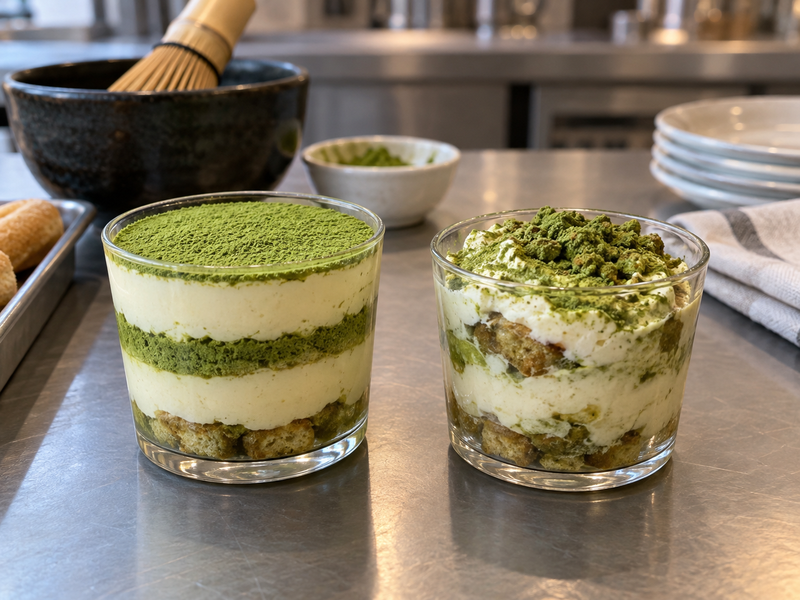
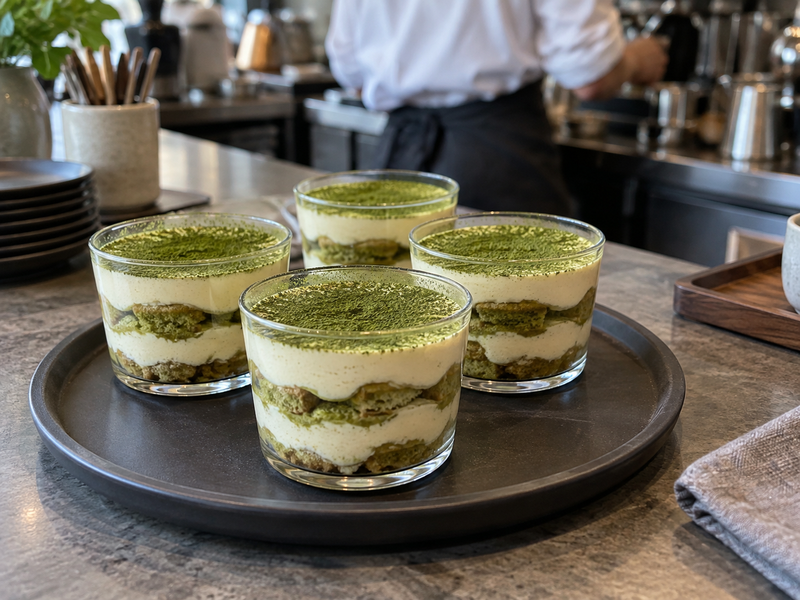
The customer should see distinct biscuit and cream layers and get both in an ordinary spoonful. Decide whether the matcha leads the flavor or sits behind the mascarpone. Set a target cup weight, number of layers and topping style before working on decoration. A very tall cup may look generous but make it difficult to reach the bottom biscuit. A shallow cup is easier to eat yet gives less room for visible layers. Test the format with the spoon and lid that customers will receive.
A single-serve cup is its own product, not simply a tray tiramisu cut differently. The biscuit pieces must fit the vessel, the cream must deposit cleanly and the finished portion needs enough headspace to close. Taste a newly assembled sample and one after the planned chilling period. If the latter is soggy or the top cream dries, the assembly timing or formula needs work. Photograph the accepted side view and a spooned interior to guide staff.
2. Which cup and lid should be chosen first?
Build in the package intended for sale
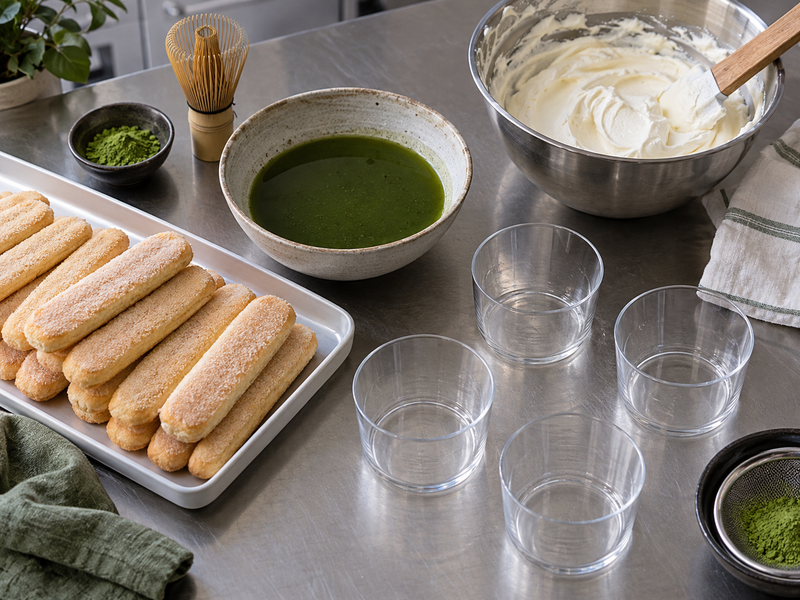
Select a food-contact cup with a capacity, shape and lid suited to the dessert. A wide opening makes piping and eating easy; a narrow one can show layers well but slow assembly. Check whether the cup is stable on a tray and whether the lid leaves clearance for the topping. Weigh an empty cup and mark the intended fill height. Staff can then distinguish a full-looking but underweight cup from one filled to spec.
Compare two formats using the same total dessert weight. Record assembly time, appearance, number of biscuit pieces needed, spoon access and lid contact. A rigid reusable glass may suit dine-in service but requires washing and breakage control. A sealed takeaway cup needs a transport and label plan. Decide the package before finalizing biscuit size and cream deposit; switching vessels late can change the product’s yield and eating experience.
| Vessel choice | Trial benefit | Practical concern |
|---|---|---|
| Wide clear cup | Easy deposit and spoon access | Layers may look shorter |
| Tall narrow cup | Visible stack | Biscuit fit and bottom reach |
| Reusable glass | Dine-in presentation | Washing and breakage |
| Lidded takeaway cup | Carry-out convenience | Topping clearance and seal |
3. How much matcha soak should each biscuit take?
Weigh the soak, then judge the bite
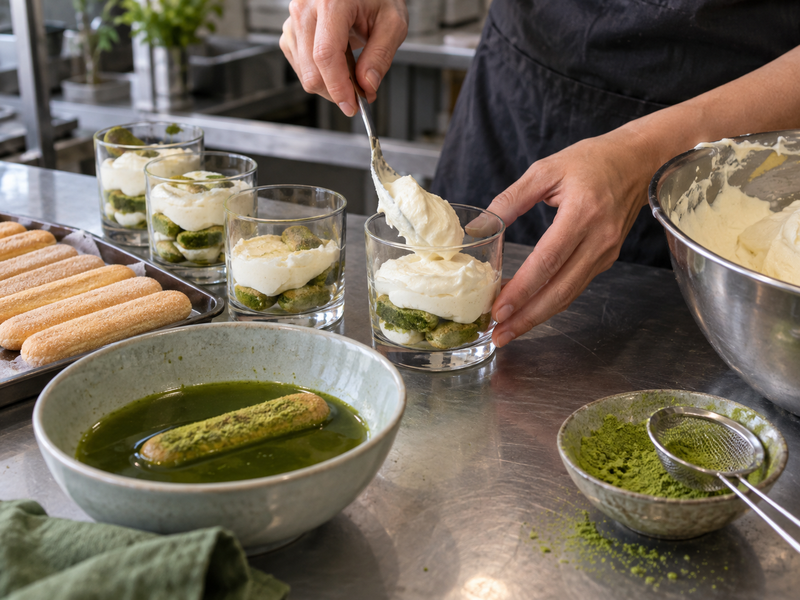
KitchenAid’s recipe dips ladyfingers in a prepared matcha liquid before layering. For production, record the liquid formula and how much a set number of biscuits absorbs. A “quick dip” varies from person to person. Compare a brief dip, a measured brush application and a short soak using the same biscuit size. Weigh samples before and after, then taste them after the dessert has chilled. The target is tender biscuit that still holds a layer, not a puddle at the bottom of the cup.
Matcha should be dispersed before it reaches the biscuits. Sift the powder or prepare a smooth concentrate so one cup does not receive a dark clump. The tea liquid may settle during assembly, so specify how and when staff mix it. If the café uses a different biscuit brand, repeat the soak test; absorption can change. Check whether the biscuit contains wheat, egg or other allergens from its current label.
4. How should the cream be prepared for depositing?
Make the formula and method explicit
Mascarpone and whipped cream can make a rich layer, but texture depends on mixing and temperature. KitchenAid’s reference uses a cooked egg-yolk mixture before combining it with mascarpone and cream. A café may choose that route or an alternative approved formula; the food-safety plan must match the ingredients and process. Do not replace the documented egg step with an informal shortcut. Weigh components, record mixing order and observe whether the cream holds a piped shape after chilling.
Deposit is the production test. A very soft cream spreads into the biscuit layer and hides the pattern; an overly firm one can leave gaps and uneven cup weights. Try the actual piping bag or depositor. Weigh a sample deposit before relying on visual fill marks. Record the time the cream remains workable at the station under the operation’s handling controls. A recipe that pipes neatly for the first ten cups but loosens by the last ten needs a smaller assembly batch or a process change.
| Cream check | Passing observation | Likely next test if it fails |
|---|---|---|
| Mixing | Smooth, no grainy mascarpone | Review component temperatures |
| Deposit | Defined layer without gaps | Adjust consistency or nozzle |
| Cup weight | Within set range | Calibrate piping amount |
| After chill | Holds shape on spoon | Review formula and handling |
5. What assembly order keeps portions alike?
Lay out a small production line
Stage empty cups, cut biscuits, measured soak, cream and lids in the order staff will use them. Choose the number of biscuit and cream layers that fits the selected vessel, then write it down. A cut biscuit should fit without forcing the cup wall. If staff must improvise different shapes for every layer, use a cutting guide or change the vessel. Weigh an approved cup and compare every few units during a pilot run.
Build the first and last cups from one batch side by side. Matcha liquid may become stronger at the bottom if it settles, while cream may warm or thicken in the bag. Stir and change bags at defined points if the trial shows drift. Keep topping until the appropriate stage so matcha dust does not become patchy under a lid. A clean sidewall matters in a clear cup; wiping every finished vessel is slower than depositing with the right nozzle and fill height.
6. How can the team measure batch yield?
Reconcile ingredients with finished cups
Start with total weights for soaked biscuits, prepared cream and topping. Record the number of saleable cups, average filled weight and material left in bowls, bags or trays. A recipe scaled from six home servings may not make exactly sixty commercial portions once deposit loss and vessel dimensions are considered. Calculate cost per saleable cup from the actual run rather than dividing ingredients by the hoped-for count.
Check variation by weighing cups from the beginning, middle and end of assembly. If the average is right but the range is wide, customers will receive different amounts and nutrition calculations may be unreliable. Investigate whether the difference comes from cream deposit, biscuit count or soak. The batch sheet should include a visual level mark as a quick check, with weight as the calibration standard.
| Yield item | Record | Why it matters |
|---|---|---|
| Cream prepared | Total weight | Deposit target |
| Biscuit and soak | Used and leftover weight | Absorption and waste |
| Saleable cups | Count and weight range | Portion control |
| Rejects | Count and reason | True cost |
7. What chilling and handling plan is needed?
Treat the dessert as an assembled dairy product
The cream, soaked biscuit and any egg component need a written preparation and cold holding plan. Identify where each component is made, how it moves to the assembly station and how finished cups are labeled and stored. The FDA Food Code is a U.S. model for retail food handling; local rules and the café’s approved plan determine the actual controls. A home recipe’s chilling interval is a texture guide, not a commercial shelf-life claim.
Run a separate quality observation across the intended sales window. Taste for soggy biscuit, weeping cream, faded matcha and off odors, and check whether a lid traps droplets above the topping. Do not extend a use period because the layers still look neat. If assembly takes too long at room conditions, reduce the run size or change the workstation. A smaller, traceable batch may produce fewer rejects than a large batch left waiting for lids.
8. Will the finished cup survive takeaway?
Test the trip a customer actually makes
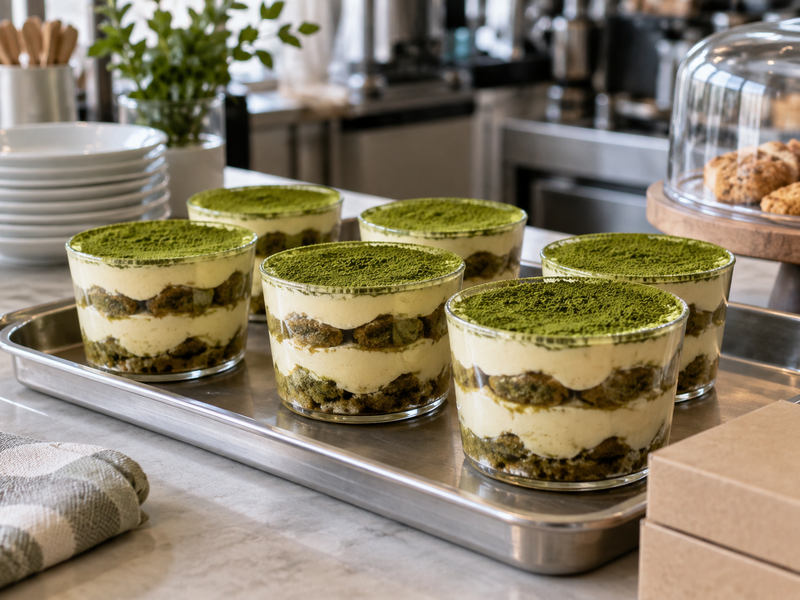
Close the lid on a chilled sample, place it in the intended bag and carry it along a realistic route. Inspect sidewall smears, layer movement, liquid pooling, lid contact and whether the spoon is usable. A cup that survives a stationary display shelf may tilt in a crowded bag. Test a single cup and several cups together; they need different carriers. If the topping sticks to the lid, leave more headspace or finish it after lid removal for dine-in service.
The takeaway label needs the correct ingredient and allergen information for the destination market. Choose a label position that remains readable without hiding the layers. Check whether the customer can open the lid without squeezing the cup and pushing cream over the rim. The packaging decision should come from the full dessert and transport trial, not from an empty cup sample supplied by a packaging vendor.
| Takeaway check | Passing result | Possible correction |
|---|---|---|
| Lid clearance | No topping contact | Lower fill or taller lid |
| Short transport | Layers stay distinct | Change carrier or deposit |
| Opening | No spill at rim | Revise cup stiffness |
| Label | Legible and complete | Move or resize label |
9. Which costs and allergens must be checked?
Price the delivered portion
Cost matcha, biscuits, mascarpone, cream, any egg component, sugar, cup, lid, label, spoon and labor against actual saleable units. Include cups rejected because of smears, inconsistent fill or broken biscuits. A tall premium cup may improve appearance but reduce shelf density and add packaging cost. Compare price and margin with the café’s other chilled desserts while keeping the approved portion and taste standard intact.
Build an ingredient and allergen sheet from current product labels and the final formula. Milk, egg and wheat are common in this format, though exact ingredients depend on the chosen biscuits and cream. The FDA’s major food allergen guidance helps U.S. teams frame the review; the selling market governs required disclosures. Do not say a cup is egg-free or gluten-free based on a quick visual check or an unreviewed substitution.
10. When is the cup ready for regular service?
Repeat a full run with ordinary staff
The final specification should list supplier ingredients, matcha soak formula, biscuit cut guide, cream process, cup and lid identifiers, deposit weights, layer order, topping, finished weight range and approved cold handling route. Include photos of the filled cup from the side and top. Ask a second team to assemble a full small run from the sheet without verbal coaching, then compare first and last cups with the reference.
During a limited sale, record comments about sweetness, tea flavor, biscuit texture and ease of eating. “Too wet” may reflect an overlong dip, a different biscuit or a longer hold; change one cause in the next trial. Watch remakes and unsold cups by batch. The product is ready when staff can assemble and close it quickly, the customer can carry and eat it cleanly, and the operation can trace every chilled batch.
| Decision | Evidence | Next move |
|---|---|---|
| Launch | Stable layers, yield and handling | Train all shifts |
| Revise | One repeatable sensory or pack fault | Controlled retest |
| Hold | Unresolved safety or label question | Complete review |
FAQ
Q1. Can cups use the same recipe as tray tiramisu? The flavor can start there, but cup geometry changes biscuit fit, deposit, yield and eating quality.
Q2. Why is there liquid at the bottom? The biscuit may have absorbed too much soak or the cup may have been held beyond its quality window.
Q3. Should matcha be dusted on before closing? Test the appearance under the lid after the planned hold; a last-minute finish may look better for dine-in service.
Q4. Can a café make cups ahead? Yes, within its approved cold handling plan, after checking how the layers change over the intended service window.
Q5. What is the easiest portion check? Use a fill mark during assembly and verify it against the approved finished-cup weight.
Make one pilot run in the final cup and lid, then carry several samples through the customer’s likely takeaway route. That exercise will expose deposit, headspace and handling issues before the dessert reaches the case.