
Matcha chai joins two assertive flavors, so a café recipe needs more care than putting two premixes in one cup. Nippon Matcha’s home recipes show several ways to combine them. For a café, the question is which version a customer can recognize and a barista can repeat during a rush. Matcha Village’s sample service offers a route for tea comparisons. Measure the matcha, the spice base and the milk separately, then taste the drink at its intended temperature.
Contents
- 1. What should customers taste first?
- 2. Which chai base fits the menu?
- 3. How should matcha be chosen for a spiced drink?
- 4. How can a recipe trial reveal the right balance?
- 5. What is the hot-drink build order?
- 6. How does an iced version need to change?
- 7. Which parts can be prepared before service?
- 8. How should sugar, caffeine and allergens be described?
- 9. What does the drink cost at actual yield?
- 10. When is the recipe ready for the menu?
1. What should customers taste first?
Write a sensory target
“Matcha chai” can mean a matcha latte with a warm spice note, or a chai latte with a small matcha layer. Those are different drinks. Have tasters describe the first sip and the finish without seeing the recipe. If they only taste cinnamon and sugar, the matcha may not be earning its place. If they taste only grassy tea, the chai component may be too weak. Decide which ingredient leads and which supports it before adjusting doses.
The drink also has to fit the rest of the menu. A spiced matcha offered beside a plain matcha latte should be different enough to justify a second listing. Taste it with the café’s usual milk and cup size, not a tiny bench sample. The larger drink changes dilution and sweetness. A short product description can then tell customers whether it contains a brewed black-tea chai base, a caffeine-free spice infusion or a syrup. Those choices affect both flavor and disclosure.
2. Which chai base fits the menu?
Compare spice formats before buying by price
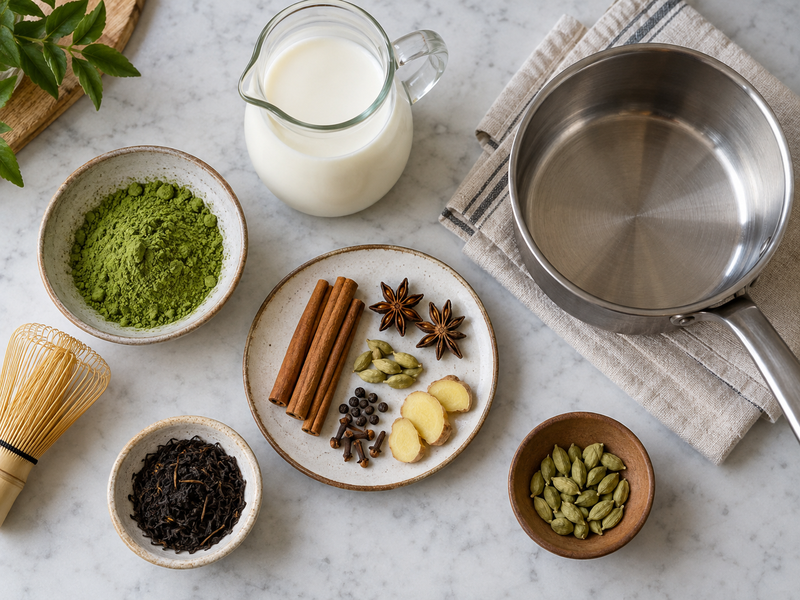
A brewed chai concentrate may offer more control over spice and sweetness, but it takes preparation and cold space. A commercial concentrate can simplify service if its formula is stable and its ingredient list fits the menu. Powder and syrup formats bring different texture and sugar levels. Obtain current specifications and taste each candidate at the dilution the supplier recommends; a spoonful of neat syrup tells little about the finished cup.
Black tea changes the caffeine profile compared with a spice-only base. It can also bring tannin that competes with matcha. Test a tea-containing chai and a spice infusion side by side if the menu promise is unclear. Cardamom, ginger, clove and cinnamon each become more or less prominent in milk. Record what is actually in the base so staff can answer ingredient questions. Avoid calling a blend “traditional” when its formulation and origin have not been documented.
| Chai format | Service benefit | Trial question |
|---|---|---|
| Brewed tea and spices | Adjustable flavor | Can the kitchen reproduce strength? |
| Commercial concentrate | Quick portioning | Does its sweetness leave room for matcha? |
| Spice-only infusion | No black tea in base | Is the body sufficient in milk? |
| Syrup or powder | Compact storage | Does texture or sugar dominate? |
3. How should matcha be chosen for a spiced drink?
Test it inside the final formula
A matcha that tastes balanced in water may disappear behind ginger and clove. Another may become harsh when combined with black tea. Sample candidate powders in the actual chai and milk, using the same dose and preparation method. Look for a clear tea finish and a color that still reads as matcha after the components are mixed. A high-priced powder is not automatically the best fit for a highly spiced drink.
Ask for a current product specification and lot sample before writing a purchase brief. Note origin, ingredient statement and storage instructions from supplier documents rather than relying on category names. Matcha Village’s company background describes matcha and blend supply, but a specific product claim needs the current item documentation. During trials, keep the powder sealed between uses; stale or damp test material gives misleading results. Train staff to weigh the dose or use a verified scoop, since a casual extra spoon changes both taste and cost.
4. How can a recipe trial reveal the right balance?
Change one axis at a time
Start with the café’s intended cup size and milk. Fix the matcha preparation, then compare two or three chai levels. Pick the closest level and test matcha dose around it. Finally adjust sweetness. This order prevents a sweeter cup from winning simply because tasters prefer sugar. Give every sample a code and taste blind where practical. Write down aroma, first sip, finish, spice heat and whether tea remains visible after a few minutes.
Use weights or measured volumes in the trial sheet, including ice for an iced version. Record the base’s dilution, since concentrates vary. A recipe such as “one pump chai, one scoop matcha” is only repeatable when the pump output and scoop mass are verified. Nippon Matcha’s examples are useful inspiration; the café’s purchase format, cup size and customer expectations determine the production formula.
| Trial | Matcha | Chai base | Sweetener | Ask tasters |
|---|---|---|---|---|
| A | Fixed | Low | Fixed | Can you identify spice? |
| B | Fixed | Medium | Fixed | Is matcha still clear? |
| C | Fixed | High | Fixed | Does chai overwhelm the finish? |
5. What is the hot-drink build order?
Prevent dry powder and overheated flavors
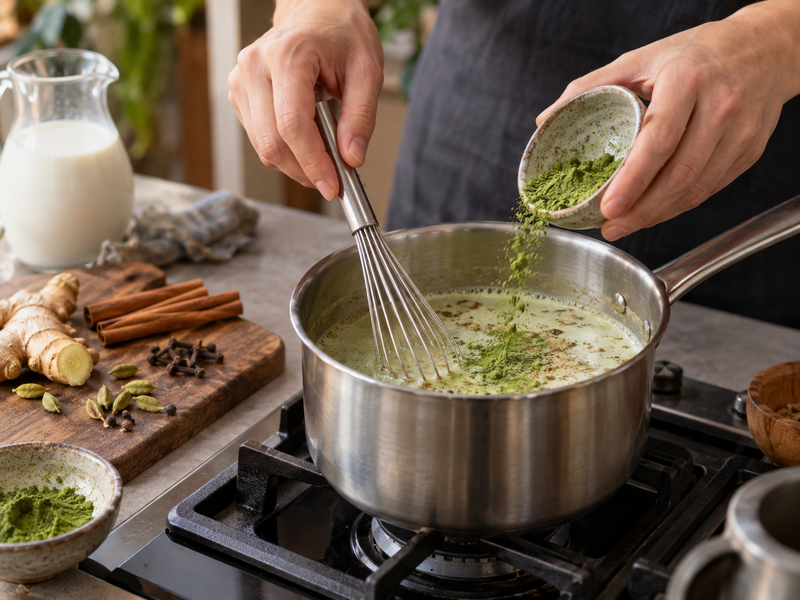
Disperse matcha in a small amount of water using a consistent whisk or blender method, then combine it with the chai base and heated milk. This makes clumps easier to spot before they are hidden by foam. If the chai concentrate is refrigerated, account for its cooling effect; do not compensate by overheating milk until it tastes cooked. A hot-drink trial should use the shop’s normal pitcher and cup, since bench conditions often hide the delays of service.
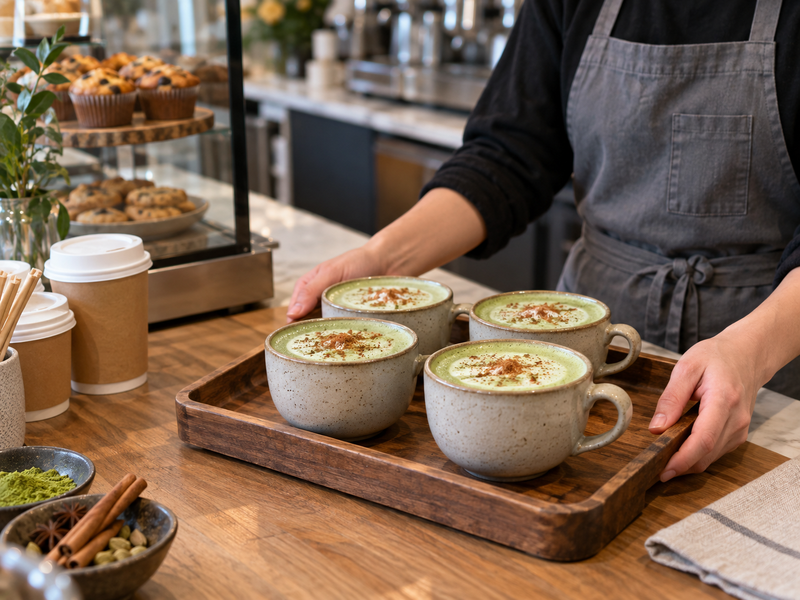
Taste immediately and after the time a customer might carry the cup to a table. Spice perception and sweetness shift as the drink cools. Decide whether the matcha is poured on top for a visible layer or mixed fully for uniform flavor. A layer photographs well but requires a clear handoff instruction; the first sip may otherwise be mostly matcha and the last mostly chai. Record any garnish by weight or count, and check that it adds value rather than masking the drink.
6. How does an iced version need to change?
Count the melting ice as an ingredient
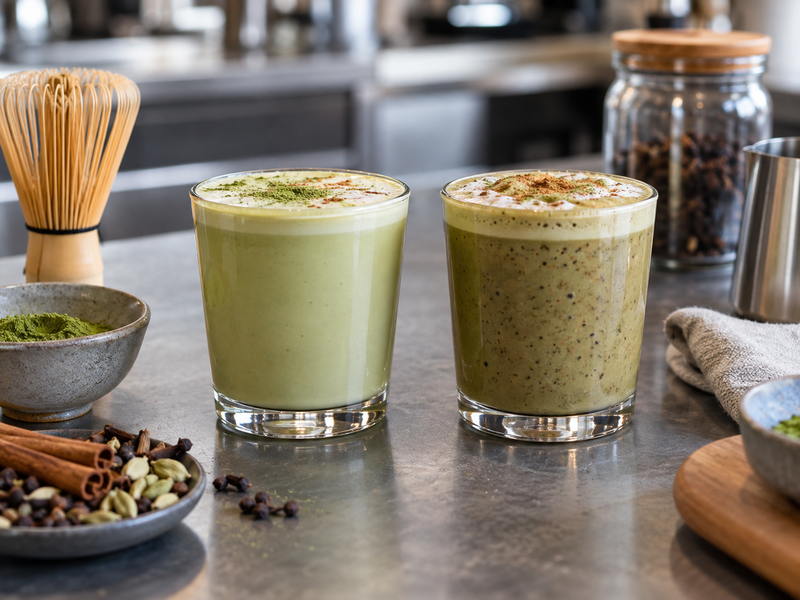
An iced matcha chai is often made by pouring a hot-dispersed matcha concentrate over cold milk and ice. That may work, but the final drink can be much weaker than the hot version. Build it in the intended cup with the actual ice fill, and taste after several minutes. Compare shaking, stirring and layering for both appearance and flavor uniformity. A visually striking layered cup may need a “stir before drinking” note if that is the best way to taste it.
If the chai base is thick or sweet, measure it before adding ice and use a method that moves it through the milk. Do not leave undissolved matcha at the bottom. A cold-mixed matcha can require a different dispersion step from a warm concentrate; test with the tools staff will have. The recipe card should state the final fill line, not merely the amount of liquid poured before ice.
| Iced failure | Likely cause | Next test |
|---|---|---|
| Pale, weak finish | Ice dilution | Reduce liquid or change ice fill |
| Dark powder at bottom | Poor dispersion | Prepare matcha separately |
| Sweet first sip, bland last sip | Layered concentrate | Stir or change build order |
| Spice dominates | Base level too high | Rebalance before adding sugar |
7. Which parts can be prepared before service?
Batch only what the process can control
A prepared chai base may save time if the kitchen can make, label and store it consistently. Write the recipe by weight and identify the batch date, container and intended use period under the shop’s food-safety plan. A commercial concentrate still needs its opened-container instructions followed. Matcha is often best dispersed near service to avoid settling and flavor changes, though a short batch trial can test whether the specific workflow holds up.
Separate a flavor trial from a safety decision. The FDA Food Code is a U.S. model for retail food handling, but local requirements and the venue’s approved procedures govern preparation and storage. A milk-containing premix needs particular care. If the café cannot document who made a batch and when, a slower made-to-order method may be more reliable than a mystery bottle behind the counter.
8. How should sugar, caffeine and allergens be described?
Build the menu statement from ingredients
Matcha contributes caffeine, and a black-tea chai base adds more. The amount varies with the actual ingredients and recipe, so avoid a precise caffeine number without valid data for the finished drink. A spice-only chai base is different from black-tea chai; staff should not guess which one is used. State whether the standard drink is sweetened, and offer a less-sweet variation only if it has been tested for balance.
Milk and milk alternatives bring ingredient and allergen questions. Verify every packaged component’s current label, including chai concentrate, syrup, garnish and alternative milk. The FDA allergen reference helps U.S. teams identify major allergens, while the applicable market rules determine the required customer information. Keep a simple ingredient sheet at the counter so a barista can answer without improvising claims about health, energy or dietary suitability.
| Customer question | What staff should check |
|---|---|
| Is there black tea? | Current chai base ingredient list |
| Is it sweetened? | Chai base and added sweetener |
| Which milk is used? | Standard recipe and substitution process |
| Is it allergen-free? | Ingredient list and cross-contact procedure |
9. What does the drink cost at actual yield?
Cost the cup people receive
Include matcha, chai base, milk, sweetener, ice or hot-water input, garnish, cup and lid. A concentrate’s label price is less useful than cost per prepared serving at the tested dilution. Measure loss from a whisk bowl, shaker or pitcher when it is material. If the shop offers two sizes, test each formula rather than doubling every ingredient; a larger cup can change ice and milk proportions.
Time is also part of the service calculation. During a rush, a drink requiring several separate heating and whisking steps may block the bar. Observe three consecutive orders with ordinary staff and count how often they need to stop for more chai base or a clean whisk. If a cheaper chai base forces a larger matcha dose to make the tea noticeable, the total recipe may cost more. The cost sheet should follow the approved sensory recipe rather than drive it blindly.
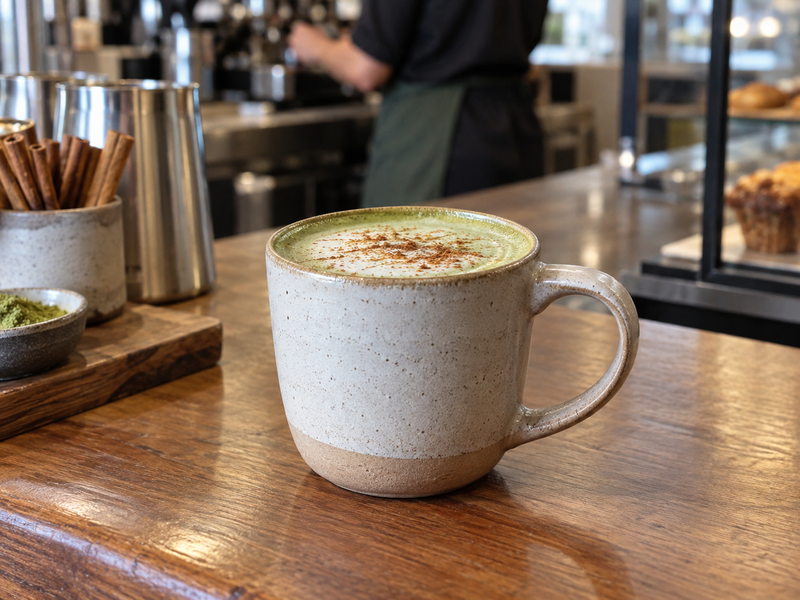
10. When is the recipe ready for the menu?
Repeat it across shifts
Write a recipe card that states component brands or specifications, measured amounts, cup size, build order, serving temperature, garnish and substitution rules. Have a second barista make it without coaching, then taste that cup against the approved sample. Any step described as “a little” needs a measure. Test the iced and hot versions independently; success in one does not approve the other.
Run a short menu trial and record sales, remakes and customer language. “Too sweet” suggests a different correction from “I cannot taste the matcha.” If the drink depends on an unusually complex preparation, simplify the build before adding a permanent menu line. A useful final decision includes a product photo, ingredient sheet, cost per cup and a cleaning instruction for any shared tools.
| Decision | Evidence | Response |
|---|---|---|
| Launch | Repeatable taste and service time | Train all shifts |
| Revise | One fixable sensory issue | Retest one variable |
| Hold | Ingredient or storage uncertainty | Resolve documentation |
FAQ
Q1. Does matcha chai need black tea? No. A spice-only base creates a different drink; describe it accurately and test whether it has enough body.
Q2. Can a café use chai syrup? Yes, if its ingredient list and sweetness fit the recipe. Taste it in the finished cup.
Q3. Why does iced matcha chai taste weak? Ice dilution, uneven mixing or a low tea dose may be responsible. Check each with measured trials.
Q4. Can matcha and chai be premixed? A short trial can assess flavor and settling, while the shop’s food-safety plan determines handling and storage.
Q5. Should a layered drink be served unstirred? Only if tasters prefer that drinking experience. Otherwise, mix it or tell customers to stir.
Set a single reference cup beside the recipe card during training. The team should be able to explain exactly where the tea and spice appear in that cup, then make it again when the counter is busy.