
Matcha beignets sound simple until a café has to make the fiftieth one taste like the first. Dough temperature, frying, filling and the time between finishing and sale each change the result. The matcha beignets from Cherry on My Sundae offer a useful home-kitchen reference; a retail version also needs a repeatable production window and a service plan. Matcha Village’s sample service can support the tea trial. This guide sets up the pastry trial without pretending one formula fits every fryer.
Contents
- 1. What should a matcha beignet deliver at the counter?
- 2. Which dough makes frying and handling predictable?
- 3. Where should the matcha flavor sit?
- 4. How should dough be mixed, proofed and cut?
- 5. What does a controlled fry trial record?
- 6. When should beignets be filled and finished?
- 7. How long is the useful service window?
- 8. How can a small team run the station?
- 9. Which costs and allergens belong in the product sheet?
- 10. What evidence is enough to approve a launch?
1. What should a matcha beignet deliver at the counter?
Define the bite before choosing a dough
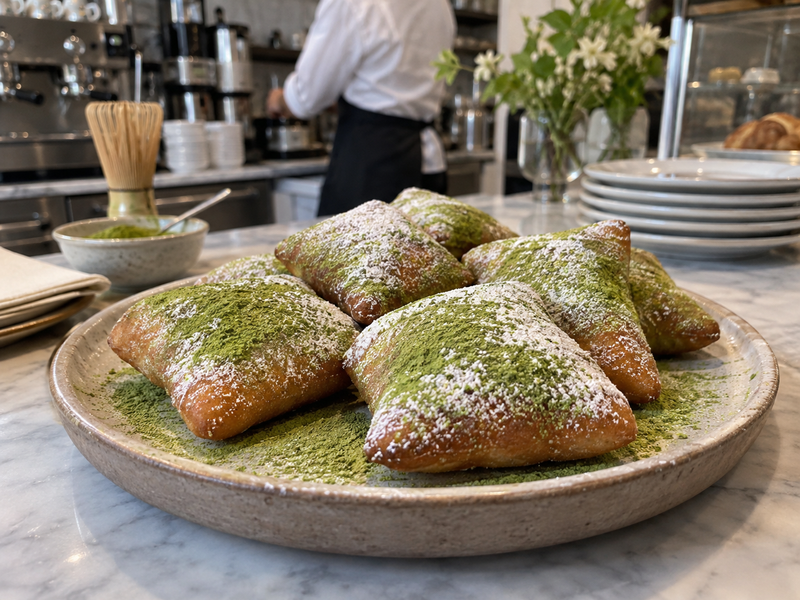
Decide whether the offer is a warm, plain pillow with matcha sugar; a filled pastry; or a plated dessert with sauce. Those are different service jobs. A filled version takes longer to assemble and is harder to hold. A dusted version can be finished quickly but loses a clean appearance when left under humid display conditions. Write the target in terms a baker and cashier can both observe: approximate piece size, expected crust, filling amount, sweetness and sale temperature. A photograph of an approved cut piece is more useful than “fluffy and green” in a product brief.
Build the first tasting around the café’s actual menu. If most customers buy sweet milk drinks, an intensely sweet filling may make the pairing heavy. If the pastry is intended as a standalone treat, a lightly sweet dough may need a fuller finish. Keep matcha, sugar and any dairy components individually identifiable in the tasting notes. That makes it possible to fix bitterness or blandness without changing everything at once.
2. Which dough makes frying and handling predictable?
Start with a familiar yeast dough
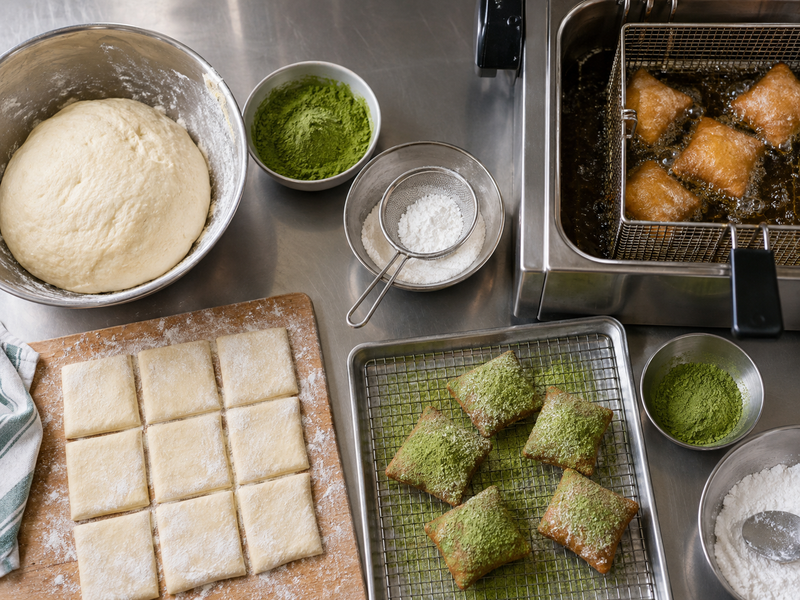
A café already producing a dependable enriched dough can test that base before creating a new one. The dough must survive mixing, bench handling and transfer to the fryer without stretching into thin patches. It should expand enough to form a tender interior, yet retain a shape that staff can fill or bag. Record ingredient weights and dough temperature; “one scoop of flour” is not an adequate instruction when the next shift makes the batch.
The first trial should compare a modest set of changes, such as two hydration levels or two piece sizes, with the same proof and fryer setup. Changing fat, flour, hydration and size together hides the cause of the result. Cherry on My Sundae’s version shows one way to bring matcha into the format, but the café’s flour, mixer and service rhythm deserve their own test.
| Dough trial | Keep fixed | Compare | Reject when |
|---|---|---|---|
| Base versus softer dough | Flour, yeast, piece size | Handling and interior | Pieces collapse on transfer |
| Small versus large cut | Dough and proof | Fry time and portion value | Center stays heavy |
| Plain versus matcha dough | Dough base | Flavor and fried color | Tea tastes scorched |
3. Where should the matcha flavor sit?
Compare dough, filling and finish separately
Matcha can be mixed into the dough, whisked into a cream filling or combined with fine sugar for the final dusting. Each route exposes the tea to a different process. In the dough it experiences frying and can lose a bright color. In a chilled cream it remains more visible, but the cream changes the storage and allergen plan. A dusting gives a direct first taste, although loose powder can look messy and taste dry. Trial one route at a time, then combine only the versions that improve the finished pastry.
Use a small, weighed pilot so the amount of tea can be compared fairly per pastry. Sift matcha into dry ingredients or disperse it in a compatible liquid to avoid dark pockets. Taste after the pastry cools slightly; heat and sugar can mask the tea during the first bite. Matcha Village’s published background can support discussion of matcha and blending options, but obtain a current specification before making supplier claims on a menu or label.
4. How should dough be mixed, proofed and cut?
Give staff visible checkpoints
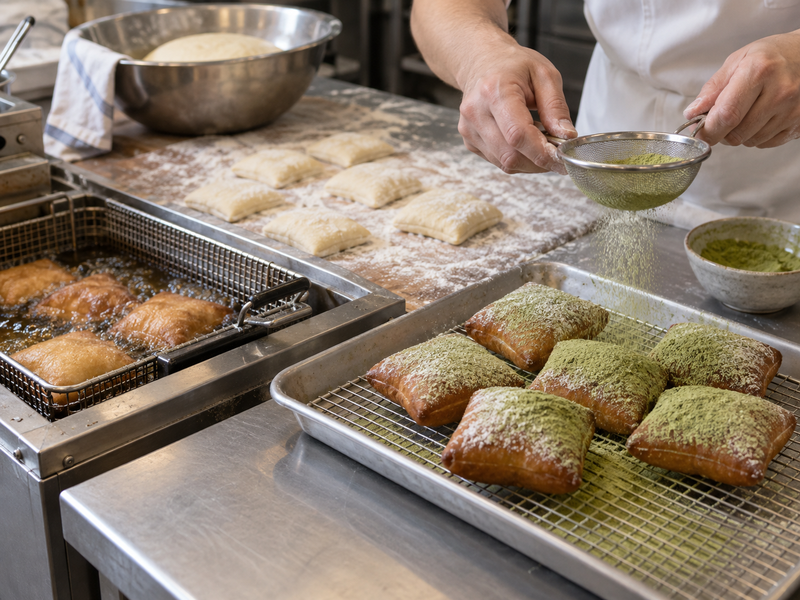
Mix until the dough is cohesive and extensible enough for the chosen shape. Note the mixer, batch size and dough temperature because a small trial in a different bowl may develop at a different pace. During bulk fermentation, assess expansion and feel rather than relying on a timer alone. A dough that is too slack can absorb more oil or distort during transfer; one that is underproofed may stay dense in the center. Record what the dough looks and feels like at the point it is ready to divide.
Cut pieces consistently with a guide or weighed portions. Unequal pieces complicate frying and pricing. Dust the bench sparingly so excess flour does not fall into the oil. Set a maximum time between cutting and frying in the trial sheet, then evaluate later pieces for overproofing. If the café intends to chill dough overnight, run that as its own trial with the actual cold-storage equipment rather than assuming the same proof schedule will work.
| Checkpoint | What to record | Why it matters |
|---|---|---|
| After mixing | Dough temperature and feel | Predicts later proof behavior |
| At dividing | Total dough weight and portion count | Exposes yield drift |
| Before frying | Expansion, surface and handling | Signals proof readiness |
| After frying | Center texture of sample piece | Confirms process, not just color |
5. What does a controlled fry trial record?
Treat oil condition as a recipe variable
The fryer should be ready before dough is moved to it. Measure oil temperature with the tool the kitchen will use in daily service, and record how far it falls when pieces are added. A crowded basket can make the second batch unlike the first. Track pieces per load, turning method, total fry time and the appearance of a cut sample. Color alone is a weak endpoint when matcha darkens the dough.
Oil type and management follow the café’s equipment and food-safety plan. Filter or replace oil according to that plan; a pastry fried in oil carrying flavors from savory products may taste wrong even when the dough is sound. Put the operator’s observations next to the measured settings: whether pieces float evenly, form large blisters, split at the seam or have a greasy surface. A useful trial sheet tells the next baker what to change when the first load is pale and the second is dark.
6. When should beignets be filled and finished?
Build the sequence around sale time
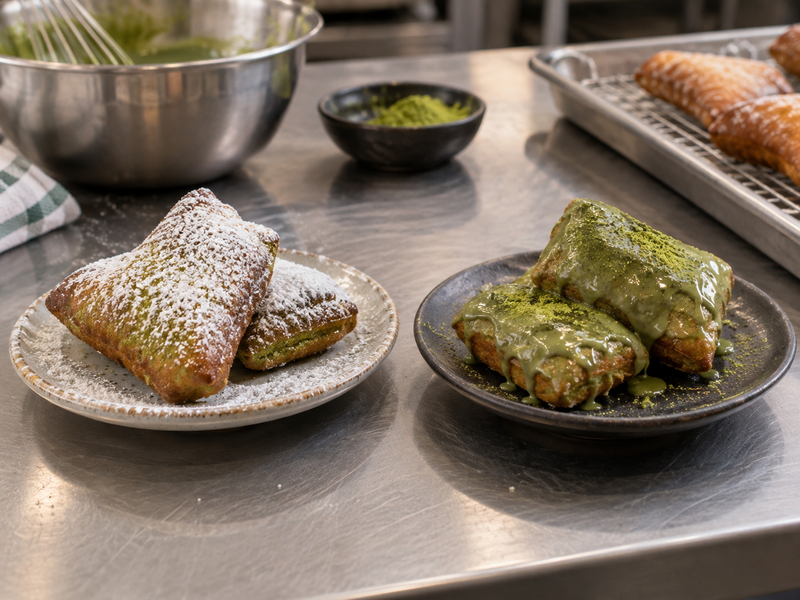
Drain fried pastries so excess oil does not soak the finish. Let them cool enough for the intended filling; a cold cream piped into a very hot pastry can lose structure. Weigh a sample of filled pieces rather than trusting the feel of the piping bag. If filling leaks, first check the hole size and pastry interior before simply reducing the amount. For a dusted version, apply the matcha mixture close to handoff and compare its appearance after a short hold under the real display lighting.
Separate preparation of a dairy or egg filling from the frying station and follow the kitchen’s temperature controls. The FDA Food Code is a U.S. model reference, while the venue’s regulator and written food-safety program determine the applicable rules. The process card should say which components may be made ahead, where they are held and who finishes the pastry.
| Finish | Service advantage | Control to test |
|---|---|---|
| Matcha sugar | Fast, visible flavor | Moisture and powder shedding |
| Matcha cream | Distinct center | Filling weight and cold handling |
| Matcha glaze | Neat plated look | Set time and sweetness |
7. How long is the useful service window?
Test eating quality, not just appearance
Beignets are especially sensitive to time. The crust softens as moisture moves outward, while a dusting may dissolve or spot. Set up a timed comparison with pastries from one fry load: taste one soon after finishing, another at the planned display interval and another at the proposed end of service. Keep the holding setup identical to the café’s planned counter or case. Record texture, oil impression, filling condition and matcha flavor. The window is the last point that meets the agreed product target.
Do not turn that sensory window into a food-safety claim. A filled, chilled product needs a separate storage decision based on ingredients and applicable rules. If quality drops before demand peaks, change the production schedule: more small fry loads may sell better than one large batch. For slower locations, a limited afternoon run or made-to-order finish may be easier to defend than an all-day tray.
8. How can a small team run the station?
Draw the route from dough to handoff
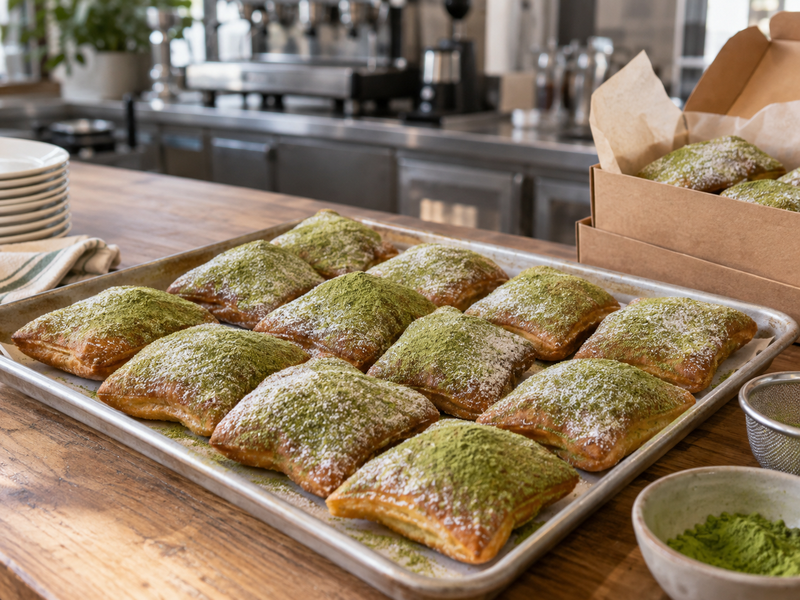
A good pastry can fail at service if staff cross paths between a hot fryer, a filling station and a crowded pickup shelf. Mark where raw dough waits, where finished pastries drain, where the filling bag is stored and where orders are handed over. Try the route during an ordinary busy period, not just in an empty kitchen. The cashier needs a simple way to tell customers whether the pastry is available now or in the next fry load.
Assign one person to the fryer during the peak, with another person finishing and boxing if volume justifies it. If one person must do both, reduce menu variations. Pre-portion dusting mix and prepare clean boxes before the rush. A pilot can reveal whether filling creates the bottleneck, in which case a plain version may be a better opening offer. Record delays and rejected pastries by cause rather than writing “service was slow.”
| Station | Ready before opening | Peak-service check |
|---|---|---|
| Dough | Portion count and proof status | Next load timing |
| Fryer | Oil setup and drain space | Load size and sample center |
| Finish | Measured topping/filling | Consistent application |
| Handoff | Packaging and menu description | Waiting time and order accuracy |
9. Which costs and allergens belong in the product sheet?
Cost the saleable pastry
Calculate from an actual trial yield: dough ingredients, matcha, finishing ingredients, frying oil allocation, packaging and any rejected pieces. The number that matters is saleable units per batch, not the theoretical number cut from the dough. Watch labor as well; a filled pastry may have an attractive ingredient cost but take too long at the counter. Compare the contribution of one pastry against the space and staff time it uses during the busiest hour.
List allergens from every ingredient and from the work area. Flour, milk, eggs, nuts in a topping and shared equipment may all matter. The FDA’s major food allergen guidance is a U.S. reference; labels and disclosures must follow rules in the sales market. Ask suppliers for current ingredient and allergen documentation, and train staff to use the approved list instead of guessing from the pastry’s appearance.
10. What evidence is enough to approve a launch?
Run a short, realistic sale
Approve a version only after the team has repeated it with the actual mixer, fryer, staff and packaging. Keep the final record short enough to use: formula by weight, dough and proof cues, cut size, fry load, finish weight, service window, allergen list and target saleable yield. Include a cut-photo standard so a new baker can recognize an underdone center. A repeat trial on a different shift is more persuasive than one polished tasting.
During a limited sale, note when pastries sell out, how often customers ask about the flavor and why pieces are discarded. A complaint such as “too oily” points toward fry conditions or proof; “not enough matcha” points toward formulation or finish. Change one cause at a time and document the next trial. If the product performs only when the head baker is present, keep it in development until the ordinary shift can deliver it.
| Launch decision | Evidence required | Next action |
|---|---|---|
| Pass | Repeatable texture, service and margin | Train and schedule |
| Revise | One clear defect with likely cause | One-variable retest |
| Hold | Unresolved safety or allergen question | Resolve before sale |
FAQ
Q1. Can matcha be added directly to beignet dough? Yes, but sift and weigh it, then test fried color and flavor against a plain-dough version. A filling or finish may give a clearer tea note.
Q2. Can a café fry all the beignets in the morning? Test that plan against the intended display window. If texture drops before the selling peak, use smaller timed loads.
Q3. Should the beignets be filled while hot? Let them cool enough that the chosen filling keeps its structure, and follow the filling’s storage controls.
Q4. Is a green interior proof of strong matcha flavor? No. Taste and appearance should be scored separately after the pastry reaches serving temperature.
Q5. What is the simplest first menu version? A consistently fried, unfilled beignet with a measured matcha finish is a manageable opening test.
The next useful step is a one-shift trial with weighed dough, logged fryer loads and timed tastings. That record will show whether matcha beignets belong in daily service, a limited window or a special event.