
A matcha tea strainer should break dry clumps without slowing the person preparing the drink. Buyers sometimes order a loose-leaf infuser, a powder sieve and a serving strainer as if they perform the same task. They do not. Define where powder enters the workflow, then test candidate meshes over the vessel and batch size you use. Echo Kiln’s consumer guide describes sifting before whisking; a B2B choice also needs handling and cleaning checks.
Contents
- 1. What is the strainer meant to remove?
- 2. How does a powder sieve differ from a tea infuser?
- 3. Which mesh performs with your matcha lot?
- 4. What size and shape fit the vessel?
- 5. How should staff push powder through?
- 6. Can the strainer support batch service?
- 7. What material and construction should be checked?
- 8. How is the mesh cleaned and dried?
- 9. When should a strainer be replaced?
- 10. What belongs in the purchase specification?
1. What is the strainer meant to remove?
Distinguish clumps from defects
A fine sieve can break soft agglomerates in dry powder before water is added. It should not be presented as a way to make an unsuitable or contaminated ingredient acceptable. Ask why the powder forms clumps in your setting: packing pressure, repeated opening or handling may contribute. If a lot has an unexpected odor, visible foreign material or moisture problem, hold it for quality review rather than pushing it through mesh.
Define the desired cup result. Prepare identical portions with and without sifting under one whisking method. Count or photograph visible lumps immediately after mixing and after the normal service interval. Record powder retained on the sieve. If the difference is small with your mixer, a separate sieve may not earn counter space. If sifting improves the drink, choose a tool staff can use every time. The right strainer solves a specific preparation issue, not a vague promise of “premium texture.”
At development stage, include two powder conditions in the trial: a newly opened pack and a pack handled as it would be during service. Keep both within the supplier’s instructions and do not manufacture a moisture problem simply to favor a finer mesh. If the sifter performs well only with the new pack, the buying team should investigate powder handling before switching equipment. That comparison helps separate a tool problem from a storage or dispensing problem and gives staff a clearer reason for the sifting step.
2. How does a powder sieve differ from a tea infuser?
Look at the task and openings
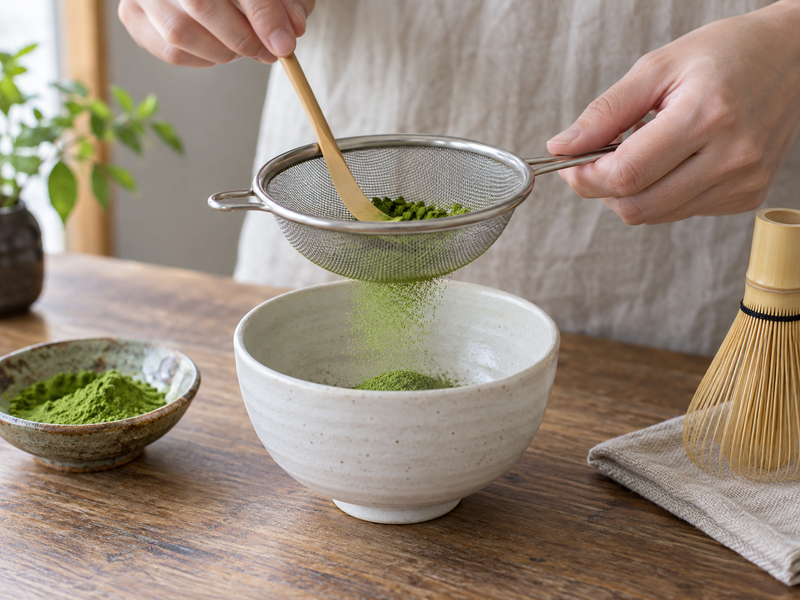
A loose-leaf infuser is designed to hold or separate steeped leaves from liquid. A matcha sieve prepares fine powder before whisking. Some fine strainers can serve both purposes; Ippodo describes a strainer that can sift matcha or catch tea leaves. That does not mean every infuser has a mesh, opening and handle suitable for powder.
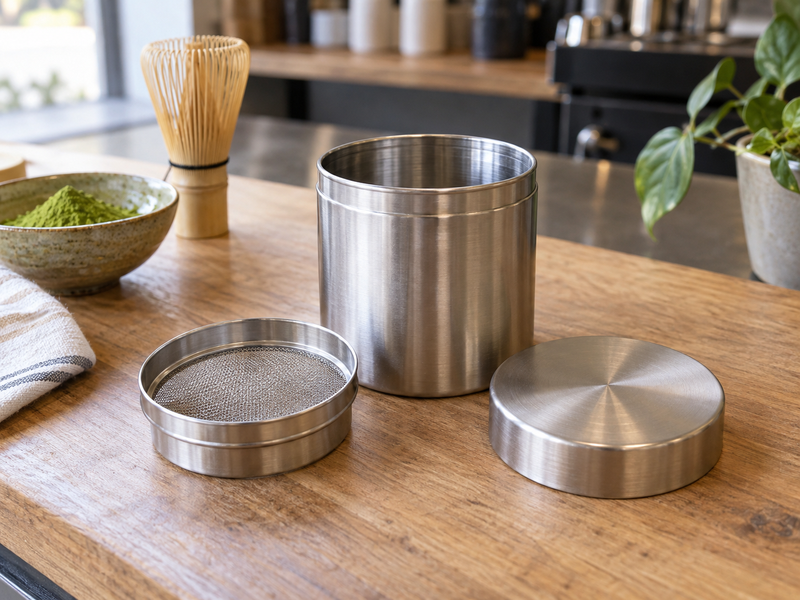
Inspect the actual object. Drop a measured portion of matcha into the candidate and see whether it passes with gentle movement or needs force that bends the mesh. Check whether the tool spans the bowl without tipping and whether powder lands inside rather than on the rim. A basket that closes around tea leaves may have seams that trap powder. A very shallow sieve may spill during a multi-serving dose. The procurement description should name “powder sifting” as the intended function and include a sample acceptance test.
| Tool | Designed task | Buyer risk |
|---|---|---|
| Loose-leaf infuser | Hold leaves in liquid | Powder traps in seams |
| Fine powder sieve | Break dry clumps | Capacity may be small |
| Dual-use strainer | Both stated uses | Must trial each use |
3. Which mesh performs with your matcha lot?
Test passage and retention
Mesh labels are not enough to predict performance. Ask the vendor how it specifies aperture and whether that information refers to the finished assembly. Then trial the exact powder you buy, including a portion from a normally opened pack. Measure starting mass and powder recovered in the bowl to estimate hold-up. Look for loose wires, torn points and areas where powder cakes at the rim.
Repeat across several operators. One person may tap gently while another presses hard. Compare the resulting powder, time and mesh deformation. If a finer sieve removes a lot of material, determine whether it is breaking clumps or retaining usable powder. Do not set a universal aperture based on a blog; matcha particle behavior and practical cleaning vary. A serviceable mesh lets staff process the required dose with controlled effort and yields a prepared drink that passes your sensory test.
4. What size and shape fit the vessel?
Trial the complete station
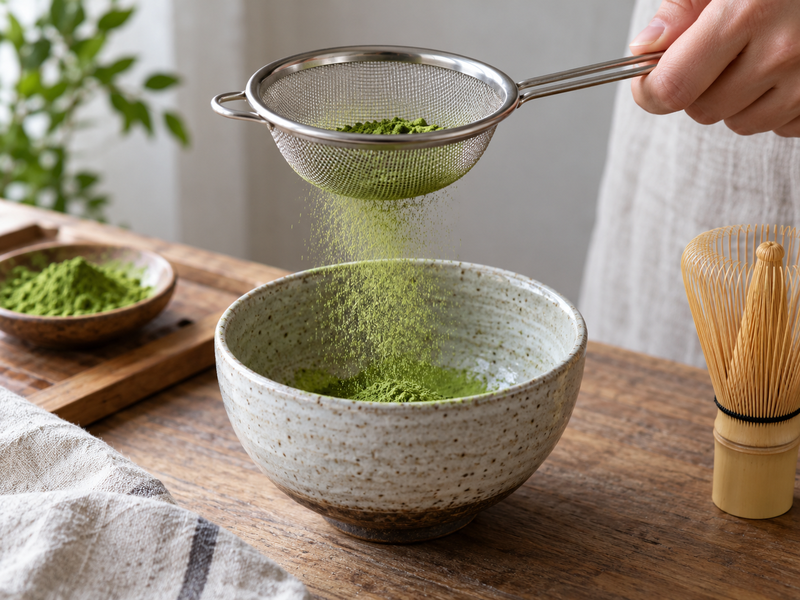
Measure the bowl or pitcher opening where the strainer will sit. Check handle length, rim support, depth and clearance under nearby shelves. A sieve that fits a home chawan may wobble over a wide commercial pitcher. A stable tool should leave both hands available for controlled powder movement and avoid resting its mesh against a wet bowl surface.
Watch transfer and storage. The sifter should move from storage to use to wash point without dropping residual powder across the counter. Test a typical single serving and the largest batch you intend to sift. If the bowl is deep, check that staff can see whether powder has passed. For retail sets, check whether the strainer fits inside the proposed packaging without crushing its mesh. Buyers often focus on aperture while overlooking geometry; a tool that tips or spills will be skipped by staff even if its mesh is excellent.
| Fit feature | Trial | Reject if |
|---|---|---|
| Rim support | Place over vessel | Rocks or tips |
| Basket depth | Add normal dose | Overfills |
| Handle clearance | Use at station | Hits equipment |
5. How should staff push powder through?
Specify a gentle method
Staff may tap the rim, shake the sieve or use the back of a small spoon. Trial these methods on the same powder and mesh. Excessive pressure can deform a fine screen or force material through unevenly. If the tool needs a dedicated pusher, include one in the kit and explain its use. The method should be repeatable during a busy shift, not dependent on one careful demonstrator.
Write a short operating cue. Weigh the dose, place the sieve over a dry vessel, move powder through using the agreed method and inspect what remains. Define what a retained hard particle means for the ingredient lot: it may need quality attention rather than more pressure. After sifting, prepare the drink with a standard mixing method to see whether the extra step changes the customer result. Ippodo’s dedicated sieve illustrates that powder preparation is its own stage; your staff card should make that stage practical for your equipment.
6. Can the strainer support batch service?
Calculate the work per order
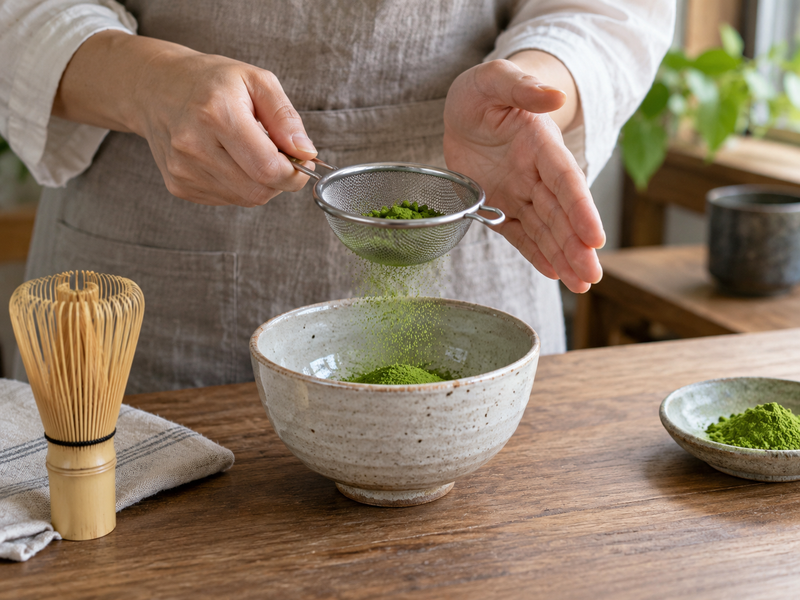
If a café prepares many drinks, a small sieve may need repeated loading and cleaning. Test the largest legitimate batch rather than multiplying a single-cup time on paper. Record powder capacity, transfer loss and how long the sieve takes to reset. If a prepared dry batch will be stored, the quality team should define container, identification and handling; sifting alone is not a storage validation.
Compare line options. One large sieve may fit a batch station while smaller tools serve individual bowls. Another option is to pre-portion powder under controlled conditions. Trial the choices for quality and labor. Check whether staff can identify which powder lot was used if several grades share a station. Avoid holding loose matcha in an unlabeled open basket. A tool may improve the cup yet become a bottleneck if every order queues behind one screen. The selected setup should work at realistic order volume.
| Service model | Sifting point | Control needed |
|---|---|---|
| Single bowl | Just before mixing | Dose and cleanup |
| Small batch | Before measured preparation | Lot and hold method |
| Retail kit | At customer use | Clear instructions |
7. What material and construction should be checked?
Inspect contact surfaces
Ask for the material specification of mesh, frame, handle and any coating. Request food-contact documentation appropriate to your market from the actual manufacturer rather than accepting a generic marketplace badge. Inspect joints for gaps that trap powder and edges that could damage a user’s hand or bowl. A wooden handle may feel comfortable but introduce different washing limits from a metal frame.
Check production samples, not only artwork. Inspect several units for mesh tension, loose strands, poor welds and variation in basket shape. Run a normal wash trial and see whether the handle or rim changes. If the maker claims dishwasher compatibility, request instructions for the exact construction and test it in your operation. No material name alone proves the whole assembled tool meets your destination requirements. Keep a reference sample and a defect list for receiving checks on future orders.
8. How is the mesh cleaned and dried?
Include cleaning in the service trial
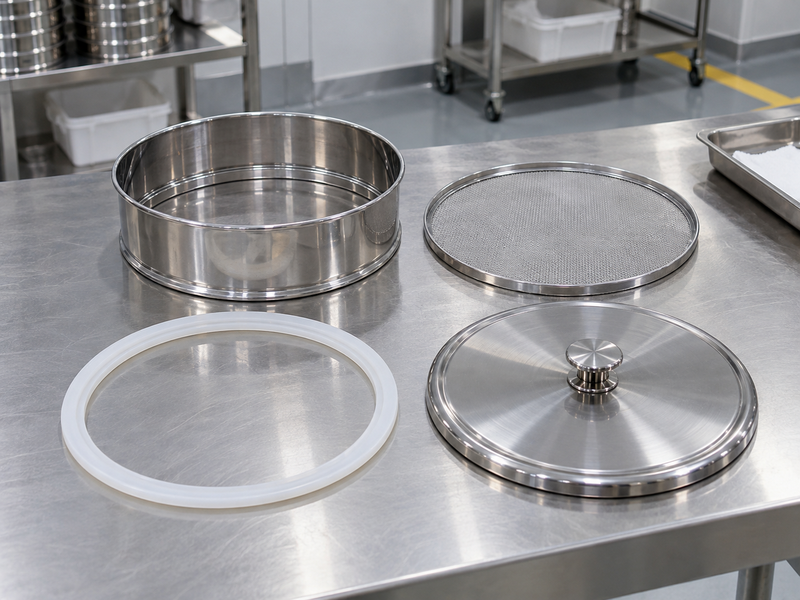
Dry powder may brush away easily before it gets wet; damp matcha can cling to corners and mesh intersections. Ask the vendor for its cleaning method, then try it after several consecutive portions. Check whether all contact surfaces can be seen and reached. A brush might be needed, but it should not pull wires loose. Record how long drying takes before the next use or storage.
Avoid a hidden residue problem. Have a staff member who did not select the tool clean it under normal station conditions. Inspect the inside of the rim and handle joint afterward. If the sieve also handles loose tea, decide whether flavor transfer is acceptable or whether tools should be dedicated. Follow the business’s cleaning rules and the maker’s material limits. A sieve that passes powder well but repeatedly traps green paste can be a poor commercial choice. Include cleaning time in total labor cost.
| Area | Check after washing | Action |
|---|---|---|
| Mesh | No trapped paste | Re-clean or replace |
| Rim seam | Visible and reachable | Choose simpler design |
| Handle joint | Dry and intact | Follow maker care |
9. When should a strainer be replaced?
Define a visible reject condition
Bent mesh, loose wire, detached handle or a damaged rim can affect both handling and powder control. Create an inspection cue that staff can use at opening. Do not rely only on a fixed calendar period; wear depends on use, cleaning and construction. Track replacement during the pilot so purchasing can hold enough spare units for the service volume.
Ask what can be repaired. In many small strainers, replacement is more practical than attempting to reshape a distorted screen. Confirm whether the maker supplies identical units over time and whether a design revision will be disclosed. For retail kits, define a defect route for a new sieve that arrives misshapen. The distributor should photograph damage and record shipment identifiers. A low unit price can conceal costly service interruptions if replacements are inconsistent or unavailable when the mesh fails.
10. What belongs in the purchase specification?
Specify use and acceptance
Write the intended powder, dose range, receiving vessel, material, dimensions, care method and packaging. Add a practical trial: powder passage, retained mass, stability over the bowl and cleaning inspection. If the strainer will be bundled with tea, check that its instructions fit the actual product format. Matcha Village’s company materials mention matcha and gift-set combinations, but the specific accessory and its manufacturer documentation require confirmation before a bundle is advertised.
Protect the approved design. Keep a signed sample and a drawing or product code. Ask suppliers to notify you before changing mesh, handle, coating or packaging. At receipt, sample units from multiple cartons rather than trusting one display piece. Staff should have a clear rule for rejecting damaged screens. The buying decision is sound when the strainer improves your prepared drink and remains easy to handle, wash and replace at the promised order volume.
| Specification area | Evidence | Owner |
|---|---|---|
| Performance | Powder and drink trial | Product team |
| Construction | Material and sample check | Quality |
| Supply | Replacement and change plan | Procurement |
Receiving teams can use the approved powder-passage test as a quick check on future sieve lots. Sample units from different cartons, inspect mesh under good light and pass the standard dose through each. Compare retained powder and handling with the signed reference. A change in mesh tension or basket depth may be easy to miss visually but obvious during use. Hold suspect cartons before they reach café stations or retail boxes.
FAQ
Q1. Is a matcha tea strainer the same as a loose-leaf infuser? No. Check whether the actual mesh and shape can sift dry powder.
Q2. Does sifting fix poor-quality matcha? It can break soft clumps; it does not resolve an off odor or foreign material.
Q3. Must a café sift every serving? Compare results and service time with its powder and mixer.
Q4. What should staff inspect daily? Look for bent mesh, loose wires, damaged rims and trapped residue.
Q5. What should a buyer request from the maker? Ask for material details, care instructions, dimensions and a production sample.
Send suppliers your powder dose and vessel dimensions, then test several strainers at the actual station. Select one that improves the cup without adding a cleaning bottleneck. Keep a replacement plan so a damaged screen never becomes a reason to skip the approved preparation step.