
Matcha tea recipes can look easy on a test bench and behave differently on a busy counter or production line. Powder dose, mixing order, water temperature, milk choice, and holding time all change the result. The recipes below are starting formulations for product trials, with amounts stated per serving or batch. Adjust them against your powder’s specification and your market’s rules before sale. Matcha Village supplies pure matcha, latte powders, and related blends for beverage and food applications, so a recipe can be matched with an appropriate ingredient format.
Contents: powder · hot tea · iced latte · plant milk · smoothie · bakery · dessert · savory · batching · approval
1. What should you check before testing matcha tea recipes?
Define the ingredient and the serving
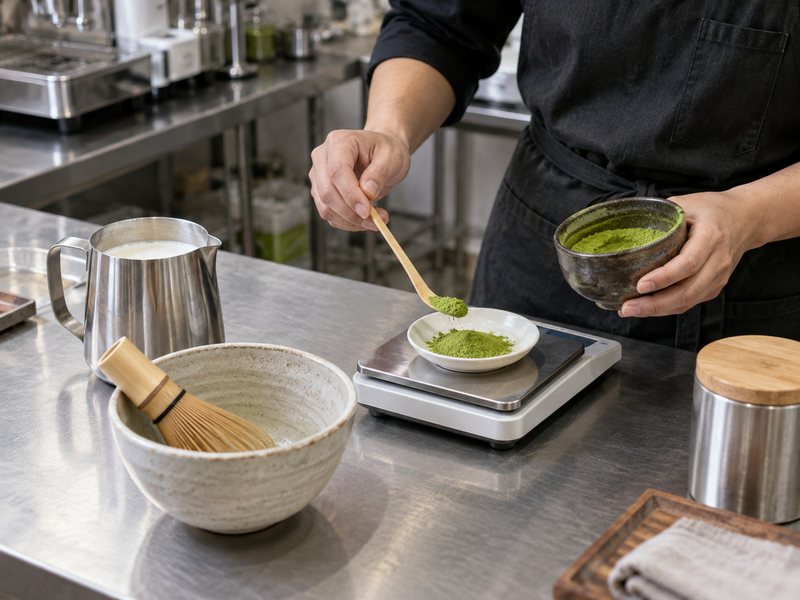
Choose a coded powder sample and weigh it. A teaspoon varies with scoop shape and powder density. These weights are starting points, not fixed doses. Record whether the ingredient is pure matcha or a latte premix. A premix may already contain sweetener or other ingredients, so replacing it gram for gram with pure matcha would change sweetness, color, cost, and caffeine. Check the supplier specification before building a finished recipe.
Set a fair comparison. Use the same water, base ingredient, vessel, temperature, and mixing method for each candidate powder. Taste the drink at the temperature and age a customer will experience. For food, evaluate the finished product after baking, freezing, or chilling. Matcha Village’s pure matcha and latte powder are different formulation routes. Pick the route that matches your production process, then write a separate formula for each. Include yield and portion size so flavor and cost calculations refer to the same finished serving.
| Trial control | Record before tasting | Why |
|---|---|---|
| Powder | Product code and weight | Repeatable dose |
| Liquid | Type and weight | Consistent flavor base |
| Process | Temperature and mixing time | Comparable dispersion |
| Serving | Final yield and portion | Cost and label calculations |
2. How do you make a repeatable hot matcha?
Start with a plain drink that reveals the powder
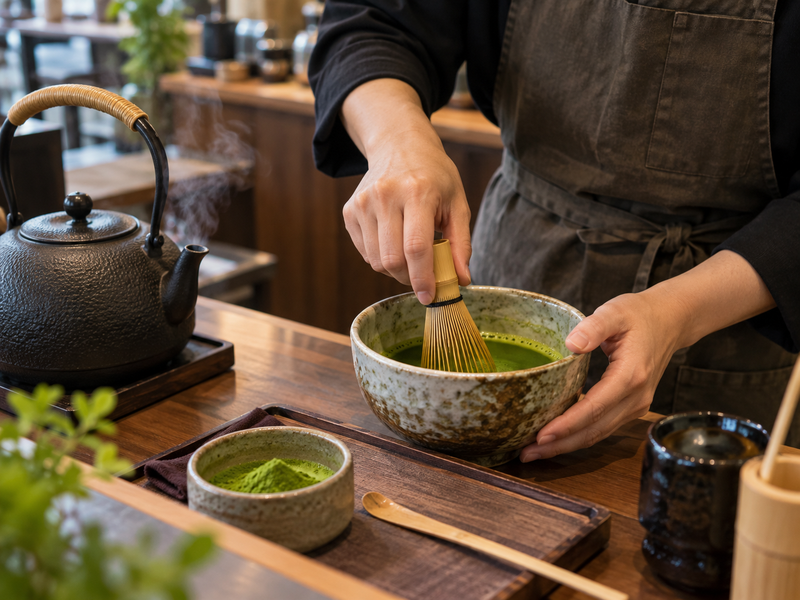
For one test cup, sift 2 g pure matcha into a bowl, add 60 g warm water, and whisk until no dry pockets remain. Top up with 100 g warm water if a lighter drinking strength suits the concept. These numbers are a pilot starting point; adjust taste and serving size with the same powder before locking a menu recipe. Avoid boiling water in the initial comparison because harsh extraction and heat can make sensory differences harder to interpret. Use a thermometer if the preparation will be repeated by several staff members.
Write down what happens after whisking. Check aroma, bitterness, texture, foam, and settling immediately, then again at service time. For plain matcha, a soft aftertaste and clean texture may matter more than a dramatic dry-powder color. For café rollout, create an operator card with dose, water, vessel, and mixing tool. Train staff on the same method. A demonstration cup is not a usable recipe if another shift cannot reproduce it.
3. How do you build an iced matcha latte?
Make a smooth concentrate before adding ice
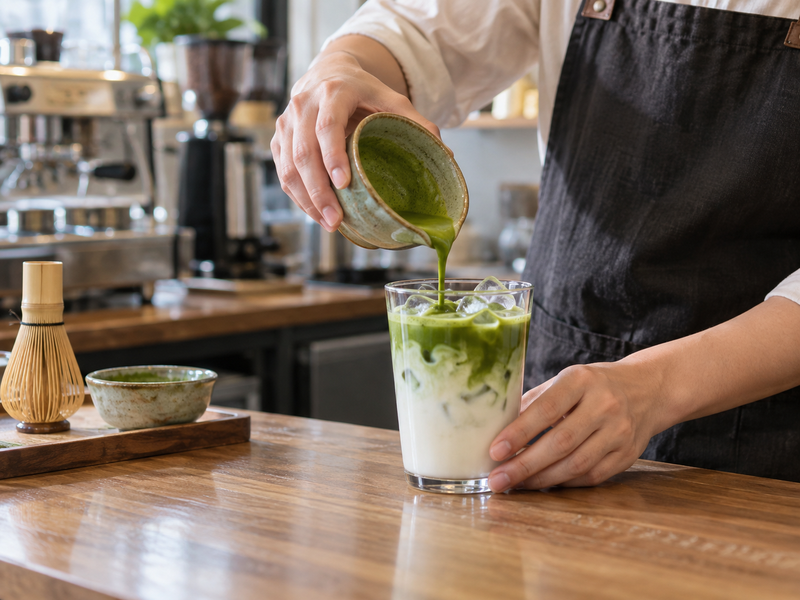
For a starting café trial, whisk 3 g pure matcha with 30 g warm water until smooth. Add 15 g simple syrup if the menu calls for a sweet drink. Pour 180 g chilled milk into a cup with ice, then add the matcha concentrate. Record the ice weight if consistent fill and cost are important. Adjust matcha, syrup, and milk in separate test rounds; changing all three together hides why the drink improved. Use a tested syrup recipe or commercial syrup with a known composition for menu standardization.
Taste it after a short hold. Ice melts, sweetness shifts, and powder may settle during delivery or pickup. Check appearance and flavor after the usual wait. A chain may prefer a premix for easier dosing, but it should be tested against pure powder at an equivalent serving. The premix’s matcha fraction and sweetness need documentation. Matcha Village offers matcha latte powder for that trial, alongside pure powder for teams controlling sweetener choice.
| Iced latte trial | Starting amount | Adjust after tasting |
|---|---|---|
| Pure matcha | 3 g | Flavor strength |
| Warm mixing water | 30 g | Dispersion |
| Simple syrup | 15 g | Sweetness |
| Chilled milk | 180 g | Body and serving yield |
4. How can you adapt a matcha latte for plant milk?
Treat the base as an active ingredient
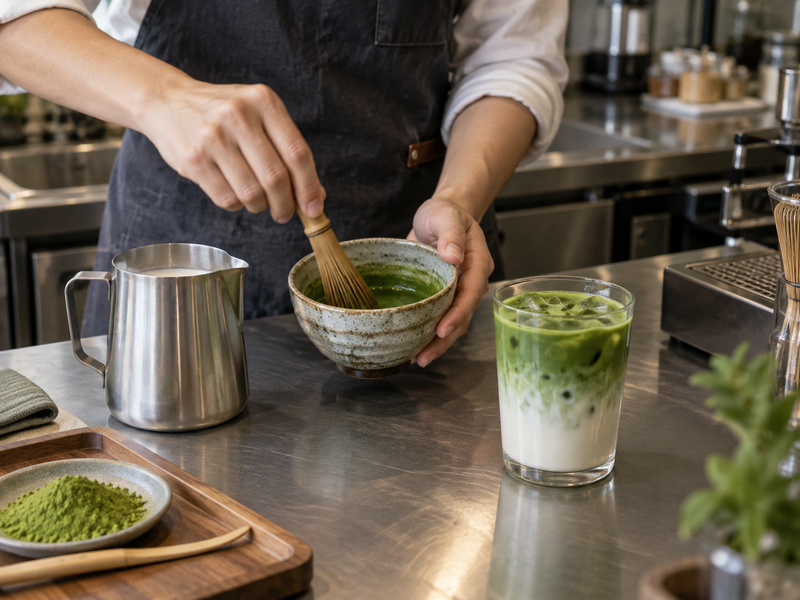
Oat, soy, and almond drinks bring different sweetness, protein, fat, and aromas. Each can make the same matcha dose taste different. Start with the iced latte method, replacing dairy milk with an equal weight of the chosen plant drink. Keep the matcha concentrate unchanged for the first comparison. Then adjust syrup or powder in small steps. Test the exact commercial plant drink rather than a category name; two oat drinks may behave differently because their formulations are different.
Check behavior during service. Some bases foam well hot but separate when iced. Others mask tea flavor and need a stronger powder or lower syrup dose. Observe the drink immediately, after standing, and after a normal delivery interval. If the concept includes “dairy-free” or allergen wording, verify the complete ingredient and handling process under local rules; a recipe idea alone does not establish a claim. Product teams can ask Matcha Village for a powder with the color and flavor profile suited to their chosen base. Run a fresh test when that base changes, even if the menu name stays the same.
5. What makes a matcha smoothie work in service?
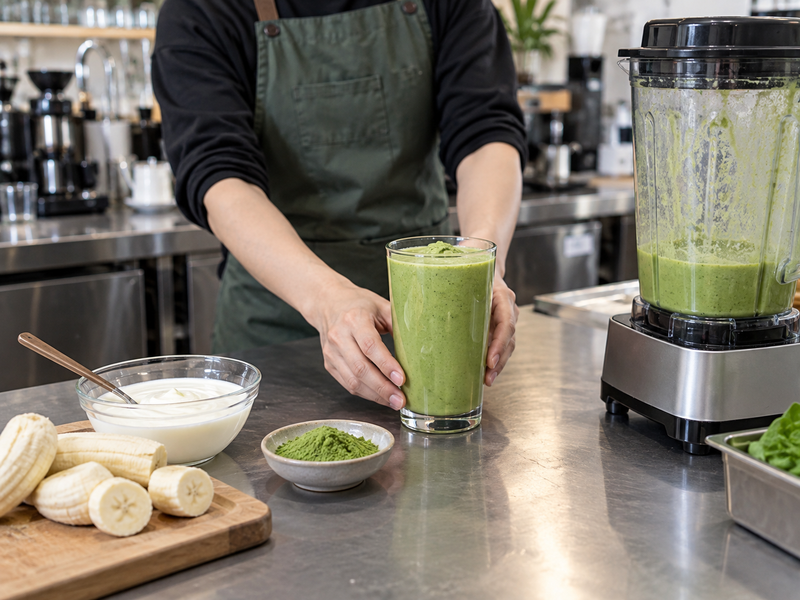
Blend for a defined texture and yield
For one pilot serving, blend 3 g pure matcha, 180 g plain yogurt or a suitable alternative, 80 g frozen banana, and 40 g water. Add sweetener only after tasting. This combination gives a practical starting texture without claiming a universal finished nutrition profile. Banana sweetness and yogurt acidity vary by supplier, so record brands and weights during development. If a different fruit becomes the hero ingredient, retest matcha visibility and taste rather than assuming the powder will read clearly through the new base.
Measure the finished cup. Blend time affects temperature and texture. A smoothie may thicken while standing or show specks if powder enters the blender as a dry clump. Pre-wet the matcha with a small amount of water when needed, then add the other ingredients. Test the longest realistic hold before service. For a franchise, write an operator card with the frozen ingredient specification, blending sequence, cup fill, and cleaning step. For packaged smoothies, shelf-life and food safety work require a separate process validation beyond this bench recipe.
| Smoothie variable | Watch for | Adjustment to trial |
|---|---|---|
| Fruit sweetness | Tea flavor disappears | Reduce fruit or sweetener |
| Yogurt acidity | Sharp finish | Compare another base |
| Frozen content | Inconsistent thickness | Weigh each ingredient |
| Powder dispersion | Visible clumps | Pre-wet matcha |
6. How do you add matcha to a baked product?
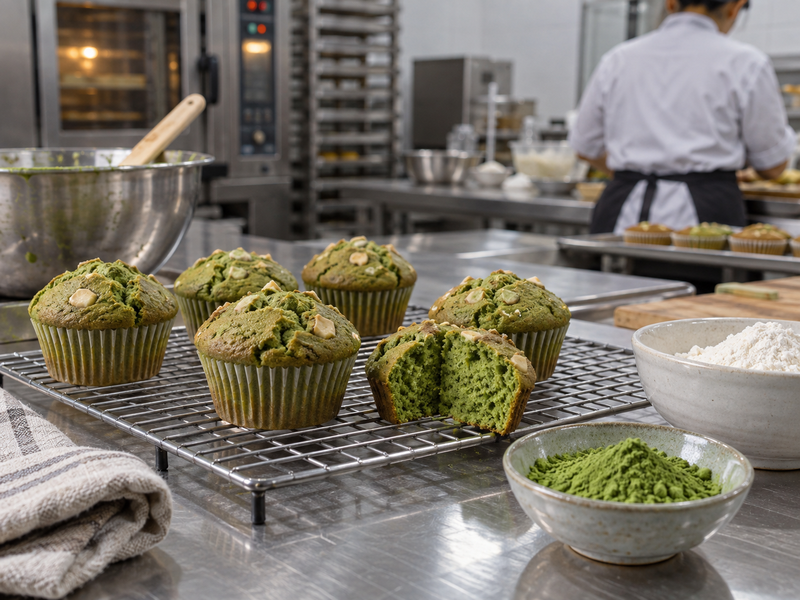
Test the baked result, not only green batter
For a small muffin trial, start with an established vanilla muffin formula and replace 10 g of its flour with 10 g pure matcha per 500 g total dry mix. Keep the remaining recipe and bake conditions unchanged. The percentage is a starting experiment, not a recommended commercial specification. Sift the matcha with dry ingredients to distribute it evenly. Compare an otherwise identical control batch so the team can see how color, crumb, bitterness, and aroma change after baking and cooling.
Separate flavor from color decisions. A stronger matcha dose can make batter greener and the finished cake more bitter. Longer or hotter baking can dull color, while sugar and vanilla can soften tea notes. If a lower-cost culinary powder works well in the final muffin, paying for a powder chosen mainly for plain drinking may offer little value. Conversely, a coarse or harsh powder can leave an unwanted finish. Matcha Village lists bakery applications among its product selection areas. Ask for samples suitable for your process and compare finished goods at the planned shelf age, not only on the day of baking.
| Bakery checkpoint | Question to answer |
|---|---|
| Batter | Is powder evenly dispersed? |
| Freshly baked | Is flavor clear but balanced? |
| Cooled product | Does color remain acceptable? |
| Later shelf check | Does aroma or texture shift? |
7. How can matcha work in a chilled dessert?
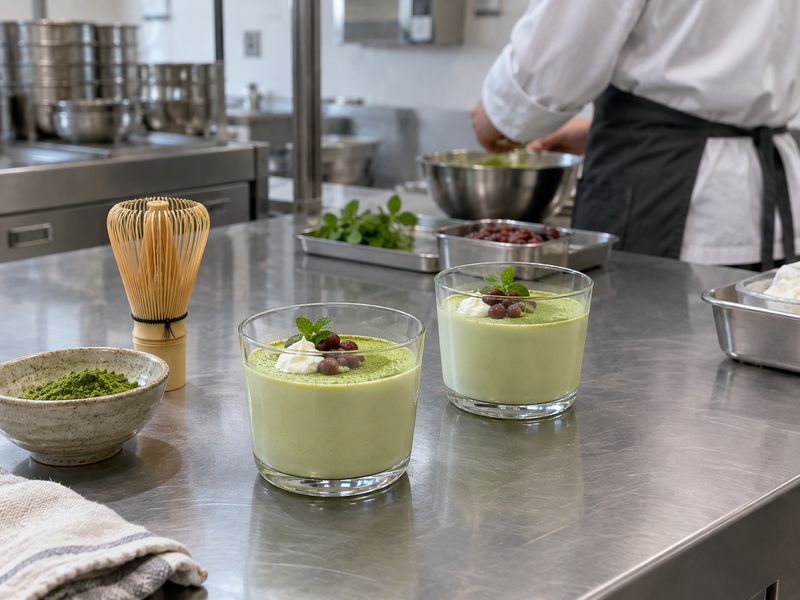
Add the powder where it can disperse
For a pilot panna cotta or similar chilled dessert, take an established validated base recipe and whisk 5 g pure matcha into a small portion of its liquid before adding that portion back to a 500 g base. This avoids dry pockets. Taste after the dessert has chilled fully. Cold temperatures can mute aroma and sweetness perception, so a warm liquid sample gives an incomplete picture. Keep the gelling system and heating process from the validated base unchanged until the matcha dose and sensory result are understood.
Test the appearance customers buy. Look for sediment, streaks, color fading, and uneven portions across a batch. A dessert displayed under bright lighting may need different packaging or service conditions from a covered retail cup. If the recipe contains dairy, a plant alternative, or other allergens, assess labeling and cross-contact in the final production setting. Matcha also works in ice cream, but frozen texture and flavor release need their own trials. Matcha Village’s application range includes dairy and ice cream; share your processing temperature and target serving when requesting a sample.
8. Can matcha fit a savory food recipe?
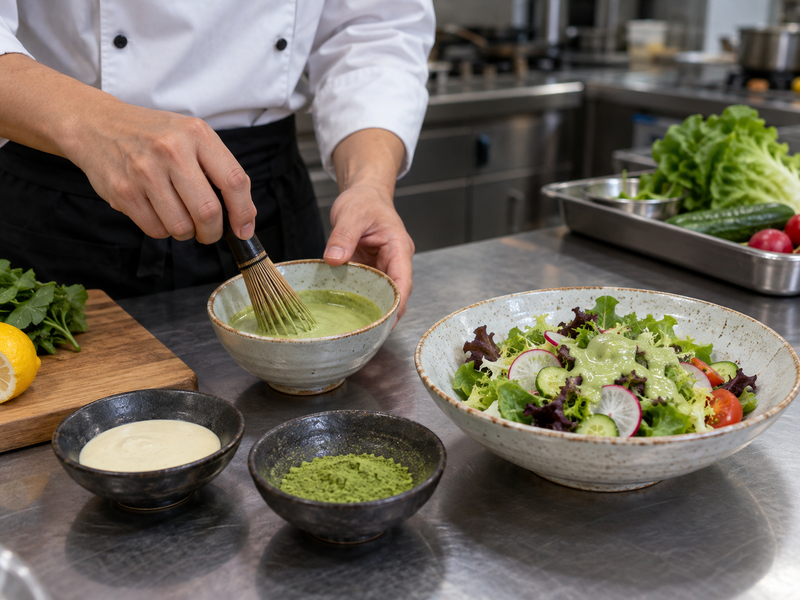
Use a small pilot dose and a clear purpose
Matcha can contribute green color and a vegetal, slightly bitter note to a savory dressing or sauce. For a pilot dressing, whisk 1 g pure matcha with 20 g water, then blend with 80 g of an already approved creamy dressing base. Taste before raising the dose. Acidity, salt, herbs, and oil can make the tea note feel sharper or bury it completely. The goal should be a defined flavor contribution, not a green label on an otherwise unchanged sauce.
Check stability in the actual meal. Taste the dressing alone and on the food it will accompany. Inspect separation and color after its intended holding period. A savory product may use much less powder than a latte, so cost per serving and caffeine assumptions must use the actual formula. Matcha’s flavor can clash with strong garlic or vinegar; a milder base may make it easier to judge. For a packaged sauce, product safety, pH, preservation, and shelf life require normal development and validation. A kitchen trial does not establish those properties.
| Savory test | Decision point |
|---|---|
| Base alone | Is matcha detectable and pleasant? |
| With food | Does it suit the dish? |
| After holding | Does color or texture change? |
| Commercial review | Are cost and labels workable? |
9. How do you scale recipes for a chain or factory?
Preserve ratios and verify process effects
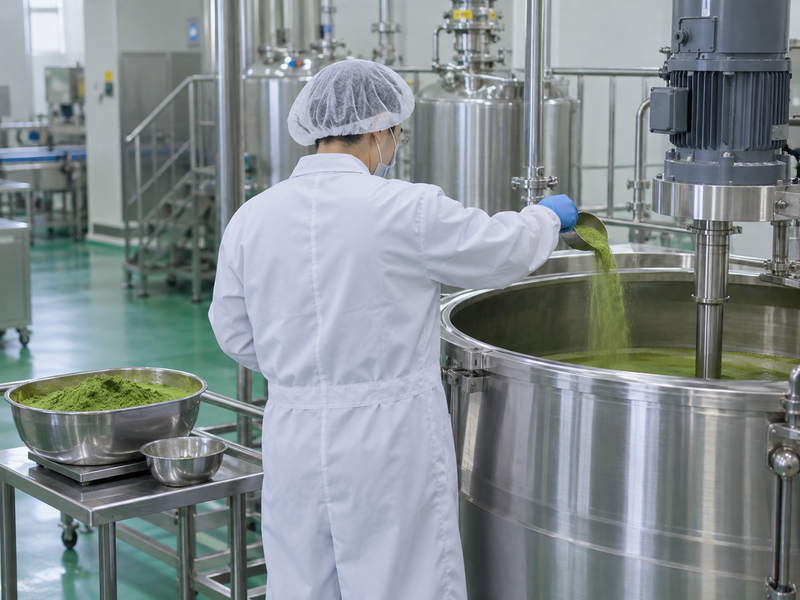
Scaling a recipe by arithmetic gives an initial batch formula, not an approved production method. A larger mixer may hydrate powder differently. Ice and milk may enter at different temperatures. Bakery ovens and filled packages have their own heat histories. Start with a weighed formula, convert each ingredient into a percentage of finished mix, and calculate a pilot batch. Then record actual yield, processing loss, and portion weight. Compare production samples with the bench reference using the same sensory terms.
Build in control points. Specify ingredient order, mixing equipment, time, temperature, hold time, and allowable rework. For a chain, verify that staff can follow the recipe across stores with available tools. For packaged goods, involve quality and regulatory teams in shelf-life, allergen, and labeling work. If the finished recipe changes its matcha dose, revisit caffeine and nutrition calculations where applicable. Matcha Village describes batch tracking and bulk supply capabilities; ask for lot identification and change communication that fit your manufacturing records. A successful bench cup becomes commercially useful only when its process can be repeated.
| Scale-up record | Why it belongs in the file |
|---|---|
| Ingredient percentages | Calculates new batch sizes |
| Mixing sequence | Protects dispersion |
| Actual yield | Sets cost and serving size |
| Reference sample | Guides sensory approval |
| Lot record | Connects ingredient with batch |
10. What should a final recipe specification include?
Make the approved version easy to repeat
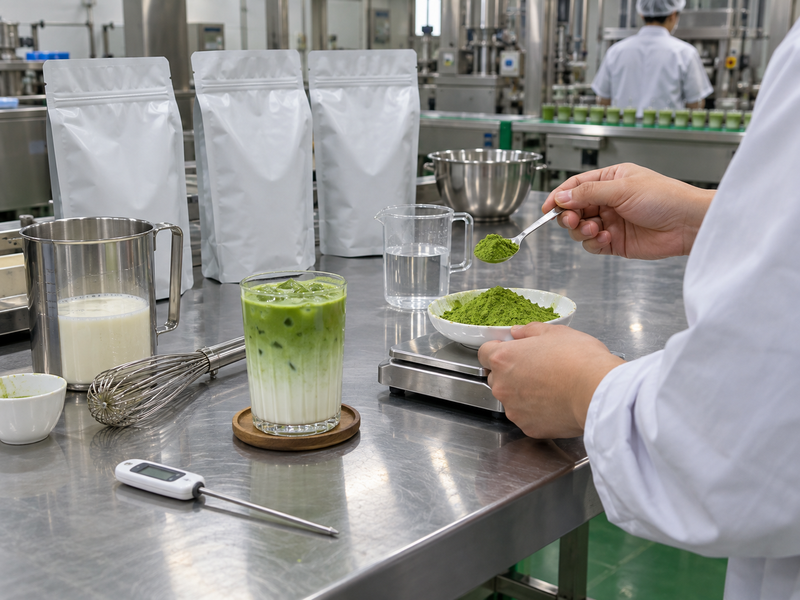
Write the exact ingredient names and supplier product codes, weights, process order, equipment, temperatures, yields, and portion size. Attach a photo or sensory reference if color matters. State which substitutions require a new trial. A switch from pure matcha to a sweetened premix is a reformulation, even if the finished drink looks similar. Record the ingredient lot on production paperwork. Keep a dated approval sample and update the document when your base milk, powder, syrup, or packaging changes.
Give procurement the same version operators use. A recipe cannot stay consistent if purchasing selects a different grade from the one product development approved. Send the supplier an application brief with target color, flavor, dosage, packaging, market, and required documents. Compare samples from bulk wholesale matcha or a suitable blend against the approved formula. A clear specification gives café teams and factories a stable target, while still allowing controlled adjustments when customer feedback or ingredient supply changes.
| Final specification | Minimum entry |
|---|---|
| Ingredient identity | Supplier and product code |
| Formula | Weight of every component |
| Method | Order, time, and temperature |
| Finished product | Yield, portion, sensory target |
| Change control | Retest and approval trigger |
These matcha tea recipes are starting points for controlled trials. Weigh the powder, taste the finished application, and document the version that works before you scale it. For an ingredient shortlist, send your recipe format, target dose, and market to Matcha Village and request coded samples suited to that use.
FAQ
Q1: Can one matcha powder work in every recipe? Possibly, but test each application because milk, heat, and cold change flavor and appearance.
Q2: Should cafés weigh matcha instead of using a teaspoon? Weighing gives a more repeatable dose and cleaner cost calculation.
Q3: Can a latte premix replace pure matcha gram for gram? No. Check its full composition and reformulate sweetness and dose.
Q4: When should a team taste a baked or frozen trial? Taste it in the state and at the age customers will encounter.
Q5: What information should a supplier receive with a recipe inquiry? Send the application, ingredient dose, finished serving, desired sensory profile, market, and scale.