
Matcha taiyaki turn a fish-shaped griddle cake into a tea-flavored cafe item, but the mold determines much of the work. Batter must reach the tail and fins, filling must stay inside the body and the center must cook before the surface becomes too dark. Build the pilot around the actual machine and the order volume you expect.
1. Should matcha taiyaki use green batter or green filling? · 2. What should be checked before choosing a taiyaki machine? · 3. How should the first matcha batter comparison be designed? · 4. What should a filling specification include? · 5. How can batter reach the tail without excessive overflow? · 6. How should the cooking cycle be assessed? · 7. What is the best way to unload and serve the cakes? · 8. What should a takeaway packaging trial compare? · 9. How can the cafe estimate real hourly output? · 10. What should be approved before another location starts production?
1. Should matcha taiyaki use green batter or green filling?
Change one component first
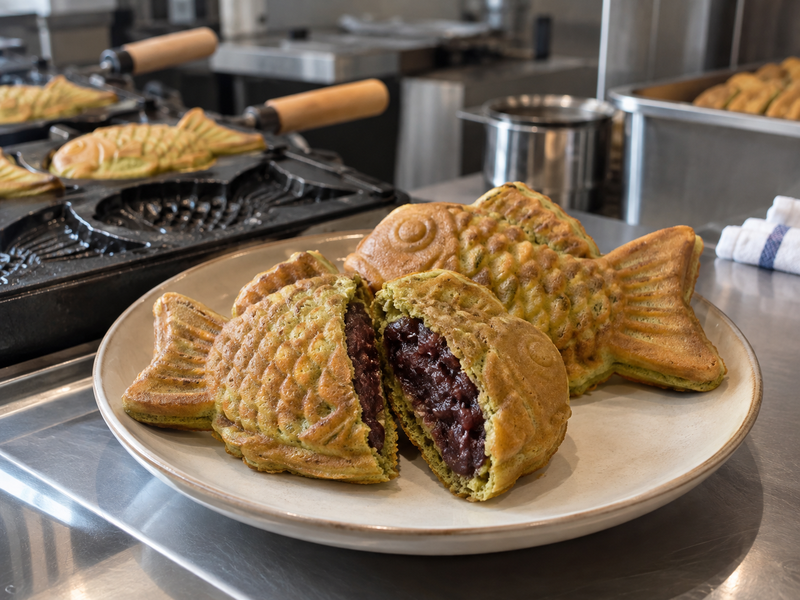
A green batter with a familiar filling gives customers a visible tea-colored cake. A plain batter with matcha filling creates a different product and may suit a shop whose existing machine settings already work well. Select one direction for the initial trial rather than changing both at once.
Dear Juneberry’s matcha taiyaki place matcha in the batter and offer filling options. The accompanying custard ingredient list and method contain inconsistent milk quantities. Use the article as an example of the batter concept, not as a complete commercial custard specification.
For a first development batch, propose matcha batter around an already approved sweet bean filling. This leaves one main flavor adjustment while preserving a filling your staff can portion confidently.
Decide how the cake should be eaten: immediately at the counter, from a sleeve while walking, or after a takeaway journey. A thin crisp edge and a soft central body can change during those different service paths. The product brief should name the path you intend to support.
2. What should be checked before choosing a taiyaki machine?
Match capacity to the full cooking cycle
Inspect mold dimensions, cavity count, plate material and the manufacturer’s instructions. A larger number of cavities only helps if the operator can fill, close, open and unload them consistently. Include the time spent cleaning overflow between cycles.
Ask the equipment supplier about permitted batters, preheating, plate care and replacement parts. A sample made on a hand-held pan does not demonstrate how the same batter will behave on an electric commercial unit.
| Equipment detail | Question for the supplier | Pilot observation |
|---|---|---|
| Cavity size | What product weight is intended? | Fill distribution |
| Heating control | How is the unit operated? | Surface consistency |
| Plate release | What care is required? | Sticking and damage |
| Service access | Which parts need routine cleaning? | Turnaround time |
Do not base a purchase only on a stated pieces-per-hour figure. Time the complete workflow with your filling and a normal operator.
Keep a record of which cavity produces each trial sample. If one fish repeatedly has a pale tail or dark head, cavity-specific observations are more useful than changing the whole batter immediately.
3. How should the first matcha batter comparison be designed?
Keep the existing base intact
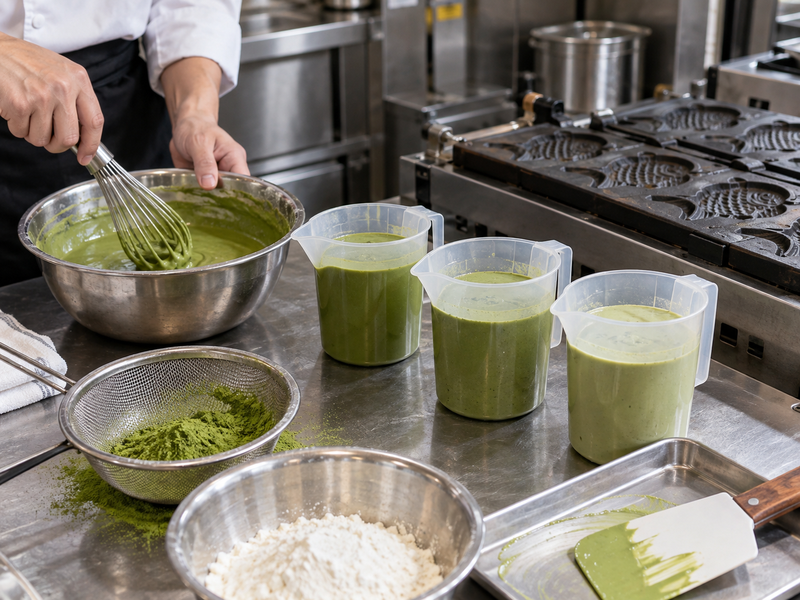
Start from a complete taiyaki batter already suited to the selected equipment. Just One Cookbook’s taiyaki recipe supplies a separate documented batter and filled-mold method for comparison. Its quantities and timing should remain attached to that recipe rather than being mixed casually with another source.
As an unvalidated tea-screening proposal, test 1, 1.5 and 2 grams of matcha per 100 grams of flour in your chosen base. Keep the remaining ingredients, rest procedure and filling constant. Those levels are starting experiments, not a finished production recommendation.
Sift and blend the tea through the dry ingredients before mixing the batter. Examine a small smear for powder pockets, then record how it pours from the selected jug or dispenser.
Use the same deposited quantity for each cavity comparison. A stronger-tea sample with a thicker wall may cook differently simply because more batter was added.
Taste the cake both with and without its filling. That helps separate tea flavor from the sweetness of the center and shows whether the batter needs adjustment before the filling recipe is reconsidered.
4. What should a filling specification include?
Control shape as well as weight
A filling that can be placed neatly in the body of the mold is easier to cover than one that spreads toward the fins. Use the selected filling’s approved preparation and holding method, then portion it consistently before cooking.
For a proposed placement exercise, compare two modest filling weights within the machine supplier’s operating guidance. The actual numbers should follow cavity capacity; there is no useful universal amount for every taiyaki mold.
| Filling property | Check in the mold | Possible problem |
|---|---|---|
| Portion shape | Fits the body area | Exposed filling at the seam |
| Consistency | Holds position during covering | Movement into thin edges |
| Temperature | Matches the approved process | Different cooking behavior |
| Texture | Passes through chosen tool | Uneven deposit |
Keep the filling away from the closure line. Overfilling can create attractive raw photographs but leave batter unable to seal around the center.
Use a separate development sheet for custard, chocolate or other alternatives. Each brings different ingredients and handling requirements. An established bean-filled cycle does not automatically validate an egg-and-dairy custard version, even when the finished fish weighs the same.
5. How can batter reach the tail without excessive overflow?
Observe the cavity in stages
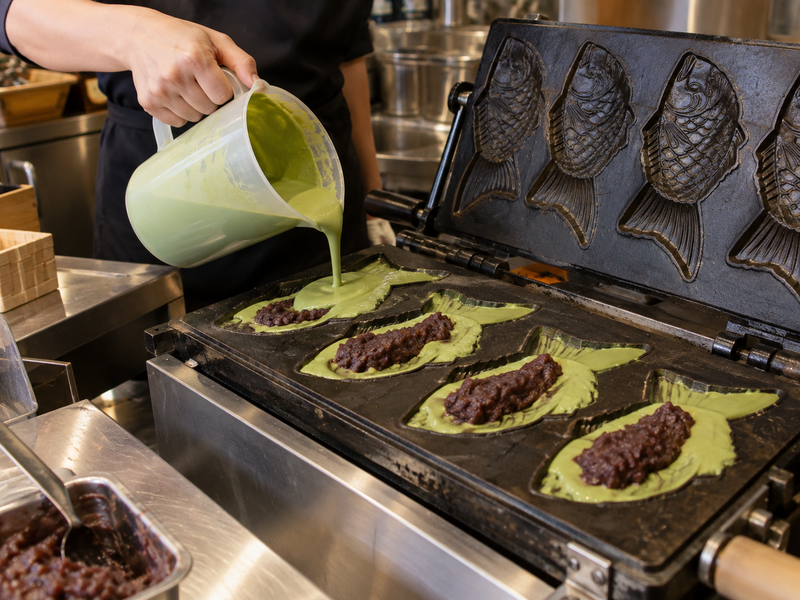
Preheat and prepare the machine according to its instructions. Deposit the first batter layer in a way that reaches the detailed parts of the mold, then place filling in the body and cover it with the remaining batter as required by the selected method.
During the pilot, photograph the cavity after the first deposit and after filling placement, with the machine safely handled. These images help staff reproduce the sequence without guessing how much batter should sit beneath the filling.
Measure total deposited batter by weighing the dispensing container before and after a small cycle. If possible, also distinguish the lower and covering deposits during setup. That information helps explain why the center is thin on one side.
Inspect cooked fins and tail details, then compare the amount of excess batter around the seam. A little trim may be acceptable in the product design, but recurring large overflow adds waste and cleaning time.
Change one deposit at a time. Increasing both lower and upper layers makes it harder to tell which adjustment filled the missing detail or created a thicker central wall.
6. How should the cooking cycle be assessed?
Cut the thickest part of the fish
Surface color is only one observation. Open assessment samples through the body, where batter surrounds the filling, and inspect the cake’s interior. Follow your validated cooking procedure for the specific batter and filling rather than relying only on a golden exterior.
Record preheating, load, cavity position and the approved operating sequence. If the machine needs turning or another step, include it explicitly in the working instruction. A vague direction to cook both sides leaves room for different results.
| Cooking observation | Where to inspect | What to investigate |
|---|---|---|
| Pale detail | Tail and fins | Deposit and cavity heating |
| Dark patch | Head or broad surface | Contact and heat distribution |
| Dense interior | Body cross-section | Batter and cycle |
| Exposed filling | Closing seam | Placement and coverage |
Compare samples from a first cycle and a later normal service cycle. The machine’s working condition after repeated use may differ from a carefully prepared single demonstration.
Retain photographs of the cut center alongside the surface image. That prevents the team from approving a photogenic fish whose thickest section still falls outside the kitchen’s cooking specification.
7. What is the best way to unload and serve the cakes?
Protect the details staff worked to create
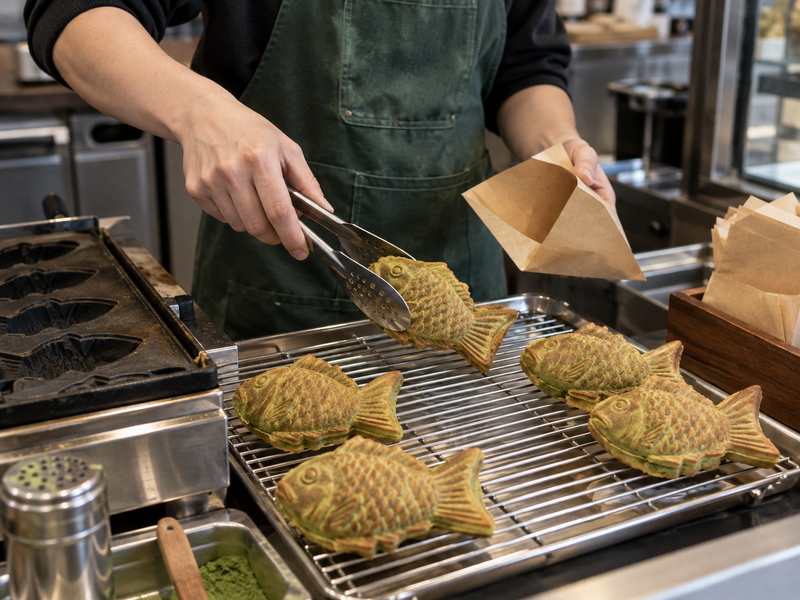
Use tools compatible with the machine’s plate surface and the manufacturer’s instructions. Lift the cooked cake with support around its body instead of pulling at the tail. Record where breakage occurs so the team can distinguish sticking from rough handling.
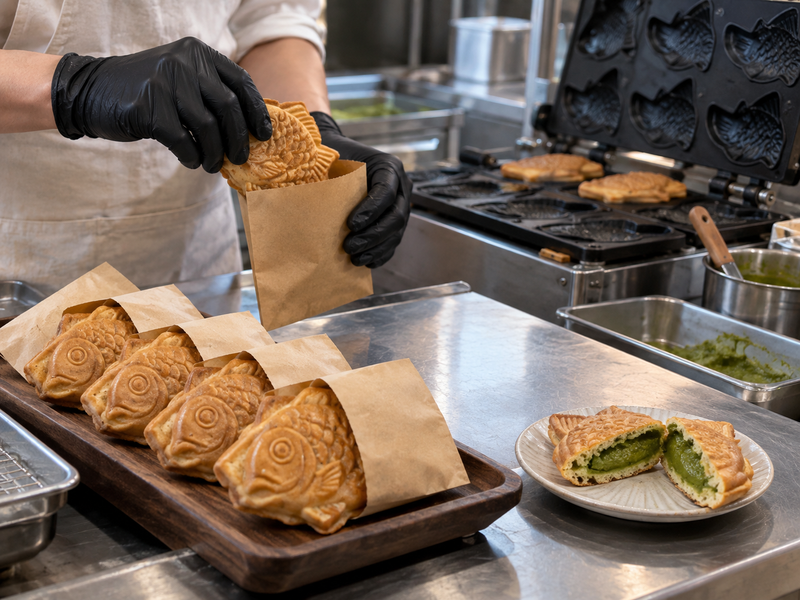
Place cakes on the approved finishing surface while completing any necessary trim. Do not stack a full cycle tightly just because counter space is limited. Test the effect of the actual arrangement on the texture you want to serve.
Prepare sleeves or plates before unloading. A worker holding a hot cake while searching for packaging may squeeze the fish or delay the next cycle. Put the assembly items within reach of the cooking station without obstructing safe machine operation.
Taste a sample after the normal handoff delay. Judge whether the tail still has the intended bite and whether the filling is comfortable to eat. A menu photograph taken immediately after opening the mold is not a substitute for that service check.
If the chosen format requires a warning about a hot filling, make the service instruction clear and appropriate to the actual product.
8. What should a takeaway packaging trial compare?
Close the pack before judging the result
A paper sleeve, vented tray and closed box can produce different eating experiences. Put freshly prepared samples into the actual options under the approved handling procedure, then assess them after the realistic trip to the customer.
Check the fish’s shape as well as its texture. A narrow sleeve can break fins, while an oversized box may allow cakes to collide. The package should also keep exposed filling or grease away from the customer’s hand.
| Pack option | What to inspect | Tradeoff to evaluate |
|---|---|---|
| Open sleeve | Grip and drip protection | Short-distance service |
| Supported tray | Fin and tail damage | More packaging material |
| Closed box | Moisture and contact | Transport protection |
| Multiple-piece pack | Cakes touching each other | Shared-order presentation |
These are packaging trials, not a claim that any format permits a particular holding time. Establish food-safety and quality limits for the approved recipe and service route.
If no package preserves the intended texture over a long delivery, change the sales promise or delivery range. Adding more tea cannot solve a cake that reaches the customer in a different physical condition.
9. How can the cafe estimate real hourly output?
Time orders, not empty machine cycles
Run a small rehearsal that includes batter replenishment, filling placement, unloading, trimming and packing. Use the normal staffing level and include other work the operator is expected to perform. Record the number of acceptable finished orders.
For a hypothetical calculation, six cavities producing five saleable cakes per cycle give a different output from the nominal six-cake capacity. If a cycle plus handling takes eight minutes, the arithmetic gives 37.5 acceptable cakes per hour before additional interruptions. These figures are illustrative, not machine performance claims.
Keep losses by reason: missing detail, sticking, seam leakage and rejected centers. That breakdown identifies whether another cavity, a better dispenser or a revised workflow would address the actual constraint.
For matcha selection, provide the supplier with baked batter samples and the intended filling. The site’s culinary-grade matcha guide offers useful purchasing context. Ask Matcha Village for identifiable Chinese matcha samples and approve them through the machine trial rather than choosing from raw color alone.
10. What should be approved before another location starts production?
Transfer the machine-specific instructions
Name the exact equipment, cavity size and dispensing tools on the recipe sheet. Include the lower batter deposit, filling placement, covering step and approved cooking procedure. Another branch should not have to infer those details from a photograph of the final fish.
Show acceptable and unacceptable center cross-sections. Give staff a clear route for stopping and reporting a machine or ingredient change that falls outside the approved setup.
| Transfer item | Used by | Verification |
|---|---|---|
| Machine and tools | Branch manager | Equipment check |
| Batter version | Prep team | Current batch sheet |
| Filling placement | Cooking staff | Staged cavity photograph |
| Serving pack | Counter team | Closed-package sample |
Review ingredient declarations across batter, filling and toppings. Wheat, egg, milk, soy or nuts may be relevant depending on the recipe. Claims should follow the full product, including any premix or purchased filling.
Have the receiving branch produce one normal service sequence with its own staff, then compare the first and last cakes for mold detail, center structure and condition after packing before releasing routine production.
FAQ
Q1: Can a pancake batter be used without adjustment?
Treat it as a separate equipment trial. Taiyaki needs batter that fills detailed cavities and cooks around a center in the chosen mold.
Q2: Should more batter fix a missing tail?
Check the deposit path and cavity performance first. More total batter may create overflow without correcting distribution.
Q3: Can different fillings share one cooking instruction?
Only after each combination has been evaluated and approved. Filling composition, portion and starting condition can change the process.
Q4: Is green surface color a reliable cooking test?
No. Assess the thick central section under the kitchen’s validated procedure as well as exterior appearance.
Q5: Can nominal machine capacity be used for sales forecasts?
Use a service rehearsal that includes handling, rejects, replenishment and packing. Nominal cavity count is only one input.