
Matcha crepes are thin enough that small changes in batter and pan heat show up immediately: one tears, the next turns brown, and the third is too thick to fold. A café needs a measured batter deposit, a rest that fits prep, and a pan routine staff can repeat. Christie at Home’s matcha crepes provide a home recipe reference. The service decision is how many crepes to prepare ahead and which fillings should be added only when ordered. Matcha Village’s sample service can support a tea comparison in the finished batter.
Contents
- 1. What crepe should the café serve?
- 2. Which batter ingredients need fixed weights?
- 3. How should matcha be mixed into a thin batter?
- 4. What does batter rest change?
- 5. How can pan heat and deposit be controlled?
- 6. When should crepes be cooked ahead?
- 7. Which fillings work at handoff?
- 8. How should crepes be folded and packed?
- 9. What do yield, cost and allergens show?
- 10. When is the recipe ready for service?
1. What crepe should the cafe serve?
Set the filled product as the target
A thin matcha crepe can be a plated breakfast, a folded takeaway snack or a dessert with cream and fruit. Choose one primary service format before refining the batter. The crepe needs enough flexibility to fold around the filling without tearing, a tea flavor that remains visible alongside toppings, and a portion size that fits the pan and pack. Photograph an approved unfolded crepe and the finished item; both matter.
Taste the plain crepe before adding a strong spread. A sweet chocolate filling can hide matcha, while tart fruit may bring it forward. Decide whether the batter should be lightly sweet or almost neutral. The home reference suggests berries and chocolate among its pairings; a café should test what its customers will actually order. A crepe that only tastes like matcha before filling may not justify its place on a matcha menu.
2. Which batter ingredients need fixed weights?
Record liquid and flour precisely
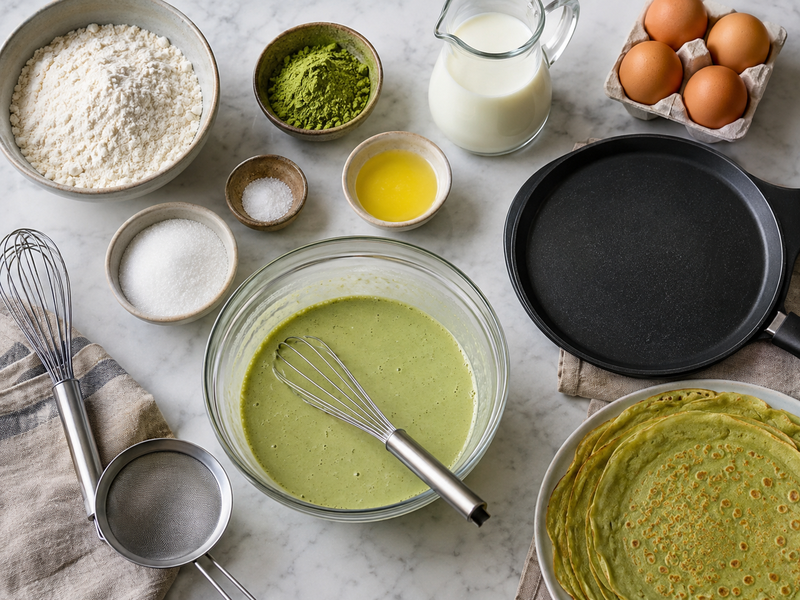
The Christie at Home recipe uses flour, matcha, eggs, milk, water, sugar and melted fat. A production batch should use weights for each ingredient, including egg if possible. Small changes in liquid-to-flour ratio alter how quickly the batter spreads and whether the cooked sheet folds. Different flour or milk products can also affect color and browning.
Make a plain control beside the matcha batter. If both tear, the pan or base formula may be at fault. If only matcha crepes tear or show spots, investigate powder mixing and any liquid change used to disperse it. Record batter temperature and total yield. A café preparing several liters cannot rely on a home recipe’s cup measures or assume the last ladle behaves like the first.
| Ingredient | Function in trial | Control |
|---|---|---|
| Flour | Structure | Weight and supplier |
| Egg | Binding | Weight, not only count |
| Milk and water | Flow and tenderness | Total liquid weight |
| Fat | Pan release and mouthfeel | Addition method |
| Matcha | Color and flavor | Lot and dose |
3. How should matcha be mixed into a thin batter?
Remove powder pockets before cooking
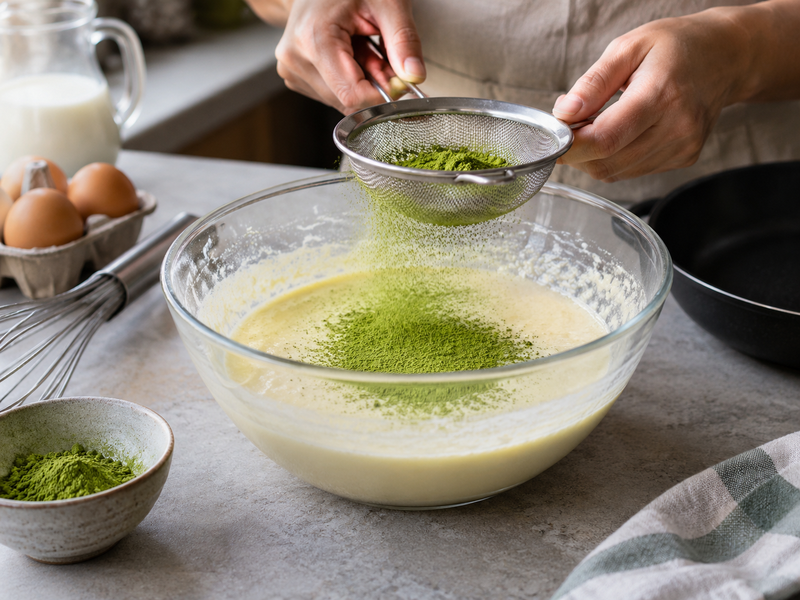
Sift matcha with dry ingredients or make a smooth paste with measured liquid before combining the full batter. The reference sifts tea with flour and salt. In a larger batch, scrape the bowl’s sides and base so no green paste remains hidden. Strain only if the method has been tested; a sieve may catch lumps but also retain a measurable amount of batter. If the batter rests, stir it gently and check that the tea has not collected at the bottom.
Compare powder candidates by cooking plain crepes with the same tea weight. Matcha may look bright in batter and dull under pan heat. Taste after the crepe cools enough to eat, then with the intended filling. Do not increase tea merely to fix browning; first check pan heat and cook time. Current supplier documents should support any claim about origin, grade or certification of the selected powder.
4. What does batter rest change?
Test viscosity at service time
Rest can let flour hydrate and bubbles settle, but the useful interval depends on the formula and prep schedule. Make one batter and cook samples immediately and after the proposed rest under the operation’s handling plan. Record flow from the ladle, spreading time, tear rate and finished texture. A batter may thicken during rest; adding water by eye just before service creates an undocumented recipe change.
If viscosity shifts, weigh any adjustment and compare the resulting crepes. Do not put all attention on the timer. The goal is batter that spreads into a thin sheet with the café’s pan and staff technique. Check whether matcha settles during rest; stir without whipping new air into the bowl. If the operation wants to hold batter across service periods, review the egg and dairy handling under local rules and the kitchen’s food-safety plan.
| Rest point | Observe | Decision |
|---|---|---|
| Just mixed | Flow and bubbles | Baseline |
| Planned prep rest | Spread and color | Candidate SOP |
| Later service | Thickness and settling | Stir or discard decision |
5. How can pan heat and deposit be controlled?
Use the first crepe as a calibration
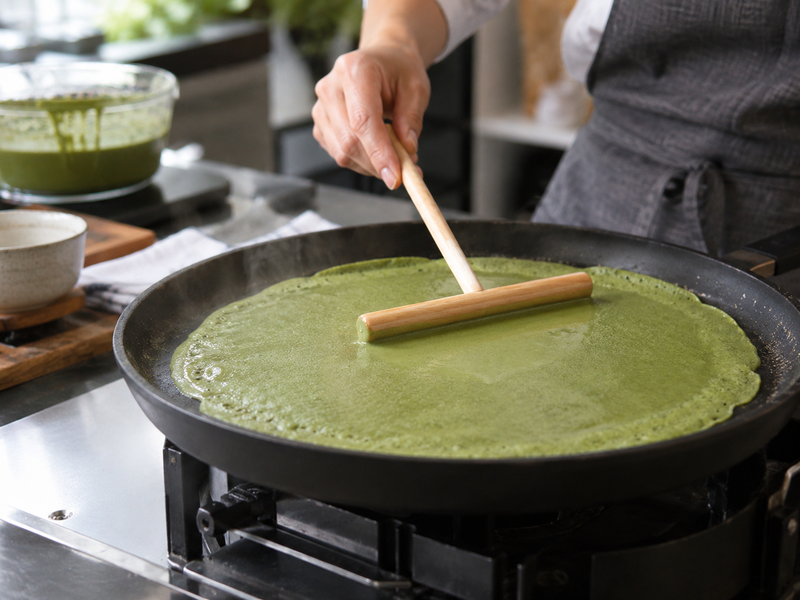
Set a pan or crepe plate temperature range using the equipment’s controls, then validate it by the cooked result. A too-cool surface can leave a pale, rubbery sheet; too much heat can brown matcha before the batter spreads. Measure batter per crepe with a ladle or depositor and use the same pan size. Watch the first and tenth crepes; a pan can heat further as service continues.
Spread promptly and consistently, then turn at an observable endpoint such as released edges and a set top. Document whether the second side needs the same time. If the first crepe is routinely discarded, count it in yield and look for a better preheat routine. A quick photo of acceptable top and underside is helpful for training. Color alone does not establish doneness, so taste and handle a cooled sample too.
6. When should crepes be cooked ahead?
Compare made-to-order with a small stack
Cooking every crepe on order may create a queue, while a large pre-cooked stack can dry or stick. Trial a small advance stack using the intended separator, cover and service interval. Check whether crepes peel apart, fold without tearing and still taste of matcha. Compare that with a freshly cooked control. A stack that looks fine from above may contain damp lower sheets and dry upper ones.
Record how many crepes staff can cook per hour while filling orders, and how many are left at the end of service. A short timed batch may offer the best balance. Prepared batter and cooked crepes containing egg or milk need handling under the café’s plan. The FDA Food Code is a U.S. model reference; local rules set the operation’s controls. Quality tests do not establish a safe storage period.
Use a numbered stack in the trial. Mark the first sheet, one from the middle and the last sheet with a small parchment tab so the tasting team knows where each came from. Check their flexibility before filling, then fill all three with the same measured ingredients. If the earliest sheet cracks and the last remains supple, the usable window may be shorter than the planned service period. If lower sheets become damp, review the cover and separator. The goal is a stack from which staff can take any sheet and make a saleable order, not one that requires sorting through a pile for the best-looking crepe.
Watch the pan operator’s workload during that same trial. One cook may produce an attractive stack when no orders are waiting but lose consistency while turning, filling and taking payment. Record the tasks that interrupt the pan and move them to another station if possible. A small timed production run may yield more saleable crepes than continuous cooking alongside every other café task.
| Service route | Benefit | Test |
|---|---|---|
| Cook on order | Fresh texture | Queue time |
| Small advance stack | Faster assembly | Sticking and drying |
| Full-day stack | Easy early prep | Waste and quality loss |
7. Which fillings work at handoff?
Keep moisture and sweetness in check
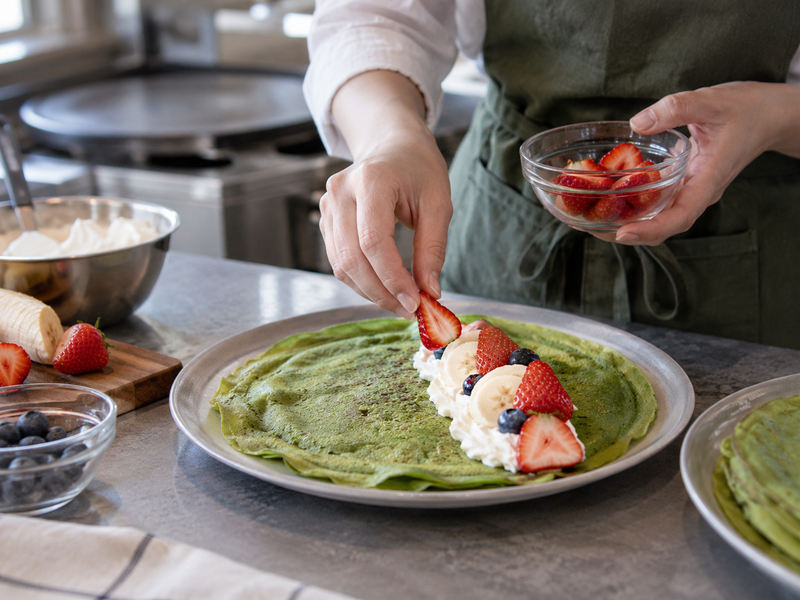
Cream, fruit, chocolate spread and nut butter behave differently in a thin crepe. A wet fruit filling can leak through a warm sheet; a thick spread may tear it as staff apply it. Choose two opening combinations and weigh components per order. Taste the completed crepe after the expected wait. If matcha disappears behind the filling, reduce the filling or reconsider the tea dose before adding more decoration.
Add fragile or cold components at the point of service under the operation’s food-safety plan. A warm crepe can soften whipped cream quickly. Test the placement of sauce so it stays inside the fold or on the plate as intended. Staff should know which ingredients and allergens are in each filling. A substitution changes the final product and may require a different pack or cooking sequence.
8. How should crepes be folded and packed?
Test the travel shape
A triangle suits a plate, while a rolled or cone form may be easier for takeaway. The fold needs to keep the filling inside without making a thick, doughy stack at one edge. Try each shape with the intended filling weight. Put a finished sample in the actual box or sleeve and carry it as a customer would. Inspect leaks, wrapper staining, temperature and whether the crepe can be eaten without a knife.
If the crepe is handed over in a hot package, condensation can soften it. A cold dessert filling creates another handling route. Choose pack materials with suitable food-contact documentation and a clear ingredient label when required. Keep the fold and pack instructions in the station card. A presentation that takes several careful minutes may be unsuitable for a short-order counter, however attractive it looks in a photo.
| Fold | Selling format | Trial concern |
|---|---|---|
| Triangle | Plated dessert | Filling escape at cut |
| Roll | Boxed takeaway | Moisture and sogginess |
| Cone | Handheld snack | Drips and grip |
9. What do yield, cost and allergens show?
Count full saleable sheets
Cost batter from its actual cooked yield, including torn sheets and the preheat test crepe. Add filling, garnish, packaging and labor. A large pan may produce fewer units per batch but allow a higher selling price. Measure the batter deposit and finished crepe weight so a portion remains consistent across shifts. Watch waste from a small advance stack during a limited sale.
The batter commonly contains wheat, egg and milk; fillings may add nuts, dairy or soy. Verify current ingredient labels. The FDA major food allergen guide is a U.S. primary source, while final declarations depend on destination market. Do not infer that using plant milk makes the finished crepe dairy-free if the batter still contains butter or a dairy filling.
10. When is the recipe ready for service?
Repeat the pan routine with another cook
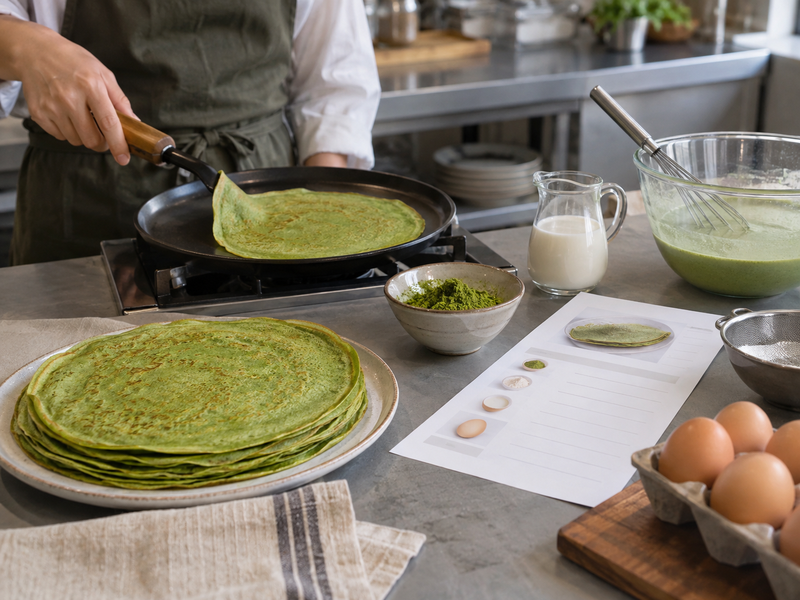
Write the batter formula by weight, mixing and rest method, pan and preheat, deposit amount, spread and turn cues, accepted stack interval, filling weights and fold. Include photos of a plain cooked crepe and finished order. Have a second cook make ten consecutive sheets. Compare diameter, color, tear rate and matcha flavor with the reference. A perfect first sample is less useful than a predictable run.
During a limited sale, log remakes by cause: torn sheet, long wait, cold filling, leak or weak tea. Change one cause at a time. If the café cannot keep filled crepes intact during takeaway, make the product dine-in only or redesign the pack. The menu line is ready when the team can prepare a thin sheet and fill it promptly without relying on one expert crepe maker.
| Decision | Evidence | Next action |
|---|---|---|
| Launch | Low tear rate and stable handoff | Train shifts |
| Revise | One clear process fault | Targeted trial |
| Hold | Filling or handling uncertainty | Complete review |
FAQ
Q1. Does matcha crepe batter need to rest? Compare immediate and rested samples in the actual pan; use the point that gives consistent spreading.
Q2. Why do matcha crepes tear? Batter ratio, pan heat, deposit and turn timing all deserve review.
Q3. Can crepes be made ahead? Test a small stack for sticking and texture under the café’s approved handling plan.
Q4. Which filling shows matcha best? Compare completed orders; a restrained fruit or cream filling may reveal tea better than a heavy spread.
Q5. What should the station measure? Batter per crepe, pan condition, saleable count and filling weight.
Cook ten crepes with the intended pan and two staff members, then serve them in the proposed pack. The tear rate and customer-ready orders will show whether the recipe is a workable café item.