
A matcha gift set has to make sense before and after the ribbon comes off. The recipient should know how to make a drink, the tea should arrive in good condition, and the buyer should be able to reorder the same presentation. This consumer-oriented gift guide suggests possible contents. For a retailer or corporate buyer, the harder work is choosing a recipient, testing the opening experience and specifying every packed component.
Contents
- 1. Who is receiving the gift?
- 2. What makes the gift usable on day one?
- 3. Which matcha belongs in the box?
- 4. How should accessories be selected?
- 5. Does the packaging protect the contents?
- 6. What can a buyer customize accurately?
- 7. Will the printed instructions earn their space?
- 8. How should landed cost be compared?
- 9. What should a shipping pilot reveal?
- 10. How can the set be reordered reliably?
1. Who is receiving the gift?
Choose the experience before the objects
A first-time home user, an experienced matcha drinker and a conference attendee need different gifts. The novice needs a simple first cup and clear care instructions. An experienced recipient might value a distinctive bowl or a well-described tea more than another beginner whisk. A large corporate campaign needs predictable packing, address handling and a presentation that works across many recipients. Define the recipient and occasion in a short brief before requesting samples.
The brief should also say what the recipient is expected to do: make an unsweetened bowl, blend a latte or simply sample the tea. That decision controls the accessory list and recipe card. If a gift will be distributed internationally, check the destination’s import and labeling requirements with qualified partners before choosing a tea-containing box. A tool-only set may be operationally simpler in some cases, but it is a different gift. Design the opening moment around the actual recipient rather than a generic product photograph.
2. What makes the gift usable on day one?
Walk through the first cup
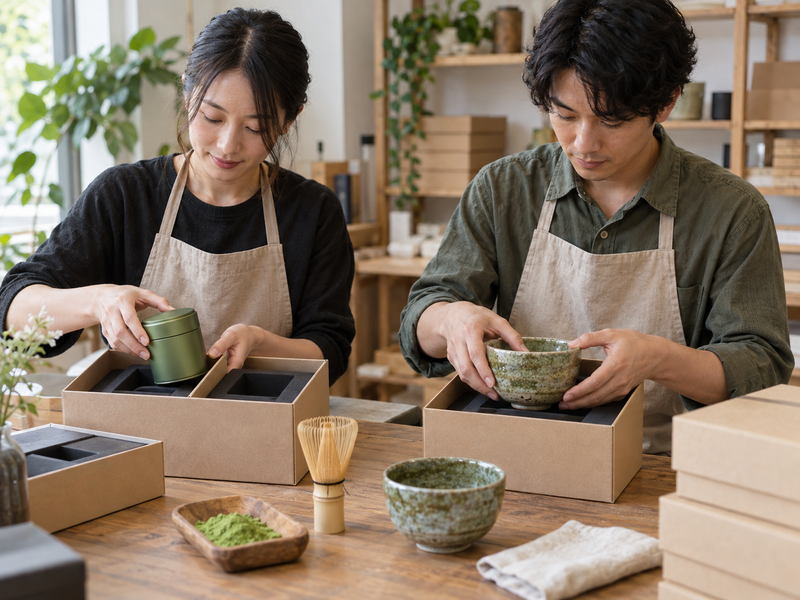
Place a sample set in front of someone who did not select its parts. Ask them to open it, read the card and prepare the featured drink using the box contents plus ordinary household water. Record what they have to fetch or guess. A whisk and bowl with no way to portion tea may still be usable, but the card should be explicit about measurement. If the recipe requires a scale or milk frother, say so rather than implying everything is included.
Keep additions purposeful. A small sifter can help if the supplied powder forms clumps in the planned method; a holder can protect a whisk in regular use. Neither should displace better tea or adequate bowl protection just to increase the item count. Make the gift easy to put away after use, including a method to close or store the opened tea pack. A satisfying unboxing lasts minutes; the preparation and storage experience determines whether the recipient uses it again.
| Recipient need | Useful inclusion | Test |
|---|---|---|
| First drink | Tested tea and concise recipe | Novice makes cup unaided |
| Portioning | Scoop with approximate guide or scale advice | Check dose against scale |
| Whisk care | Clear rinse and dry instructions | Inspect after use |
| Tea storage | Resealable pack or storage direction | Try after opening |
3. Which matcha belongs in the box?
Match tea to the promised drink
Sample the proposed tea in the exact recipe the gift teaches. A matcha that performs well in a sweet latte is not automatically the right choice for a plain bowl, and a dramatic tasting note cannot compensate for a confusing recipe. Record the tea’s product code, origin description as documented, pack size, lot handling and label copy. Review any claims on growing method, grade or testing against the supplier’s documents for the actual product. Broad adjectives are not a substitute for a traceable specification.
Consider the recipient’s likely use rate. A very large pack may sit open for a long time; a tiny pack may not give the user enough attempts to learn. Inspect the closure, seal and opening size. Does the included scoop fit without spilling? Can the tea be packed away cleanly after one serving? For corporate orders, check how lot changes will be handled if deliveries are staged. The gift message should not promise identical sensory notes across batches without a control process.
4. How should accessories be selected?
Prefer fit and replaceability
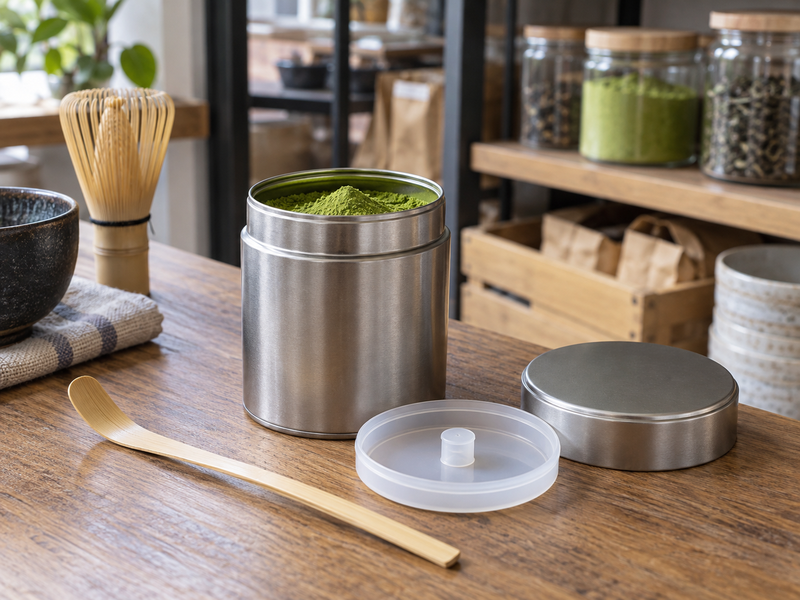
The bowl, whisk and scoop should be tested as one set. The bowl needs room for the proposed whisking motion and a stable base; the whisk should arrive with intact tines and a clear replacement route. The scoop is useful for transferring powder but should not be presented as an exact gram measure without calibration. A decorative accessory that does not fit or serve the chosen recipe can make the gift feel less considered.
Request material descriptions and care instructions for each food-contact item. If the gift is meant for repeated use, ask whether a customer can buy a replacement whisk or bowl. If a ceramic item is handmade, define acceptable variation in color, shape and glaze before ordering. Variation may be part of the appeal, but retailers still need a defensible quality threshold for chips, unstable feet and rough edges. Photograph the approved combination so substitutions are visible at receiving.
| Accessory | Critical fit | Replacement question |
|---|---|---|
| Bowl | Space for included whisk | Can the same size be ordered again? |
| Whisk | Tines protected in pack | Is an equivalent available? |
| Scoop | Fits tea opening | Can it be replenished alone? |
| Sifter | Sifts supplied powder | Are mesh and frame specified? |
5. Does the packaging protect the contents?
Design for the route, not the shelf only
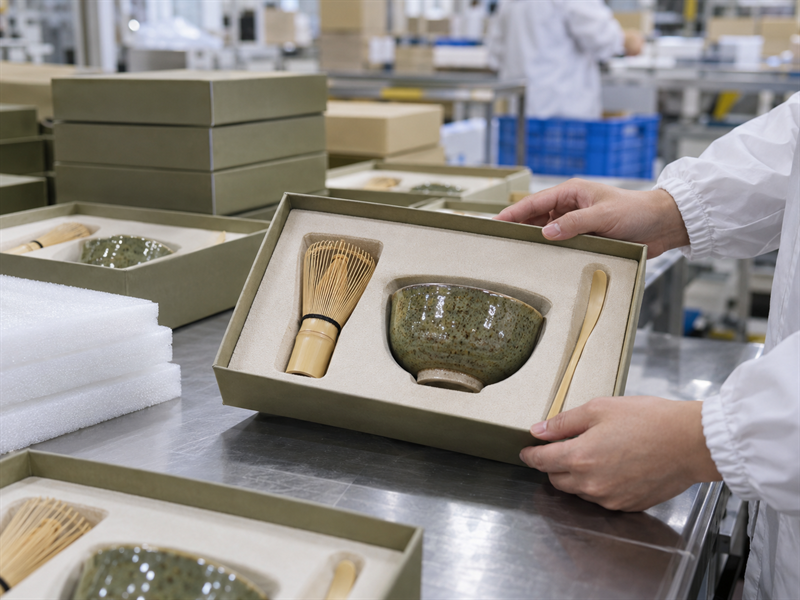
A neat display box can fail in parcel delivery. The bowl needs protection from the outer carton and from the other items. The whisk should not bear weight on its tines. The tea seal must not rub against a sharp ceramic edge. Open and close the box several times to check whether the insert continues to hold components, then test a packed sample through a realistic distribution route. Record damage by component, not merely by whether the outer carton looks intact.
For a retail shelf, check how the box stands, how a customer reads the contents and whether the seal shows tampering. For corporate distribution, verify how an address label and any message card fit without obscuring required product information. Prefer recyclable or reusable materials when feasible, but avoid unsupported environmental claims about a whole package because one piece uses paper. The design decision should be backed by a packed sample, shipping trial and clearly quoted materials.
6. What can a buyer customize accurately?
Separate artwork choices from product claims
Private-label options may include a sleeve, printed box, note card or selected component colors. Ask the supplier which elements can actually change at the quoted quantity, the artwork format required and the proof approval date. Do not assume that a logo on the box means the tea origin, ceramic maker or all assembly steps are custom. Map each claim on the package to the component it describes and the document that supports it.
For corporate gifts, confirm who approves recipient messages and whether variable names or cards are packed by hand or by a documented process. A simple sleeve around a stock, validated set may be more reliable than redesigning every item under a tight deadline. Keep regulatory label content legible even when promotional artwork changes. Before print, inspect a physical proof for color, type size, barcode position and the correspondence between contents and illustrated items. This is where attractive mockups often reveal missing practical detail.
| Custom element | Approval evidence | Common mismatch |
|---|---|---|
| Sleeve or box | Printed proof | Color differs from screen mockup |
| Contents panel | Approved component list | Picture shows absent item |
| Tea claims | Product documentation | Copy exceeds evidence |
| Message card | Final text and names | Incorrect version packed |
7. Will the printed instructions earn their space?
Make one recipe and one care path clear
The first-use card should lead with the intended drink, measured ingredients and a short sequence. If the gift is marketed to beginners, ask a novice to prepare it without a live demonstration. Note whether they know how to open the tea, where to sift, how much water to add and how to move the whisk. Revise the card around those pauses. A large brand story is less useful if the recipient cannot identify the first step.
Then explain care in language that fits the supplied materials. Bamboo whisk instructions should address rinsing and drying; ceramic and metal care should follow their maker’s directions. Provide a way to find replacement parts and tea, but do not turn the card into an aggressive sales sheet. A QR code can hold a longer demonstration, yet the printed card should remain workable if the code is never scanned. Retest the directions if the tea pack size or bowl changes, because the recipe and images may no longer match.

8. How should landed cost be compared?
Price the complete delivered unit
Compare proposals using the same component specification and delivery destination. Add tea, accessories, primary box, protective insert, assembly, print setup, cartons, freight and expected breakage or replacement handling. Obtain quoted minimum quantities and lead times for the actual configuration, not a generic catalog price. A premium-looking box can be inexpensive at one quantity and costly at another because tooling and assembly change the economics.
Model the retail margin or corporate budget using a packed, delivered unit. Consider whether replacement pieces will be held separately and who pays when a bowl arrives damaged. If the set includes perishable tea, the ordering schedule should account for its dated inventory; a large packaging run need not force an equally large tea pack run. Separate reusable artwork costs from recurring unit costs. That makes future reorders easier to evaluate and prevents a launch promotion from hiding the steady-state price.
| Cost line | Ask the vendor | Internal decision |
|---|---|---|
| Components | Quote exact bill of materials | Value of each inclusion |
| Packaging | Identify setup and unit cost | Protection versus presentation |
| Assembly | Define who packs and inspects | Labor and error risk |
| Freight and damage | Quote route and remedy | Real landed margin |
9. What should a shipping pilot reveal?
Let recipients report the weak point
Send a modest pilot through the planned channel to several addresses or sites. Photograph the packed unit before dispatch and ask recipients to photograph it before rearranging contents. Record exterior damage, internal movement, broken parts, powder leaks and confusion during first use. A pilot is especially valuable for a gift because the buyer may never see the recipient’s actual opening experience. Repackaging at the head office can hide a transit flaw.
Include at least one user who matches the target recipient rather than only internal staff who know the product. Ask what they understood from the front panel and whether they could prepare the drink. A customer may admire the bowl yet struggle to find the tea pack under the insert. Fix the sequence and protection before scaling. If a failure occurs, revise one design variable at a time and repeat the route trial. Document the approved pack-out as photographs and a component count for the assembly team.
10. How can the set be reordered reliably?
Create a controlled kit specification
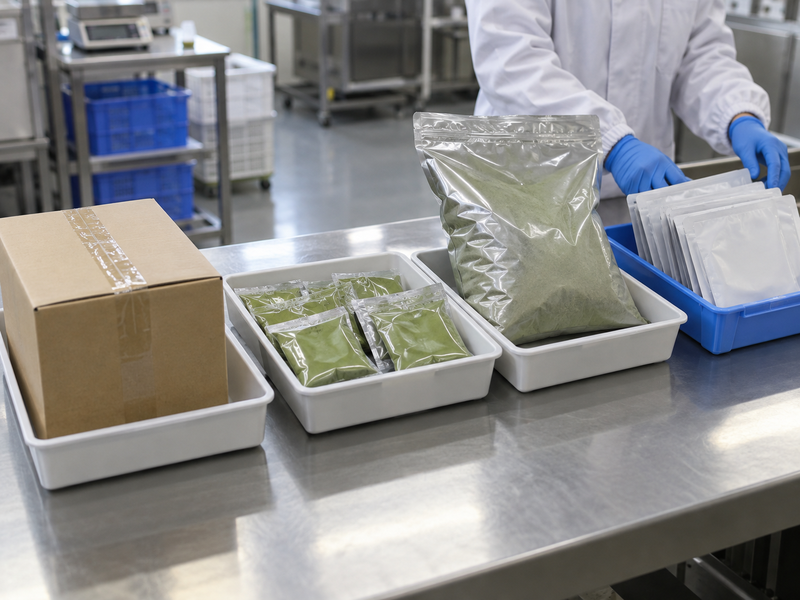
Assign a kit item code and list every component with its own code, quantity, material or product description, approved sample, label revision and packing position. State who is responsible for tea lot rotation and how substitutions are authorized. A repeat order for “the same gift set” is too vague when the box, whisk or pack size may have changed between seasons. Keep the approved physical sample and photographs alongside the procurement record.
Receiving checks should inspect both the outside and the hidden layers: correct tea and seal, intact ceramics, whisk shape, printed message, accessory count and insert fit. If orders are split among several fulfillment centers, use the same acceptance checklist at each. Track returns by failure type so a breakage pattern is distinguished from a recipe complaint. A gift program is successful when a later batch delivers the same usable experience without relying on one person’s memory of the first launch.
| Control | Owner’s record | Check at receipt |
|---|---|---|
| Kit contents | Signed component list | Count and identity |
| Tea and claims | Approved product and label | Lot, seal and copy |
| Presentation | Artwork revision and pack photo | Correct sleeve and insert |
| Service response | Replacement policy | Damaged unit route |
FAQ
Q1. Does a matcha gift set need a bowl? No, if its stated use is a latte or tasting kit with an alternative vessel. Make the needed household items explicit.
Q2. Is a higher item count a better gift? Only if the extra items improve preparation, care or presentation for the intended recipient.
Q3. Should corporate gifts use custom tea? Custom tea may be possible, but a documented, tested tea with a custom sleeve can be easier to deliver consistently.
Q4. How can a buyer reduce ceramic breakage? Test a fitted insert and outer carton on the actual shipping route, then inspect returned samples.
Q5. What should be approved before printing? The physical box proof, component list, tea claims, recipe card and packed sample.
Treat the gift as a delivered first-use experience. When the tea, tools, instructions and pack all support the same cup, the recipient can enjoy it without needing the buyer to explain what was meant.