
For a Doha hotel, the matcha decision is rarely made by one person. A chef may want a particular flavour, a café manager wants a fast drink, purchasing wants a workable minimum order, and the local importer must accept the product and its documents. Search results for matcha supplier qatar include shops, regional distributors, and exporters. The useful question is which route can deliver the exact powder your team approved, in a pack it will use while fresh, with records the receiving team can trace.
The Google result list we checked included Matcha Wholesale Qatar: Japanese Supplier, MOQ, Price & Import Guide among the first ten organic results. Its market overview is a starting point for questions, not a substitute for a current review of your product and shipment. This guide turns those questions into a buyer’s worksheet for Qatar’s hospitality and foodservice teams.
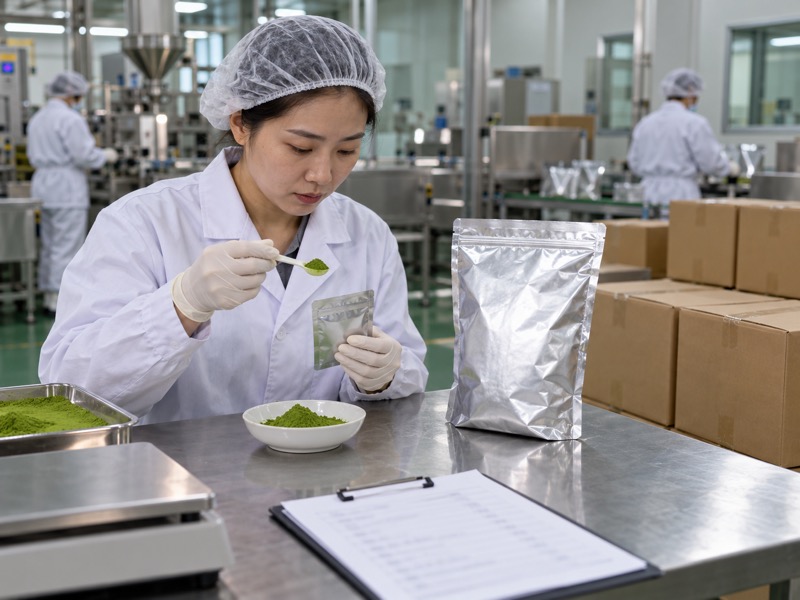
1. What does the Qatar venue need the matcha to do?
Write a brief that a supplier can actually quote
A hotel breakfast counter, a specialty café, and a retail brand do not need the same matcha pack. Describe where the powder will be used, which drinks or foods matter, the number of service points, and the expected monthly quantity. Specify whether the menu uses unsweetened matcha, a premix, or both. If a supplier sends only a general catalogue, ask it to mark the exact products that fit the brief. A pretty sample without a product code is difficult to order twice.
For drinks, list cup volume, water, milk, sweetener, ice, and target matcha grams. For a dessert kitchen, note whether the powder must keep colour in a baked or chilled application. For retail, add pouch size, ingredient and claim review, and who owns the artwork. Have the person who prepares the product sign off alongside purchasing. That small step prevents a low price from overriding a cup that staff cannot serve reliably.
| Use | Trial to run | Pack question |
|---|---|---|
| Café latte | Hot and iced service | Open-pouch turnover |
| Hotel buffet | Busy-period preparation | Multiple service points |
| Pastry kitchen | Actual recipe and holding time | Ingredient handling |
| Retail brand | Consumer preparation | Artwork and batch code |
2. Is a Qatar distributor or direct overseas supplier the better route?
Compare the work each route places on the buyer
A distributor holding regional stock may suit a small venue that needs one or two kilograms at a time and cannot manage import paperwork. An overseas supplier can offer direct access to a chosen processor and pack, but the buyer must have a clear local importer and a realistic shipping schedule. Ask both options for the same product description, net pack weight, lot information, and delivery point. Without these, a delivered local price and a factory price are not comparable.
Look beyond the first shipment. Can the local seller identify the actual producer and lot on the next order? Can the exporter support smaller repeat shipments without changing grade? If a regional distributor repacks or relabels, ask how incoming lots map to outgoing pouches. The route should preserve the tea’s identity and the buyer’s ability to investigate a complaint. Choose the route that solves the business’s service and reorder needs, not the one with the most impressive catalogue.
3. How should a Doha team test a matcha sample?
Reproduce a normal shift rather than a sales demonstration
Code two or three samples and prepare them using the venue’s real water, tools, milk, and cup. Test a plain tea first to understand aroma and finish, then the main menu drink. The bar team should record clumping, dose, colour through milk, and what happens during the ordinary delay between preparation and pickup. A powder that looks vivid in a bowl may be hard to use in a fast iced build; another may need so many grams that its lower quote no longer matters.
Run the winning candidate during an ordinary service period and ask two staff members to prepare it independently. If their cups vary, fix the recipe or training before placing a large order. Keep the sample pouch, its product code, lot, and preparation notes together. When the first commercial lot arrives, repeat the same cup. A blind taste test is useful only if the team can find the approved product again.
| Check | How to compare | Pass evidence |
|---|---|---|
| Freshness | Plain tea aroma | No stale note |
| Milk performance | Same recipe and dose | Accepted flavour and colour |
| Service speed | Normal bar tools | Repeatable preparation |
| Holding | Usual pickup delay | Acceptable settling |
4. Can the supplier identify what is in the pouch?
Separate origin, grade, and ingredient claims
Ask for the growing origin, milling or packing location, full ingredient list, and the supplier’s own grade definition. These details can be different. A brand name that sounds Japanese does not prove Japanese-grown tea, and “ceremonial” is not a universal technical specification. If the product contains sugar, milk powder, flavour, or other ingredients, compare it as a mix rather than pure matcha. Its recipe, labeling, and serving economics will differ.
Request a specification that names the same product as the trial pouch. Note colour, moisture or other stated attributes only when the supplier can explain the method and tolerance. Ask how lot codes work and whether a change of origin or recipe triggers a new code and notice to the buyer. A hotel buying for several outlets needs one accepted standard, not several similarly named powders arriving under one catalogue description.
5. Which records should the importer review before ordering?
Build the packet around the exact product and channel
Have the named Qatar importer review a draft specification, ingredient statement, pack and label proof, lot-linked test record where applicable, draft invoice description, and the supplier’s proposed shipping documents. The importer should check current requirements with the relevant local authorities and its broker. The Qatar Ministry of Public Health is an official starting point for current public-health information; use the importer’s current procedure for the specific food category. Avoid treating a different company’s old clearance as a reusable approval.
Ask what is required for plain foodservice matcha, retail pouches, and formulated mixes separately. Claims such as organic or halal should be supported by documents appropriate to the actual product, supply chain, and market, rather than by a logo copied into a brochure. The importer can decide what evidence it needs and whether a claim should be used at all. Mark each document with the product code and version so the team does not approve one pouch and import another.
| Document | Question | Owner |
|---|---|---|
| Specification | Is this the sampled product? | Supplier |
| Lot record | Does it identify the shipment? | Supplier or lab |
| Artwork proof | Does local review accept it? | Brand and importer |
| Commercial papers | Do description and quantity match? | Exporter and importer |
6. How should a buyer approve packs and labels?
Test the pack on a working bar
Request a filled sample of the proposed commercial pouch. Check its seal, ease of opening, scoop access, closure after use, and how the lot and date are marked. A big bag may be inexpensive to fill, but a low-volume bar can expose the tea repeatedly before it is consumed. A hotel with several counters may prefer sealed inner packs so each station opens only what it will use soon. The correct size follows actual turnover and storage practice.
Check the outer carton too. Does it protect pouches from crushing and moisture during the planned journey? Can receiving staff read the case count and lot? The importer should approve the final label version before production. If a regional partner repacks, decide who is responsible for the finished label and for keeping the lot link. A pack review should end with photographs or a signed sample, version number, and a clear rule for substitutions.
7. What minimum order makes sense for a Qatar launch?
Buy enough to learn, not enough to inherit stale stock
Start with expected cups per week multiplied by tested grams per cup. Add a measured allowance for training and waste, then compare that demand with the supplier’s MOQ, pack size, shelf life, and replenishment time. Use a conservative launch forecast. A new menu can be slower than expected, while a successful signature drink can consume stock surprisingly fast. Both outcomes are easier to handle with a supplier willing to discuss a realistic reorder rhythm.
Ask whether sample costs can be credited, whether a first order can include two grades, and whether later orders can be scheduled. Do not assume a price break on a larger order is a saving if the venue cannot use the powder while it remains at the accepted standard. The matcha wholesale MOQ guide gives a general calculation; Qatar buyers should add the chosen route’s real receiving and distribution time.
8. How should the delivered price be compared?
Price the accepted serving, including the route
Ask for written quotes showing currency, net kilograms, pack configuration, delivery term, lead time, and included services. For direct imports, the importer or broker should supply current local charges for the exact product and route. For a distributor, clarify delivery within Qatar and whether the seller bears the risk before the venue receives the cartons. Do not compare a factory quote with a local doorstep quote as if both were the same service.
Calculate tea cost per accepted cup from the actual dose. Include shipping, testing, unusable stock, and the cost of a service disruption in a practical comparison. A powder that needs a higher dose may cost more per drink even if its kilogram price is lower. A small café may reasonably pay more per kilogram for dependable small deliveries. Keep the assumptions on the quote sheet so a later price change can be traced to powder, freight, pack, or recipe.
| Cost item | Direct route | Distributor route |
|---|---|---|
| Powder | Quoted by exporter | Included in local price |
| Transport | Confirm term and actual quote | Check delivery area |
| Local entry | Importer confirms | Usually handled before resale |
| Quality loss | Buyer measures | Buyer measures |
9. What should be inspected when the first order arrives?
Receive the lot against the approval file
Before dispatch, agree on who will receive and inspect the order. At receipt, compare case count, pouch seals, product code, and lot number with the invoice and approved sample. Photograph any damaged carton before unpacking it. Move sound stock to suitable storage promptly, following the supplier’s guidance. Do not let a bar begin using an unverified new lot because it arrived during a busy shift.
Make the approved drink from the arriving powder. If dose, colour, or flavour differs materially, pause that lot and contact the supplier with the exact code and preparation record. Give the seller a fair chance to investigate, but keep the previous menu standard in place until the team accepts a change. The first order is a trial of documentation, packaging, transport, and cup performance together.
10. How can Qatar venues keep the next order dependable?
Keep a small supplier scorecard alive
Track the first few orders by lot, arrival date, pouch condition, approved dose, quality notes, and response time. Use actual grams consumed to set a reorder point; purchase-order quantities alone can hide training waste or unexpectedly popular drinks. A venue with several outlets should record which lot went to which station. If a complaint appears, that record lets the team isolate the affected stock rather than guessing across the whole business.
Ask for written notice before the supplier changes origin, blend, pack, processing site, or delivery route. A change may be acceptable after a short trial, but it should not arrive unannounced under the old product name. Review the delivered cost per cup quarterly or whenever a major quote component changes. A supplier is worth retaining when its product, papers, and response remain steady after the first enthusiastic sample call.
| Review field | Evidence | Action if it changes |
|---|---|---|
| Cup quality | Reference and lot samples | Retest recipe |
| Pack integrity | Receiving log | Hold affected units |
| Document fit | Importer sign-off | Resolve before dispatch |
| Replenishment | Sales and lead-time record | Adjust reorder point |
Frequently asked questions
Q1: Is a Qatar distributor always more expensive?
Compare full delivered cost and service, including minimum order and the work of direct importing. The lowest kilogram quote is not always the lowest usable cup cost.
Q2: Should a hotel use one matcha for drinks and desserts?
Test each use separately. One powder may work in both, but the hotel should approve that result rather than assume it.
Q3: Who checks current Qatar import requirements?
The named local importer should review the exact product, pack, claims, and shipment with current official guidance and its broker.
Q4: Why keep the sample pouch?
Its product and lot information give the receiving team a reference when the commercial order arrives.
Q5: When should a venue reorder?
Use actual consumption and observed replenishment time to set a stock trigger, then revisit it after the first few shipments.