
A shaped matcha sugar cookie has two jobs: taste unmistakably of tea and come out of the oven with the intended edge. A recipe that makes a lovely scooped cookie may spread too much for cutters, icing, or branded gift boxes. Bites by Bianca’s matcha sugar cookies show the consumer appeal of the flavor. This commercial guide focuses on a cut-out dough that can be rolled, decorated, packed, and repeated across shifts. The bakery should approve the finished decorated cookie, not a raw shape on a tray.
1. Which cookie format is the production team making?
“Sugar cookie” can mean a soft scooped round, a crisp cut-out, or a tender iced biscuit. Choose one physical target before adjusting ingredients. A soft scooped formula is designed to spread; a cut-out formula needs enough structure to hold a circle, leaf, or seasonal design. Record target thickness, finished diameter, edge definition, snap or bend, and whether icing will cover the surface. These choices affect the amount of tea visible and how the cookie eats.
A development brief should describe the sale format as well. A café counter cookie can be thicker and softer than a mailed gift biscuit. A decorated party favor needs a dry surface and a pack that prevents contact marks. Make a plain control and an iced control. Taste both after the proposed hold. Icing can make a balanced plain cookie taste too sweet, so approval cannot stop at the undecorated base.
| Format | Shape requirement | Packaging pressure |
|---|---|---|
| Scooped soft cookie | Mostly round, some spread | Protect tender center |
| Cut-out cookie | Clean cutter edge | Prevent breakage |
| Iced gift cookie | Flat, stable surface | Prevent sticking and smear |
| Mini assortment | Similar thickness and color | Control mixed-batch bake |
2. What dough properties protect the cut edge?
A cut-out dough needs enough cohesion for rolling and lifting without tearing. Too much butter or a warm dough can make shapes stretch between the board and tray. Too much flour can keep an edge sharp while producing a dry, dull bite. Develop a control formula by weight. Record flour type, fat condition, sugar type, egg addition, and final dough temperature. Change one variable at a time. The useful question is not whether dough feels pleasant in a bowl; it is whether it can be cut, transferred, and baked by the staff who will make it.
Roll a test sheet at the proposed production thickness. Cut circles first, then the most difficult seasonal shape. Compare a cookie from the center of the sheet with one from rerolled scraps. Reworking changes dough temperature and gluten development, which may change spread and texture. Set a rule for how many rerolls are acceptable and include scrap loss in costing. If the dough becomes sticky after one reroll, a slower line or a different formula may be needed.
Make transfer a measurable step
Count torn shapes and distorted corners during a timed bench run. A cutter that makes perfect shapes only when the pastry chef works slowly will not scale. Test the real bench flour, parchment, tray, and spatula.
3. How much matcha gives a clear flavor without weakening dough?
Use weighed matcha additions in a controlled series rather than a spoon measure. Fine powder contributes dry solids and color as well as flavor. Increasing it may make dough feel drier or more prone to cracking, depending on the base formula. Keep other ingredients fixed in the first comparison. Taste baked cookies plain and after icing. A powder that looks vivid raw can bake dull; a strong tea note can disappear beneath sweet decoration.
Compare powders at equal addition, then at the amount required to reach the same finished tea impression. This reveals cost per approved cookie. Sift or pre-blend matcha with flour to reduce green pockets. Inspect the rolled sheet before cutting; dark flecks may become more visible after baking. Keep an approved lot sample. If the powder changes, repeat the bake in the actual dough rather than judging the replacement by dry aroma alone.
| Trial | Hold constant | Judge after baking |
|---|---|---|
| Lower tea addition | Base dough and thickness | Is flavor recognizable? |
| Standard addition | Same oven load | Color and texture |
| Higher addition | Same sugar and fat | Bitterness and cracking |
| Alternative powder | Same tea mass | Flavor per finished cost |
4. How should dough chilling and rolling be controlled?
Chilling can make cut-outs easier to transfer and reduce unwanted spread, but an overly cold sheet may crack at narrow points. Define a workable dough temperature range through trials, then translate it into an operational instruction. “Chill until firm” is vague when tray sizes, refrigerator loads, and room temperatures vary. Measure sheet thickness with guides and check several points across the slab. Thin areas brown faster and make icing look uneven.
Test whether to chill before rolling, after rolling, or after cutting. A large cold block may take extra labor to roll; a flat sheet can chill faster but needs shelf space. Cut shapes from the first and last sheets of a batch and compare them after baking. If the last sheet spreads more, dough warming during service is a likely cause. Record bench time and scrap temperature. A bakery may need smaller dough batches rather than a different recipe.
Limit flour on the bench
Excess dusting flour changes the surface and leaves pale patches on a green cookie. Weigh or standardize dusting, brush off residue, and compare with rolling between suitable sheets. Evaluate staff speed as well as appearance; a method that saves flour but doubles labor may not fit a high-volume line.
5. What oven test predicts edge definition and green color?
Bake a tray map. Put identical shapes at the corners and center, then record spread, browning, and surface shade. Ovens often have hot zones, and a green dough makes uneven browning conspicuous. Define the endpoint by structure and bottom color, not just a timer. A cookie may look pleasantly green on top while the underside is too dark for the intended flavor. Test with the actual tray, liner, oven load, and rotation rule.
Measure the width of raw and cooled cookies using the same points. That gives a practical spread measure for each shape. Check whether narrow leaf tips or letter corners brown before the body sets. If they do, simplify the cutter or change thickness before raising matcha. Let cookies cool fully before judging final dimensions; warm biscuits can still be fragile and deform during transfer. A darker edge may be acceptable for a plain café cookie but not for an iced gift set with a precise silhouette.
| Bake observation | Likely variable to inspect | Commercial risk |
|---|---|---|
| Rounded corners | Dough temperature or spread | Lost design detail |
| Dark undersides | Tray, liner, hot zone | Bitter finish |
| Pale soft center | Thickness or endpoint | Fragile pack |
| Uneven green | Mixing or oven pattern | Inconsistent display |
6. Which icing supports the tea flavor and shape?
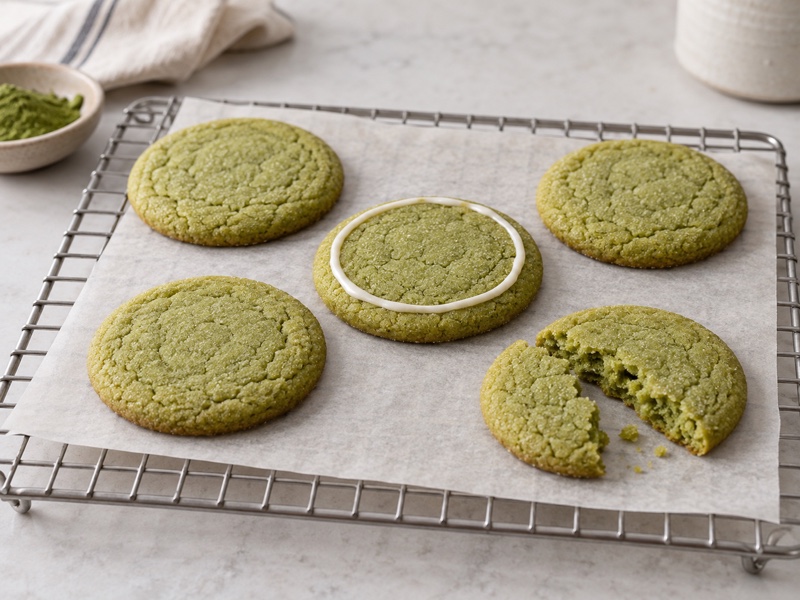
An iced matcha sugar cookie can look polished while tasting mostly of sugar. Decide whether icing is a full flood, a partial line, or a small accent. Taste each version with the same cookie. A partial decoration leaves tea visible and often lets its flavor lead; a full white surface may suit an event design but change the product’s identity. Choose icing color based on the brief and confirm any color ingredients with the label team.
The surface must be cool and dry before decorating. Test whether the icing spreads over raised edges, pools at the center, or flakes during packing. Record icing mass per cookie, because a small visual change can meaningfully change sweetness and cost. If staff use different piping bags and tips, compare line width and drying behavior. Check decorated samples after stacking or tray movement, not only on a flat table. A surface that appears dry may still transfer color to a sleeve.
Make decoration repeatable
Create a photographic standard showing acceptable border width, fill coverage, and defects. Train staff with a timed batch. If detailed piping creates high reject rates, simplify the design before raising the selling price to cover waste.
7. How should cookies be cooled and packed?
Cookies must cool enough that packaging does not trap moisture or damage icing. Map cooling rack layout and time for the actual room conditions. Measure product temperature or define a tactile and visual endpoint supported by trials. Pack a few cookies too early during development to see the failure mode; then set the production rule before launch. Check whether the cookie softens, sticks to film, or forms condensation in a sealed sleeve.
Test pack strength using the real route: café display, local delivery, or parcel shipping. A rigid tray may protect shapes but increase packaging cost. A flexible bag may work for circles yet break pointed designs. Open packs after vibration and inspect edges, icing, and crumb accumulation. Commercial shelf life needs product-specific sensory and, where relevant, safety evidence. Do not adopt storage times from a home recipe for a different size, icing, and package.
| Pack option | Benefit | Failure to test |
|---|---|---|
| Individual sleeve | Portion hygiene | Smear or moisture trap |
| Rigid tray | Shape protection | Cost and excess space |
| Window box | Visual sales | Light exposure |
| Opaque box | Light protection | Hidden breakage |
8. What should the allergen and label review cover?
A conventional sugar cookie may contain wheat, egg, and milk; icing or decorations can add other ingredients. Review the actual recipe and shared equipment, not a generic cookie label. For US packaged foods, the FDA identifies major food allergens and labeling duties. Other markets have their own requirements. If the product is sold as “matcha,” keep evidence of the tea ingredient and amount used. Avoid implying a health benefit merely because the cookie contains green tea.
Packaged gift sets need ingredient order, net quantity, date marking, and any other required details checked for the destination. If icing changes for a holiday run, update the formula and artwork review. A bakery may use the same base cookie across several colors and toppings, but each finished product can have a different ingredient and allergen profile. Put version numbers on recipe cards and labels so packing staff do not reach for an outdated sleeve during a busy week.
9. Which powder and purchasing terms should a bakery request?
A supplier should provide a lot-linked sample, specification, origin and traceability information, storage guidance, and market-relevant quality documents. Compare powder in the actual baked cookie at the approved dose. Dry powder color alone is not a reliable purchase test. Ask about pack size: a large open bag in a warm bakery may lose freshness before it is used, even when its price per kilogram looks favorable. Plan storage and replenishment around realistic consumption.
Matcha Village’s pure matcha powder can be trialed for bakery use. State the cookie style, oven conditions, desired natural color, volume, and delivery market when requesting options. Discuss how lot changes are communicated. Keep a retained powder sample and a few packed cookies from the approved batch. When a replacement lot arrives, run the control cookie before committing to a decorated production run.
| Buyer item | Why request it |
|---|---|
| Lot-linked sample | Reproducible bake trial |
| Powder specification | Ingredient approval |
| Pack formats | Freshness and waste control |
| Lead time | Seasonal production planning |
10. What makes a shaped-cookie launch test credible?
Run a timed batch using final cutters, bench setup, oven load, icing method, and pack. Include new staff, not only the developer. Record dough losses, rerolled scrap, broken shapes, icing rejects, and cookies that fail the final color target. Taste plain and iced controls after the full intended holding period. Count saleable units and calculate margin from that number. A theoretical dough yield can flatter an intricate design whose tips break in transit.
Approve a photo standard and a written defect rule for spread, dark edges, green color, icing marks, and broken packs. Assign an owner for powder substitution and label changes. Start with a simple circle or shape that survives handling; expand the cutter range only after the first format earns its place in production. Request powder samples linked to real lots and make the buying decision from finished, packed cookies rather than from a bright bowl of dough.
FAQs
Q1: Are these the same as scooped matcha sugar cookies? They share a flavor idea, but a cut-out formula needs a separate shape and handling test.
Q2: Why do cut edges blur? Warm dough, formula balance, excessive reworking, or oven conditions may contribute. Change one variable at a time.
Q3: Should matcha go into icing or dough? Dough gives tea through each bite; icing can add or hide it. Test the complete decorated cookie.
Q4: Can a bakery use a vivid green powder without testing? No. Judge flavor, color, and structure after baking and packing, with a lot-linked sample.
Q5: How is commercial shelf life set? Test the finished cookie in its final pack and route, including texture, appearance, and applicable safety checks.