
A matcha starter set should help a newcomer make a second cup, not just an attractive first photograph. MatchaWhat’s tier comparison shows how sets can grow from basic tools to fuller assortments. For a café or retailer, the key question is simpler: what does a beginner need to open the box, portion the tea, prepare the drink and care for the tools without live coaching? Test that whole journey before deciding which tier to stock.
Contents
- 1. What is the beginner’s first drink?
- 2. What is the minimum workable kit?
- 3. Is the bowl forgiving to use?
- 4. How should the whisk be specified?
- 5. Does the powder suit the instruction?
- 6. How will a novice measure and adjust?
- 7. Is the quick-start guide clear?
- 8. Can the customer care for every part?
- 9. What belongs in each price tier?
- 10. How should the set be pilot tested?
1. What is the beginner’s first drink?
Design for one achievable outcome
Begin with a specific beverage: a small hand-whisked matcha, an iced latte or another tested format. The first instruction should not ask a novice to choose among six recipes before learning what the tools do. For a retailer, this decision also helps staff recommend the set in one sentence. A customer seeking a sweet latte may not need the same bowl capacity or tasting notes as a customer exploring plain matcha.
Prepare that drink using a sealed production sample of the proposed tea and only the contents promised in the box. List any ordinary household item the customer must provide, such as a cup, water or milk. If the recipe silently assumes a thermometer, blender or kitchen scale, either include a workable alternative or state the requirement. Avoid describing a set as “complete” until someone outside the product team can actually make the featured cup without being guided through the missing steps.
2. What is the minimum workable kit?
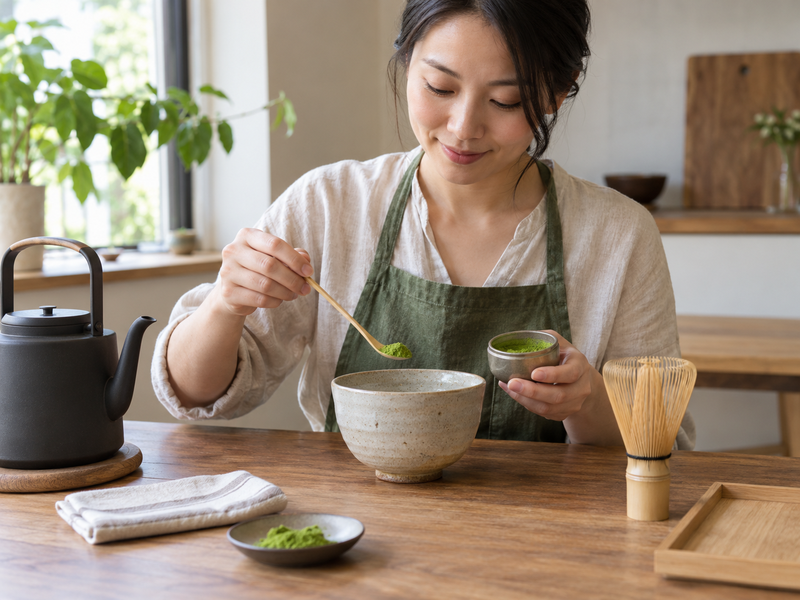
Protect the core before adding extras
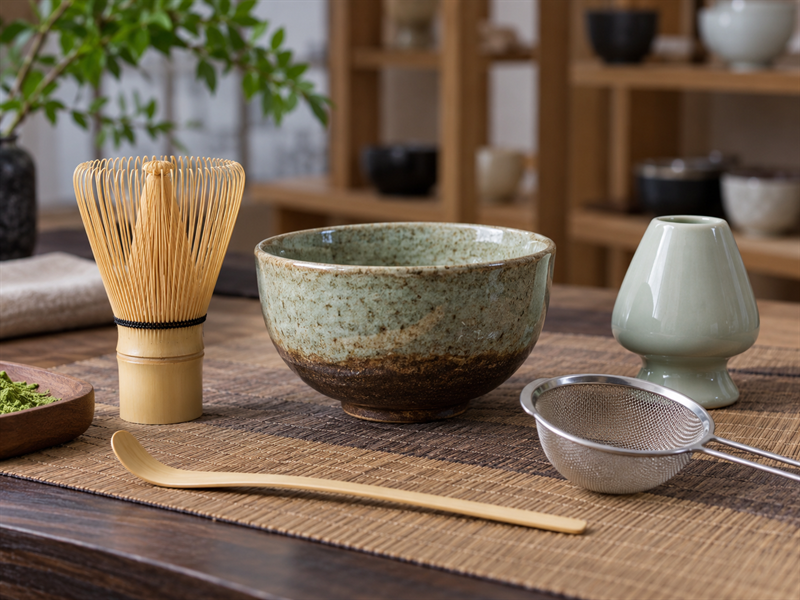
For a hand-whisked first bowl, the core is tea, a suitable vessel, a usable whisk, a way to portion powder and a concise method. A bamboo scoop is common, although its amount varies and should be described as approximate. A sifter can be valuable with a powder that clumps; it should be selected after testing, not added automatically. A whisk holder aids storage but cannot rescue a poor whisk or bowl. Put the budget into the core experience first.
A café may sell a tool-only starter set to customers who already buy its tea separately. That can work if the shelf label makes the exclusion obvious and recommends a compatible tea pack. For online retail, photograph and list the exact box contents, including whether tea is included. Ask suppliers for part-level costs and replacement availability. If a beginner damages a whisk, the business should be able to provide a compatible replacement without requiring a second whole kit.
| Piece | First-use role | Decision test |
|---|---|---|
| Tea | Provides the drink | Taste in stated recipe |
| Bowl | Allows comfortable mixing | Novice whisking trial |
| Whisk | Disperses powder | Tine and handle inspection |
| Portion tool | Guides quantity | Compare with a scale |
| Sifter | Handles clumps if needed | Test with supplied tea |
3. Is the bowl forgiving to use?
Make space for imperfect technique
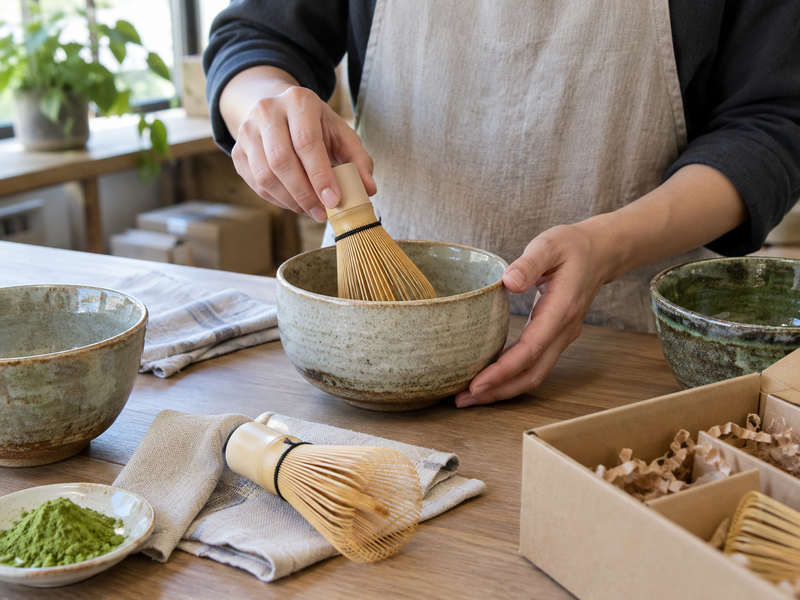
A newcomer may move the whisk more widely or hold it at an odd angle. Test bowls with people who have not practiced the brand’s preferred motion. The bowl should sit steadily on the counter, have enough interior width for the supplied whisk and allow the user to see the powder before adding water. A smooth interior can be easier to inspect and clean than an elaborate texture that catches powder. Those features matter more than a claim that a particular shape always makes superior foam.
Check pouring too. Some users will transfer a matcha mixture into a tall glass for a latte; a bowl that spills down the side can make the set frustrating. Look at the rim and foot for sharp or uneven areas, and request material and care information for the exact item. If the set includes a ceramic bowl, account for shipping protection and the customer’s storage space. A beautiful bowl that arrives chipped is not beginner friendly.
4. How should the whisk be specified?
Evaluate the supplied tool in hand
Inspect several units of the proposed whisk, not just a photograph. Tines should be intact and reasonably consistent, the handle should feel secure, and the whisk should move freely inside the chosen bowl. Use it in repeated bowls with the planned water volume and powder dose. A delicate whisk may perform well in an experienced hand but be easily damaged by a beginner’s pressure or by poor packing. Ask the vendor how it is protected in the box.
Care instructions must be specific to the actual whisk. Test rinsing and drying exactly as the customer card describes. If a holder is included, verify its shape fits the whisk and does not pinch the tines. Provide a replacement part or clear specification for one. A starter product should normalize the idea that a whisk wears with use rather than imply it is permanent. Avoid promising a fixed lifespan, since technique and care affect wear.
| Whisk issue | Sample check | Customer consequence |
|---|---|---|
| Bent tines at arrival | Open shipped samples | Poor first use |
| Bowl mismatch | Test full whisk motion | Splashing or damage |
| Unclear care | Follow printed card | Premature wear |
| No replacement | Request part code | Entire set hard to maintain |
5. Does the powder suit the instruction?
Make the recipe with the actual tea
A recipe card written with one matcha may disappoint when the production pack contains another. Taste and prepare the intended commercial product, checking the amount of powder, water and any milk or sweetener in the actual instructions. If the tea is presented as suitable for a plain bowl, test it that way; if the set is positioned around lattes, judge it in that drink. A supplier’s grade word alone does not establish a universal flavor or preparation result.
Request the tea’s product identification, lot handling, pack size, label information and any documents supporting specific claims. Avoid turning “ceremonial” or “premium” into unsupported statements about harvest timing, pesticide status or health effects. The pack should open cleanly and close or store sensibly after the first use. For a low-volume home user, a tea package that stays exposed to air and moisture can undermine the later experience. Include storage advice appropriate to the actual pack and supplier directions.
6. How will a novice measure and adjust?
Give a starting point and a way to learn
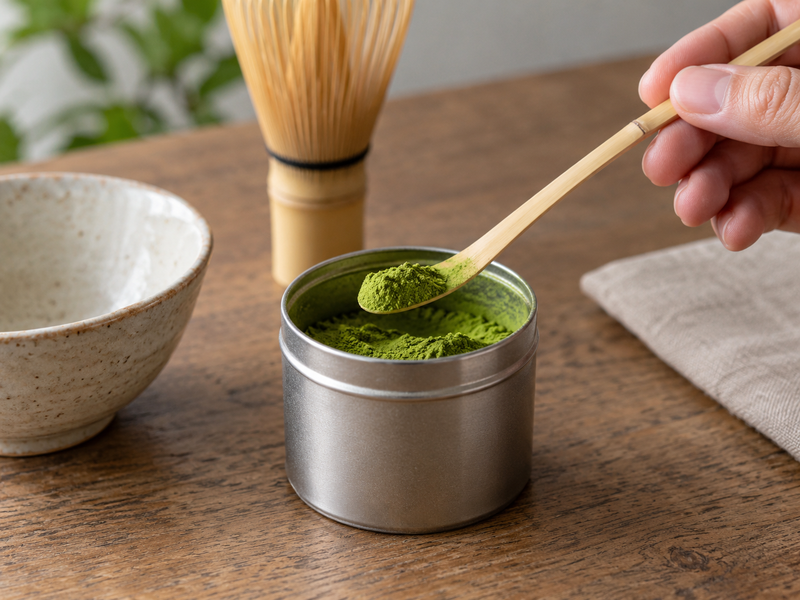
Write the recipe with a measured amount the team has tested. If a scale is not included, explain that the supplied scoop gives only an approximate portion and show how many level or heaped scoops the specific trial used. Do not assert that every bamboo scoop carries a fixed gram weight. Powder density and technique vary. A small, inexpensive scale can be recommended for users who want repeatability, particularly if the set is sold through cafés with precise recipes.
The card should say what to adjust if the drink is too intense, thin or clumpy. Keep changes separate: alter the tea amount or water amount first, rather than changing temperature, whisking and milk together. A sifter may remove dry clumps, but it does not correct a heavily overfilled bowl. For staff selling the kit, a short demonstration using the same measures as the card can build confidence without creating a method the customer cannot repeat at home.
| Problem on first cup | Check first | Simple adjustment to test |
|---|---|---|
| Too strong | Powder amount | Reduce measured tea |
| Too dilute | Water or milk amount | Reduce liquid or increase tea modestly |
| Dry specks | Mixing and dry clumps | Test sifting and initial small-water mix |
| Splashing | Bowl fill and whisk motion | Use planned vessel level |
7. Is the quick-start guide clear?
Let a beginner find the next action
Use a short sequence with plain verbs: open, measure, add water, mix, pour or drink, then clean. The card should be legible while hands are busy and should identify the included parts by the names used on the product page. If the set supports both a plain bowl and a latte, make the primary path visually dominant and put the alternative beneath it. Too many equal-weight options can leave a new customer unsure which one to try first.
Run an uncoached test. Give the closed box to several users matching the target audience and observe the first ten minutes. Note every question they ask, the point at which they search online, and any part they leave unused because its purpose is unclear. A QR video can extend the guidance, but the printed card should stand alone if a phone is unavailable. Revise the card after seeing actual behavior, then test it again with a fresh user who has not heard the team’s explanation.
8. Can the customer care for every part?
Plan the moment after drinking
Beginners often do not know that different pieces may require different care. Give separate instructions for the whisk, bowl, scoop, sifter and tea pack, based on supplier guidance and material evidence. A generic “wash everything” direction may be unsuitable for bamboo, decoration or packaging. Check whether the customer can dry the whisk and put the tea away without improvising storage. If the box is meant to hold the kit between uses, see whether damp tools have a place outside the sealed tea compartment.
For a café selling multiple starter sets, staff should know what to recommend if a component arrives damaged. Maintain a replacement route and a simple defect record. Inspect units after the planned cleaning method during development to catch glaze or whisk issues early. Care is part of the product promise: a kit that makes a good first cup but cannot be stored cleanly will not encourage a second one.
| Part | Care instruction to validate | Reuse check |
|---|---|---|
| Whisk | Rinse and dry per maker | Tines remain serviceable |
| Bowl | Approved washing method | Finish remains sound |
| Tea pack | Close and store per label | Powder remains protected |
| Sifter | Remove trapped powder | Mesh remains clear |
9. What belongs in each price tier?
Change usefulness, not just item count
An entry tier might provide the minimum workable tool group and a small tea pack. A middle tier could add a better-protected ceramic bowl or a sifter that the supplied tea benefits from. A higher tier may offer a distinct bowl material, more tea or stronger presentation. These are examples, not a universal lineup. Build each tier around a customer decision the retailer can explain, and test every tier independently. Do not let the entry kit feel intentionally unusable so that customers must upgrade.
Compare complete landed costs, including packaging, assembly, freight, returns and replacement support. Ask vendors for quotations on the exact configurations and quantities. A low price on a component list may disappear once breakage protection and print are included. Stock planning matters too: if all tiers share the same whisk and tea SKU, replacement and replenishment can be simpler. If components vary, make the differences visible on labels and in the sales script.
10. How should the set be pilot tested?
Follow the kit from warehouse to second cup
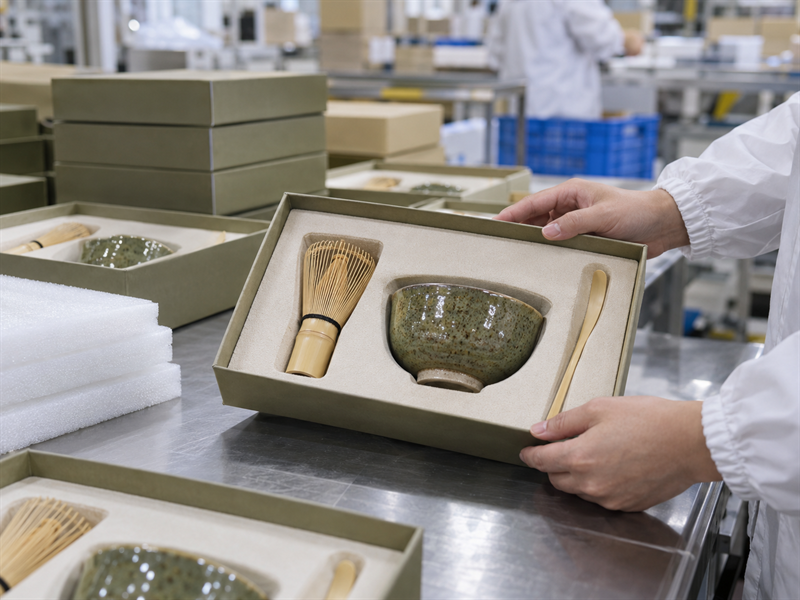
Ship a small sample through the intended channel and inspect the unboxing, seal, ceramic protection and whisk condition. Then ask beginners to make the first cup without coaching and, later, a second cup after storing the tools. The second attempt reveals whether instructions were retained and whether the tea package and whisk care work in practice. Collect specific observations, not only a satisfaction score: where did they spill powder, hesitate or change the recipe?
Lock the approved bill of materials, supplier item codes, tea identification, instruction revision, box layout and master sample. At reorder, compare delivered units to those records, including any substitution in the tea or bowl. Update the preparation card when a component changes. A starter set succeeds when a new customer can open it, make the promised drink and maintain it well enough to try again; that outcome can be tested before a large purchase.
| Pilot stage | Observation | Decision |
|---|---|---|
| Delivery | Chips, bends, seal damage | Revise protection |
| First cup | Confusion or missing tool | Revise contents or card |
| Cleaning | Unclear or awkward care | Revise design and guidance |
| Second cup | Repeatability and storage | Approve or retest |
FAQ
Q1. Does a beginner need a bamboo whisk? For the hand-whisked recipe taught by the set, include a usable whisk or state the alternative method clearly.
Q2. Must a starter set include matcha powder? A tool-only kit can work, but the product listing should say so and identify what tea the customer needs.
Q3. Is a scoop an exact measuring tool? No. Calibrate it with the supplied tea and describe its portion as approximate.
Q4. What should be tested before a bulk order? A shipped unit, an uncoached first cup and the customer’s second cup after cleaning and storage.
Q5. How can a retailer reduce returns? Show exact contents, give clear first-use instructions and protect the whisk and bowl in transit.
Keep the first version focused. A short, successful preparation path is more valuable to a new user than a long list of accessories whose purpose is not clear.