
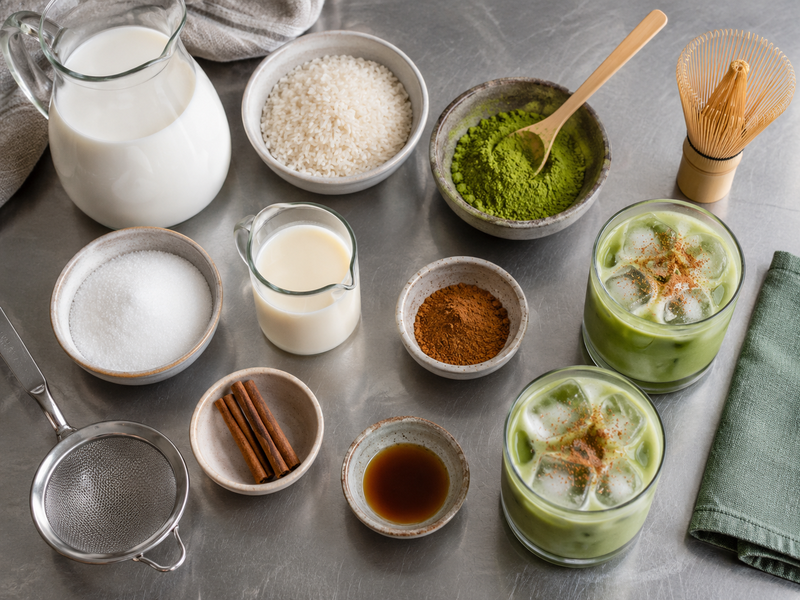
Matcha horchata combines tea with a rice-and-cinnamon drink, but the café has to decide whether to prepare that base from scratch or buy one. Each route changes labor, sweetness and consistency. ArtfulTea’s matcha horchata uses soaked rice, cinnamon, plant drinks and a separate matcha pour. A production recipe should measure both layers, test them mixed and review handling before a batch enters service. Matcha Village’s sample service can support the tea comparison.
Contents
- 1. What should matcha horchata taste like?
- 2. Should the café make or buy the horchata base?
- 3. How should rice and cinnamon be controlled?
- 4. Where should sweetness be adjusted?
- 5. How should matcha be prepared for the base?
- 6. What build works for iced service?
- 7. Which batch handling steps need review?
- 8. How should ingredients and allergens be described?
- 9. What is the actual cost per cup?
- 10. When is the drink ready for the menu?
1. What should matcha horchata taste like?
Set the order of flavors
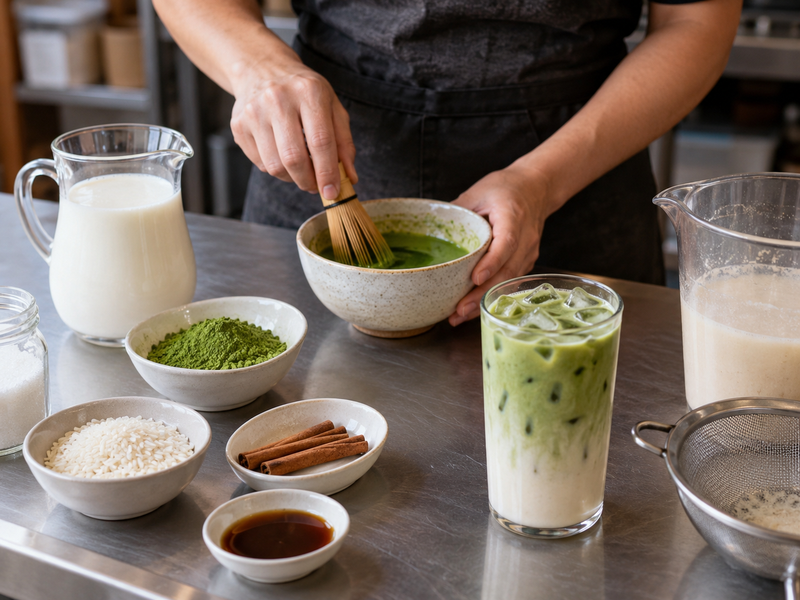
The first sip should make sense as both horchata and matcha. Decide whether rice-cinnamon sweetness leads with tea in the finish, or matcha leads with a gentle spiced base underneath. Taste the drink layered and stirred. A photogenic green top may give the customer mostly matcha through a straw and mostly sweet base at the end. If stirring is expected, say so or mix it before handoff.
Use the café’s intended cup and ice amount. Cinnamon, sweetness and dilution shift as ice melts. Note the final mouthfeel: rice sediment can be part of a traditional-style drink, but grit or inconsistent thickness is not desirable in a premium café item. The ArtfulTea version is a useful reference for separate matcha preparation. The café should set its own flavor standard from the fully built cup.
2. Should the cafe make or buy the horchata base?
Compare total work and flavor control
A scratch base gives control over rice, cinnamon and sweetness but takes soaking, blending, straining and cleaning. A prepared base can shorten service prep but may contain sugar, stabilizers or flavors that change the matcha balance. Request current ingredient and handling documents for any purchased base. Taste it at the manufacturer’s stated dilution, then in the final matcha drink.
Make a small scratch batch and one prepared-base version at the same finished cup volume. Record labor minutes, usable yield after straining, cold space, ingredient cost and waste. Do not decide on cost per liter of undiluted base alone. A concentrated product may be economical but taste flat once diluted. A scratch version may taste better and still be unsuitable if the café cannot manage its handling and consistency across shifts.
| Base route | Advantage | Operational test |
|---|---|---|
| Scratch rice base | Flavor control | Soak, strain and clean time |
| Purchased ready-to-use | Quick service | Sweetness and storage |
| Purchased concentrate | Compact stock | Dilution accuracy |
3. How should rice and cinnamon be controlled?
Weigh the grain and assess straining
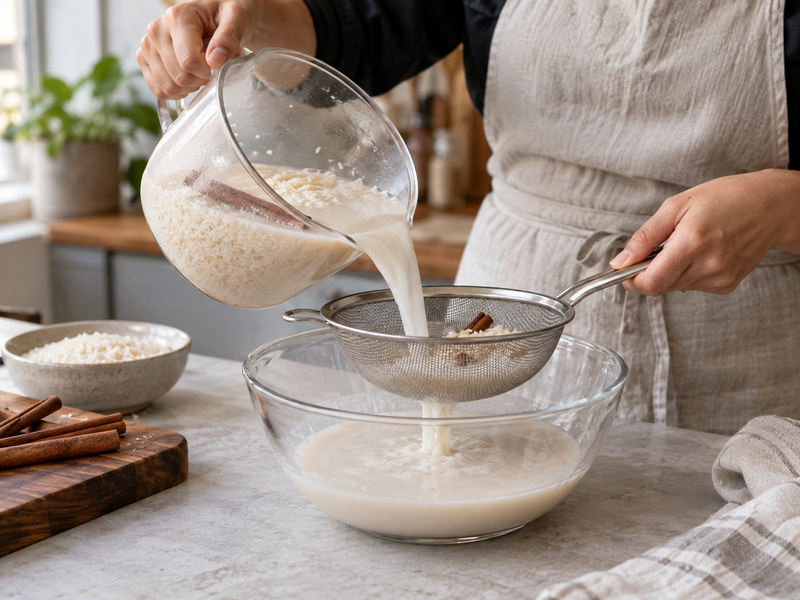
ArtfulTea soaks rice with cinnamon before blending and straining. For a café scratch version, record rice type, water, cinnamon form, soak process, blender load and strainer. A different rice lot or grind can change body and sediment. Use a consistent measure of cinnamon; a large stick and a small stick are not the same dose. Taste the base without matcha before adjusting the tea.
Measure liquid before and after straining. The difference is process loss and belongs in cost. Compare two straining methods for smoothness and yield. A very fine filter may make a smooth drink but slow prep or remove much of the rice body; a coarse one may leave an unpleasant gritty finish. The process must fit the operation’s food-safety plan, especially if rice is soaked or held. Do not borrow a home recipe’s overnight step without reviewing the actual conditions.
Keep a retained sample of the strained base from the beginning and end of a batch. Place both in identical clear cups and compare sediment after the same interval. If the last cup has more rice solids, the pitcher needs a documented mixing step before portioning. The decision also affects matcha: tea added to an uneven base may seem inconsistent even when the tea dose is exact. Record the base’s finished weight, not only the starting water, so the bar can reproduce both concentration and cup cost.
4. Where should sweetness be adjusted?
Account for every sweet ingredient
ArtfulTea’s recipe includes coconut sugar and plant drinks. A café’s purchased base might already be sweetened, and a flavored milk can add more. List sugar-bearing components before adding syrup. Trial a low and standard sweetness level with the same matcha dose and cup volume. Taste after ice begins to melt. A very sweet base can hide the tea; a lower-sugar base can make cinnamon feel sharp.
Use measured syrup or weighed sugar dissolved in the base, not a last-minute guess at the bar. If a less-sweet option is offered, test it as a distinct formula so staff know the correct matcha and base balance. Do not call a drink “no added sugar” or make a nutrition claim without reviewing the exact ingredients and local rules. A clear menu description is often enough: rice-cinnamon base, matcha and the standard milk or plant drink.
| Sweetness source | Record | Why |
|---|---|---|
| Prepared horchata | Sugar in specification | Baseline sweetness |
| Plant drink | Sweetened or unsweetened | Recipe variation |
| Added syrup | Dose per cup | Repeatability |
| Topping | Amount | Final taste and label |
5. How should matcha be prepared for the base?
Disperse the tea before layering
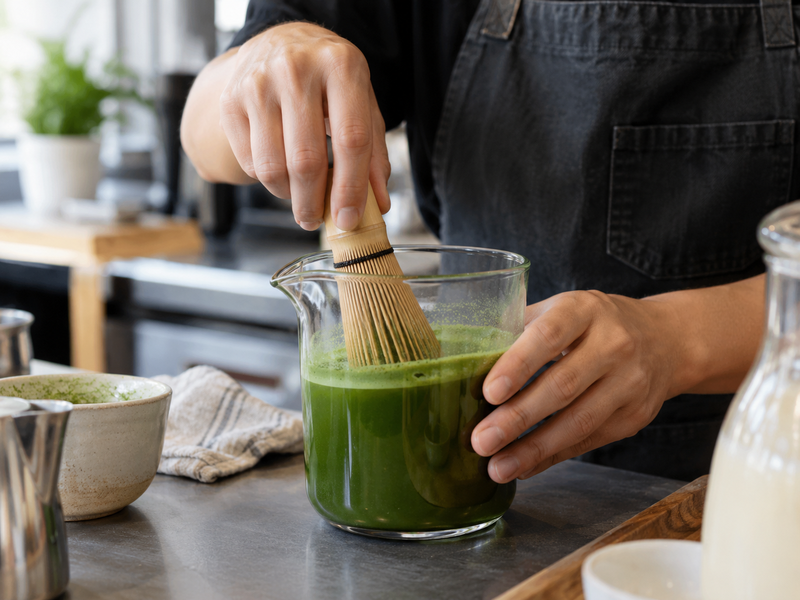
Whisk sifted matcha into a measured small amount of water or another approved liquid so dry powder does not collect on top of the horchata. ArtfulTea prepares the tea separately before pouring it over the base. Compare a fully mixed drink with a layered version at equal ingredient weights. The visual layer may be attractive, but taste through a straw and after stirring. The version that serves the customer better should win.
Sample matcha in the actual rice-cinnamon base. A powder that tastes balanced in water may be hidden by cinnamon and sweetness. Record grams per cup and supplier lot, and obtain current documentation before stating origin or grade. Check whether tea settles during a prepared concentrate hold. If so, define an agitation step or make it on order. A small dark clump in a pale base is both visually obvious and unpleasant in the first sip.
6. What build works for iced service?
Treat ice and final fill as ingredients
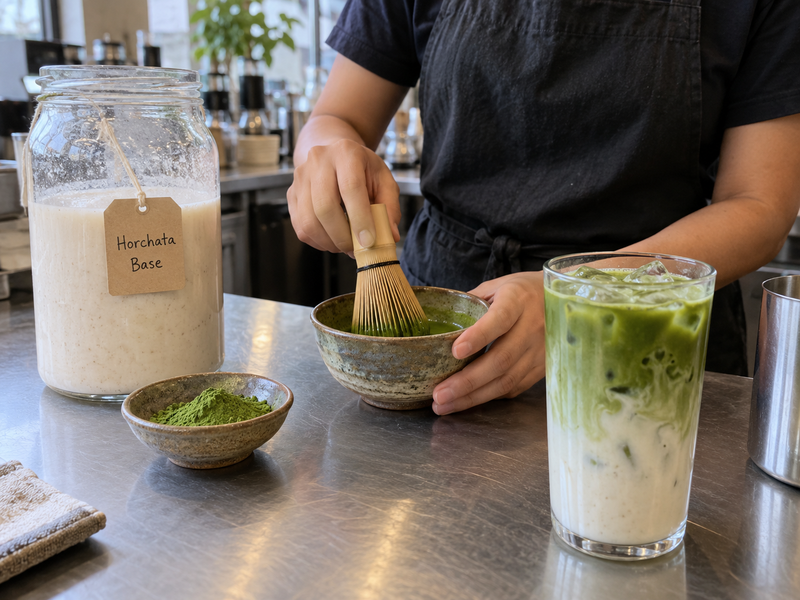
Set the cup, ice weight, horchata base amount and matcha amount. Pour in a tested order and note whether the tea remains layered long enough for handoff. A base containing rice solids may settle before pouring, so stir or shake it according to the recipe card. Measure the first and last cups from a batch. If one is thin and the other thick, the base needs a better mixing procedure or smaller batch size.
Taste at handoff and after the likely table wait. Cinnamon and matcha may become uneven as ice melts. If a garnish is used, test whether it adds aroma or merely leaves gritty powder on the lid. A drink meant for takeaway needs a secure lid and a clear stir instruction if layers are intentional. Record the final cup weight so staff can recognize an underfilled serving.
Test the cup with the straw placed in the position customers normally use. In a layered drink, the straw may draw from the lower rice base while the matcha stays on top. Taste through the straw before and after one gentle stir, then compare that with a fully mixed build. This is a better guide than a photograph of the layers. If the fully mixed version tastes better, the team can still pour a visual layer and give a specific stir instruction at handoff, provided the customer can do so without spilling.
| Build step | Measure | Check |
|---|---|---|
| Ice | Weight or validated fill | Dilution |
| Horchata | Volume or weight | Body and sweetness |
| Matcha | Powder and liquid | Tea strength |
| Handoff | Final fill | Consistency |
7. Which batch handling steps need review?
Trace the base from preparation to discard
A scratch rice base and an opened commercial base need different preparation records, but both require labeling and storage under the café’s approved food-safety plan. Record who made or opened the base, the ingredients, container and intended use period. The FDA Food Code is a U.S. model reference; local requirements govern the operation. A home recipe’s storage advice is not a commercial shelf-life study.
Run a separate quality check at intervals during service. Inspect sediment, separation, cinnamon intensity and matcha flavor in drinks made from the beginning and end of a batch. Do not top up an old container with fresh base, which makes both traceability and quality evaluation difficult. If staff cannot keep the scratch process consistent, a documented purchased base may be the more reliable menu route despite a higher ingredient price.
8. How should ingredients and allergens be described?
Name the actual base
Horchata varies by region and recipe. This article’s trial uses a rice-cinnamon base, but a café should describe its own ingredients rather than presenting one version as universal. Almond milk introduces a tree-nut allergen; oat and dairy drinks carry different review questions. Check current labels of prepared base, milk, syrup and garnish. The FDA major allergen guidance is a U.S. starting point; destination rules determine customer information.
Staff should know whether the drink contains dairy, almonds, added sweetener and cinnamon. Avoid claiming it is suitable for a restricted diet because the standard recipe appears plant-based; shared equipment and the actual ingredient list matter. A menu description can be concrete without becoming long: “rice-cinnamon horchata with whisked matcha,” followed by the milk and sweetener information the market requires.
| Customer question | Document to check |
|---|---|
| Does it contain nuts? | Base and milk labels |
| Is it sweetened? | Base specification and syrup dose |
| Is there dairy? | Standard recipe and substitution |
| Is the tea pure matcha? | Current powder specification |
9. What is the actual cost per cup?
Include scratch-process loss
Cost rice, cinnamon, water, milk, sweetener, matcha, ice, cup, lid and labor. For scratch horchata, count the liquid discarded with strained solids and the time spent soaking, blending and cleaning. For a purchased base, calculate cost at the approved dilution, not per bottle. Include cups remade because the base separated or the matcha clumped.
Compare both routes using the same final cup and taste standard. A purchased base may reduce prep labor but require more matcha to remain noticeable. A scratch base may produce a more distinctive drink but create daily waste when demand is low. During a limited sale, track paid orders and end-of-day base remaining. That record is more useful than a theoretical ingredient cost built around perfect sell-through.
10. When is the drink ready for the menu?
Repeat the chosen base across shifts
Write a recipe card with base source or scratch process, batch yield, cinnamon and sweetness, matcha preparation, cup, ice, build order, mixing instruction and handling route. Have two baristas produce several drinks from the same base and compare first and last cups. If a drink looks beautiful but needs a long explanation before it tastes right, revise the build or menu language.
Collect specific feedback during a limited sale: too sweet, too much cinnamon, weak tea, gritty or difficult to stir. Each points to a different test. Keep the recipe fixed during the trial so results can be interpreted. The drink earns a menu place when the café can make the rice-cinnamon base consistently, combine it with a clear matcha note and answer ingredient questions without guessing.
| Decision | Evidence | Next action |
|---|---|---|
| Launch | Stable flavor and handling | Train shifts |
| Revise | One repeatable balance fault | Controlled trial |
| Hold | Unresolved base storage or label | Complete review |
FAQ
Q1. Does matcha horchata have to contain dairy? No. Check and describe the actual base and milk used.
Q2. Why does the drink settle? Rice solids or matcha may separate; test mixing and batch size.
Q3. Can a café use a prepared horchata base? Yes, after reviewing its ingredients, dilution and finished flavor.
Q4. Should the matcha be layered? Compare layered and mixed cups as customers drink them, not only in photographs.
Q5. What is the key scratch-base measure? Record usable liquid yield after straining and its consistency across batches.
Make one scratch base and one purchased-base drink at the same sweetness and cup size. The better menu choice is the one staff can reproduce and customers can enjoy through the final sip.