
Many first-time customers buy a matcha starter kit because separate tools and powders are confusing. If the box contains pretty objects but no workable recipe, their first cup may be lumpy or bitter and the kit ends up in a cupboard. A better purchase solves the first-use problem: clear contents, a suitable powder, matched tools, and care instructions a beginner can follow. Retailers and importers can test this directly. Give the packed sample to someone new to matcha, watch what they do, and record every point where they need extra information. The checks below make that review consistent across suppliers.
Contents
- 1. Who counts as the starter customer?
- 2. Can the buyer make a cup from the box?
- 3. Which matcha powder suits the recipe?
- 4. Do the bowl and whisk work together?
- 5. How should a beginner measure and sift?
- 6. Are the instructions genuinely usable?
- 7. What care can a new user manage?
- 8. How should the kit be packed and labeled?
- 9. Can customers buy more powder and parts?
- 10. How should a retailer approve the kit?
1. Who counts as the starter customer?
Decide what the buyer already knows
A home cook curious about matcha lattes and a café trainee learning a straight tea service both qualify as beginners, but they need different guidance. The home customer might own a mug and kettle but no whisk. The trainee may have a full station yet need a precise recipe and a safe way to rinse tools. Define the intended user in one sentence, then list what they probably own and what they will have to buy.
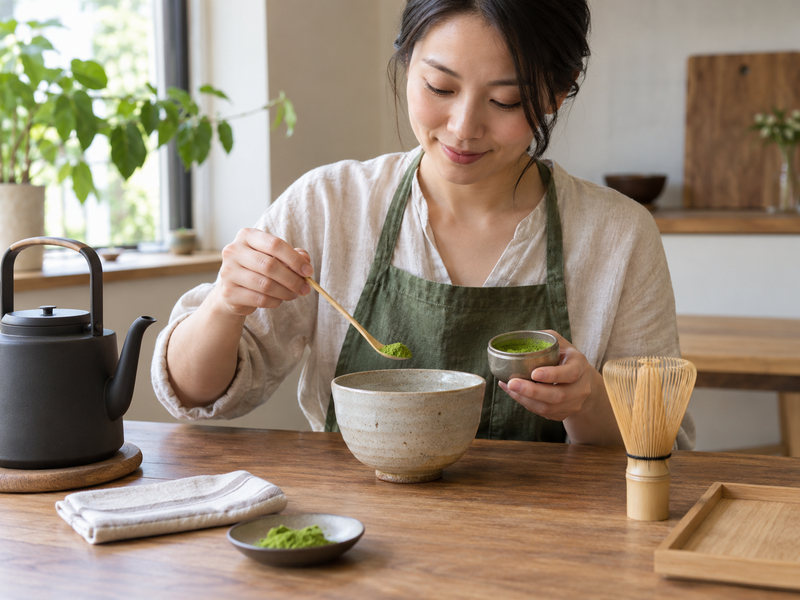
Use a real beginner: ask them to explain what they think each item in the box does before showing the instructions. Their guesses reveal what labeling must clarify. A matcha starter kit for retail should reduce uncertainty, not simply assemble unfamiliar Japanese names in a sleeve. A café training kit should mirror the station that staff will use after training, including the same powder grade and serving method.
2. Can the buyer make a cup from the box?
Test first-cup readiness
Open the package without fetching extra matcha equipment. Does it contain powder, a suitable vessel, a whisk, a measuring method, and a recipe? Water and a kettle are reasonable household assumptions; a specialist sifter or scale should be mentioned if required. If the product is tools only, say so prominently rather than leaving a buyer to learn that after gifting it. Run the first-use test: hand an unopened production sample to a beginner and ask them to make one cup while you observe silently.
Note questions about the powder amount, water amount, temperature, whisk movement, and where a wet whisk should go. Those questions are a more useful design brief than a long marketing description. A starter kit need not include every accessory, but its contents and omissions must be clear enough for a customer to prepare a drink with confidence.
| First-cup item | Why it matters | If omitted |
|---|---|---|
| Matcha powder | Allows immediate use | State “powder not included” |
| Bowl or vessel | Provides whisking space | Specify compatible vessel |
| Whisk | Disperses powder | Do not call it a complete kit |
| Simple recipe | Converts parts into a drink | Add a clear card or QR guide |
3. Which matcha powder suits the recipe?
Match flavor and format to first use
A beginner making a milk drink may need a different flavor and dose from someone preparing matcha with water alone. Do not choose powder from a grade label in isolation. Prepare the recipe printed on the kit using the actual pack included, and taste it both warm and after a short wait. Ask whether the customer can use the remaining powder before quality changes after opening. Check the pack itself: is it sealed, dated, labeled for the destination market, and easy to close or store?
A tiny sample may be enough for one cup but gives no room to practice. A very large pack can become a burden for a curious first-time buyer. Matcha Village offers different matcha grades and blended products for different applications; retailers should request a product specification and sample for the chosen recipe. Avoid claims about health or origin that the particular lot and documents cannot support.
4. Do the bowl and whisk work together?
Pair tools before approving their appearance
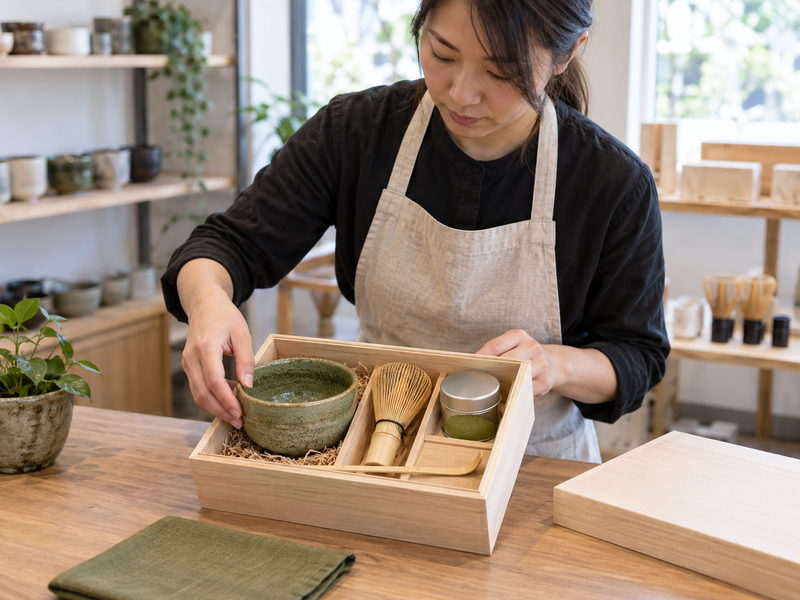
Suppliers may source a bowl and whisk from different ranges, then combine them in a starter box. That is reasonable only if they work as a pair. Put the whisk into the bowl and make the proposed recipe. Look for enough interior room, a stable base, and no repeated tine strikes against ceramic. Test the bowl’s rim when pouring a latte concentrate and its lip when drinking straight matcha. Repeat with another unit: a single set may be unusually well matched.
Inspect several examples from a production lot for functional variation. Beginners often whisk with too much force; a forgiving bowl shape helps them learn without frequent splashes. The Matchatori starter-set article discusses core tools, but a wholesale buyer should still validate the exact pair offered in their own branded pack. Keep the approved sample for later comparisons.
| Pairing check | Observe | What to change if it fails |
|---|---|---|
| Whisk clearance | Tines meet side wall? | Choose wider bowl or smaller whisk |
| Bowl stability | Bowl rocks during use? | Review base and counter mat |
| Splash margin | Liquid crosses rim? | Recheck depth and recipe |
| Pouring | Concentrate runs down outside? | Test another rim profile |
5. How should a beginner measure and sift?
Avoid precision that the supplied tools cannot give
A bamboo scoop is useful for transferring powder, but two people’s scoopfuls can differ. Give a beginner a simple starting recipe and explain that a scale offers more repeatability if they want to refine it. If the powder visibly clumps, a small sifter may help, provided it fits over the bowl and cleans easily. Observe the mess: ask the user to open the pack, portion powder, sift it if the instructions say so, and close the pack.
Powder caught in a tin seam or spilled across the counter can turn an easy-looking kit into an irritating routine. A carefully sized scoop and a clear “start here, adjust to taste” note may solve more than an extra accessory. For café training, record an actual weighed dose and teach that as the standard; a decorative scoop alone is too variable for consistent service.
6. Are the instructions genuinely usable?
Write for the moment of preparation
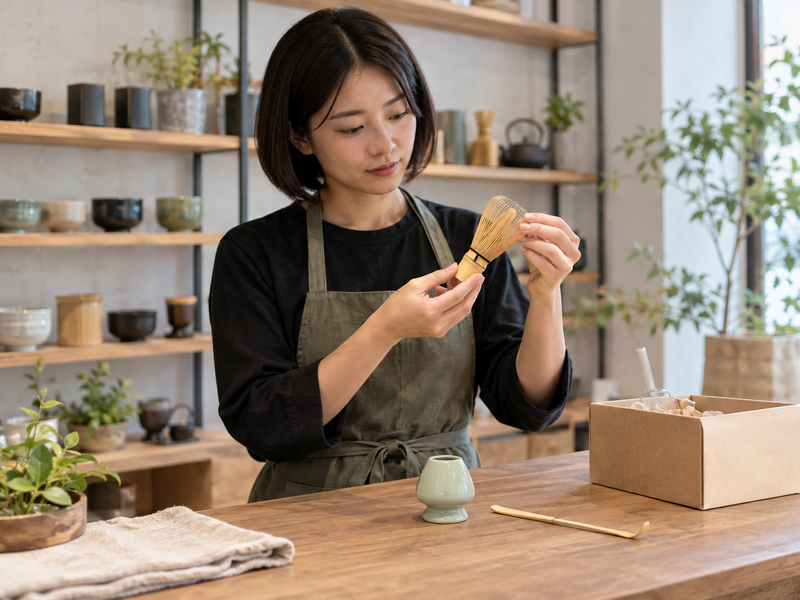
A crowded leaflet can make a simple drink look intimidating. Place instructions in the order a beginner acts: open powder, measure, add a small amount of water, whisk, finish the drink, then rinse and dry tools. Give quantities for the powder and liquid used in the included recipe rather than vague phrases such as “add a little.” If the kit supports both water-only matcha and lattes, separate those routes visually. Read the card aloud: if a sentence needs explanation from the seller, rewrite it.
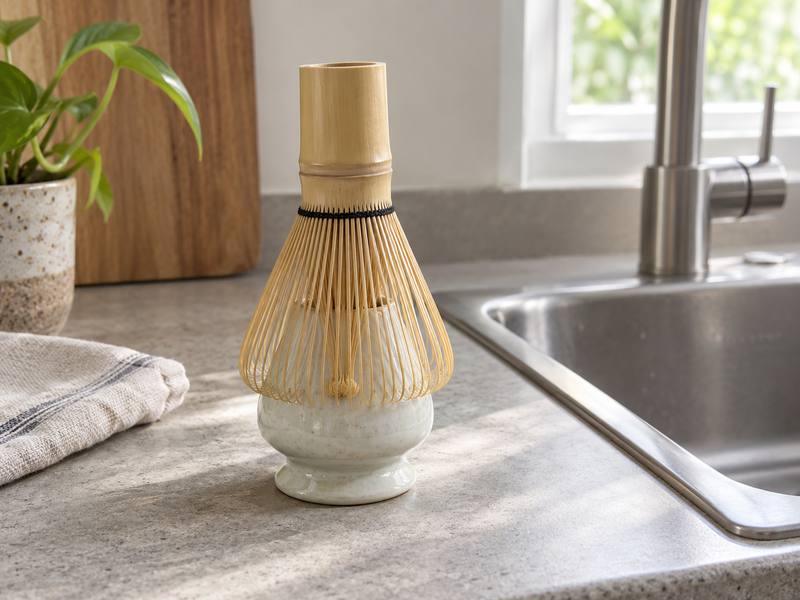
Show a clear picture or short description of the whisk motion without promising that every cup will have identical foam. Translate and check instructions for the sales market; unfamiliar tool names should be defined once. Include storage advice for powder that matches its actual pack. A simple care step prevents the common mistake of closing a damp bamboo whisk back inside the presentation box.
| Instruction step | Minimum information | Beginner check |
|---|---|---|
| Portion | Powder amount | Can they measure it? |
| Mix | Water amount and method | Can they follow without coaching? |
| Serve | Straight tea or latte route | Is the end drink clear? |
| Care | Rinse, dry, store | Do they know where tools go? |
7. What care can a new user manage?
Keep the routine realistic
The kit should still work after several weeks, not just for an unboxing video. Rinse the whisk using the maker’s directions and give it room to dry. Clean the bowl and sifter with methods suited to their materials. Avoid promising dishwasher use or heat resistance without product-specific guidance. Do the cleanup test: let the beginner finish the drink, then ask them to put everything away using only the care card.
Note whether they return a wet whisk to a closed box, leave matcha caught in a sieve, or store powder next to moisture. That observation may call for a holder, a drying diagram, or simpler parts. A retailer should ask suppliers how the exact bowl finish and bamboo whisk should be cared for, then verify the instructions through actual use. Good care advice reduces preventable complaints and makes a first purchase more likely to become a lasting habit.
8. How should the kit be packed and labeled?
Protect tools and describe contents honestly
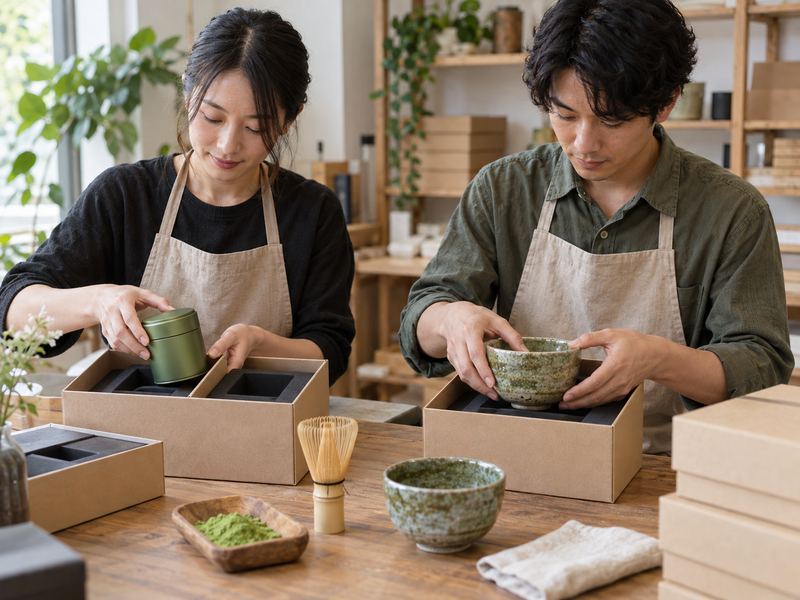
Retail packaging must do two jobs: make the contents easy to understand and protect fragile parts during delivery. Open a shipped sample rather than a hand-carried showroom box. Check whether ceramic can strike bamboo, whether the whisk tines are pressed by an insert, and whether food packs stay sealed and separate. The outside should state exactly what is included, the product variant, and any market-specific food information for included matcha.
Look at the shelf edge: can a buyer tell this starter kit from a tools-only box without reading a tiny back panel? For importers, review case packs, barcode placement, language needs, and damage handling before a seasonal order. Avoid a large empty box simply to suggest value. A compact pack that arrives intact and explains the first cup is a better product than one that looks generous but leaves customers confused.
| Pack element | Practical test | Risk caught |
|---|---|---|
| Component insert | Open delivered sample | Broken bowl or whisk |
| Contents panel | Compare with actual box | Missing-item complaints |
| Powder label | Check sales-market needs | Mislabeling or poor storage |
| Outer carton | Inspect ordinary shipment | Transit damage |
9. Can customers buy more powder and parts?
Support the second month, not only the first cup
A successful starter kit should lead naturally to another matcha purchase. Provide a way to buy the same powder or a suitable alternative when the initial pack runs out. Make worn whisk replacement easy; customers should not have to repurchase an entire box for one tool. For a retail brand, specify components with individual SKUs and record what can be reordered. Ask the supplier early: can they supply matching whisk and bowl pieces next season, and will a changed design be communicated before shipment?
A café training program needs reliable replenishment too. If trainees learn on one powder and later use a different recipe at the counter, their practice may not transfer. Keep the kit’s recipe and refill offering aligned. Clear refill and replacement information also gives customer service a concrete answer when a buyer asks how to maintain the set.
10. How should a retailer approve the kit?
Compare results from several users
Use one scorecard for all candidate starter kits. Record the packed condition, contents accuracy, powder pack details, recipe clarity, beginner questions, drink quality, cleaning behavior, and replacement options. Give samples to more than one first-time user; one person may be unusually patient or already know tea preparation. Watch without rescuing them: the point is to see whether the kit itself teaches enough. Then ask what they liked, what they would remove, and what they expected in the box.
Separate those comments from observed failures such as a damaged whisk or missing food label. Before a bulk order, request a production sample matching the exact component list and approved artwork. A small pilot sale can show whether customer service questions and shipping damage remain manageable. Keep a reference sample and written specification for future reorders.
| Approval question | Evidence | Action if weak |
|---|---|---|
| First cup possible? | Uncoached user trial | Fix contents or recipe |
| Tools compatible? | Bowl-and-whisk test | Change one component |
| Pack protects? | Delivered sample | Revise insert or carton |
| Repeat use possible? | Refill and spare list | Secure supply terms |
A practical next step
Choose a matcha starter kit by the first cup it enables and the next ten cups it can support. Define the beginner, include only useful parts, match powder with the printed recipe, and test the exact packed set with a new user. Then observe cleanup and confirm refills and replacement whisks. A buyer can ask suppliers for a production sample and run this trial before negotiating a larger order. The result should feel simple to a customer, even though the buyer has checked many details behind that simplicity.
FAQ
Q1: Must a starter kit contain matcha powder? No, but a tools-only kit should say so clearly and explain what powder the recipe expects.
Q2: Is a sifter compulsory for beginners? It can help with clumps, but test the actual powder and recipe before adding another piece.
Q3: Can a bamboo scoop replace a scale? It helps transfer powder, while a scale gives more repeatable doses during recipe development.
Q4: How many users should test a sample? More than one beginner is useful; include someone who has not previously prepared matcha.
Q5: What should be available after purchase? Powder refills, replacement whisks, care advice, and clear answers about the kit’s components.