
A new matcha customer often has the right tools yet still makes an uneven first cup. The box shows a bowl and whisk, but the card skips the powder amount, water sequence, or cleanup. A useful matcha starter kit guide closes those gaps. It takes a buyer from a clear work surface through a drink they can taste and repeat, then shows where wet tools belong. For retailers and café trainers, the guide should work without a salesperson standing nearby. Test every instruction with the actual contents and someone who has never prepared matcha before.
Contents
- 1. What should be on the counter before starting?
- 2. Which tools does the first cup really need?
- 3. How should powder be chosen and opened?
- 4. How can a beginner measure consistently?
- 5. What water instructions are clear enough?
- 6. How can the user mix without dry clumps?
- 7. How should the drink be finished and tasted?
- 8. What happens immediately after the cup?
- 9. What should the printed guide actually show?
- 10. How can a retailer test the guide before launch?
1. What should be on the counter before starting?
Arrange the ingredients in working order
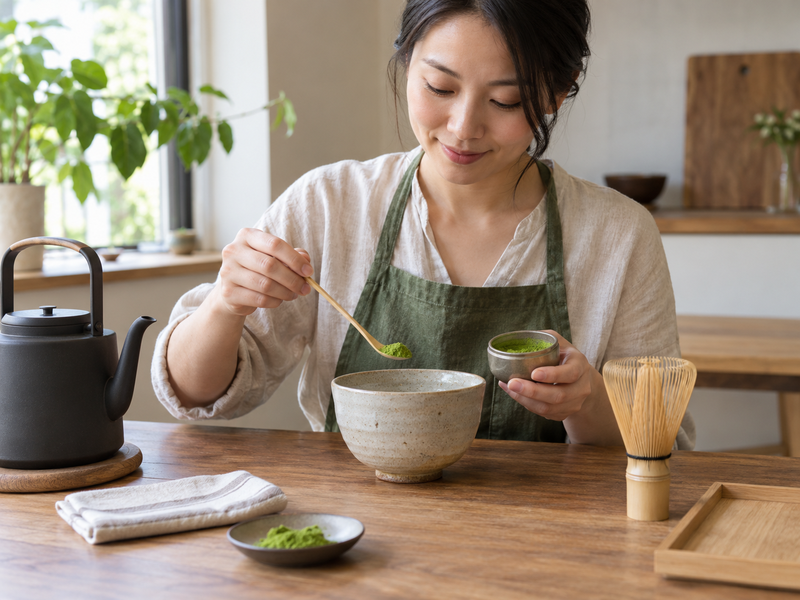
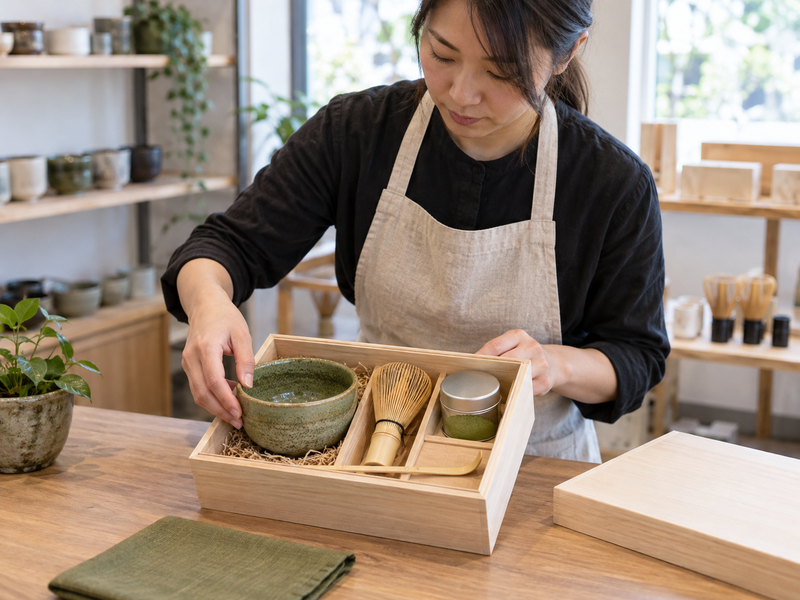
The first cup becomes easier when the user can see every item before opening the powder. Set out the matcha pack, a clean dry bowl, the whisk, a measuring method, water, and the intended serving cup. Add a sifter only when the recipe calls for one. A towel or tray can catch minor spills without becoming a required specialist purchase. Start with the actual box: a guide should distinguish included items from everyday equipment the customer supplies.
If it says “use a scale,” the package must either contain one or state that a household scale is needed. For café training, lay out the tools in the same positions staff will use during service. For a home kit, give enough room for the whisking motion rather than staging a crowded product photograph. A short setup diagram can stop a beginner from opening powder before realizing their bowl is still wet.
2. Which tools does the first cup really need?
Explain each piece by what it does
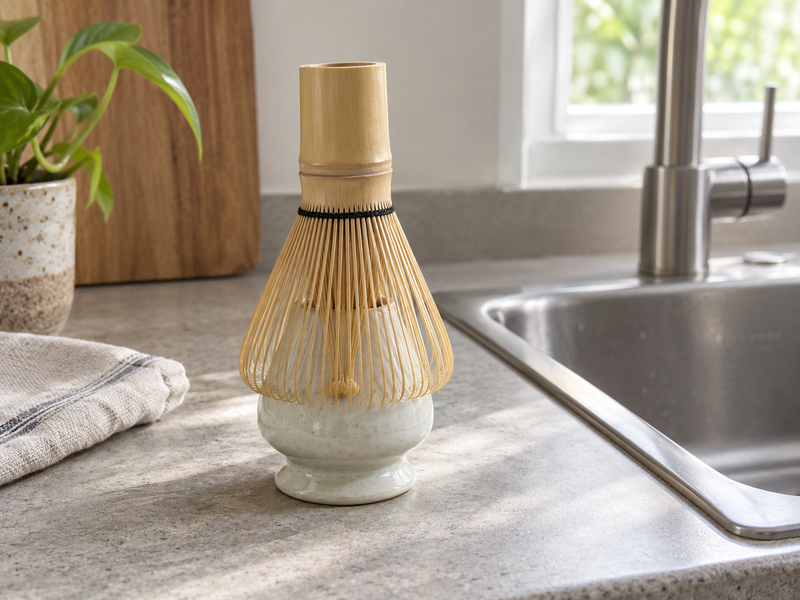
A bowl gives the whisk room to move. A bamboo whisk disperses powder in water. A scoop transfers matcha, while a scale helps when precise, repeatable amounts matter. Those jobs are easier to understand than an unexplained list of Japanese tool names. Try the minimum setup: prepare the recipe using only a suitable bowl, whisk, matcha, water, and a measured dose. If a visible clump remains, test a sifter. If the whisk has nowhere to dry, consider a fitted holder or clear rack instruction.
Add each item because it solves a problem observed in that trial. The Ichizen starter-kit article describes a starter arrangement; a retailer should still test the exact components it sells. A matcha starter kit guide should tell readers which pieces are required for the first cup and which are helpful upgrades after they learn the basic process.
| Piece | Job during preparation | Beginner note |
|---|---|---|
| Bowl | Holds powder and water for whisking | Leave room for hand movement |
| Whisk | Breaks up and mixes powder | Avoid grinding tips on ceramic |
| Scoop or scale | Helps portion powder | Scoop amounts vary; scale gives weight |
| Sifter | Breaks visible powder clumps | Use when the recipe benefits |
3. How should powder be chosen and opened?
Start with the drink on the card
A kit meant for a straight bowl of tea may choose a different powder profile from a latte kit. The guide should name the drink its recipe makes and use the powder supplied or clearly recommended with the tools. Opening directions matter too. A learner may tear a pouch unevenly, spill powder, or leave it exposed while preparing water. Show the first move: open the package carefully, portion only what is needed, close it promptly, and follow its storage instructions.
If the kit includes a tin, test how the scoop fits through its opening. Avoid invented claims about shelf life or flavor based on color alone. The supplier’s pack, lot information, and product specification should support any claim printed for buyers. For a retail program, prepare cups from the same powder pack format customers receive, since a neat laboratory sample may handle differently from a narrow consumer pouch.
4. How can a beginner measure consistently?
Give one starting recipe and room to adjust
A good first-cup card states amounts for powder and liquid in a form the user can follow. “A little water” leaves too much guesswork; a number with units is more useful. If the kit offers only a bamboo scoop, describe it as an approximate transfer tool rather than a precise measuring instrument. A small digital scale can help café trainees and home users repeat a preferred recipe, but it should not be an invisible requirement for a supposedly complete starter box.
Run a second cup: ask the same beginner to repeat their first drink without help. Compare dose, liquid amount, and taste. If the results drift, revise the measurement instruction before blaming the person. Give an adjustment note such as “change one amount at a time” so a learner can tell which step changed the cup. The guide should make experimentation manageable rather than suggesting one universal formula fits every powder and preference.
| Measurement | State on the card | Reason |
|---|---|---|
| Powder | Amount and measuring method | Repeatable starting strength |
| Initial water | Amount for mixing | Easier clump control |
| Finishing liquid | Amount and type | Defined final drink |
| Adjustment | One variable per attempt | Useful comparison between cups |
5. What water instructions are clear enough?
Replace vague words with a usable method
“Hot water” is an uncertain instruction. Some beginners pour straight from a boiling kettle; others wait so long the drink cools before whisking. A product guide should provide the supplier-tested water target or a simple method for reaching the intended preparation condition, then check it against the exact powder and recipe. Test without a thermometer: if the kit does not contain one, can a person using a typical kettle follow the directions reasonably?
A more precise café recipe may specify a measured target; a home card can explain the practical sequence in ordinary language. Water amount is as significant as warmth. Begin with enough liquid to mix powder thoroughly, then add the remaining amount required for the chosen drink. Keep safety in mind when holding a warm bowl. Do not promise that one temperature or foam level will suit every matcha powder, milk choice, and palate.
6. How can the user mix without dry clumps?
Teach the sequence, not a magic gesture
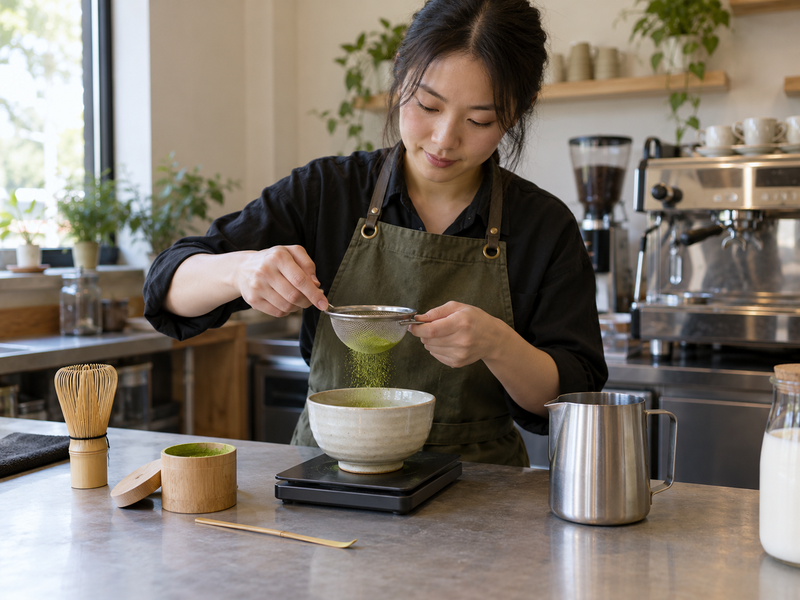
Place measured powder in a dry bowl. If the powder has visible lumps, sift it when a suitable sifter is available. Add a small portion of the water specified in the recipe and work it into a smooth mixture before adding the rest. Then move the whisk through the liquid without pressing its tips hard into the ceramic. Look at the bottom: a glossy surface can hide dry powder stuck in a corner. Ask the learner to stop and check before pouring the drink into another cup.
If clumps persist, test whether the sifter, powder storage, bowl shape, or liquid amount is the cause. A guide that merely says “whisk vigorously” can lead to splashing and damaged bamboo. Show a short motion description and let the user know that mixing powder well matters more than reproducing a photograph of tall foam. Café trainers can demonstrate once, then let staff repeat while following the printed card.
| Problem seen | Possible cause | Next trial |
|---|---|---|
| Dry powder at base | Liquid added too quickly | Begin with smaller water portion |
| Visible lumps | Powder clumps | Try a suitable sifter |
| Splashing | Bowl or motion mismatch | Slow movement and check depth |
| Bent whisk tips | Pressure against bowl | Lighten contact and inspect tool |
7. How should the drink be finished and tasted?
Give the learner a real endpoint
Straight matcha may be served from the same bowl after mixing. A latte route moves the mixed matcha into a cup with milk or adds milk to the prepared base. The guide should choose a primary route and show the final serving amount rather than abruptly ending at “whisk.” Taste before changing three things: if the cup seems too strong or weak, adjust one variable on the next attempt and write down what changed. This turns the starter kit into a learning tool.
The printed example must use the powder packed with the kit, or plainly explain any substitute. For cafés, use the same cup and milk that appear in service so staff can compare finished drinks fairly. For home gifts, consider a second route on the reverse of the card rather than crowding the main first-cup steps. A clear endpoint makes customers feel that they completed the process, even if they refine their preferred strength later.
8. What happens immediately after the cup?
Show the care step while tools are still out
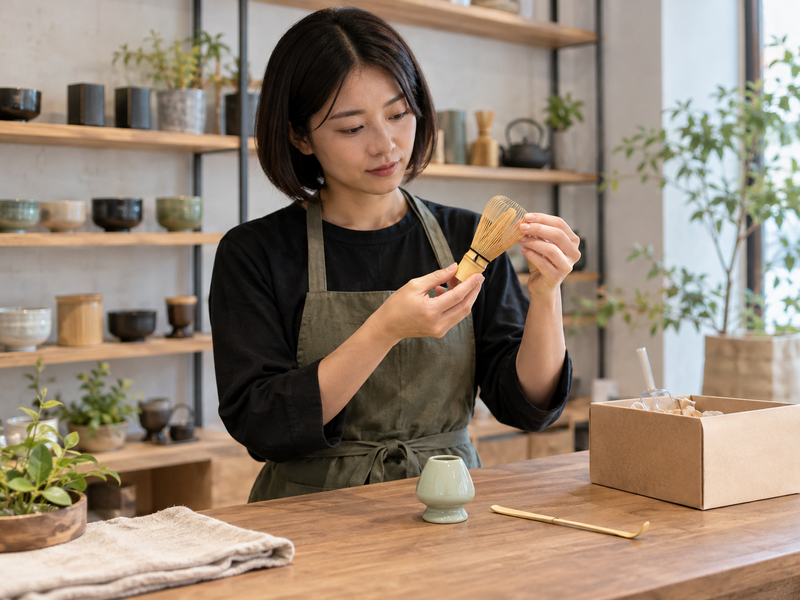
The guide should continue through cleanup. A new user may rinse the bowl but put a damp whisk back into a closed presentation box because no storage advice appears near the recipe. Tell them how to rinse the exact whisk supplied and where to let it dry according to the maker’s instructions. Clean the bowl and sifter in ways suitable for their materials. Close and store the powder as the pack directs.
Watch the natural behavior: after a first cup, do beginners look for a holder, wipe tools with a rough cloth, or leave the powder open? Those observations show where a card needs a small care illustration or an extra sentence. A café training guide should specify the station’s drying and inspection routine, not assume one worker will remember it for the next shift. Avoid broad dishwasher or durability claims without product-specific evidence.
| Item after use | Immediate action | Guide reminder |
|---|---|---|
| Whisk | Rinse and dry as directed | Do not seal damp in box |
| Bowl | Wash and inspect interior | Check for powder residue |
| Sifter | Clear mesh and rim | Dry before storage |
| Matcha pack | Close and store as labeled | Protect remaining powder |
9. What should the printed guide actually show?
Use one page for one main drink
The front of a starter card should answer five practical questions: what is included, what the user supplies, how much to use, in what order to act, and how to care for tools afterward. A numbered route with a small drawing can serve beginners better than a long brand story. Read it standing at a counter: the text should remain legible when hands are busy and the bowl is nearby. Define unfamiliar tool names once beside a picture of the actual component.
Keep optional latte variations on the reverse or in a separate panel. If a QR video is included, check that the basic method remains in print in case a link fails. Translate the card for sales markets and review units carefully; switching a volume unit or omitting a dose changes the recipe. The card should match the finished kit, not a draft component list from early development.
10. How can a retailer test the guide before launch?
Run an uncoached first-cup trial
Give several new users a final packed sample and the printed guide. Do not explain the tools while they work. Record where they pause, which instructions they reread, whether the drink matches the recipe, and what they do with wet tools afterward. Separate observation from opinion: one participant may prefer stronger matcha, but several people missing the same step signals a guide problem. Check each sample against the contents list, including powder pack and labels.
Then send packed units through the expected delivery route and confirm that the card remains visible and usable after shipping. Keep an approved physical sample with the signed instructions and bill of components. If a supplier later changes the whisk, bowl, powder format, or scoop, repeat the relevant part of the user trial. A matcha starter kit guide is finished only when an uncoached customer can make a cup and clean up with the pieces they receive.
| Trial moment | What to record | Change if repeated |
|---|---|---|
| Setup | Missing item or unclear name | Rewrite contents panel |
| Mixing | Lumps, spills, tool contact | Clarify sequence or change tool |
| Serving | Unclear final drink | Add endpoint and amount |
| Cleanup | Damp or dirty storage | Improve care instruction |
A practical next step
Write the guide around a real first cup. Put the kit on a work surface, measure the included powder, follow the water and mixing steps, finish the drink, then clean and store every piece. Ask a beginner to repeat the route without help. Their pauses are edits waiting to be made. For a retailer, this simple trial can turn a box of unfamiliar objects into a product customers can use again tomorrow. Keep the final card short enough to read during preparation and precise enough to support a second, more confident cup.
FAQ
Q1: Can a first cup be made without a sifter? Often yes. Try the included powder and recipe; add a sifter when visible clumps remain.
Q2: Does a bamboo scoop give an exact dose? No. It transfers powder, while a scale gives a repeatable weight for recipe work.
Q3: Should a guide cover both straight tea and lattes? It can, but put one clear main route first and keep the alternative easy to find.
Q4: Why test the card with someone new to matcha? A beginner reveals missing steps and unclear names that an experienced maker may unconsciously fill in.
Q5: What should happen after whisking? Finish and taste the drink, then rinse and dry tools and close the powder according to their instructions.