
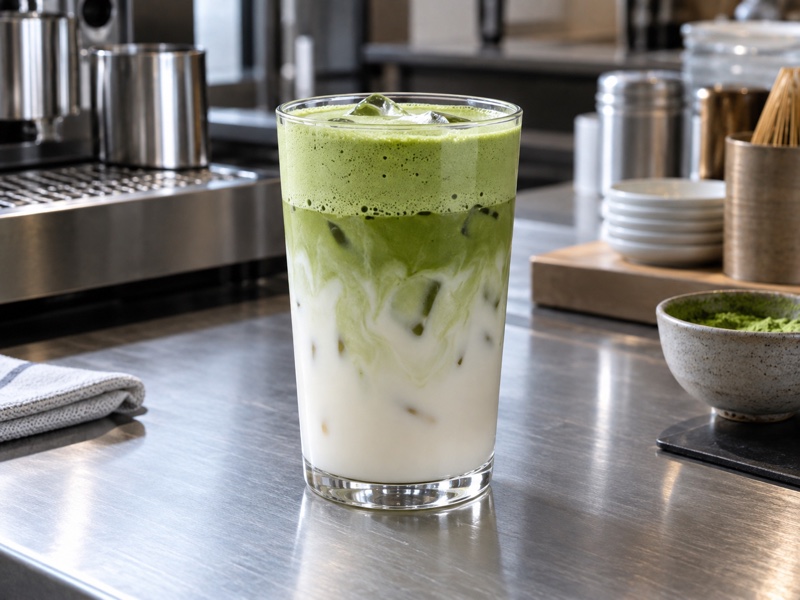
Matcha cold foam is a chilled, aerated topping that puts tea flavor above an iced drink. A café may like the look at the bar but find that the cap disappears during a delivery walk or turns grainy in a larger batch. Solve that with a service trial: define the drink underneath, then measure foam texture, dose, holding behavior, and preparation time. The cream-top recipe from White on Rice Couple demonstrates a small-batch home version. A commercial recipe needs its own equipment and timing tests because a hand frother, pitcher, and high-volume mixer do not produce the same structure.
1. What counts as good matcha cold foam on a finished drink?
Specify the guest experience in terms a barista can see and taste. A successful cap should spread over the drink without vanishing at once, allow a sip of both tea and base beverage, and remain pleasant as the guest finishes. Decide whether you want a loose pourable foam or a thick cream top. The words are often used interchangeably, yet they describe different textures and costs. A thick cap can hide the beverage and feel heavy over a sweet latte; a light cap may vanish over sparkling soda.
Photograph a standard cup immediately after topping and again after the typical pickup or delivery interval. Measure foam depth at the rim and inspect whether liquid drains down the cup wall. Taste from the cup without stirring, then stir and taste again. If the first sip is bitter while the final sip is bland, the tea and sweetness need redistribution. This test prevents a visually striking photograph from passing as a service-ready drink.
| Service target | Check | Rejection sign |
|---|---|---|
| Foam coverage | Top-view photo at service | Bare patches on arrival |
| Sip balance | First and final sip | Harsh tea then plain base |
| Texture | Spoon and straw test | Curdled or chalky cap |
| Hold | Same cup after pickup interval | Complete collapse or drainage |
2. Which base should a café test: cream, dairy milk, or plant milk?
Start with the type of topping your menu can actually serve. Cream makes a rich cap but brings a higher ingredient cost and a milk allergen. Milk can make a lighter foam, but body depends on its composition and the equipment used. Barista-style plant beverages vary widely in protein, fat, gums, and sweeteners. An oat drink that foams for a hot latte may behave differently when cold and mixed with matcha. Do not infer performance from the front label.
Prepare the same tea concentrate with each candidate base. Match temperature, batch size, tool, mixing time, and cup. Compare aeration immediately, then observe drainage and taste after the intended hold. Read ingredient statements before choosing a “dairy-free” option, and review cleaning practices that could transfer milk into a plant-based order. For packaged products in the US, the FDA’s allergen guidance explains major allergen declarations; café menus should also follow local disclosure rules. A base choice is an operational and labeling choice as much as a texture choice.
3. How should matcha be dispersed without green specks?
Matcha is a fine powder, not an instant soluble flavor. Some particles remain suspended while others settle if the mixture sits. Sifting before hydration can help, but the more useful control is a written concentrate method. Weigh tea and liquid, mix them to a smooth slurry, scrape the vessel, and then add the base. Do not dump dry powder into a pitcher of cold cream and assume a high-speed frother will reach every pocket. Green dots are particularly visible against a pale foam.
Compare a water-based slurry with a small dairy or plant-base premix if both fit the recipe. Water makes a leaner foam; adding too much dilutes the base. Keep the final mass equal in the comparison so a smoother result is not merely a weaker matcha dose. Matcha Village offers pure matcha samples for beverage testing; ask for powder specifications and test the actual lot in your cold system. A powder approved in a hot latte still needs a separate foam trial.
| Dispersion route | Main advantage | What to watch |
|---|---|---|
| Sift into small liquid portion | Controls dry pockets | Extra prep step |
| Premix in base | Preserves liquid ratio | Takes more shear |
| Ready concentrate | Speeds service | Settling during hold |
4. How much tea should go into one topping portion?
Decide dose per finished cup, not only concentration in a bulk pitcher. If a recipe calls for 30 grams of topping but staff dispense inconsistent amounts, matcha cost and caffeine contribution shift with every cup. Weigh a series of normal pours and calculate the actual matcha delivered per drink. Use a low, middle, and high tea trial with identical base and sweetness. Taste over both a neutral base and the real menu drink. Coffee bitterness, fruit acid, or syrup can make the preferred level change.
Strong tea is not automatically the most recognizable tea. A high dose may leave a dusty finish or turn the foam dull after holding. A modest dose can work when the underlying drink is restrained. Write a serving tolerance the team can measure, such as a fill line or target mass, and test whether ordinary staff can hit it during rush service. If the proposed drink has coffee and matcha, account for both sources of caffeine in any consumer communication; a powder grade name does not establish a serving’s caffeine content.
5. Which whipping method survives a café rush?
A handheld frother suits a small cup but can struggle when asked to aerate a full prep pitcher. A larger mixer may create more air yet leave the topping too stiff for a clean pour. Set a practical batch size for each tool, then test peak orders rather than choosing equipment from a quiet-hour demonstration. Record starting temperature, mixing time, vessel shape, and the operator’s endpoint description. The consumer cream-top example distinguishes small frother batches from larger hand-whisked portions; that difference deserves a controlled café test.
Define the whipping endpoint
Train staff to stop at a defined texture. A soft, flowing ribbon may suit an iced tea, while a dessert-style cap needs more body. Overwhipped cream can clump and separate as staff try to pour it. Also test cleanup: a tool that takes seconds to mix but minutes to wash between allergen orders may slow the line. Measure order-to-handoff time for several consecutive drinks, including retrieval from refrigeration and washing, rather than timing only the whip.
| Equipment | Pilot question | Record |
|---|---|---|
| Hand frother | Can it repeat a one-cup cap? | Time and foam depth |
| Pitcher mixer | Does a batch remain pourable? | Batch size and drainage |
| Whisk | Is texture consistent between staff? | Operator variation |
6. Should sweetness sit in the foam or the drink?
Place sweetness deliberately. Sweet foam over an unsweetened black tea creates a sharp transition; the same cap over a syrup-heavy latte can taste cloying. Build four simple comparisons: sweetened and unsweetened foam over sweetened and unsweetened bases. Keep the total beverage size fixed. Taste first sip, mixed sip, and last sip. A team may find that modest sweetness in each layer reads more balanced than concentrating all sugar in one place, but the actual answer depends on the drink.
Sweetener format matters to production. Granulated sugar can leave grit in a cold mix unless dissolved first. Syrup adds water and can thin the foam. Powdered sweeteners and flavored syrups may change viscosity or introduce ingredients requiring label review. Record the product and its concentration, not just “one pump.” If the menu promises an unsweetened drink, decide whether that means no added sugar in either layer and train staff accordingly. A hidden sweet foam can create a guest complaint even if the base beverage is plain.
7. How long can a prepared batch be held?
Separate physical quality from safety. A foam may remain food-safe under an approved refrigerated procedure yet lose its bubbles and taste flat, while an attractive cap can still be mishandled. Use your food safety plan and the rules where the café operates. In US retail settings, the FDA Food Code provides the model framework for foods requiring time and temperature control. It does not assign a universal shelf life to every foam recipe. Dairy, plant base, added ingredients, and handling can change what validation is needed.
Test a prepared pitcher
Run an actual service hold test in the intended covered container. At opening, mid-shift, and the proposed discard point, measure foam depth after a standard pour, note drainage, smell, and taste. If remixing is allowed, define how often and test whether it damages texture. Mark the preparation time and lot on the container. A good operations sheet also tells staff when to discard a batch after temperature abuse or an uncertain label, rather than asking them to judge by appearance.
| Hold check | Observation | Operational decision |
|---|---|---|
| At preparation | Baseline body and flavor | Release batch |
| Mid-service | Drainage and remix response | Continue or remake |
| End of validated window | Texture and safety controls | Discard timing |
8. Which drinks make a useful matcha foam pairing?
Choose a base that leaves room for tea. Unsweetened cold brew can make a pronounced bitter pairing; a light black tea may let matcha remain clearer. Citrus soda looks attractive under a green cap but acid, carbonation, and foam structure can conflict at the boundary. A creamy iced latte can support matcha yet reduce contrast between topping and base. Test each combination in its sale cup with its standard ice and straw. A spoon tasting of foam alone misses these interactions.
For a menu trial, limit the initial launch to one or two bases with distinct roles. For example, offer a coffee option and a non-coffee option, then compare sell-through and complaints. Record which drink customers stir, whether the cap blocks the lid opening, and whether delivery movement changes the appearance. This information helps decide if foam should be a customizable add-on or a fixed signature build. A fixed build is easier to train and cost; customization can require more allergen controls and staff judgment.
9. What should purchasing ask the matcha supplier?
Request ingredient identity, specification, lot traceability, market-appropriate documents, and enough sample to test across several service shifts. Ask whether the supplier can support a consistent profile when volume increases. Compare two candidate grades at the same effective tea dose and again at matched finished flavor. Those are different tests: one reveals intrinsic performance; the other reveals cost to hit the menu target. A cheap bag may need more powder and leave more sediment in the cap.
Keep a retained control from an approved lot and test incoming powder under the same recipe. Record cold foam color, flavor, sediment, and pour behavior, because dry powder inspection alone cannot catch a changed guest experience. The Matcha Village pure matcha range identifies different starting grades for beverages and baking, but the purchase specification should reflect your approved foam, not a broad marketing category. Agree on corrective steps before a rush-season reorder arrives.
| Buyer record | Evidence needed | Why it matters |
|---|---|---|
| Powder lot | Supplier documents and sample | Traceability |
| Formula | Tea and foam mass per drink | Consistent cost |
| Service test | Foam at handoff and later | Guest experience |
| Allergen procedure | Ingredients and equipment flow | Accurate ordering |
10. How does a café decide whether the topping pays for itself?
Calculate actual cost per approved serving: tea, foam base, sweetener, cup, labor, remake rate, and waste from held batches. Compare that with the menu price or add-on fee. A thick cap that uses a costly base may be worthwhile as a signature product if it sells at the intended price; a low-price add-on needs faster production and less waste. Run the calculation after staff have made a realistic series of drinks, since a development kitchen usually dispenses more precisely than a busy bar.
Approve the menu only when taste, foam hold, workflow, allergen handling, and cost pass together. Keep a photo of the approved cup and a short mixing specification at the station. If a customer reports an empty-looking top on arrival, staff can compare the complaint with the intended handoff interval and test a fix. Start with one stable drink, then adapt the foam to other bases using fresh trials. The cap is a small component, but its failure sits where every guest can see it.
FAQ
Q1: Is matcha cold foam the same as whipped cream? No fixed definition covers every café. Specify your intended pourability, fat level, and serving texture.
Q2: Can I make a dairy-free version? Yes, but test the exact plant beverage and manage cross-contact and menu wording.
Q3: Why are there green dots in the foam? Dry matcha pockets or insufficient premixing are common causes. Test a measured slurry step.
Q4: Can a batch sit on the counter during rush service? Follow your validated food safety procedure and local time and temperature rules; do not use appearance as the release criterion.
Q5: Should foam be sold as an add-on? Cost the real portion and test its appearance on each drink before offering broad customization.