
Matcha snacks cover a broad shelf: coated nuts, bars, biscuits, crackers, and sweets. A powder that tastes promising in a latte may vanish after baking, turn bitter in a savory dough, or leave a coating that looks dull after distribution. Bokksu’s overview of matcha snacks shows the range of consumer formats. A manufacturer should narrow that range to one product promise, then test the finished snack through processing, packing, and the intended shelf life. The following checks turn a green prototype into a product a buyer can evaluate.
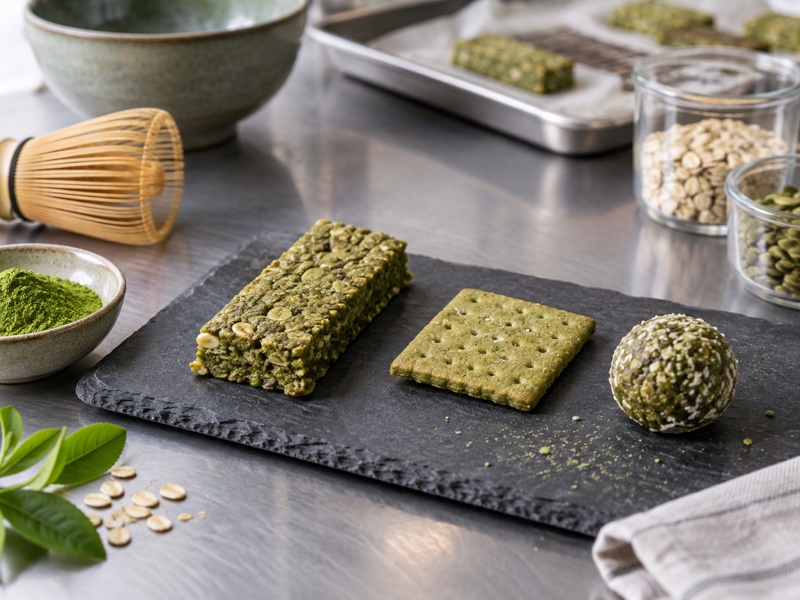
1. Which snack format is worth developing?
Start with a customer occasion and retail channel. A single-serve bar near the checkout, a resealable coated nut pouch, and a premium gift biscuit need different portion sizes, textures, and price points. Choose one format before selecting matcha grade. Write a short brief covering who buys it, when they eat it, the expected tea intensity, sweetness, and the maximum ingredient cost. A line extension should also fit the factory’s equipment; a beautiful hand-dipped prototype may fail on the available coating line.
Build a small format screen with the same tea powder in several matrices. Taste each at the intended eating temperature and after a short pack hold. A fat-rich coating can carry tea flavor differently from a dry baked cracker. Avoid making every prototype vivid green at the expense of taste. The winning format is the one where tea adds a reason to buy and still survives the planned process.
| Format | Main technical question | Commercial test |
|---|---|---|
| Baked biscuit | Does tea survive oven heat? | Color and flavor after pack hold |
| Coated nuts | Does coating stay even? | Rub-off and rancidity plan |
| Snack bar | Does tea balance binder? | Chew and moisture migration |
| Savory cracker | Does tea fit salt and fat? | Repeat-purchase tasting |
2. What role should matcha play in the flavor?
Tea can be the lead flavor, a subtle bitter counterpoint, or a color cue. Decide which role the package promises. A product called “matcha bar” should deliver a recognizable tea note across the whole bite. A chocolate confection with a little green garnish may honestly position itself differently. Run blind tasting without visible color to assess flavor. Then show the product and ask whether its appearance matches the label’s implied intensity.
Matcha interacts with sugar, salt, fat, and aromatics. Vanilla can round a sweet product but hide a delicate powder; strong spices can make tea nearly irrelevant. Build a small matrix changing one accompanying flavor at a time. Taste the snack after processing, not just the raw mix. Ask panelists what they notice first, what remains after swallowing, and whether bitterness feels clean or stale. Translate that language into a measurable development target and a retained reference sample.
Separate category appeal from product quality
A customer may like the idea of matcha snacks but reject a dry bar or greasy coating. Gather feedback on the complete eating experience. If the tea flavor is fine but texture fails, fix texture rather than buying a stronger powder.
3. Which powder grade works in the chosen matrix?
Grade names can be a starting filter, but they do not predict performance in every snack. Compare lot-linked powders at equal addition in the actual formula. Check dry aroma, finished tea flavor, post-process color, and color after storage. In a baked product, a powder chosen for bright water preparation may lose its advantage under heat. In an unbaked coating, a finer powder may disperse more evenly and feel less gritty. The decision belongs to the finished product.
Ask for product specifications, origin and traceability details, storage guidance, pack sizes, and destination-specific test documents. Keep a sealed retained sample of the approved lot. Calculate cost per saleable snack at the dose needed for an equivalent sensory result. A cheaper powder that needs more addition may increase bitterness or dry the matrix. A more expensive one may not be justified if consumers cannot detect a difference after processing.
| Powder trial | Hold constant | Inspect |
|---|---|---|
| Equal mass | Base recipe and process | Flavor and color |
| Equal perceived flavor | Finished target | Cost per unit |
| New lot | Approved formula | Consistency |
| Different fineness | Dose and matrix | Grit and coating uniformity |
4. How does processing change tea flavor and color?
Bake, extrusion, frying, and coating each expose tea to different heat, shear, moisture, and oxygen conditions. Test powder at the point it would enter the real line. A surface dusting may preserve color but rub off in the pouch. Tea baked inside a cracker may stay attached but look dull and taste less distinct. Do not choose an addition point solely from a kitchen sample. Run a small pilot on production equipment and sample along the line.
Measure product color with fixed lighting and a neutral reference. Taste immediately and after packing. If the tea becomes harsh at a higher process temperature, see whether the oven profile, powder choice, or flavor balance can change without compromising safe processing. If the product requires a color additive to meet the visual brief, regulatory and label teams should review it for each market. A natural tea powder cannot promise the same green shade in every heat process.
Protect the process record
Log ingredient lots, temperature profile, dwell time, moisture target, and any coating or dusting loss. Without that record, a dull production batch may be blamed on powder when the actual cause is a hotter oven or a longer hold before packing.
5. What texture must survive the pack?
Snack buyers often judge texture before subtle tea notes. A bar that hardens, a cracker that softens, or a coating that flakes will not gain repeat sales from its flavor concept. Define texture at release and at the proposed end of life. For baked goods, check crispness after exposure to the actual pack environment. For bars, check chew, stickiness, and whether inclusions separate from the binder. For coated nuts, inspect clumping and powder rub-off after vibration.
Build a packaging comparison with the same product lot. Use candidate films, seals, and headspace, then run the intended storage and transport conditions. Track moisture and sensory change using methods appropriate to the product. A shelf-life number cannot be borrowed from another snack merely because both contain matcha. The formulation, water activity, packaging barrier, and manufacturing controls determine the evidence needed. Ask a food safety specialist to design the validation plan where required.
| Texture defect | Likely source to test | Buyer impact |
|---|---|---|
| Soft cracker | Moisture ingress | Stale impression |
| Hard bar | Moisture loss or binder change | Poor bite |
| Flaking coating | Weak adhesion | Messy pack |
| Clumped pieces | Humidity or surface tack | Poor portionability |
6. Which package protects color and flavor?
A window pouch can show green pieces but exposes them to light. An opaque film may better protect appearance yet demand stronger photography on the outer pack. Test both with the actual product and retail lighting. Observe not just average color but dark or pale pieces that make the pouch look inconsistent. Check oxygen and moisture barrier needs with packaging specialists, then confirm seal quality on the line. A high-barrier film is useful only if it seals reliably and survives distribution.
Open packs at planned intervals and taste against a protected control. Tea aroma may fade before the color noticeably changes. Keep photographs with a fixed light source and note the pack’s storage history. Test whether powder rubs onto the inner film or makes a clear window cloudy. For a multipack, inspect how pieces touch each other in transit. The packaging decision should weigh product protection, display appeal, recycling requirements, cost, and the target retailer’s shelf conditions.
Include actual case handling
Ship or simulate the intended route. A careful lab tray cannot reveal how a carton stack or vibration affects coated pieces. Open a case from the bottom of a pallet as well as the top during the pilot.
7. What claims can the brand support?
“Made with matcha” should be supported by the approved formula and supplier records. Organic, origin, antioxidant, energy, and caffeine statements require separate evidence and market-specific review. The FDA notes that caffeine varies across products and serving sizes; a snack’s caffeine content cannot be guessed from the shade of green. If the brand wants a quantified statement, test or substantiate the final serving and have the label reviewed.
Ingredient and allergen claims also depend on the complete snack. A matcha-coated nut has a different allergen profile from a rice cracker or dairy confection. The FDA food allergen guidance covers US major allergens; other markets need their own review. Claims such as “gluten-free” require controls for ingredients and cross-contact, not just a wheat-free recipe on paper. Keep a claim file linked to the formula version and final package artwork.
| Claim | Evidence to request | Common gap |
|---|---|---|
| Matcha content | Formula and tea purchase records | Vague flavor name |
| Organic | Applicable certification chain | Ingredient-only certificate |
| Caffeine | Finished-serving support | Powder estimate only |
| Allergen statement | Final recipe and process review | Missed coating ingredient |
8. How should a line trial be measured?
Pilot a run that uses the intended mixer, depositor, oven or coating line, and packer. Collect samples at startup, steady state, and shutdown. Measure yield, reject rate, tea distribution, color, and sensory quality. Watch for powder dust loss at transfer points. If matcha remains in the hopper or filter, the finished snack may contain less tea than the batch sheet assumes. In a coating line, check whether early pieces carry a heavier layer than later ones.
Count saleable packs, not theoretical units. Weigh broken pieces, off-color product, and material left in equipment. Ask operators where the process slows or creates cleanup. A recipe that wins a kitchen tasting but blocks a nozzle every hour is not ready for a chain order. Repeat the trial after any major change in powder fineness, binder, or package film. Retain samples with lot and process information so complaints can be traced to a specific run.
9. What should procurement ask of a matcha supplier?
Ask for lot-linked samples, a specification, origin and traceability information, storage and pack options, lead time, and market-relevant quality documents. Explain the processing temperature and intended snack format. A supplier can propose a powder for baking, coating, or blending, but that recommendation should be tested in the actual line. Matcha Village offers pure matcha powder and application options; confirm exact terms and documents for the offered lot rather than assuming a general brand description applies to every shipment.
A continuity plan matters if the snack enters retail distribution. Ask how the supplier handles a new harvest, a new grinding lot, or a formulation change in a blend. Keep a sealed approved powder and finished-product control. Build a small receiving test that compares new deliveries with both. If the team needs seasonal volume, discuss forecasts and pack configuration early. A price quote alone does not tell a manufacturer whether a supplier can support repeated runs.
| Procurement question | Decision supported |
|---|---|
| Can samples be tied to lots? | Reliable qualification |
| What tests accompany supply? | Quality and import review |
| How are changes communicated? | Consistent flavor and color |
| Which packs fit usage? | Lower opening loss |
10. When is a matcha snack ready for retail?
A launch file should contain the approved formula, process parameters, powder specification, packaging specification, sensory reference, shelf-life evidence, claim approvals, and a replacement-lot procedure. Test the final pack at the end of its proposed life, then taste it with the target consumer group. A bright fresh sample is an incomplete sales pitch. Retail buyers need confidence that a case arriving weeks later still looks and eats as promised.
Calculate margin from saleable packed units after line loss and distribution damage. Begin with one format and one clear tea role. If the first pilot fails, trace the failure to flavor, process, texture, or package before changing several ingredients at once. Ask for lot-linked powder samples and run them in the real snack matrix. The product earns broader distribution when its tea flavor and texture remain recognizable after the journey to the shelf.
FAQs
Q1: Which snack format is easiest for matcha? There is no universal choice. Screen the powder in the actual matrix and consider the factory’s equipment and channel.
Q2: Does matcha stay bright after baking? Color depends on powder, formula, heat, and storage. Judge baked product after its intended pack hold.
Q3: Can a snack claim a specific caffeine level? Only with support for the finished serving and market-specific label review.
Q4: Should buyers select by grade name? Use grade as a starting point, then compare lot-linked samples at equal finished flavor and cost.
Q5: How is shelf life set? Validate the real recipe, process, pack, and route for sensory quality and applicable safety requirements.