
A matcha smoothie often fails in the fifteen minutes after it leaves the blender. Fruit can drown out the tea, ice can thin the drink, and a striking green color can turn muddy in a delivery cup. A café can avoid much of that variability by treating the drink as a measured recipe with a defined serving window. This guide is for beverage teams developing a menu item or packaged pilot. It covers fruit choice, powder dose, texture, handling, and cost, then shows how to test those decisions under real service conditions. The current Ahrefs SERP includes a vegan matcha smoothie recipe using banana and pineapple; use it as evidence of customer interest, while building your own formula around your equipment and audience.
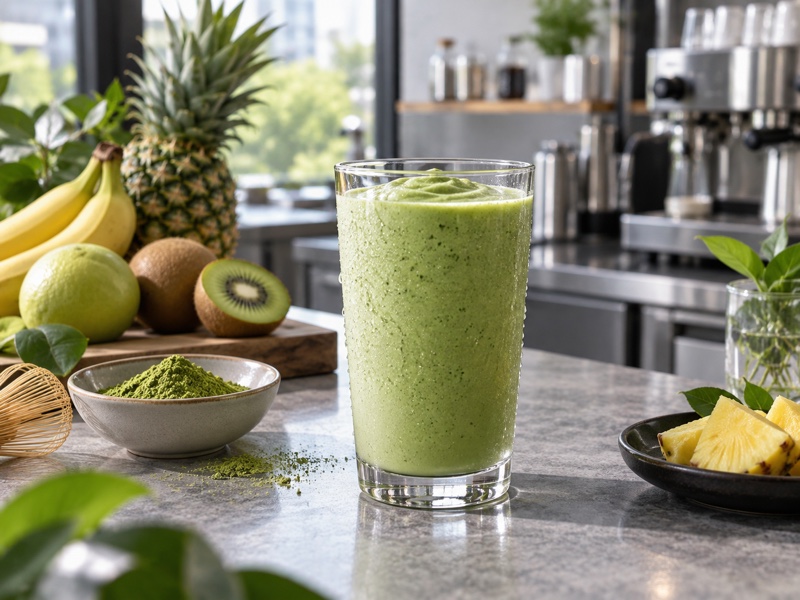
1. What should a matcha smoothie taste and feel like?
Choose a flavor target before choosing fruit. A smoothie can be tangy and refreshing, creamy and mild, or closer to a dessert. Matcha contributes a tea note and some bitterness; the amount that survives depends on the fruit, dairy or plant base, sweetener, and serving temperature. Cold blunts flavor, so a powder that tastes clear in warm water may seem quiet in a frozen banana drink. Ask tasters to name what they notice first, what remains after swallowing, and whether they would order the drink again. “Tastes green” gives a developer little direction.
Texture also needs a written target. Some guests want a pourable cold drink; others expect a spoonable smoothie. Decide whether small fruit fibers are acceptable and whether the cup should have foam. Fill the intended retail cup, place the lid on, and observe it after several minutes. A drink that looks smooth in the blender jug can separate against a clear wall. Defining the cup experience makes ingredient tests faster. It also tells the service team when a drink should be remade rather than stirred and sent out.
| Decision | Example target | Test in the actual cup |
|---|---|---|
| Tea presence | Clear but balanced | Blind tasting at serving temperature |
| Thickness | Pourable through a wide straw | Flow and straw test |
| Appearance | Natural green | Photo at handoff and later |
| Separation | Acceptable during service window | Timed visual check |
2. Which fruit gives matcha room to register?
Banana makes a creamy base and reduces the need for extra sweetener, but its ripe flavor can dominate. Pineapple supplies acidity and a cleaner finish, yet too much can push the tea into the background. Mango gives body and sweetness, while berries can move the color toward brown or purple. None of these choices is inherently correct. The commercial question is which fruit you can buy consistently and which flavor your customers will recognize. Use one fruit as the lead, then add a smaller amount of a second fruit only if it solves a specific problem.
Frozen fruit helps control temperature without relying entirely on ice. However, piece size, sugar content, and ripeness still change the result. A new case of banana can differ from the one used during development. Record fruit weights after trimming or from the frozen bag, not “one banana.” Taste the blend before adding syrup. If fruit already provides enough sweetness, a sweetener may only raise cost and blur the tea. Keep a fruit-free matcha base nearby during trials; it gives tasters a quick reference for how much tea character remains.
3. How should a café set the matcha dose?
Begin with a sensible beverage dose and test a short range by weight. For a single café cup, a team might compare 2 g, 3 g, and 4 g of powder in the same fruit base. These numbers are trial settings, not a universal recipe. Matcha strength differs by lot, and cup volume changes the concentration. Tasting three coded cups at the same temperature will tell you whether a larger dose improves the drink or merely adds a dry, bitter edge. Record the winning dose with the powder lot used.
Powder cost should be calculated per finished saleable cup. A higher-priced matcha can be economical if its flavor comes through at a lower dose. Equally, a cheap powder that forces you to add syrup, more powder, or a flavor mask may be a poor purchase. Test candidate powders in the finished smoothie, not only in water. If you plan to call the drink “matcha” prominently on the menu, the tea should be perceptible. Customers notice when a green smoothie tastes only of banana.
| Pilot cup | Matcha dose | What the panel should judge |
|---|---|---|
| A | 2 g | Is tea detectable? |
| B | 3 g | Does tea balance the fruit? |
| C | 4 g | Does the extra dose add flavor or harshness? |
4. Which milk or liquid base works best?
Water keeps the fruit and tea clear but can make a thin drink. Dairy milk adds body and familiar creaminess. Oat, soy, coconut, and other plant drinks each have their own sweetness, fat level, and protein behavior. Choose the liquid for the final sensory result and for the menu claim you plan to make. An “unsweetened” carton may still have a different taste and nutrition profile from another brand. The actual ingredient label belongs in the recipe file.
Do not replace a liquid one for one and assume the drink will behave the same. A lower-fat base can leave the smoothie watery. A highly flavored coconut drink can hide matcha; a strongly oat-flavored one can change the finish. Test at the same liquid weight, then adjust only after comparing. If a café offers dairy and plant versions, create separate recipes and cost them separately. Staff should not be left to guess how much extra fruit to add when a guest asks for a substitution. Allergen information should follow the ingredients actually used, including any yogurt or protein powder in the base.
5. What mixing order reduces clumps and uneven texture?
A blender can disperse matcha, yet dry powder dropped onto frozen fruit may stick to the jug wall. Start by weighing each ingredient. A small amount of liquid can wet the powder before the frozen ingredients enter, or the powder can be blended into a liquid base briefly. Then add fruit and blend to the defined texture. Specify the blender program or time for the equipment in your shop. A powerful commercial blender can heat a small batch if it runs too long, while a weaker machine may leave hard fruit pieces.
Check the jug after blending. Green streaks on its wall mean the drink may not contain the full measured dose. Scrape or rinse only according to your food safety procedure; do not quietly add liquid until the smoothie becomes easy to pour. That changes the formula and nutrition. If the drink needs a second blend, document it. Test one cup, then three consecutive cups during a busy period. A process that works for a developer who measures slowly may fail when a barista is handling several orders.
| Step | Control point | Common failure |
|---|---|---|
| Weighing | Powder and fruit masses | Variable taste |
| Wetting | Powder fully dispersed | Dry green clumps |
| Blending | Defined program | Heat or fruit pieces |
| Pouring | Target fill weight | Inconsistent yield |
6. Should the recipe use ice or frozen fruit?
Ice gives coldness and volume, but it becomes water as the drink waits. Frozen fruit adds coldness with flavor and body. The best choice depends on the intended texture and cup price. Compare an ice-led formula with a frozen-fruit formula at the same target fill weight. Taste immediately, then after the likely service or delivery interval. Watch for a watery layer at the bottom and a foam cap at the top. A drink that wins at the blender may lose after a ten-minute courier handoff.
Fruit also varies in freezer temperature and size. A bag pulled from a busy service freezer may blend differently from a deeply frozen development sample. If the café makes large batches, test the last cup from the jug as well as the first. Smoothie texture changes while the batch waits. For food safety and quality, follow your operation’s cold holding rules; do not assume a drink remains suitable merely because it still feels cool. A smaller, made-to-order batch can give a better cup than an oversized jug held for convenience.
7. How can a team keep the color appealing?
Color comes from matcha, fruit, milk, and air. Banana and pale tropical fruit tend to leave more visible green than dark berries. Some fruit blends turn gray-green even with a strong powder. Decide whether that appearance suits the product before trying to fix it with a larger matcha dose. More powder affects bitterness and cost. Photograph each pilot in the actual cup under the lighting customers will see, with no filters. Repeat after the drink sits for the expected service window.
Storage of the powder matters too. Close the bag promptly and protect it from heat, light, and moisture according to its supplier specification. Compare a newly opened lot against a retained approved sample if color shifts. Brightness alone does not certify quality; taste, aroma, documentation, and performance in the recipe matter. If a menu photo promises a saturated green but the shop delivers a muted fruit blend, revise the photograph or formula before launch. A truthful product image prevents a complaint more effectively than a claim about “premium” powder.
| Observation | Possible cause to test | Practical response |
|---|---|---|
| Gray-green drink | Fruit color interaction | Change fruit mix |
| Green specks | Poor powder dispersion | Revise wetting step |
| Dull over time | Holding or powder exposure | Shorten service window |
| Thin lower layer | Ice melt or separation | Test frozen-fruit balance |
8. What should a menu say about nutrition and caffeine?
State what the drink contains without turning it into a medical promise. Matcha contributes caffeine, while fruit, milk, yogurt, protein powder, syrup, and toppings determine much of the finished drink’s nutrition. A smoothie called “no added sugar” still needs a recipe and label review; sweetened plant milk or yogurt can change the claim. If you list calories or protein, calculate from supplier information for every ingredient and verify serving weights. A menu number copied from another smoothie is unreliable.
Do not assume the caffeine amount from a generic matcha article applies to your cup. Powder dose and actual product differ. Ask the supplier for relevant information or test if a precise claim is needed. A customer choosing a matcha smoothie may also order espresso or an energy product that day; clear ingredient and caffeine messaging lets them make their own choice. For a B2B buyer, a well-kept formulation sheet is the foundation for consistent labeling across stores. It is more useful than broad “energy” language that may need regulatory review.
9. How should a café cost and stock the drink?
Build cost from the weighed recipe and real waste. Include matcha, fruit, liquid base, sweetener, topping, cup, lid, straw, and any takeout packaging. Frozen fruit may reduce prep but it occupies freezer space and can produce thawed waste. Fresh fruit may add trimming labor and ripeness variability. Record the fill weight and number of saleable cups per batch. If the last cup is short, the theoretical ingredient cost understates your actual cost per sale.
For procurement, compare powder offers by the dose required in the finished drink. Ask for a lot-linked sample, specification, pack size, lead time, and storage guidance. Matcha Village’s bulk matcha options can be evaluated against a written smoothie brief. The best decision comes from a repeatable taste test and a landed cost calculation. Keep a backup fruit and powder plan before a promotion drives volume. A seasonal smoothie is hard to maintain if one essential ingredient changes without warning.
| Cost line | Record per cup | What can be missed |
|---|---|---|
| Matcha | Grams × landed unit cost | Higher dose for weak powder |
| Fruit | Usable grams | Trimming and thaw loss |
| Base and extras | Measured amount | Sweetened substitutions |
| Packaging | Cup, lid, straw | Delivery-specific items |
10. How can a team approve a matcha smoothie for service?
Run a small pilot during the conditions that will challenge it. Make the drink with the actual blender, service freezer, cups, lids, and staff. Time the order from ticket to handoff. Taste one sample immediately and another at the longest likely wait. If delivery is offered, pack a cup and inspect it after a real route. Note separation, flavor, fill level, and the condition of the lid. Ask staff which step caused hesitation. A formula that demands a rare tool or too many weighings may need a prep kit or a simpler ingredient list.
Approve the final powder lot and fruit specification, then write a one-page procedure with weights, blend program, target appearance, and remake rules. Train against the cup rather than a glossy photograph. Keep the first-week sales and waste figures; they may show whether customers prefer a smaller size or less sweetness. A good matcha smoothie holds its tea identity from blender to customer. Start with one clear version, listen to service feedback, and expand the range only when the original cup can be made reliably.
FAQs
Q1. Can a matcha smoothie be vegan? Yes, if every ingredient, including yogurt, protein powder, sweetener, and topping, meets that specification. Check supplier labels.
Q2. Is fresh fruit always better than frozen fruit? No. Frozen fruit can give useful texture and temperature control. Compare flavor, waste, and service consistency in your operation.
Q3. Why does the drink taste mostly of banana? Banana or syrup may be too dominant, or the powder dose may be too low. Run a matched tasting before increasing matcha.
Q4. Can the café preblend it for rush periods? Test the exact hold, temperature, separation, and food safety procedure first. Made-to-order may deliver a better result.
Q5. What should be on the supplier brief? Target flavor, dose range, powder documents, pack size, expected volume, and the smoothie base used for testing.