
Matcha mochi can look excellent in a display case and still disappoint at the first bite. A dry edge, gummy center, or faint tea flavor usually points to a formula or holding problem. For bakeries and food brands, start with a measured trial: choose the right rice flour, keep a control batch, and judge the cake after the same holding time customers will experience. This guide covers powder selection through portion cost. The Matcha Mochi Cake recipe in Ahrefs’ current top results offers a consumer reference; the checks below serve commercial development.
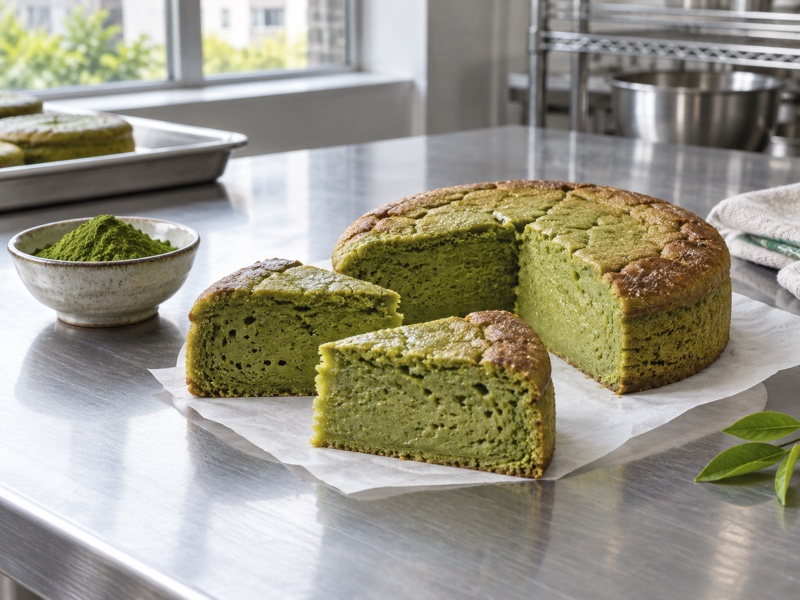
1. What makes matcha mochi different from an ordinary cake?
Matcha mochi cake gets its characteristic chew from glutinous rice flour, often sold as sweet rice flour or mochiko. The name “glutinous” describes the sticky texture; it does not mean the flour contains wheat gluten. A conventional wheat cake relies on a different flour system and develops a different crumb. In a butter mochi-style product, the center should feel cohesive and springy when cool, with no loose batter or wet pocket. Customers expect some resistance when they bite through it. If a buyer wants a soft sponge, call the item a matcha cake and develop that format separately.
Tea changes the experience in a quieter way. Matcha adds vegetal, lightly savory notes that can balance butter, coconut, or dairy. Its flavor can disappear beneath a heavy sweetener, so evaluate the finished bar rather than judging dry powder alone. The practical target is a slice that still tastes of matcha after baking and after a day in the package. Write down that target before changing the formula. “Green and chewy” is too broad to tell a production team whether a new lot performs well.
| Product attribute | Target to define | What to check |
|---|---|---|
| Chew | Springy without a wet center | Cut surface after full cooling |
| Tea flavor | Recognizable through sweetness | Blind tasting against control |
| Color | Natural green for the chosen powder | Standard-light photograph |
| Portion | Consistent weight and clean edges | Scale and cutting yield |
2. Which flour should a bakery choose for matcha mochi?
Buy glutinous rice flour specified for mochi-style baking. Ordinary rice flour, rice starch, and mixed gluten-free baking blends can all produce different textures. A supplier may use a familiar trade name on the bag, yet particle size and moisture vary between mills. Get the ingredient declaration and specification for the exact lot offered. Run a small bake before accepting a pallet. If you change mills, compare the new flour beside your approved control with every other variable held steady.
During mixing, watch how quickly the dry flour hydrates and whether lumps remain. During baking, record the time when the center stops moving like liquid. After cooling, check the cut face and bite at room temperature. Then repeat the same assessment after your intended holding period. A flour that appears fine on day one can give a firm or sticky bar later. Keep a retained sample in the intended pack. This simple practice tells you more than a flour name on an invoice, especially when a retailer needs a consistent eating quality across deliveries.
3. How much matcha belongs in a mochi test batch?
Start with your approved plain mochi base and add matcha as a measured test variable. Three pilot batches with low, medium, and high powder additions are easier to judge than one ambitious green batch. As an initial experiment, a bakery might compare additions around 1%, 2%, and 3% of rice flour weight. Those are trial points, not a universal recipe: powder intensity, base sweetness, and baking conditions will shift the preferred result. A kitchen scale is necessary. A spoonful is too imprecise for cost or lot comparison.
Mix matcha thoroughly into a portion of the dry ingredients before introducing liquid. This reduces isolated green spots. Some bakers first distribute it through sugar; others sift it with flour. Either route can work if the dry blend is even and the final batter has no visible pockets. Use the same lot and pack age throughout one comparison. Taste blind if you can. A vivid cup of plain matcha may be too delicate for a rich mochi batter, while a robust baking powder might seem rough in water yet taste balanced in the cake.
| Trial | Matcha added per 1 kg rice flour | Question to answer |
|---|---|---|
| A | 10 g | Does the tea register after baking? |
| B | 20 g | Is flavor clear without harshness? |
| C | 30 g | Does extra powder improve taste enough to justify cost? |
4. Which liquids and fats change the finished bite?
Milk, coconut milk, eggs, and butter each change flavor and structure. Their labels also affect allergens and claims. A coconut-rich base may pair naturally with matcha, but swapping canned coconut milk for a carton drink changes the water and fat balance. The same warning applies to whole milk, lower-fat milk, and plant-based alternatives. Treat each swap as a new formula. Record brand, fat content, and total mass so the trial can be repeated.
If a bar feels greasy, do not automatically cut matcha or extend baking time. Compare fat addition, emulsion, pan depth, and cooling first. If a center feels gummy, check whether the cake was sliced warm; mochi-style batters continue to firm as they cool. Bake a control and one changed batch side by side. That makes the cause visible. A bakery selling through a café may choose a richer, softer same-day bar, while a packaged product may need a different balance after transport. Decide which sales channel the formula serves before calling either texture a failure.
5. How should the batter be mixed and baked?
Build a production sheet that names the order of addition, mixer speed, bowl size, pan dimensions, batter weight per pan, oven setting, and cooling time. Matcha powder is fine enough to form small clumps, so disperse it before wet ingredients enter. Once liquids and dry ingredients are combined, scrape the bowl and check the bottom for unmixed flour. A smooth-looking surface can hide a dry pocket below. If you use shredded coconut or another topping, weigh it per pan and check that it remains in place during transport to the oven.
Pan depth matters as much as oven time. A deeper pan can look set at the edges while the center still moves. Record the center appearance, the change in wobble, and the bake loss by weighing the pan before and after. Do not rely on a timer borrowed from a smaller home recipe. Let the cake cool in a controlled, clean area before portioning. A warm cut compresses the crumb and can make a sound formula seem underbaked. Document the point at which staff can cut without dragging the blade through the interior.
| Process step | Record | Why it matters |
|---|---|---|
| Dry blending | Time and method | Avoids green powder pockets |
| Filling | Batter weight and pan size | Controls depth and bake |
| Baking | Oven setting and endpoint | Prevents wet centers |
| Cooling | Time, rack, room conditions | Gives a repeatable cut |
6. Why does matcha mochi lose its green color?
Matcha color changes with heat, light, oxygen exposure, and the color of other ingredients. A batter that looks bright before baking can emerge olive-toned; a clear package under strong display light can look duller the next day. Compare powder lots under the same light and run color checks on the finished cake at the time customers will see it. Photograph the sample on a neutral background with a fixed camera setting. Phone filters and changing kitchen lights make weak evidence.
Do not promise a neon green result from a natural tea powder. Stronger color is not automatically better flavor, and adding more powder can create a bitter finish. If a bright product is part of the brief, specify the visual target and ask whether any other color ingredient is permitted and correctly declared. For a clean-label line, a softer shade may be the honest outcome. The matcha color guide found in current search results discusses color as a quality clue; commercial approval still requires your own finished-product trial.
7. What should a bakery test before setting shelf life?
Shelf life is a product-specific result, not a number to borrow from a recipe blog. A home recipe can suggest a storage practice for its own kitchen, but commercial holding adds packaging, transport, display temperature, and handling differences. Decide whether the item will be sold same day, chilled, or in a sealed pack. Then test that actual route with the intended recipe and sanitation controls. Check appearance, odor, chew, moisture migration, and any applicable microbiological criteria at planned intervals. Work with a qualified food safety specialist for the markets where you sell.
Matcha adds another sensory check: does the tea aroma remain clear, or do dairy and coconut notes take over? Test the bar in the final wrapper, not an open tray. Compare one sample under normal display light with another in protected storage. Record lot IDs for rice flour, matcha, dairy, and package film. If a retailer reports a dull or sticky bar, traceability lets you compare a retained sample from the same production run. A statement such as “best within three days” should come from those tests and your local requirements, not from an attractive first-day slice.
| Holding condition | Sample check | Decision supported |
|---|---|---|
| Same-day display | Cut, color, bite, aroma | Counter service |
| Intended pack | Seal and moisture movement | Packaging choice |
| Planned delivery route | Condition on arrival | Transport suitability |
| End of proposed life | Sensory and safety plan | Date marking |
8. How can matcha mochi be portioned and priced?
Cost the item from the approved pan, not from theoretical ingredient weights alone. Record the cooked pan weight, trim, broken cuts, and number of saleable portions. A small powder dose can still be a material cost when matcha price changes, but labor and waste may be larger surprises. Compare the cost per finished bar for each pilot strength. If the high-matcha batch wins a blind tasting by a narrow margin, decide whether its extra cost supports a visible premium price.
Define a cutting pattern that staff can repeat. A plastic or lightly oiled blade may give a cleaner edge in a sticky cake; test your equipment with the cooled product. Weigh ten portions from different parts of the pan and review the spread. A corner piece may have more browned edge than a center piece, so consider whether both belong in the same sale unit. For wholesale, account for tray liners, individual wraps, case packing, label application, cold chain if used, and the retailer’s expected waste. Clear unit economics make a pleasant tasting useful to a buyer.
9. Which matcha specification should a commercial buyer request?
Ask a supplier for a sample tied to an identifiable lot, an ingredient specification, origin information, storage guidance, and testing relevant to your market. The phrase “culinary grade” alone cannot tell you how that powder will behave in mochi. Put two powders into the same base at the same mass. Compare the dry aroma, finished flavor, color after cooling, and color after holding. If one powder needs a much higher dose for an equivalent result, its lower price per kilogram may not translate into a lower cost per bar.
Check how a supplier handles lot changes. A production planner needs lead time, pack size, minimum order quantity, and a way to approve a replacement lot before the old one runs out. Keep a sealed retained sample of the approved powder and finished cake. Matcha Village supplies pure matcha powder and bulk formats; a useful supplier discussion starts with your recipe, expected volume, target flavor, and documents needed for sale. Ask for facts specific to the offered lot rather than assuming a website description covers every shipment.
| Buyer document or sample | Practical use |
|---|---|
| Lot-linked powder sample | Bench comparison and retained control |
| Product specification | Ingredient and quality parameters |
| Origin and traceability record | Accurate packaging claims |
| Pack and lead-time details | Production planning |
10. How should a bakery approve matcha mochi for launch?
Run a pilot that resembles real production. Use the intended mixer, pan, oven load, cooling rack, cutter, and pack. Ask production staff to follow a written sheet without the developer standing beside them. Evaluate bars from the beginning and end of the run. Have a tasting panel compare the pilot with the approved bench sample after identical holding. If the pilot changes, adjust one variable at a time. A batch sheet full of undocumented “little extra” additions will make the next run hard to fix.
Before launch, confirm allergen declarations, ingredient order, net weight, date marking, and any claims with the team responsible for your market. Train service staff on the product’s chew and storage so they do not describe it as an ordinary sponge cake or leave it under unsuitable display conditions. Keep a clear rejection rule: wet center, stale aroma, damaged wrap, or color outside the agreed range. A compact launch file with photos, weights, lot IDs, and tasting notes is more useful than a single beautiful hero shot.
For a first commercial test, choose one powder and one portion size. Make enough bars to observe cut yield and customer response, then change the brief only when evidence points to a problem. Matcha mochi succeeds when its chew, tea flavor, and presentation survive normal service. Ask your supplier for lot-linked samples and test them in the actual bakery formula before committing to volume.
FAQs
Q1. Is matcha mochi made with ordinary rice flour? Usually no. A mochi-style chew comes from glutinous or sweet rice flour; verify the ingredient on the supplier specification.
Q2. Can I use the same matcha as a plain tea service? You can test it, but evaluate flavor and cost in the baked bar. Powder suited to water may behave differently in a rich batter.
Q3. Why is the center sticky after baking? A mochi cake should be chewy, but a loose wet center can indicate insufficient baking, excessive pan depth, or cutting before cooling.
Q4. How long can a bakery sell matcha mochi? Set the period through testing in the final pack and distribution conditions, with food safety checks appropriate to your market.
Q5. What is the quickest way to compare two powder lots? Bake matched small pans at the same dose, then taste and photograph them after the same cooling and holding time.