
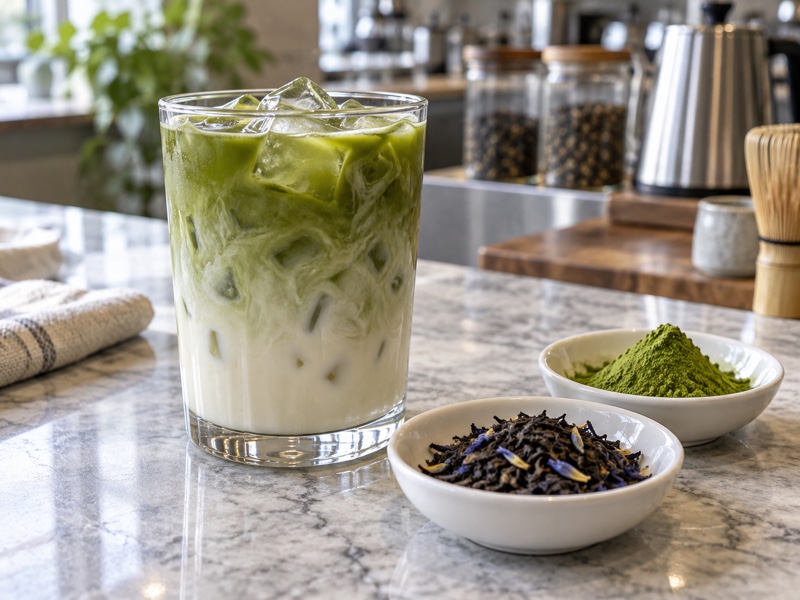
Earl Grey matcha combines two strong tea identities. The green tea can disappear under bergamot, while a weak black-tea infusion contributes little beyond caffeine and dilution. The iced Earl Grey matcha latte appearing in search results shows one way to pair them. A café should build its own drink from separate, measured tea components and taste the cup after milk and ice are added. The goal is a deliberate blend, not a collision of two fashionable names.
1. What should an Earl Grey matcha drink taste like?
Write the sensory target first. A customer should recognize matcha’s tea body and Earl Grey’s citrus-like bergamot without either becoming harsh or perfumed. Decide whether the drink is a black-tea-forward latte with matcha on top or a matcha latte with a lighter Earl Grey note. They will need different doses and menu descriptions. Taste the drink stirred as well as layered; customers may not drink it in the carefully photographed order.
Set serving size, ice, milk, sweetness, and expected queue time. A hot version and an iced version are separate formulas because extraction, dilution, and aroma change with temperature. Avoid promising a “gentle” caffeine level from flavor alone. Both tea components contain caffeine, and the actual amount depends on dose and preparation. The product brief should include a clear caffeine message and the ingredients customers can identify.
| Direction | Expected first note | Test |
|---|---|---|
| Earl Grey forward | Bergamot and black tea | Matcha still identifiable? |
| Matcha forward | Green tea | Earl Grey adds clarity? |
| Balanced blend | Both in one sip | Does milk muddy either? |
2. Which Earl Grey should be tested?
Earl Grey products vary by black-tea base and bergamot flavoring. A tea bag, loose-leaf blend, and concentrate may produce different strengths at the same nominal weight. Read the actual product specification and test the item the café can stock. Do not assume that every product called Earl Grey will behave alike in milk. Some bergamot notes are bright and citrus-like; others can read as soap when concentrated or paired with a strongly vegetal matcha.
Make a controlled infusion with weighed tea, measured water, temperature, and time. Taste it plain, then in the full beverage. If a ready-made concentrate is used, check sugar and dilution instructions. A sweetened concentrate can push the finished drink past the target sweetness before any syrup is added. Keep a retained sample of the approved tea and require a re-test when its formulation or supplier changes.
3. How should the Earl Grey be steeped?
Weak steeping leaves only a bergamot aroma; excessive steeping can add astringency that stacks with matcha bitterness. Start with the supplier’s preparation guidance, then test the extraction that survives milk and ice. Record grams of tea per water volume and a precise steeping time. Strain at the endpoint. Leaving leaves or a bag in the concentrate while it waits can make the later cups stronger than the first.
If the café batches black tea, define cooling, cold storage, date marking, and discard under its food-safety plan. Taste the first and last portions of a batch. A concentrate that tastes fine when warm can seem flat after refrigeration. Do not add more syrup automatically; compare a fresh infusion first. Staff need a short brew card that states the vessel and yield, not simply “strong Earl Grey.”
| Brew variable | Keep fixed | Watch for |
|---|---|---|
| Tea weight | Water and time | Strength and cost |
| Water temperature | Tea and time | Harshness or weak aroma |
| Steep time | Tea and water | Astringency drift |
4. How is the matcha portion prepared?
Weigh the powder for one serving and disperse it in a measured small amount of water. Sift if the approved lot clumps. A cold milk pour over dry powder is likely to leave green specks. Keep the same powder lot while testing Earl Grey strength. Once the blend is balanced, compare a second lot-linked sample in the final recipe. A matcha that tastes good alone may not retain enough identity beside black tea and bergamot.
Run a small dose ladder at fixed Earl Grey strength. Taste immediately and after the normal wait. A high dose can create astringency on top of the black tea; a low dose may give color with little flavor. The tea should be perceivable after stirring. If it disappears, reduce the Earl Grey concentration or syrup before automatically doubling matcha. Cost the final grams per cup.
5. Which milk and sweetener keep the teas distinct?
Dairy, oat, soy, and almond products alter both tea flavors. A rich milk can soften astringency but hide matcha; a sweet plant milk can make bergamot seem like candy. Compare two realistic milks in the same formula and decide on a default. Measure added syrup after accounting for any sugar already in the Earl Grey concentrate or milk. Taste the finished drink through the actual straw or lid opening.
Vanilla can round the blend, but it can also erase the distinction between the teas. If the drink needs a large flavored syrup dose to be palatable, revisit tea extraction. Customers who order “less sweet” should receive a tested variant, not the standard formula with an arbitrary pump removed. Document the lower-sugar result and its flavor. Ingredient and allergen cards should reflect each milk choice.
| Base | Potential benefit | Check |
|---|---|---|
| Dairy milk | Creamy integration | Tea muted? |
| Oat drink | Body and sweetness | Added sugar? |
| Lighter base | Clearer tea | Too sharp? |
6. Does layering improve the drink?
Layers can make the two teas visible, but they do not guarantee a balanced sip. Test black tea, milk, and matcha in different pour orders with weighed ice. Photograph at handoff and after the normal queue. Then stir fully and taste. If the layered drink tastes good only after mixing, tell customers to stir or serve it mixed. A complicated pour that delays service may not earn its place on the menu.
Check the last sip. A dense, sweet Earl Grey concentrate may settle beneath tea and milk, leaving a syrupy finish. The team can change concentration, pour order, or pre-mixing, but it should alter one variable at a time. Use a clear cup only if staff can deliver the intended appearance at normal speed. For delivery, a gradient may not survive transport; an even drink with a good flavor can be the better product.
7. How should ice and holding be tested?
Ice changes dilution and tea balance. Weigh it during development and use the same size or machine ice that the bar uses. Test the fresh cup and one held through the longest routine service delay. Measure whether bergamot or matcha fades first. A warm black-tea concentrate poured over too little ice can melt a large share of it and thin the final cup. A very cold, concentrated brew may preserve ice but taste harsh.
If tea bases are batched, label and handle them under the operation’s approved plan. Matcha can settle in a prepared slurry and needs a defined remix or made-to-order method. The first and last cups should contain the same tea dose. A cup that works once at a test bench is not a service specification until it survives the actual batch and queue pattern.
Build a worst-case cup deliberately: use the final portion of the brewed Earl Grey batch, a matcha slurry that has waited as long as the recipe allows, and the smallest ice pieces normally produced by the machine. This exposes weak points without pretending they happen in every order. If the result is poor, narrow the allowed hold or make one component fresh. Write the resulting limit on the bar card so the busiest shift follows the same rule.
| Moment | Check | Likely revision |
|---|---|---|
| Freshly built | Both teas recognizable | Adjust dose balance |
| Normal handoff | Ice and layers | Pour order or temperature |
| Delivery window | Stirred final flavor | Concentration or channel |
8. What should the menu and staff say about caffeine?
Both black tea and matcha contribute caffeine. Do not label this as a low-caffeine matcha drink because it tastes creamy. A precise number needs a defensible basis for both ingredients and the actual serving. Without one, a clear statement that it contains black tea and matcha is more accurate. Staff should know the cup uses two caffeinated teas and be able to suggest a suitable alternative if asked.
The menu should describe the default milk and sweetness. “Earl Grey matcha” may not tell customers whether it is hot, iced, sweetened, or creamy. A short description can. Avoid claims that the blend improves focus or health merely because it contains tea. If the formula changes to a ready-made syrup or concentrate, review ingredient, allergen, sugar, and menu copy before service.
9. What does one cup cost?
Cost both teas at their approved doses, including brewed Earl Grey loss and matcha slurry left in vessels. Add milk, syrup, ice, cup, lid, labor, and remakes. A slow three-layer pour may look premium but constrain the bar at peak volume. Measure build time and taste consistency across several staff. If a pre-batched Earl Grey base reduces labor, include its unsold waste and cold-storage requirement.
Compare the drink’s margin with a simpler matcha latte. If the second tea adds real flavor and customers value it, the cost can be justified. If it only adds a name, it is an expensive complication. Keep supplier substitutes controlled: a different Earl Grey or matcha can shift the balance even if the ingredient price is similar. Retest the complete cup when either tea changes.
| Cost item | Measure | Missed cost |
|---|---|---|
| Earl Grey | Tea grams and brewed yield | Discarded concentrate |
| Matcha | Powder grams | Heavy scoops |
| Base | Milk, syrup, ice | Sweetened concentrate |
| Service | Cup, lid, minutes | Slow layered build |
10. When is the blend ready for the bar?
Give another barista a one-page build card: Earl Grey brew, matcha slurry, milk, syrup, ice, pour order, and handoff. Ask them to make several cups under ordinary queue pressure. Taste each stirred and as served. Check ingredient weights, build time, appearance after a wait, and whether both teas remain distinct. If staff have to improvise the tea strength, the recipe is not yet ready.
When comparing powders, test a lot-linked sample from Matcha Village’s wholesale selection in the final Earl Grey formula. Approve the version that meets the agreed flavor and cost, not the one that looks brightest in plain water. A clear brew card for each tea makes the drink easier to train and easier to repeat across shifts.
FAQs
Can Earl Grey and matcha be mixed? Yes. Control each tea’s strength and taste the finished cup after milk and ice are added.
Does the drink have more caffeine than a plain matcha latte? It may, because black tea is added. A precise comparison needs the actual ingredients and serving doses.
Why does the drink taste perfumed? The Earl Grey or bergamot component may be too strong for the matcha and milk. Reduce it in a controlled trial.
Can the black tea be brewed ahead? Follow the café’s approved cooling, storage, and quality process; strain at the measured endpoint.
Should the two teas be layered? Only if the layer improves the customer experience and survives service. Taste the stirred drink as well.