
A smoothie bowl can leave the blender thick enough for a photograph yet melt into a drink before a guest reaches the table. Matcha adds another variable: its tea flavor can disappear under fruit or turn harsh when staff add extra powder to restore a green color. A café needs a matcha smoothie bowl formula measured by weight, a texture check and a topping build that works at service speed. Minimalist Baker’s home recipe shows how frozen banana, coconut milk and matcha can form a bowl; the plan below adapts that idea for repeatable café production without repeating its nutrition claims.
Contents
- 1. What makes a smoothie bowl different from a drink?
- 2. Which ingredients should set the base?
- 3. How much matcha belongs in a serving?
- 4. How can you control spoonable texture?
- 5. Which toppings work at café speed?
- 6. What food-safety checks does prep need?
- 7. How should staff assemble and serve it?
- 8. How do you cost the finished bowl?
- 9. How can you test menu acceptance?
- 10. What belongs on the final recipe card?
1. What makes a smoothie bowl different from a drink?
Design for a spoon and a delay
A bowl should hold toppings on its surface for the time a guest needs to receive and eat it. It should feel creamy, not like shaved ice, and its matcha flavor should remain noticeable after the fruit. A smoothie designed for a straw often needs more liquid and can fail those tests. Define the target bowl before choosing ingredients: serving vessel, net base weight, planned topping weight and time from blend to handoff. Use a standard spoon to judge texture. If the mixture runs level within seconds, it may need less liquid or a colder fruit base.
Test in the real bowl: a broad shallow bowl warms and spreads a base differently from a tall takeaway cup. Serve a trial and photograph it at handoff and ten minutes later under the same conditions. The ten-minute observation is a quality test, not a food-safety holding time. Ask tasters whether they can identify tea flavor without prompting. A bowl that looks green because of spinach may still taste only of banana. Define the sensory result you want before asking staff to solve it with extra matcha.
| Product target | Trial check | Failure signal |
|---|---|---|
| Spoonable base | Holds a spoon track briefly | Flows like a drink |
| Topping support | Fruit stays visible | Toppings sink |
| Tea flavor | Matcha noticed in blind taste | Fruit overwhelms tea |
| Service stability | Acceptable after handoff delay | Watery ring or separation |
2. Which ingredients should set the base?
Choose fruit and liquid for flavor as well as texture
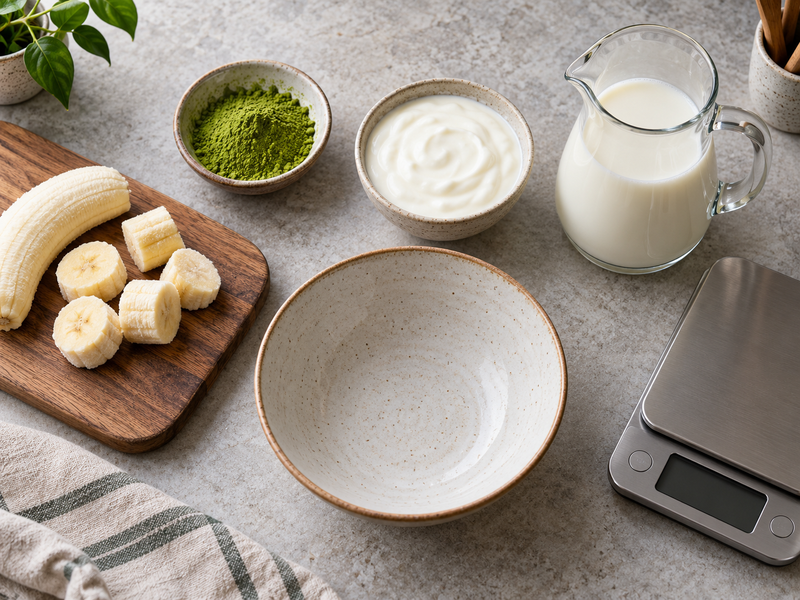
Frozen banana can give body and sweetness. Pineapple adds acidity; mango adds a different aroma and can make the matcha harder to notice. Coconut milk changes creaminess and brings its own flavor. Leafy greens can deepen the visual green without adding much matcha character, which may mislead the team during recipe development. Keep the starting formula short. A trial might contain frozen banana, a measured liquid, matcha and one optional fruit accent. That is a test design, not a published ideal recipe. Weigh every component so staff can repeat the result.
Compare three bases: make the same matcha dose in a banana-only base, a banana-pineapple base and a lower-banana base. Keep final mass constant. Taste for tea presence, sweetness and sourness. The home Minimalist Baker example uses frozen banana, optional pineapple, coconut milk, matcha and greens, but a commercial bowl must meet your menu price, allergen needs and blender capacity. Avoid adding a long list of “superfood” powders during the first test. Each new ingredient changes flavor, declaration and purchasing work.
3. How much matcha belongs in a serving?
Weigh tea against the full bowl
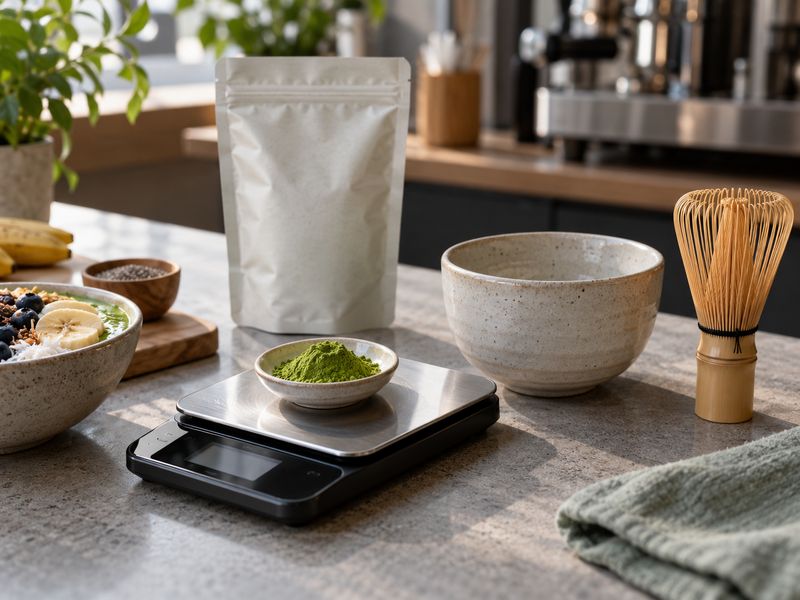
Choose an initial powder dose and test it in the complete formula, not in water alone. Calculate matcha grams per finished bowl and percentage of total base mass. Then prepare a lower and higher dose with all other ingredients held constant. A clear preference may emerge; if not, choose the dose that provides acceptable tea presence at reasonable cost. Do not chase a bright photograph with ever more powder. Color may come from fruit, greens, lighting or the powder lot, and a stronger dose can create bitterness.
Make the comparison blind: label bowls with random codes and serve them at the same temperature. Rate tea flavor, bitterness, mouthfeel and overall balance. Repeat with the intended toppings because a tart berry or sweet granola can change what guests taste. Ask the supplier for a matcha sample suited to cold blended applications and test more than one lot where possible. Application-specific grade descriptions can narrow the shortlist, but your kitchen must approve the actual powder in this formula. Keep the approved dose in grams; teaspoons can vary by powder density and scoop style.
| Trial | Matcha input | What stays fixed |
|---|---|---|
| A | Lower dose | Fruit, liquid, total mass |
| B | Target dose | Fruit, liquid, total mass |
| C | Higher dose | Fruit, liquid, total mass |
| Blind tasting | Random sample codes | Temperature and toppings |
4. How can you control spoonable texture?
Fix the liquid and frozen-solid ratio
Record frozen fruit mass, fruit temperature if relevant, added liquid and blending time. A small splash of unmeasured liquid can turn a thick bowl into a thin smoothie. Start with enough liquid for safe blender operation under the maker’s instructions, then add only measured increments. Do not overload a domestic blender in a commercial trial. Use an appropriate machine and batch size, and document how staff scrape the vessel between runs. The goal is a base that blends fully without unprocessed fruit pieces.
Check more than the first spoonful: portion the same mix into the intended bowl and inspect top, center and edge after handoff delay. If it freezes into a hard mass, texture is not serviceable; if it melts around toppings quickly, consider colder ingredients, less liquid or a smaller serving. Change one variable at a time. A thickener can help some formulas, but it adds label and texture questions, so establish what the simple recipe can do first. Some fruit lots vary in ripeness and water content. Build a narrow adjustment rule, such as a measured liquid increment, instead of letting staff improvise until the blender turns.
5. Which toppings work at café speed?
Make the finished bowl attractive and practical
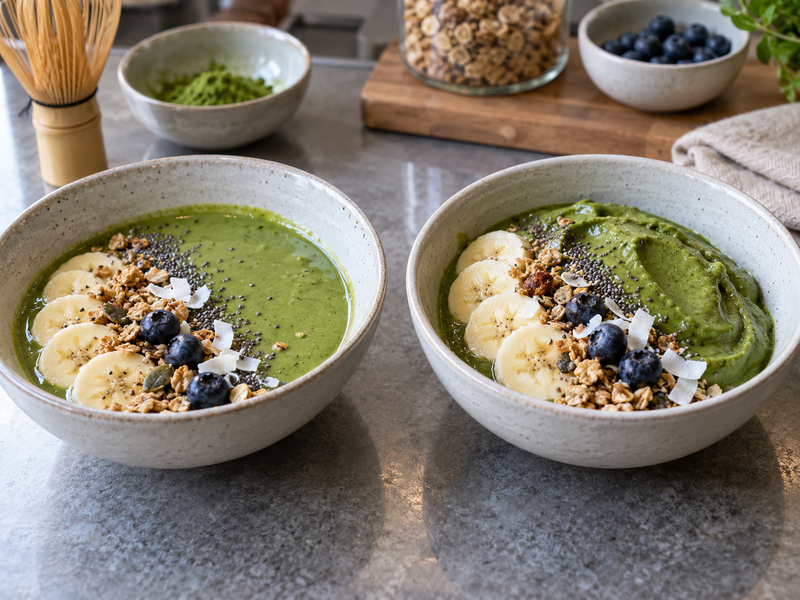
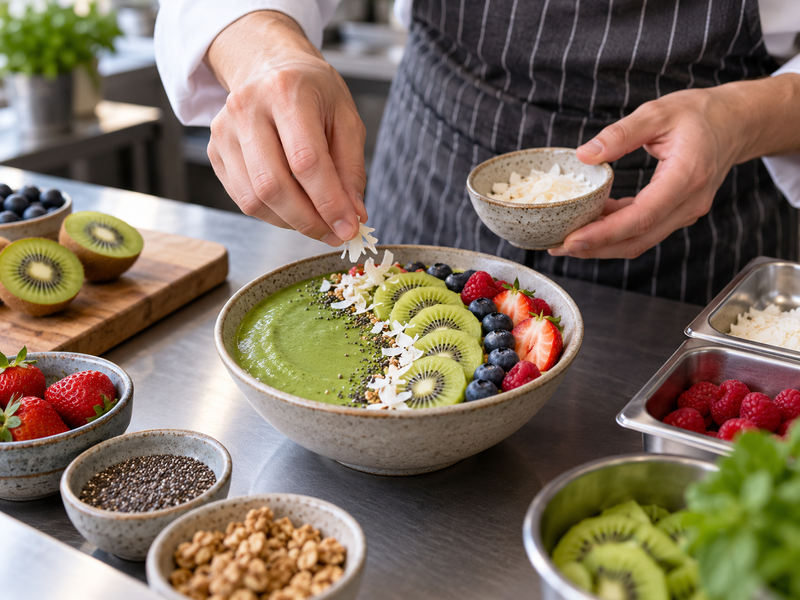
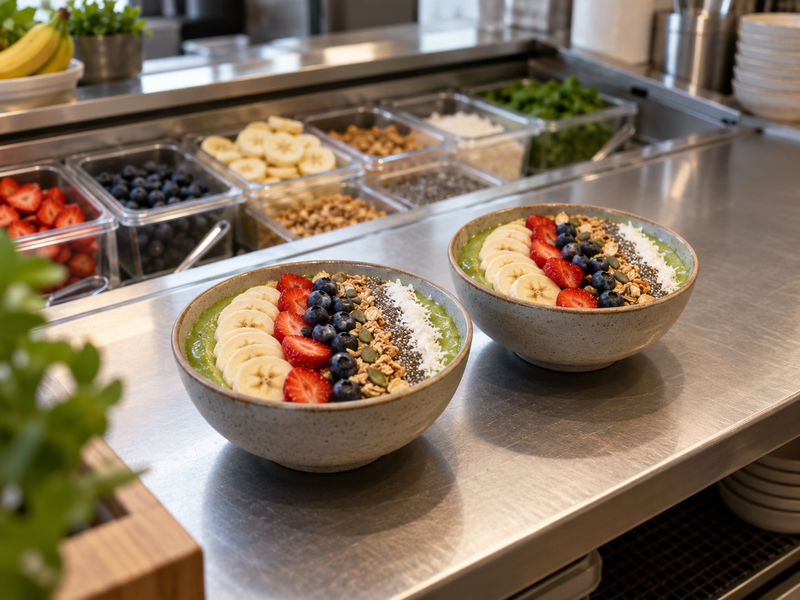
Choose toppings for flavor, texture, appearance and assembly time. Berries can add sharpness; toasted coconut brings crunch; granola adds body. Each choice affects allergen information, stock rotation and the time a ticket occupies the station. Limit the standard build to a few measured components. If every bowl needs six open containers and several garnish placements, weekend service may become slow. Run a timed build with the actual staff and measure topping waste at close.
Watch the moisture: toppings can soften or bleed color as they sit on a frozen base. Place crisp items last and serve promptly. A defined portion spoon or preweighed container reduces both overuse and inconsistent presentation. Offer optional toppings only when the register and kitchen can communicate them clearly. If a berry-free or nut-free option is advertised, train staff on handling and cross-contact; a scoop shared with nuts defeats the promise. The FDA’s food allergen information is a useful US reference for major allergen categories, while local foodservice requirements govern your menu.
| Topping | Menu role | Operational check |
|---|---|---|
| Fresh berries | Tartness and color | Wash, cut and portion |
| Granola | Crunch and bulk | Allergen label, moisture |
| Coconut | Aroma and texture | Portion and declaration |
| Seeds or nuts | Crunch | Cross-contact control |
6. What food-safety checks does prep need?
Treat fruit, dairy and ready-to-eat toppings seriously
Wash fresh produce under running water before cutting, and discard spoiled produce. The FDA’s produce advice explains that washing reduces but does not eliminate microorganisms and advises against washing produce with soap. Keep frozen ingredients under their supplier’s handling instructions. If a formula includes yogurt, milk or cut fruit that needs temperature control, apply the relevant local food code and your hazard plan. The FDA Food Code provides a model for US retail operations; it does not turn a café’s visual texture check into a safety assessment.
Keep tools separated: wash, rinse and sanitize blender vessels and topping tools as required for your operation. Label opened ingredients and track their use. A bowl sold as dairy-free needs ingredient and cross-contact review, especially if the blender also handles yogurt drinks. Do not prepare a large batch for later sale until a qualified team has approved a documented holding method. Freshness advice in a home recipe cannot serve as commercial shelf-life validation. Make to order during the pilot; this also lets the team measure genuine prep time and waste.
7. How should staff assemble and serve it?
Make the sequence a one-person job where possible
Lay out frozen ingredients, weighed matcha, measured liquid, serving bowls and topping portions in the order used. The barista weighs or uses verified preportioned ingredients, blends to the approved endpoint, transfers the base and adds toppings in a defined sequence. Include a check that the correct bowl or takeaway vessel matches the order ticket. If two employees split the task, define the handoff clearly; a bowl sitting on the counter while the topping worker finishes another order may melt before sale.
Time a realistic queue: record active staff seconds, total ticket time and any remake reason. Test one bowl, then several consecutive bowls with the blender cleaning or allergen changeover the menu requires. A recipe that takes 90 seconds in an empty café may take much longer when the same employee handles payment. Preportioning frozen fruit can save time, but count the labor and freezer space required to do it. Train staff to recognize the approved texture and to remake an over-thinned bowl rather than covering it with extra granola.
| Step | Standard | Checkpoint |
|---|---|---|
| Weigh base | Recipe grams | Correct portion |
| Blend | Approved method | No unprocessed pieces |
| Transfer | Defined bowl | Spoonable texture |
| Top | Measured portions | Correct allergens and ticket |
8. How do you cost the finished bowl?
Include toppings, packaging and labor
Calculate cost from the recipe weight of each ingredient and its delivered unit price. Add toppings, cup or bowl, spoon, napkin and an allowance for measured prep waste. Labor matters because a bowl may occupy a blender and staff member longer than a drink. Compare gross margin at the expected selling price, but also examine contribution during a rush: if a labor-intensive bowl displaces several fast drinks, the menu decision changes. Use actual sales and prep data once the pilot runs.
Check the matcha dose: if a lower-priced powder needs twice as much to be tasted under fruit, price per kilogram is misleading. Test finished-bowl cost for each candidate powder. Do the same for banana size and fruit trim. A preportioned bag may cost more per kilogram but cut service waste; a bulk frozen pack may be cheaper but require labor and freezer capacity. The calculation should show ingredients, yield, waste and staff time separately so a manager can identify where a cost change came from. Avoid lowering tea dose quietly to hit a spreadsheet target.
9. How can you test menu acceptance?
Ask customers about the bowl they actually ate
Offer a limited run during both quiet and busy periods. Track units sold, prep time, returns, unfinished bowls and repeat orders. Ask a small set of customers whether tea flavor, sweetness, texture and portion size met expectations. A photograph can attract a sale, but a repeat purchase depends on eating quality. Keep feedback separate from nutrition or health claims, which require their own substantiation. The home recipe’s personal commentary and nutrition claims should not become café marketing copy by default.
Use a consistent recipe during the pilot: if staff change fruit ratio or toppings daily, customer responses cannot be compared. Record any unavoidable substitution. Watch whether takeaway bowls arrive with melted edges or displaced toppings; packaging may need adjustment. Test the same base in a chilled service bowl and a lidded takeaway format if both channels matter. A matcha smoothie bowl may be a strong brunch item but a poor delivery product. The pilot should identify where the product works.
| Pilot measure | What it tells you | Action |
|---|---|---|
| Repeat purchase | Appetite after trial | Keep or revise |
| Melt complaints | Service and packaging fit | Change workflow |
| Tea flavor rating | Matcha dose and fruit balance | Run blind retest |
| Prep time | Bar capacity | Simplify build |
10. What belongs on the final recipe card?
Write what another shift can reproduce
List ingredient names and weights, approved matcha lot or specification, frozen fruit condition, liquid amount, blender model and cycle, bowl size, topping weights, assembly order and allergen information. Add a photo of an acceptable finished bowl and a note describing texture in plain language. State when a bowl must be remade. Keep food-safety handling instructions in the operating procedure and link the card to that procedure. A visual recipe alone will not control the quantity of tea or the temperature of ingredients.
Finish with a practical order: ask your supplier for a matcha sample and current specification, then test it in your full fruit base at the planned serving size. Approve the cup only when two trained employees can make it to the same texture, flavor and time target. Record the final cost per acceptable bowl. That gives purchasing and the café team a product they can sell repeatedly, rather than a one-off test that looked good for a camera.
For powder selection, see our matcha powder for smoothies guide.
FAQ
Q1: What makes a matcha smoothie bowl spoonable?
Measured frozen solids, controlled liquid and a repeatable blend endpoint create a base that supports toppings.
Q2: Can the café use any matcha grade?
Test powders in the full fruit formula. Tea flavor, texture and cost per bowl matter more than a grade label.
Q3: Should toppings be weighed?
Yes, at least during development and training. Defined portions support cost, presentation and allergen control.
Q4: Can the base be prepared ahead?
Only under an approved food-safety and quality plan. Make to order during the first menu trial.
Q5: How should a café price it?
Add ingredient, topping, packaging, waste and labor cost, then test demand at the proposed menu price.