
A matcha shake is a blended cold drink in which powdered green tea contributes flavor and color alongside a liquid base, ice, and often a sweetener. A one-cup recipe can look excellent yet leave sediment, separate during pickup, or slow a busy station. A commercial version starts with a defined serving and a repeatable mixing card. The checks below follow ingredient behavior and service workflow, so a buyer can compare candidate powders without assuming that a home recipe will transfer unchanged.
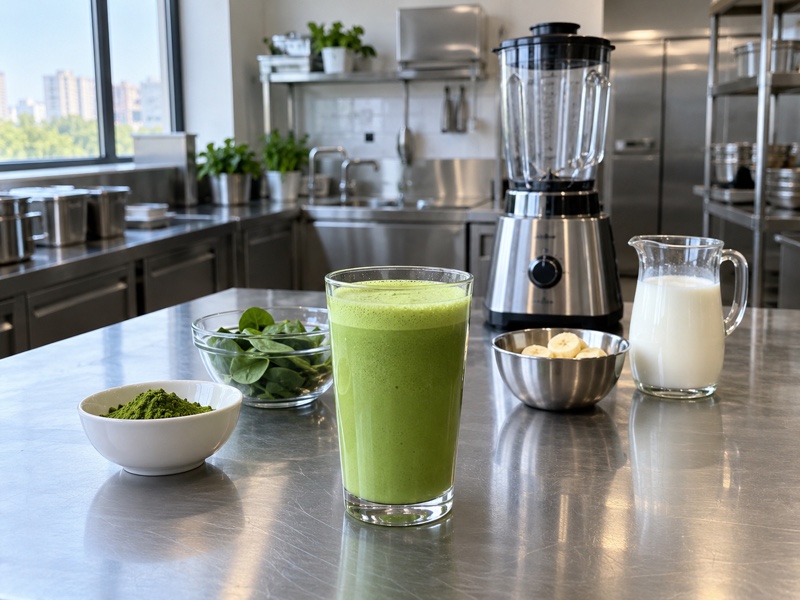
For: beverage brands, café groups, and ingredient buyers. Decision: which formula and preparation method give an accepted cup at a viable cost.
Contents: 1 · 2 · 3 · 4 · 5 · 6 · 7 · 8 · 9 · 10
1. What belongs in a commercial matcha shake?
Define the cup before selecting ingredients
A buyer needs a sharper definition than “green blended drink.” Decide whether the menu item resembles a thin iced beverage, a spoonable dessert shake, or a protein drink. Those formats require different viscosity, ice load, sweetness, and serving equipment. A recipe should specify the filled volume, cup size, target temperature, and expected time between blending and drinking. If a customer receives a straw with a narrow bore, a thick formula may fail even when the flavor is right. Name the service window: the drink should still meet its texture target when a courier arrives or when a café guest takes the first sip.
Separate components by job. Matcha supplies tea flavor and suspended solids. Milk or plant base supplies body. Sweetener balances bitterness. Ice chills and changes viscosity as it melts. Fruit, syrup, or protein ingredients can add flavor, but each can hide a weak tea choice or introduce separation. Use a plain base as the control before adding flavors. Record build order and ingredient mass so another operator can reproduce the cup.
2. Which matcha grade fits the drink base?
Screen tea in the finished drink
The grade name on a sales sheet cannot predict performance in a sweet, cold, opaque base. Ask for samples at two or three price points, then make coded cups with identical recipes. Evaluate tea aroma, astringency, green color, and any dusty finish after the planned hold. A delicate powder may taste clear in water but disappear under vanilla or dairy fat; a cheaper strong powder may remain noticeable but taste rough at the required dose. Taste where it sells: judge the finished shake with its actual base and serving temperature, not only dry powder or a hot tea sample.
Request lot-specific documents before narrowing a supplier. Useful records include product specification, ingredient identity, country of origin, batch identification, applicable food safety results, and packing format. The buyer should agree which attributes matter and how samples will be compared. Use consistent clear cups for screening. Repeat a promising result with a second lot; one attractive sample represents only its own lot.
| Tea screen | What to compare | Why it changes the decision |
|---|---|---|
| Plain water slurry | Clumps, color, aroma | Reveals powder behavior before other ingredients mask it |
| Finished shake | Flavor and finish | Tests the consumer experience |
| Held cup | Sediment and dulling | Tests the actual service window |
3. How should a pilot formula be built?
Change one variable at a time
Begin with a control that uses one tea lot, one liquid base, one sweetener, and a fixed ice mass. Weigh everything, including ice. If the drink is built to a target volume, also record the mass of the filled cup; melt and overrun can make volume less reliable. A practical trial matrix changes matcha dose across three levels while keeping the rest constant. Then hold the chosen dose and compare bases. Keep a denominator: if a trial sheet states 1% matcha, say whether that means 1 g per 100 g of the complete preblend, the finished beverage, or only the dry mix. The figures should be starting points, not product specifications.
A hypothetical pilot might start at 0.5%, 0.8%, and 1.1% matcha by mass of the complete drink before blending. These numbers are screening points only; they do not indicate an ideal or safe amount. The team should adjust based on cup size, tea strength, labeling requirements, and taste. Record soluble solids or sweetness using the team’s usual method if that measurement matters to the product. Keep a tasting sheet that distinguishes too weak, too bitter, too sweet, and too watery. “Liked it” offers little guidance for the next batch.
| Pilot variable | Hold fixed | Observe |
|---|---|---|
| Matcha dose | Base, sweetener, ice, blend cycle | Tea impact and bitterness |
| Base type | Tea dose and serving mass | Body, flavor, allergen profile |
| Ice mass | Formula excluding ice | Dilution and drinking texture |
4. What mixing sequence prevents gritty cups?
Wet powder before heavy ice dilution
Dry matcha can sit as islands on liquid or cling to a blender wall. Pre-disperse the powder in a small measured portion of liquid before adding the remaining base and ice. If the operation uses a high-speed blender, test whether direct addition works consistently; do not add a manual step without evidence that it improves accepted cups. Sifting may remove compacted lumps but also costs time and creates airborne powder. Inspect the bottom: a smooth top layer can hide sediment that becomes obvious through a straw near the end of the drink.
Blending time and speed affect foam, heat, and ice size. Longer blending can make a cup appear smoother while melting more ice and thinning the drink during the handoff window. Define a cycle that staff can reproduce on the actual machine and vessel. Observe where powder collects on the jug, whether the operator needs to scrape the sides, and how quickly a rinse returns the station to service. Record the size and source of ice; switching from cubes to crushed ice changes shear and dilution. A matcha shake process card should describe the complete sequence, including final pour, not merely “blend until smooth.”
5. How can dairy and plant bases be compared?
Test the base as part of the formula
Dairy milk, oat drink, soy drink, and other plant bases differ in sweetness, protein, fat, stabilizers, and flavor. Those differences alter how matcha comes across. A base that makes a pleasing plain latte may taste flat when blended with ice. Compare candidates at the same tea dose and target serving mass, then adjust sweetness only after identifying which base gives the preferred tea profile. Watch the label: a plant-based test can change allergen declarations, ingredient lists, and claims. Regulatory review belongs in the launch plan, not after packaging is printed.
Do not assume that dairy and plant versions can share one blending time. Some bases foam readily while others separate or leave a thin mouthfeel. Evaluate immediately and after a typical service delay. If a menu promises one taste standard across regions, repeat with the precise locally sourced base rather than using a substitute with the same category name. Where protein powder or fruit puree enters the recipe, run a separate test matrix because those ingredients can change viscosity and color. The commercial decision is a specified base and method, supported by cup observations, not a generic “works with any milk” claim.
| Base option | Likely trial issue | Record before approval |
|---|---|---|
| Dairy milk | Tea flavor may be softened | Flavor and allergen statement |
| Oat drink | Sweetness and viscosity vary by brand | Sugar balance and hold texture |
| Soy drink | Distinct flavor and foam behavior | Taste and allergen statement |
6. Which quality checks matter at service?
Judge the cup after it leaves the blender
Take observations at pour, at handoff, and after the longest expected wait. Photograph cups under the same light and use the same clear vessel for internal trials. Check color, foam, visible ice, wall residue, and sediment. Stir once with a consistent motion before tasting only if the customer will be instructed to do so. Follow the straw: sample from the top and from the last portion, since a drink can taste balanced at first and powdery at the end. A panel should record specific faults rather than a single summary score.
Set acceptance criteria that match the service model. A made-to-order café cup may only need to hold for a short queue. A delivered shake faces a longer wait and more movement. A packaged refrigerated drink is a separate product with safety, stability, and processing work that a blender trial cannot answer. Record whether defects are acceptable, fixable through preparation, or evidence that the formula must change. Keep retained pilot samples only under controlled food safety procedures; sensory checks do not replace microbial validation. If foam collapses rapidly, determine whether that matters to the advertised product before adding another ingredient.
7. How does the recipe change at scale?
Transfer the process, not only ingredient percentages
A single blender jar has a different flow pattern from a larger batch mixer. Powder can hydrate unevenly when the liquid volume increases, and the same blend duration may deliver different shear. For a chain, scale may mean hundreds of operators making individual cups; for a manufacturer, it may mean a premix or ready-to-drink line. Specify which route is intended. Map the handoffs: receiving, portioning, opening, mixing, holding, serving, and cleaning each create variation that a test kitchen can miss.
Run a small transfer trial on production equipment using the selected matcha lot. Record addition order, mixing speed, duration, temperature, vessel fill, and product yield. Taste cups from the beginning and end of a batch. If the plan uses a dry matcha shake premix, test powder segregation during transport and dosing. If the plan uses a chilled liquid base, verify its storage and handling separately. Cleaning procedures should remove green residue from seals, lids, and dispensers. A formula is ready for roll-out only when trained staff can make an accepted cup across shifts with the documented tools.
| Scale route | New risk | Validation task |
|---|---|---|
| Multi-site blending | Operator and equipment variation | Train from one card, audit cups |
| Dry premix | Ingredient segregation | Sample top and bottom of pack |
| Central liquid base | Hold and sanitation | Validate process and storage plan |
8. What should buyers request from suppliers?
Make samples comparable
Ask each matcha supplier for a sample linked to a specific lot and for the same core documents. State the intended use: cold blended beverage with an approximate tea dose and chosen base. Request pack size, minimum order, lead time, shelf-life evidence, and the supplier’s recommended storage conditions. Those commercial details affect whether a good pilot tea can actually support a menu. Tie claims to documents: do not publish origin, organic, allergen, or safety claims because they appeared in a sales email. Review the records appropriate to the target market and actual lot.
Define a sample evaluation form before tasting. Make coded cups, use the same formula, and log the lot number. If one sample tastes better but costs more, calculate the difference per accepted cup at the required dose. A powder that needs more grams to be noticed may erase an apparent lower price per kilogram. Ask whether future lots will be measured against an agreed color and flavor reference. Retain an approved reference sample using its stated storage conditions.
9. How should the menu economics be calculated?
Count remakes and station time
Ingredient cost per cup begins with weighed usage and actual purchase prices, then adds cups, lids, straws, and unavoidable waste. Ice and utility costs may be small individually but should follow the operator’s normal costing method. Compare costs at the same accepted serving size. Price the accepted cup: if a formula generates remakes from clumps, the cost of sold cups rises even when the listed ingredient total looks low. Record yield from each trial batch and the number of cups rejected for texture or appearance.
Labor belongs in the comparison when the preparation sequence changes. Time one complete cycle from the clean station through serving and reset. A pre-dispersion step might reduce remakes but add preparation time; a premix might save time while requiring inventory control. The right option depends on actual order volume and staffing. Avoid using hypothetical savings as a sales claim. For a chain rollout, label sales assumptions and check them in a real store before committing to equipment or pack sizes. Account for minimum order and shelf-life exposure.
| Cost line | Input to record | Hidden driver |
|---|---|---|
| Matcha | Grams per accepted cup and price per kilogram | Extra dose needed for flavor |
| Base and inclusions | Actual weighed use | Portion drift |
| Labor and waste | Ready-to-ready time, remakes | Added mixing or cleaning step |
10. What should be tested before launch?
Run a controlled service trial
Choose a few candidate formulas and write a preparation card for each. In a pilot site, have more than one operator prepare cups during normal service conditions. Record cup mass, timing, appearance, taste, sediment after the expected wait, and reasons for remakes. Ask staff which steps cause mistakes, then test a revised card rather than relying on verbal reminders. Decide with evidence: the winning matcha shake must pass the sensory target and the operational target at the same time. A beautiful bench cup that regularly delays orders has not passed a foodservice trial.
Confirm that purchasing can obtain the chosen tea and base in the needed pack sizes and that quality documents match the market. Freeze a formula version and an approved ingredient list so substitutions trigger a new check. Validate any packaged product with its own process, shelf-life, and food safety program. The immediate next action is a coded side-by-side trial using one tea lot per candidate, a fixed serving mass, and a defined handoff interval. Record every rejected cup. For further reading on the consumer drink concept, see the reference below; use the supplier’s specification and your own pilot data for production decisions.
Reference: “Recipe: Matcha Green Tea Shake” — The Kitchn. The linked article provides consumer recipe context; formulation and scale-up guidance here is original.
FAQ
Q1: What is a matcha shake in foodservice?
A blended, cold drink made with matcha and a defined liquid base, prepared to a repeatable serving specification.
Q2: Can a matcha shake be made without dairy?
Yes. Test the exact plant base for flavor, texture, separation, and labeling before approval.
Q3: Should matcha be sifted before blending?
Only if a controlled trial shows fewer clumps or remakes after the extra step.
Q4: How should a chain judge settling?
Inspect matched cups at pour and after the longest normal handoff, including the final sip.
Q5: What should a supplier sample include?
A traceable lot number, product specification, relevant quality documents, pack details, and storage guidance.